Share
Americano
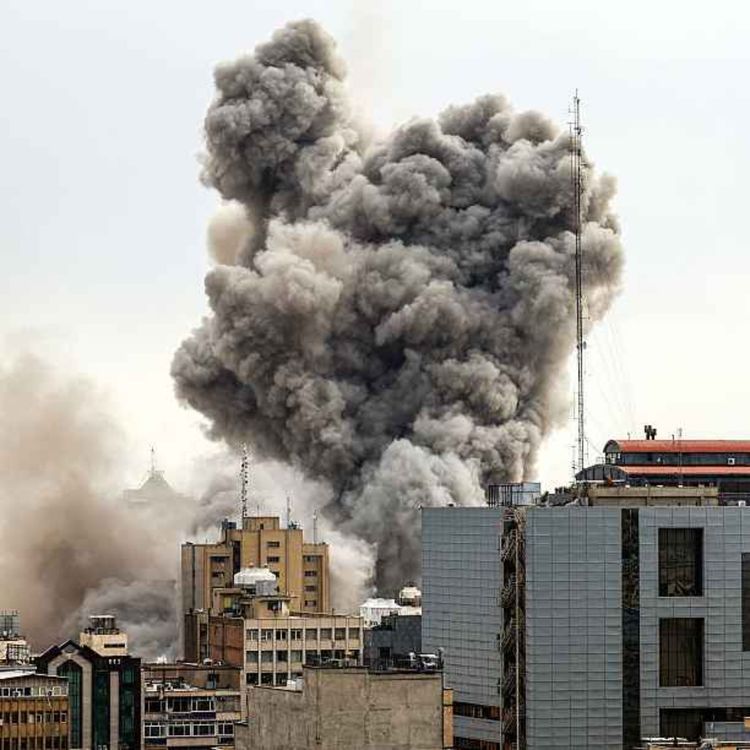
Will Iran descend into civil war?
•
Freddy is joined by historian and former diplomat, Charlie Gammell. They discuss the situation in Iran, whether the US is heading for a decisive confrontation, and examine the regional consequences: proxy warfare, Gulf energy security, Pakistan’s delicate position, and migration pressures on Europe.
Become a Spectator subscriber today to access this podcast without adverts. Go to spectator.co.uk/adfree to find out more.
For more Spectator podcasts, go to spectator.co.uk/podcasts.
Contact us: podcast@spectator.co.uk
More episodes
View all episodes
Is Trumpism unravelling? with Anthony Scaramucci
44:16|In this episode of Americano, Freddy Gray speaks with former White House Communications Director Anthony Scaramucci about his new book 'All the Wrong Moves', breaking down the systemic failures driving American populism, the economic fallout of foreign conflicts and rising national debt, and his sharp critique of Donald Trump's political strategy and economic policies.
Steve Bannon: Tech oligarchs hid the AI extinction threat
23:14|In this episode of Americano, Freddy Gray speaks with Steve Bannon - former White House chief strategist for Donald Trump - about the ideological convergence between national populists and progressive Leftists as they confront the existential risks of unbridled AI, the suppression of internal whistleblower warnings by Silicon Valley elites, and the urgent necessity of cutting off Chinese access to Western microchips and capital.
Peter Thiel, the Antichrist and the battle to control AI
28:52|Freddy Gray is joined by Michael P. Gibson, co-founder of the 1517 Fund, to discuss the weekend's warnings about AI catastrophe from Anthropic's Dario Amodei, Elon Musk and others, and the Trump administration's insistence on a light touch.Freddy and Michael discuss why Michael thinks the warnings should be read alongside Anthropic and OpenAI's plans to go public in the next six to nine months; how the role of Silicon Valley villain passes to whichever lab has the strongest model; why data centres, and now AI safety, have become Democratic talking points ahead of the midterms; why Michael believes existing product liability law already does the job; and why Peter Thiel suspects a one world body to regulate AI, sold in the name of peace and safety, could be the project of the Antichrist.Learn how to earn yield on gold, paid in gold, at Monetary-Metals.com/Americano
Rep. Randy Fine: 'I support a four-state solution for Britain!'
16:08|Freddy Gray is joined by Rep. Randy Fine, the Republican congressman for Florida's 6th district, to speak about his viral post, calling for a four-state solution for the United Kingdom. The post which parodies a popular pro-Palestinian chant, 'From the river to the sea', targeted the British government's fresh sanctions on Israeli settlements in the West Bank.Freddy and Rep. Fine discuss his claim that 38 states are ready to boycott British companies that comply with the sanctions, why he blames European allies for a war with Iran he insists is being won, whether the Falklanders' votes to remain British count for anything, and why he says Britain's Israel policy is a play for voters who 'never should have been in the country in the first place'.Learn how to earn yield on gold, paid in gold, at Monetary-Metals.com/AmericanoProduced by Henry Lloyd
Inside Jared Kushner’s Albanian adventure
19:31|What is behind Albania’s so-called ‘Flamingo Revolution’, and why has Jared Kushner found himself at the centre of it?Freddy Gray is joined by Ian Thomson to discuss Kushner’s controversial plans to build luxury resorts on Albania’s coastline, the protests they have sparked, and the country’s long-running battles over land and property.They also explore Albania’s turbulent history, the legacy of communism, and why the country’s ancient traditions and rapid growth as a tourist destination are colliding with Trump-era ambitions for real estate development.Learn how to earn yield on gold, paid in gold, at Monetary-Metals.com/AmericanoProduced by Abigail Brierley.
Will Pete Hegseth run for President?
19:06|Is Pete Hegseth positioning himself for a 2028 presidential run….or is he on the verge of being fired? The Spectator’s Sarah Beth Spraggins joins Americano to discuss the Secretary of War’s future, his loyalty to Trump, and the growing questions over his handling of the Iran war.They also explore Hegseth’s evangelical faith and Washington church, as well as his controversial personal and romantic history.Learn how to earn yield on gold, paid in gold, at Monetary-Metals.com/AmericanoProduced by Abigail Brierley and Henry Lloyd
Why did the CIA director fly to Moscow?
17:15|Gus Carter is joined by Owen Matthews, the Spectator's Russia writer, to discuss John Ratcliffe's unannounced trip to Moscow, where the CIA director met Russia's foreign intelligence chief but not Putin.Owen runs through the possible reasons: Iran, a suspected Russian provocation against NATO, and the stalled peace process. They also discuss the sabotage campaign across Europe and the sanctions bill that could hurt Russia more than anything Trump has tried.Learn how to earn yield on gold, paid in gold, at Monetary-Metals.com/AmericanoProduced by Henry Lloyd
Just how bad are the polls for the Republicans ?
28:26|Freddy Gray is joined by James Johnson, co-founder of JL Partners, on why the midterms are looking increasingly grim for the Republicans. Trump's approval is trending down, the war is dragging on it, and James expects differential turnout to hand the Democrats the House, possibly with more than 230 seats.Freddy and James discuss why a Senate map that should have been safe for Republicans is now a toss-up, which six states will decide it, why prediction markets are not the answer, and why Michigan and its DSA-aligned candidate may be the one seat that saves Trump's majority.Learn how to earn yield on gold, paid in gold, at Monetary-Metals.com/AmericanoProduced by Henry Lloyd
Have aircraft carriers had their day?
19:08|Freddy Gray is joined by Andrew Cockburn, Washington editor of Harper's Magazine, to discuss the state of the US Navy as the USS George Washington arrives in the Arabian Sea to replace the USS Abraham Lincoln, whose crew have sent home photographs of blocked lavatories, rotting rations and sailors who have lost a stone or more.Freddy and Andrew examine why the Iranian strike on the Navy's supply base in Bahrain has left the fleet resupplying from Diego Garcia, why Trump has ordered $50 billion of new launch systems ripped out and steam catapults put back, and whether Trump is now trapped in a war he can never admit he has not won.Learn how to earn yield on gold, paid in gold, at Monetary-Metals.com/AmericanoProduced by Henry Lloyd