Share
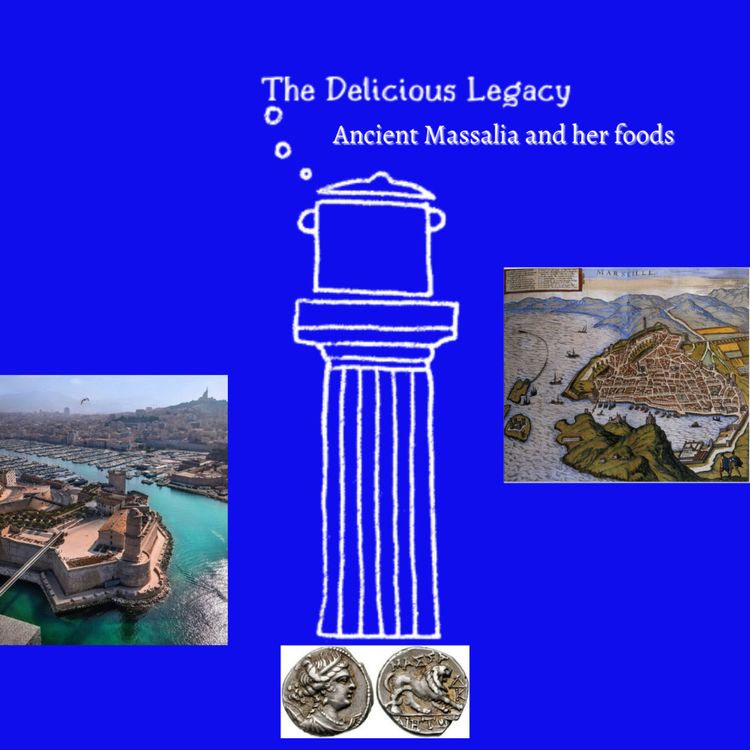
The Delicious Legacy
Ancient Massalia and her foods
Today, we know this beautiful legendary city, as Marseilles.
It's the 2nd largest city in France and the most ancient one. And her foundations were laid thanks to ancient Greeks!
The mythical start of the city is told by Herodotus and Aristotle who give us some information and traces of truth through their stories about her establishment. But we will look into her ancient food traditions!
Wine! Grapes! Olives and Herbs! The Greeks brought a lot with them when settled in Massalia around 600 BCE.
The inland routes to reach northern Europe started here; the navigable rivers that led to the Atlantic, made the spot the city was built, ideal. The trade of tin and other goods was of outmost importance, and so was the necessity to avoid the conflicts with Carthaginians along the southern routes from Spain.
But let's go to the food.
Archestratus says:
Use all anchovies for manure, exceptThe Attic fish; I mean that useful seedWhich the Ionians do call the foam;And take it fresh; just caught within the bays,The sacred bays of beautiful Phalerum.Good is it too, when by the sea-girt isleOf Rhodes you eat it, if it's not imported.And if you wish to taste it in perfection,Boil nettles with it—nettles whose green leavesOn both sides crown the stem; put these in the dishAround the fish, then fry them in one pan,And mix in fragrant herbs well steep'd in oil.How is the traditional Provençal dish "sartanado" connected with the above passage from Archestratus?
What is "myttotos"? What has in common with rouille?
What does a recipe found in a papyri, has to do with the famous French bouillabaisse?
Which oysters the poet Ausonious things are the best?
These, and a lot more are answered in the episode today!
Join me and enjoy the foods of Massalia!
The Delicious Legacy
Support the podcast on Ko-Fi and Patreon for ad-free episodes!
More episodes
View all episodes
Recipe of the Week; Lamb or Goat Kleftiko
11:16|Hello my curious archaeogastronomers!Welcome to another recipe of the week on a Saturday!I’m your hungry host Thom Ntinas, and this is The Delicious Legacy podcast! Thanks for tuning in!On today bonus episode I’m leaving you with another lamb recipe and a little bit of a story behind the naming of it; Kleftiko, perhaps one of the most famous Greek recipes abroad....The name of the dish derives from klephts, who were a group of Greek brigands or militiamen during the period of Ottoman rule over Greece between the fourteenth and nineteenth centuries. But how do you cook it? And did really thieves steal sheep and cooked them underground in the mountain hideouts?Listen and find out!Music by Miltos Boumis and Pavlos KapralosEnjoy!The Delicious Legacy
1. Rare & Disappearing Foods of the Philippines
33:15||Season 8, Ep. 1Hello!An archipelago of more than 7000 islands. Tribes with more than 200 native languages and a population of 112 million people.Philippines is a rich ground to discover some amazing ingredients, some delicious food and ancient indigenous recipes!On this episode I'm relatively quickly touching some of the rarest and fast disappearing native ingredients. The losses are due to industrial products being cheaper and imports of cheap ingredients but also an uncertain climate.Here's the ones I'm touching on this episode:Alingo, Besaang, Buttog aka The Cordillera Native Black pig Darag Chicken of Panay IslandGumamela leavesInartem Balayang (Pickled Wild Banana)Kaong vinegarAsin tibuok sa Albur unbroken saltBudbud or Bamboo SaltTultul Artisanal Sea SaltHow the unbroken salt is made:This 'Dinosaur Egg' Is One Of The Rarest Salts In The World | Still Standing | Business Insider:https://www.youtube.com/watch?v=8aY9noX3XOsMy recommendation of the week links below:The Ancient Romans relied on a curious object to tell time: a sundial in the shape of an Italian ham;https://newsletter.blogs.wesleyan.edu/2017/01/20/parslowsundial/Rare Roman “pigs” found in Welsh farmTwo “exceptionally rare” Roman pig lead ingots dating back almost 2,000 years have been discovered on farmland in west Wales:https://www.heritagedaily.com/2026/02/rare-roman-pigs-found-in-welsh-farm/157123A is for Apple podcast: C is for Carbonado, Carrot, and Cabinet Pudding:https://podcasts.apple.com/gb/podcast/a-is-for-apple-an-encyclopaedia-of-food-drink/id1743840806?i=1000756719333Enjoy!Love,Thom
Recipe of the week - Ancient Greek Roast Lamb with Pearl Barley
15:29|Hello!Your recipe of the week on a Saturday is back and what have I got for you?A delicious, tasty, fantastic celebratory recipe from the ancient Greco- Roman world!A leg of lamb, or kid goat if your prefer, or even a shoulder of lamb for a slow roast, bathed overnight, in milk and honey, and cooked with a rich luxurious sauce of red wine, dates, and garum!If you want a list with the ingredients and the original recipe from Apicius join me on Patreon here:https://www.patreon.com/posts/roasted-goat-kid-153951881?utm_medium=clipboard_copy&utm_source=copyLink&utm_campaign=postshare_creator&utm_content=join_linkEnjoy!Music by Pavlos KapralosMuch love,Thom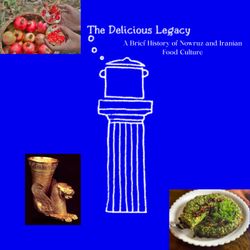
31. A Brief History of Nowruz and Iranian Food Culture
01:15:05||Season 7, Ep. 31Hello!Today is Nowruz, the Persian/ Iranian new year.So I'm re-sharing with you this episode about Persian Culinary History and Culture through the millennia.Thinking of all the Iranian people who are suffering and wishing them only the best and hoping for a swift resolution to all the destruction inflicted upon them currently.In the vast region from Anatolia to Central Asia, a rite or a festival ushering Spring, and marking the new year is celebrated at around 20th or 21st of March. People in modern countries including Afghanistan, Azerbaijan, India, Iran, Iraq, Kyrgyzstan, Kazakhstan, Pakistan, Tajikistan, Turkey, Turkmenistan and Uzbekistan historically observe the Nowruz celebrations.Enjoy!LoveThe Delicious Legacy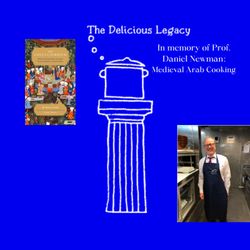
In Memory of Daniel Newman - Medieval Arab Persian Cuisine
01:03:37|HelloIt's with deep sadness that I've learned the passing of Professor Daniel Newman a prominent scholar of Medieval Arab Cuisine and a friend of this podcast.He was a guest four years ago, almost to this day when we talked about Persian cuisine in the middles ages, the influence of Arab and Islam on it, and of course vice versa.It was a fascinating discussion that lasted almost two hours and I thought i'll share with you the best bits, edited down with all the lovely fun facts and delicious recipes of the vast, fascinating period.And of course I want to dedicate this episode to all Iranian people who are suffering at this horrible time, under unimaginable conditions.In memoriam of the lovely Daniel Newman. 1963- 7th March 2026.Love,Thom{The music on this episode is titled nihavend pesrev and is probably by a Greek composer of Ottoman era named Πετράκης (Tiryaki) (1543; - 1600)He was an important Rum composer and musician in the Ottoman empire of the 16th century. He lived in the Istanbul and participated in a dervish order, having the nickname, Tiryaki (theriaklis).Lived probably between 1543 and 1600, and attributed approximately 10 compositions.In some sources mention the Great Petrakis (Petraki I Kebir), but is more likely to relate to Peter the Peloponnesian later. Petros Peloponnesios or Peter the Lampadarios (c. 1735 – 1778). He was a cantor, composer and teacher of Byzantine and Ottoman music. He served as second domestikos (ecclesiastic official of the Byzantine Empire and later part of the Orthodox Church in Constantinople, present day Istanbul) between his arrival about 1764 until the death of Ioannes Trapezountios, and it is assumed that he became lampadarios (leader of the left choir) between 1770 and 1778 at the Great Church of Constantinople, after Daniel the Protopsaltes became Archon Protopsaltes.}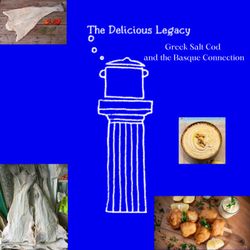
30. Greece's Salt Cod History and the Basque Connection
51:55||Season 7, Ep. 30Hello!Brand new episode where I explore the "bakaliaros" aka bacalao or salt dried cod for you and me, of the Greeks.Specifically what's the history of the fried battered salt cod and garlic mash dish that is so popular in Greece generally this time of the year, usually on the 25th of March and what's the connection with the Greek War of Independence?Recommendations for this week:The Watercress Queen:https://comfortablyhungry.substack.com/p/s4e7-the-watercress-queenRe-creating the complex cuisine of prehistoric Europeans:https://arstechnica.com/science/2026/03/recreating-the-complex-cuisine-of-prehistoric-europeans/Gourmet magazine:https://gourmetmagazine.net/Cuisines of Odesa: recipes and stories from Ukraine’s historic cityhttps://www.foxlanebooks.co.uk/product-page/cuisines-of-odesaLove,Thom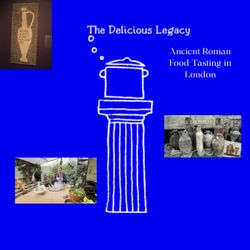
Ancient Roman Food Tasting in London
15:08|Hello!Something a little different this weekend instead of a recipe...On today's episode, I'm talking about the recent ancient roman tasting event I went at the Hellenic and Roman Library in Senate House in central London.I'm discussing the menu that was served by Sally Grainger a prominent food archaeologist specialising in ancient Mediterranean cooking and ingredients. She also talked about her research all these years about Garum and Silphium two of the most well known but equally misunderstood ingredients of the ancient Greek and Roman table. Overall in my opinion and Sam's opinion the food was tasty and the audience/guests all seem to enjoy it and those who had a negative opinion about ancient food have changed their minds! From a room of 50 or so attendees I think only three or so weren't keen in the tastes of the food.Anyway it was fascinating and I hope I'll get the chance to interview Sally for this podcast soon!Love & GarumThe Delicious Legacy
29. History of Food in Central Asia Pt2 - From Baku to Beijing!
01:03:28||Season 7, Ep. 29Hello!This is part two of my conversation with the fantastic Anna Ansari about her book "Silk Roads" and the food of Central Asia.From Baku to Beijing!Origins, trade routes, influences, and what is the connecting thread behind it all?Plus a lot of personal stories, especially with melon! Personal dramas of melon!Find out more, here!You can buy Anna's book from my affiliate link at bookshop.org:https://uk.bookshop.org/a/17049/9780241694374Enjoy!Thom & The Delicious Legacy
Batzina - An easy filo-less pie from Thessaly!
10:11|Hello!Your recipe of the week on a Saturday is out!Thessaly. The flat and fertile land of Central Greece, famed since ancient times for their horses and cavalry that provided the strategic support for Alexander The Great's campaign on his conquest of the Persian Empire.Our task today -and recipe from the region- will be a lot easier than conquering a continent and subduing the world's mightiest empire! We just need to cook this delicious dish and eat it with family or friends.Let's find out how to make it, and the ingredients!Bon Appetit! Music by Miltos BoumisEnjoy,Thom & The Delicious Legacy