Share
Berkeley Talks
Adam Gopnik on what it takes to keep liberal democracies alive
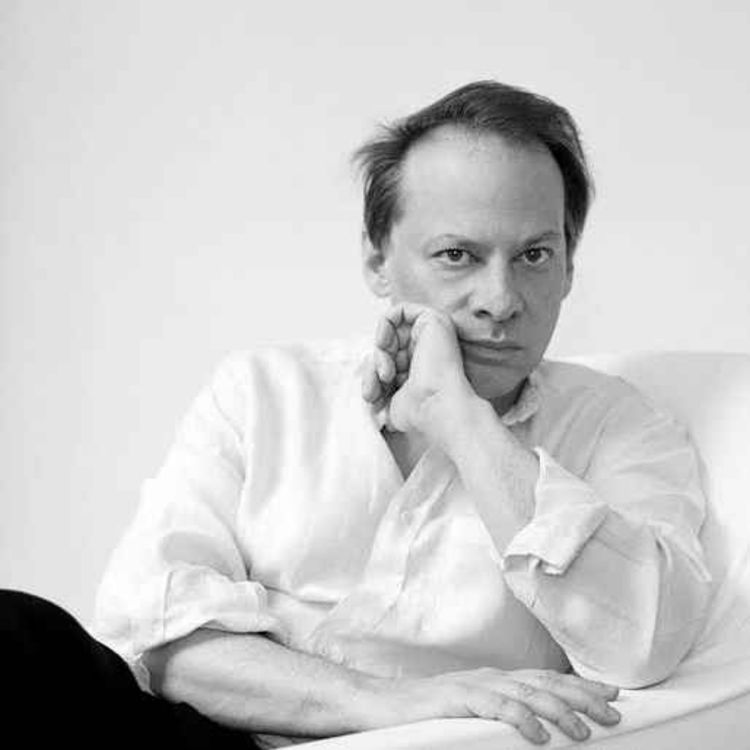
In Berkeley Talks episode 202, New Yorker writer Adam Gopnik discusses liberalism — what it means, why we need it and the endless dedication it requires to maintain.
Liberal democracy, he said at a UC Berkeley event in April, depends on two pillars: free and fair elections and the practice of open institutions, places where people can meet and debate without the pressures of overt supervision.
Gopnik said these spaces of “commonplace civilization” — coffeehouses, parks, even zoos — enable democratic elections to “reform, accelerate and improve.”
“These secondary institutions … are not in themselves explicitly political at all, but provide little arenas in which we learn the habits of coexistence, mutual toleration and the difficult, but necessary, business of collaborating with those who come from vastly different backgrounds, classes, castes and creeds from ourselves.”
And what makes liberalism unique, he said, is that it requires a commitment to constant reform.
“People get exhausted by the search for perpetual reform,” he said. “But we have to be committed to reform because our circles of compassion, no matter how we try to broaden them, come to an end.”
So it’s up to each of us, he said, to always refocus our attention on the other, to re-understand and expand our circles of compassion.
Listen to the episode and read the transcript on Berkeley News (news.berkeley.edu/podcasts).
Photo courtesy of Adam Gopnik.
More episodes
View all episodes
257. The making of pioneering Black feminist Frances M. Beal
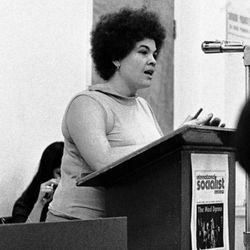
43:15||Ep. 257In 1957, a terrified 17-year-old girl lay on a Harlem kitchen table undergoing an illegal, backstreet abortion. Nearly dying from complications, she was rushed to a hospital ward where nurses badgered her and demanded to know what she had done. That teenager was Frances M. Beal.Long before she would write the seminal 1969 manifesto "Double Jeopardy: To Be Black and Female" or co-found the Third World Women's Alliance, Beal was navigating the violent realities of being young, Black and female in America. In this episode of Berkeley Talks, Ula Taylor, a UC Berkeley professor and chair of African American studies, presents her latest book project, which reconstructs Beal’s political radicalization brick by brick. Blending first- and third-person narrative, Taylor explores how Beal’s life — from the pressures and policing of her early years to unappreciated domestic labor and single motherhood — helped shape her pioneering work in social justice feminism.“Black feminism for Fran was not a politic that came from one experience or one moment in her life,” Taylor says. “It was a culmination of the brick of girlhood frustrations, the brick of early adolescent battles, the brick of teenage gendered expectation, the brick of abortions, the brick of sexual pleasure, the brick of housework and the brick of single motherhood. All and so many other theoretical and practical life bricks informed the construction of her Black feminist house grounded in social justice feminism.” Taylor’s lecture, which took place on Feb. 19, was hosted by Berkeley’s Social Science Matrix and co-sponsored by the Department of Gender and Women's Studies and the Department of African American Studies.Watch the lecture, listen to the episode and read the transcript on UC Berkeley News (news.berkeley.edu/podcasts/berkeley-talks).Music by by HoliznaCC0.Photo by Howard Petrick/The Militant.
256. When we talk to AI, what are we talking to?
01:50:41||Ep. 256In the early days of personal computing, people imagined artificial intelligence as a single, self-contained system — a kind of digital brain with a fixed identity. Talking to AI meant asking questions to a clearly defined machine.That picture no longer holds, says David Chalmers, a professor of philosophy and neural science at New York University. Today’s large language models, or LLMs, run on distributed cloud infrastructure, so they don’t behave like a single fixed machine with one clear physical boundary.While LLMs likely lack consciousness, he says, they are not merely passive tools. Instead, they’re “quasi-agents” that exhibit goal-directed behavior shaped by context. Each back-and-forth between the user and the agent holds together as a coherent exchange, but it only exists for the duration of that interaction. If this thread is the real unit of interaction, he says, then agency isn’t something the system permanently processes. Rather, it emerges during use.In this Berkeley Talks episode, Chalmers asks: When we’re interacting with AI, what exactly are we interacting with? If these short-lived “selves” exhibit beliefs and goals within a conversation, do they warrant any ethical consideration?Chalmers’ talk took place at UC Berkeley’s International House on May 7. It was the inaugural Sarah Douglas Lecture on Philosophy and Artificial Intelligence, sponsored by Berkeley’s Department of Philosophy.Watch the lecture, listen to the episode and read the transcript on UC Berkeley News (news.berkeley.edu/podcasts/berkeley-talks).Music by by HoliznaCC0.New York University photo.
255. Philosopher Mark Johnston asks, 'Is this our only life?'
01:27:21||Ep. 255When Princeton University Professor Mark Johnston's daughter was 18 months old, she stood on a beach with what he describes as a "quizzical philosophical look on her face, as if she was thinking, 'Is this my only life?'"That question is the heart of Johnston’s talk at UC Berkeley this past March, where he revisits a topic he wrote about two decades ago. Back then, he believed that the hope for an afterlife was impossible. But now, he has changed his mind. "Today, I want to show why I was wrong," says Johnston, author of the 2010 book Surviving Death. "That decent and comprehensible hope is not dashed by such ontological considerations. Even if we are essentially embodied somehow or other, our present embodiments may not be our only embodiments.”In this Berkeley Talks episode, Johnston explores through a secular lens how near-death experiences fail to provide decisive proof of a detached soul, how reductive materialism — the view that everything about the mind can ultimately be explained in physical terms — creates absurd ethical contradictions, and how viewing ourselves as "embodied wills" leaves open the possibility of a life to come.This talk took place on March 11, and was part of the Foerster Lectures on the Immortality of the Soul sponsored by Berkeley Graduate Lectures. Watch a video of the lecture.Listen to the episode and read the transcript on UC Berkeley News (news.berkeley.edu/podcasts/berkeley-talks).Music by by HoliznaCC0.Photo by Frank van Hulst via Unsplash. [Image of a person in a patterned sweater sits looking out at the ocean during sunset]
254. Why kids need awe — and how puppets can help
57:52||Ep. 254As Halle Stanford drove through Topanga Canyon in Southern California, with Dolly Parton blasting from the car speakers, she was struck by a moment of inspiration. “I had this vision of a little hedgehog on the side of the road in her little pink hiking boots, with her guitar in her bag, out to find the wows of the world,” says Stanford, an independent television producer. A few days later, she came across research from UC Berkeley’s Greater Good Science Center showing that awe — the emotion we experience when we encounter vast mysteries that we don’t understand — inspires us to care for the planet and one another. “And I was like, ‘Bingo, that's it.’”That connection became the basis for Wowsabout, a new Jim Henson Company puppet preschool special on PBS designed to bring awe to young audiences. Created by Stanford and puppeteer Dorien Davies, the 30-minute special maps the journeys of Roxy, a free-spirited hedgehog, and Ronald, a fastidious city pig, as they explore Sequoia National Park. Together, they experience moments of awe, like when standing beneath towering Sequoias and watching migrating California tortoiseshell butterflies. And they meet others along the way, including Pekan, a puppet representing the endangered southern Sierra Nevada fisher who guides them to see historic pictographs carved into the park's rock formations. Awe isn’t a luxury emotion, but an evolutionary necessity, says Dacher Keltner, a Berkeley psychology professor and the founding director of the Greater Good Science Center. “It makes kids kinder, it makes kids more creative. … Awe really helps kids stay curious, and be in love with big ideas.”Keltner has studied the science of awe for more than a decade, and in 2023 published the book Awe: The New Science of Everyday Wonder and How It Can Transform Your Life. He served as a science consultant and co-executive producer for Wowsabout. In this episode of Berkeley Talks, Stanford and Davies join Keltner and others from the Greater Good Science Center — education director Vicki Zakrzewski and parenting program director Maryam Abdullah — in a talk moderated by Sarah Bracken, education outreach and school partnerships manager at the center. The group discusses the logistical hurdles of translating wonder into film and why cultivating everyday curiosity has become an essential antidote to modern social disconnection. The conversation took place on May 13 and was hosted by the Greater Good Science Center. Watch a video of the panel discussion. (The screening of Wowsabout was removed from the recording for copyright reasons.) Audiences can watch the full Wowsabout special for free on PBS Kids.Listen to the episode and read the transcript on UC Berkeley News (news.berkeley.edu/podcasts/berkeley-talks).Music by by HoliznaCC0.Photo courtesy of The Jim Henson Company. It's a screenshot from Wowsabout that shows Ronald, the pig puppet, sitting on a mossy log in a forest campsite, smiling happily while holding a park booklet.
253. What punk subcultures can teach us about resisting hate
01:12:02||Ep. 253Across the American West Coast in the 1980s, the burgeoning punk rock and skinhead scenes were much more than just raw music and counterculture fashion — they quickly became contested ground in an ideological battle against white supremacy. Neo-Nazi groups actively targeted these subcultures to recruit alienated kids, and anti-racist punks were forced to step up in response, organizing grassroots community defense networks, confronting extremist infiltration and building alternative spaces rooted in inclusion.Those strategies — forged in clubs, at shows and within tight-knit local scenes — offer a vital, real-world blueprint for confronting today’s mainstream political crises, according to a recent panel discussion at UC Berkeley.The May 3 event, which headlined the second annual Jewish Arts and Book Fest hosted by the Magnes Collection of Jewish Art and Life, began with a screening of We've Been Here Before, a 2023 documentary short chronicling these subcultural struggles. Following the film, the program brought together the film's director, Jacob Kornbluth, and anti-racist activists Eric Ward, who's featured in the film, and Dion Garcia to explore how lessons from that fringe resistance can help heal a fractured modern society.For Ward and Garcia, the history of that resistance is deeply personal. In their youth, protecting music scenes from infiltration meant building solidarity and making sure marginalized voices were not pushed out. Yet Garcia said that looking back on the intensity of that era, he also remembers its emotional toll.“Hate is a horrible word and it's a horrible thing to carry,” Garcia said. “I don't like carrying that.”The speakers argued that the same divisive tactics that targeted 1980s youth have now mutated into mainstream public discourse. Ward, a leading expert on organized hate, explained that modern antisemitism functions on the far right as a "racialized other,” scapegoating Jewish communities as “puppet masters” of social grievances. Today, Ward warned, society is trapped in a dangerous "sectarian moment" where nuance is erased in favor of absolute polarization, particularly surrounding global conflicts."No one wants nuance," Ward said, critiquing how people today build political identities out of distant tragedies. He noted that such political theater often comes "at the expense of the most actual vulnerable, Israelis and Palestinians, who still have to live in the real world each and every day."Ultimately, the talk underscored that the path forward requires looking past ideological purity and reclaiming the cultural spaces where lonely or alienated individuals seek community. True resistance to racism and antisemitism, the speakers concluded, lies in a shared commitment to contesting these complicated spaces, finding "strange allies" across different backgrounds and strengthening the foundation of an inclusive democracy."I would argue this alliance between those of us who identify in the mainstream and empathy for people who are existing in these kind of fringe subcultures is something that I think we could all work on," said Kornbluth. "I think it's something new to a lot of folks who are thinking about where and how to fight back ... but I think it's a little piece to how we can heal ourselves." This event was sponsored by the Magnes Collection of Jewish Art and Life at Berkeley.Listen to the episode and read the transcript on UC Berkeley News (news.berkeley.edu/podcasts/berkeley-talks).Music by by HoliznaCC0.Image courtesy of Reboot Studios/7th Art Releasing.
252. Musician Lara Downes celebrates the sound of America
29:43||Ep. 252It was the morning after the 2016 U.S. presidential election, and pianist Lara Downes was catching a flight from California to Kentucky, where she was set to perform later in the evening. “It was a very weird day to be anywhere,” she recalls.That night, she performed songs from her album America Again in Louisville, a city that mirrored the country's own jagged political divide. Coming from California, Downes expected Louisville to feel tense after the election.Instead, she found that the music — curated to explore the “American Dream” through the lens of diverse composers like Florence Price and Morton Gould — created a shared space of mourning and hope that transcended the maps on the news. As she played pieces like Price’s “Fantasie Nègre” and Gould's “American Caprice,” Downes had a profound realization."I think I learned in that moment how much all of the emotions that we feel about being American — the affection and the nostalgia and the confusion and the sadness and the anger — all of it really is expressed in the music,” she says. That idea — music as a shared emotional language — continues to shape Downes’ work today. In May, she brought an all-star cast of musicians to UC Berkeley’s Zellerbach Hall to join her on her newest project, This Land: Reflections on America. Alongside folk icon Judy Collins, poet Tarriona "Tank" Ball, the Austin-based string and bluegrass quartet Invoke, and the Oakland Interfaith Gospel Choir, she performed songs like the traditional African American spiritual “This Little Light Of Mine,” Paul Simon’s “America” and Stephen Foster’s “Hard Times Come Again No More.”The performance reflects Downes’ ongoing effort to explore what it means to be American through music — a question that also led her to create The Declaration Project, a national initiative tied to the upcoming 250th anniversary of the United States. For the project, Downes spent two years traveling the country to ask Americans from all backgrounds what “life, liberty and the pursuit of happiness” means to them today.In this episode of Berkeley Talks, Downes joins NPR’s Chloe Veltman in a pre-concert talk to discuss how music isn’t just a performance, but a common language to explore the American experience.The May 9 performance and pre-concert talk were part of Cal Performances’ Illuminations: Exile and Sanctuary series and marked the final performance of the season. Learn more about Cal Performances’ upcoming 2026-27 programming.The musical selections featured in this episode are from This Land: Reflections on America, performed by Lara Downes and guest artists. All music was used with permission. Listen to the episode and read the transcript on UC Berkeley News (news.berkeley.edu/podcasts/berkeley-talks).Photo by Brittany Hosea-Small.Intro music by by HoliznaCC0.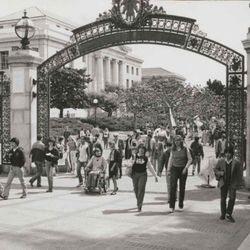
251. How the American university’s success led to its modern challenges
01:04:01||Ep. 251While preparing his lectures for UC Berkeley, Princeton University President Christopher Eisgruber spent hours poring over the memoirs and writings of former University of California President Clark Kerr, seeking wisdom from the architect of California’s 1960 Master Plan for Higher Education.Reflecting on this research, Eisgruber notes that he found more than just strategy; he found a personal connection. "I have been impressed by Kerr's wit, wisdom and decency,” he says, “and I have come to feel not only admiration but affection for him.”In his first of two lectures at Berkeley in February, Eisgruber draws on Kerr’s 1963 “hinge of history” idea to explain why American research universities are especially vulnerable to political and social attacks today.Kerr believed there was a turning point in the mid-20th century where the role of universities shifted from the periphery of society to its center as primary engines of economic and social growth. Eisgruber contends that this newfound prominence made them higher-stakes targets for public and political frustration. He points to three post-1960s shifts — rising student debt, accelerating competition and universities’ high profile in national debates over racial justice — as forces that have "compromised the political base that can help to protect higher education in moments of crisis.”Still, Eisgruber remains optimistic about the resilience of the American research university. He highlights the sector's ability to drive global recovery during the pandemic and its success in broadening its reach to include talent from all walks of life as proof of its enduring strength. While its shift to the center of national life has invited new pressures, he argues that the intense public focus on these institutions confirms their role as vital spaces for a diverse democracy to do its most important thinking.He suggests that the path forward lies in universities embracing this central, if contested, role by sustaining the vision Kerr championed: "a truly American university, an institution unique in world history, an institution not looking to other models but serving as a model for universities in other parts of the globe.”This talk was one of two lectures that Eisgruber gave on Feb. 24 and Feb. 26 as part of the Clark Kerr Lecture Series, co-sponsored by the Center for Studies in Higher Education, the Goldman School of Public Policy and Berkeley Law.Watch videos of both of Eisgruber’s lectures.Listen to the episode and read the transcript on UC Berkeley News (news.berkeley.edu/podcasts/berkeley-talks).Music by HoliznaCC0.Photo via The Bancroft Library archive.
250. Alison Gopnik on why AI is no match for a 4-year-old
01:24:50||Ep. 250Over her decadeslong career as a developmental psychologist, Alison Gopnik has observed a striking phenomenon: When children are given a new toy without an obvious use, they often outperform high‑achieving college students in figuring out how it works. While adults tend to test the most likely possibilities and quickly get stuck, children respond with playful experimentation. "What children are doing is exactly the kind of open-ended, non-utilitarian, exploratory learning that allows you to find out things about the world that you would never find out any other way,” says Gopnik, a UC Berkeley professor of psychology. In this Berkeley Talks episode, Gopnik argues that human intelligence is not a single, general capacity, but a collection of distinct cognitive modes — exploration, exploitation and care — that are distributed across different stages of a person’s life. Childhood, she says, is evolution’s way of creating a dedicated “explorer” phase, made possible by a specialized care system provided by adults."The reason why we can have these big brains," she explains, "is because we have this period of childhood where we're protected ... and we have those older people who are there to provide the resources.” Gopnik contrasts this biological model with current artificial intelligence, noting that while large language models excel at using existing data to predict patterns, it lacks the embodied, curiosity‑driven learning of a child. To create truly intelligent systems, she suggests that we need to focus on the “intelligence of care.”“A system that develops, that changes over time, and in particular, a system that's cared for by humans or cared for by other intelligent agents — that's the secret of human intelligence,” she says. “That's the kind of system you'd need if you wanted a system that had the same kind of intelligence as humans.” This lecture took place on Nov. 5, 2025, as part of the Berkeley Distinguished Faculty Lectures in the Social Sciences.Listen to the episode and read the transcript on UC Berkeley News (news.berkeley.edu/podcasts/berkeley-talks).Music by HoliznaCC0.UC Berkeley photo.
249. Hany Farid on the erosion of shared reality in the age of deepfakes
51:21||Ep. 249Two decades ago, when Hany Farid first began studying digital misinformation and manipulated media, fake content was easier to detect. Today, that landscape has shifted with a speed that he describes as “breathtaking.” In just the last year or two, he says, we’ve moved from an era where a computer takes seconds or minutes to produce a static file to "full-blown interactive deepfakes" that can hold a live conversation in real time.In this Berkeley Talks episode, Farid, a digital forensics expert and professor at UC Berkeley’s School of Information, discusses the rapidly accelerating landscape of generative AI and the unique threat it poses to our collective understanding of the world.Farid notes that tools once reserved for governments or well-funded organizations are now freely available, radically expanding the threat landscape. “We have taken a mechanism that was in the hands of state-sponsored actors and bad actors and given it to 8 billion people in the world," he says. This democratization of powerful technology makes it much easier to create convincing false images, audio and video — and much harder to trust what we see online.And he explains that human perception is no longer a reliable defense, as his research shows people are only slightly better than chance at identifying AI-generated content.To reduce the damage to our shared sense of reality, Farid suggests solutions should focus on the systems that profit from harmful content, including platforms and ad networks that help it spread. He also gives a warning about news consumption: “Stop getting your news from social media. That’s not what it was designed for.Despite the rise of deepfakes and online deception, Farid says he rejects the idea that there is no truth or fact. He believes that, although it takes effort, people can still work together to understand what is happening in the world.This lecture, which took place on March 13, was part of LNS 110: Brilliance of Berkeley, a course featuring distinguished researchers working on the world’s most pressing issues.Watch Farid's lecture (with slides) on YouTube.Listen to the episode and read the transcript on UC Berkeley News (news.berkeley.edu/podcasts/berkeley-talks).Music by HoliznaCC0.Screenshot from lecture.