Share
Yogaland Podcast
Yoga Teacher's Companion: 5 Best Practices for Shoulder Mobility
Ep. 7
•
Learn my 5 favorite postures and transitions for creating greater shoulder mobility. You'll also learn where I like to include these postures in my personal practice and sequences.
Watch the video here: https://youtu.be/Mx5toKzyKkg
▷▷▷ Head over to our blog for tons of free yoga sequences, pose breakdowns, yoga anatomy info, and teaching advice:
www.jasonyoga.com/blog
🎙 Listen to my wife Andrea's yoga podcast, Yogaland for interviews that make you laugh and think:
www.yogalandpodcast.com
✍🏾✍🏼✍🏿 Lastly JOIN OUR MAILING LIST and you'll be the first to know whenever we have new content:
www.jasoncrandell.kartra.com/page/newsletter
More episodes
View all episodes

Yoga Philosophy Explained — The 6 Core Teachings That Unite Every Tradition
33:08|What is yoga — really?Most practitioners and teachers can answer that question with a pose, a breath, or a feeling. Far fewer can answer it with the philosophical depth the tradition actually deserves. This week's episode does just that.Drawing on academic scholarship, Sanskrit etymology, and nearly 30 years of teaching and study, Jason identifies the six core teachings that appear consistently across the diverse spectrum of yoga traditions — from Hatha to Jnana, from Karma to Bhakti, from Patanjali to modern practice. Not a single reductive definition, but a genuine philosophical framework that holds up across lineages, eras, and approaches.
Your Twists Are Missing This
21:54|Most yoga twists are done to the spine — not with it. In nearly every conventional yoga twist, the arms and legs do the work: The hand presses against the knee. The elbow hooks outside the thigh. The leverage of the limbs produces the rotation, while the spinal muscles — the obliques, the multifidus, the deep rotators — remain largely passive. The spine is being twisted. It is not doing the twisting. I turn this on its head in this week’s solocast. In 15 minutes, you’ll transform the quality and depth of three yoga-informed spinal rotation exercises by adding resistance bands. This is not just about better twists. It's about building functional rotational strength that yoga's conventional twisting patterns cannot provide.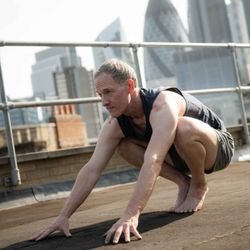
Does Yoga Build Strength? The Science Behind What Yoga Actually Does
44:14|This week Jason and I have a conversation the yoga world has been dancing around for years: Does yoga build strength? Jason offers an honest framework for understanding the ways that yoga builds strength — and where it genuinely falls short. What You'll Learn: Why strength matters — particularly for longevity The two primary components of strength development and how yoga addresses each oneHow yoga builds neuromuscular strength, efficiency, and coordination — and why that's more valuable than most practitioners realizeWhy yoga will never produce hypertrophy — and what that means for long-term health, muscle mass, and metabolic functionWhat progressive overload is and why bodyweight training alone cannot provide itWhy yoga primarily recruits Type 1 fibers and almost never accesses Type 2 fibers and why it mattersWhy resistance training and yoga are not competing modalities — they are extraordinary partnersThe Iyengar yoga innovation argument: why adding resistance training tools to yoga is no different from what the greatest yoga innovators have always done
3 Breathwork and Pranayama Techniques for Yoga Teachers Who Keep Putting It Off
21:21|If you've been meaning to teach pranayama in your classes but keep finding reasons to wait — this week's podcast is for you.Most yoga teachers want to include breathwork. The problem isn't interest — it's knowing where to start, how long to spend, and whether students will actually value it. This episodes solves all three problems in under 20 minutes, with three simple, immediately usable techniques you can bring to your next class.No restructuring required. No special training needed. Just three practical breathwork tools, three locations in your class to use them, and the confidence to begin.The Three Techniques Covered:Coherence Breathing / Sama Vritti Pranayama — 5.5 x 5.5 seconds, ideal for class openingsBreath-linked movement — half sun salutations, Utkatasana flow, eagle arms transitionsExtended exhale breathing — 6:2:8:2 ratio, ideal pre-Savasana for nervous system downregulationChapters:00:00 Introduction — why yoga teachers keep putting pranayama off01:20 Concern 1: Will my students get bored?02:06 Concern 2: Which technique should I use?02:27 Concern 3: Where does pranayama go in class?03:49 Location 1: Class opening — coherence breathing07:07 Location 2: Within dynamic movement — breath-linked movement patterns10:31 Location 3: Pre-Savasana — extended exhale breathing13:51 The final challenge — pick one technique and try it this week
Boat Pose Is Not an Ab Exercise
14:35|Most yoga teachers cue Full Boat Pose as an abdominal exercise. It isn't — and once you understand why, you'll also discover Low Boat Pose: the most underused core exercise in yoga.Full Boat Pose (Paripurna Navasana) is primarily a hip flexor exercise. Low Boat Pose (Ardha Navasana) is primarily an abdominal exercise. Understanding why — and how to use both intelligently — is one of the most practical yoga anatomy insights you can bring to your teaching and your practice.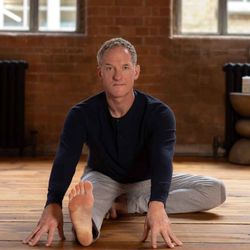
The Real Reason Your Hamstrings Are Still Tight — A Mobility Breakdown for Teachers & Students
17:48|Most people assume tight hamstrings are a stretching problem. They're not. Hamstring tightness is almost always multifactorial, which means the solution requires a broader range of strategies — not more of the same stretching that hasn't worked.On this podcast, Jason breaks down 6 evidence-informed strategies for improving hamstring flexibility that go well beyond passive stretching. Whether you're a yoga teacher, yoga student, or anyone focused on mobility and movement quality, these strategies will change how you think about — and train — your hamstrings.What you'll learn:-Why foam rolling works neurologically — not just mechanically — and how to use it as a primer before you stretch-Why strengthening your glutes may do more for your hamstring flexibility than more stretching ever will-How weak hip flexors limit anterior pelvic tilt — and why that directly limits hamstring length-Why your adductors (especially adductor magnus) may be quietly working against your hamstring flexibility-How dynamic stretching and engaged stretching give your nervous system more feedback — and unlock more range than passive stretching alone-Why hamstring tightness is almost always multifactorial — and why there is no single magic technique
Yoga Teachings That Have Endured — 10 Years and 8 Million Downloads Later
01:02:16|Wow wow wow -- it's been 10 years since the launch of Yogaland! It feels like it's been a heartbeat and also a lifetime. There's been so much learning, growth, and love while making these episodes for the past decade. I spent time compiling precious insights--gems if you will--that stood out to me from the past 10 years.We revisit moments with:Amy Ippoliti — free diving, environmental activism, and asking young people about purpose instead of popularityJames Woods (Dat Yoga Dude) — bringing yoga and social-emotional learning into schools and communitiesMaty Ezraty — why even the most accomplished yoga teachers still get nervous before every classSusanna Harwood Rubin — navigating metastatic cancer with devotion, sacred spaces, and graceJudith Lasater — the concept of inner gold and what distinguishes a truly good teacher from an abusive oneJill Miller — the five Ps of inducing the relaxation response and harnessing vagal toneAndrea Jain — an unbiased take on academic history of yoga's globalizationJulia Lowrie Henderson — the psychology behind why Bikram's cruelty registered as trustworthinessSally Kempton — the mantra that changed her relationship to failureTias Little — perfectionism as a cul-de-sacTara Stiles — doing it your own way, softness, and building a yoga practice around easeDaya Grant — what neuroscience tells us about the yoga practitioner's brain and interoceptive awarenessLisa Walford — four pillars of health developed after an HIV diagnosis in 1985, decades ahead of her time
Instability and Love: A Conversation About Family, Addiction, and Recovery
01:45:30|This week's podcast is such a special one because it focuses on our family. Jason sits down with his brother, Todd, to talk about growing up together, the chaos of addiction within family, anxiety, self-compassion, and healing as an ongoing process. I love both of these men so much, and I'm so proud of them for sharing so openly. This isn't a yoga-specific episode — it's a conversation between two brothers about family trauma and the instability that addiction creates for everyone, not just the person with the addiction. I hope you will listen, and if you or someone you know is struggling with addiction or is in recovery, I hope you will share it.
What Science Actually Says About Getting More Flexible — No Cherry Picking
27:34|As yogis, we’re certainly aware of the many benefits of stretching — but are you aware of what the research actually says about how to stretch effectively? Or how to evaluate that research honestly? On this week’s Yogaland, I’m sharing meta-analyses and systematic reviews to give you a clear, accurate, and intellectually honest picture of what actually increases flexibility. In this episode, you’ll learn: Why dynamic and passive stretching work through completely different mechanisms — and why you need both. What the research consistently shows about stretch intensity — and why moderate intensity outperforms both light and maximal stretching for tissue adaptation. The sweet spot for hold duration — and why total weekly volume matters more than any single session variable. The most important and most under-appreciated variable in flexibility training.I'd love to know what you think of episodes like these, so please leave a comment. It also helps others find our work.