Share
Yogaland Podcast
3 Backbend Cues for Tweaky Knees or Hips
Jason and I recorded this episode live at LoveStoryYoga in San Francisco at the Module 1 Advanced Studies training. Since the students are currently focusing on the hips and legs, we thought we'd take a look at backbending techniques. Jason unpacks some of the conventional wisdom about the alignment of this category of poses and then offers some unconventional options for those who don't fit the blueprint.
The bottom line is this: Since there are many different body types, there is often more than one "right" way to approach pose alignment.
We talk about:
* Three different approaches to try to troubleshoot knee pain during backbends
* When it might be OK for the feet to not be perfectly parallel in backbends like Urdhva Dhanurasana
* Why Jason no longer subscribes to any hard rules for how to tilt the pelvis in backbends (in other words, whether you should "tuck" the tailbone or not) and what he does instead to find a balanced arc
* Strategies for preparing the arms and shoulders for postures like Urdhva Dhanurasana (Upward Bow Pose or Wheel Pose)
Show notes: jasonyoga.com/podcast/episode180
SHOUT-OUT TO OUR SPONSORS
Get your yoga studio in a flow with Acuity Scheduling, the all-in-one scheduling tool for classes and private sessions. How Acuity works is simple: we clear the minds of busy studio owners and managers (just like you!) by handling all of the day-to-day booking and billing drudgery, freeing you up to be fully present in the moment. As a special bonus for our friends at Yogaland, your first 45 days of Acuity are 100% free – no credit card needed! All you have to do is sign up at acuityscheduling.com.
Women shouldn’t have to compromise when it comes to feminine products. And, with Lola, there are no compromises. Lola products are 100 percent natural, made of 100 percent organic cotton with no added chemicals, fragrances, synthetics, or dyes. Plus, they now offer new hypoallergenic cleansing wipes. Their online subscription service is fully customizable, so it’s one less thing to worry about. For 30 percent off all subscriptions, visit Mylola.com and enter code YOGALAND30 when you subscribe.
Aera is a better, safer way to diffuse essential oils. Easy, press-and-play aromatherapy capsules with no mixing, heating, or cleaning needed so it doesn’t add an additional stress of another to-do to your life. For 20% off diffusers and free shipping, go to AeraforHome.com and use code YOGALAND at check out.
More episodes
View all episodes
Why Community Matters for Yoga Teachers
16:26|If you've ever felt lonely as a yoga teacher — you're not alone. And that's exactly what this week's podcast is about. Teaching yoga is one of the most isolating jobs most people never see coming. You're surrounded by students, immersed in a tradition built on connection, and somehow you still end up feeling like you're doing it alone. In this video I'm naming that honestly — and talking about what we can actually do about it. Jason talks about:Why teaching yoga is more isolating than it looks from the outsideThe structural reasons yoga teachers feel like ships in the nightThe real cost of isolation — burnout, imposter syndrome, and self-doubtWhy community with fellow teachers is irreplaceableHow connecting to your lineage and tradition sustains youWhat I built to solve this problem — and how you can do the sameBecome part of Jason's community of yoga teachers:✅ Get your 300hr & 500hr Teacher Training Certificate with Jason: https://learn.jasonyoga.com/300
The Four Factors That Actually Control Your Flexiblity
34:50|You've been told to stretch more. You've tried the releases, the routines, the one weird trick. And you're still not as flexible as you want to be. Here's why: flexibility isn't one thing — it's four. And until you understand all of them, you're only ever solving part of the problem.Chapters00:00 — Why flexibility is misunderstood00:33 — The 4 Factors that contribute to flexibility01:47 — Factor 1: Structural factors — your fixed container06:01— Factor 2: Tissue quality — muscle, fascia, tendons and ligaments14:07 — Factor 3: Neural factors — how your nervous system governs range21:24— Factor 4: Lifestyle, age, and training context27:06 — The flexibility matrix — putting it all together28:13 — What this means for your practice and your teachingWHAT YOU'LL LEARN-Why two people can do the same practice for years and have completelydifferent ranges of motion-The difference between flexibility and mobility — and why it matters forhow you train-How your joint architecture sets a ceiling that no amount of stretching can change-Why muscle and fascia respond to training differently — and what each one actually needs-The role your nervous system plays in governing range of motion in real time-Why stress, anxiety, and feeling unsafe in a class literally make you less flexible-How strength training improves flexibility — and why the yoga community gets this wrong-What happens outside the studio that is working for or against your flexibility every single dayWHO THIS IS FOR-Yoga teachers who want a deeper, more honest understanding of how flexibility works-Serious practitioners who have plateaued and want to know why-Anyone who has ever been told they're "just not a flexible person"-Movement educators who want science-backed frameworks they can actually teachABOUT THIS SERIESThis video is part of a deeper curriculum I teach inside my yoga teacher training. If you want the full version of this content — including sequencing protocols, progressive loading strategies, and how to design classes that actually produce lasting change — get more information here: jasonyoga.com/300
Why Flexibility & Mobility Matter
18:31|The yoga world has done important work questioning its obsession with extreme range of motion — and rightly so. But the pendulum has swung too far. Flexibility and mobility aren't relics of an outdated paradigm. They're essential physical qualities with real implications for how well you move, how long you stay independent, and how good you feel in your body.In this podcast, Jason makes the case for why flexibility and mobility still matter — not as performance goals, not as aesthetic pursuits, but as foundational components of a healthy, functional body.We cover:-Why flexibility and mobility are longevity qualities, not just fitness qualities- How restricted range of motion leads to fibrosis, compensation patterns, and decreased independence over time.-Why flexibility actually contributes to strength — and why the idea that they're opposites is a false premise.-The length-tension relationship and what it means for how muscles generate force.-Why a body with usable, controlled range of motion is more resilient and less injury-prone.-Why feeling good in your body — moving freely, moving fully — is a legitimate and important goalThis isn't a rejection of everything the yoga community has learned about the importance of strength and stability. It's a reclamation of the full picture: a healthy body is strong, stable, mobile, and free. These qualities complement each other. Intelligent practice develops all of them.
Why Yoga Philosophy Matters
19:09|Yoga philosophy gives context to the physical practices many of us experience first — postures, breathwork, and meditation. It connects modern yoga to its historical roots and helps us understand the deeper purpose of the tradition.In this conversation, I explore several reasons yoga philosophy still matters today. It provides a framework for values, offers existential perspective, and strengthens the mind in the same way that asana strengthens the body. Philosophy also helps protect yoga from becoming overly performative or purely consumer-driven, reminding us that yoga is ultimately about self-understanding and transformation.Whether you’re a yoga teacher, longtime practitioner, or simply curious about yoga beyond the poses, philosophy can add depth, clarity, and meaning to your practice.
5 Sequencing Myths That Keep Yoga Teachers Stuck
37:49|Most yoga teachers are taught that sequencing should be creative, complex, and always different. But these common beliefs often making teaching harder -- and keep both teachers and students stuck.
Why Strength Matters
11:25|This is our second in a series of solocasts (you might remember that Andrea did one recently, Why Mindfulness is Still Important). In this week's episode, I explain why strength matters for yoga practitioners and teachers — not as a performance goal, but as a foundational quality that supports stability, protects joints, improves proprioception, and ultimately helps us practice for a lifetime. 💡 In this episode, you’ll learn: • Why strength protects joints and connective tissue • How strength improves stability and supports mobility • Why flexibility without strength can become a liability • How resistance training enhances proprioception and body awareness • Why yoga practitioners especially benefit from developing strength • How strength supports longevity in yoga practiceAs yoga practitioners, we’re already very good at creating flexibility and range of motion. But strength gives us the ability to control that range. It creates tone, stability, and resilience.If you’re a yoga teacher, this perspective may completely change how you think about programming, sequencing, and long-term student development.
Why The Old Model of Yoga Sequencing Doesn’t Work Anymore
42:57|On this week's podcast, Jason outlines why the old models of yoga sequencing are no longer effective in today's landscape. To name a few: More people cross-train. Fewer students are walking into studios. ClassPass has changed loyalty. Online platforms have shifted expectations. If you want better student retention, stronger engagement, and a more sustainable yoga teaching career, this conversation is essential.⸻⏱ Highlights2:23 Sequencing 2.0 — What’s New6:00 The Two Traditional Sequencing Models6:57 The Problem with Fixed Sequences8:07 The Problem with Random Classes13:29 Why Student Retention Is Harder Now20:39 Online Teaching & Retention29:50 ClassPass & (the lack of) Loyalty35:19 The Solution: Monthly Progressions35:33 How to Build Skill Over Time⸻Jason shares why consistency and novelty must coexist, how to use month-long progressions, how to think like an educator, and how we can help students build skills, helping to build student retention. to maintain retention. If you’re serious about becoming a more effective and modern yoga teacher, it's a must-listen!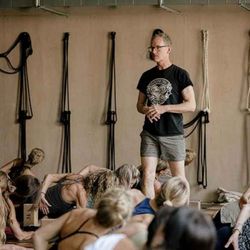
The Most Important Skill Missing from Yoga Teacher Trainings
34:28|Most yoga teacher trainings prepare you to teach one class at a time.They don’t teach you how to build real student progress.Chapters:0:00 Introduction4:04 The hidden gap in yoga teacher training5:50 Why “random” classes stall student progress8:40 The burnout cycle for yoga teachers13:24 The curriculum mindset explained14:40 Monthly arcs, series & workshops27:58 Expanding your teaching careerIn this episode, Jason breaks down the most overlooked skill in modern yoga teacher training: learning how to think like an educator instead of teaching one-off classes.Most 200-hour yoga teacher trainings focus on sequencing individual classes. But students don’t learn in 60-minute increments. They need repetition, structure, continuity, and progressive overload to make real progress.You’ll learn:• Why random yoga sequencing leads to student plateaus• How lack of curriculum causes teacher burnout• The difference between novelty and skill development• How to design month-long class arcs• How to create yoga workshops and special series• Why this shift improves student retention and career sustainabilityIf you’re a yoga teacher who wants better student results, stronger retention, and a more sustainable teaching career, this conversation will change how you think about sequencing.Learn more about Yoga Sequencing 2.0 here
Power, Boundaries & Red Flags in Yoga: A Needed Conversation
46:30|In this Yogaland episode, Jason Crandell and I talk candidly about power dynamics in yoga, the potential for abuse of authority, and how students and teachers can protect what’s most important: trust, safety, consent, and healthy boundaries.We’re not psychologists or legal experts — but we’ve been in the yoga world for decades, and we’ve seen how quickly a “teacher-student relationship” can become unhealthy when authority, charisma, and vulnerability collide. The goal of this conversation is simple: help more people recognize warning signs early, keep their autonomy intact, and stay connected to yoga in a way that’s grounded, mature, and safe.You’ll hear us cover: • The most common red flags in teacher-student dynamics • Why critical thinking belongs in yoga spaces • How “one true way” teaching can become coercive • Charisma, attachment, and love-bombing in wellness culture • Why discouraging cross-training or other teachers is a problem • How “inner circles” and status tiers can create vulnerability • Consent and hands-on adjustments: what students can ask for, and what teachers must respectIf you’ve ever felt uncomfortable in a class, confused by a teacher’s intensity, or pressured to stay loyal to one method or community — this episode is for you.