Share
Work with Purpose: A podcast about the Australian Public Sector
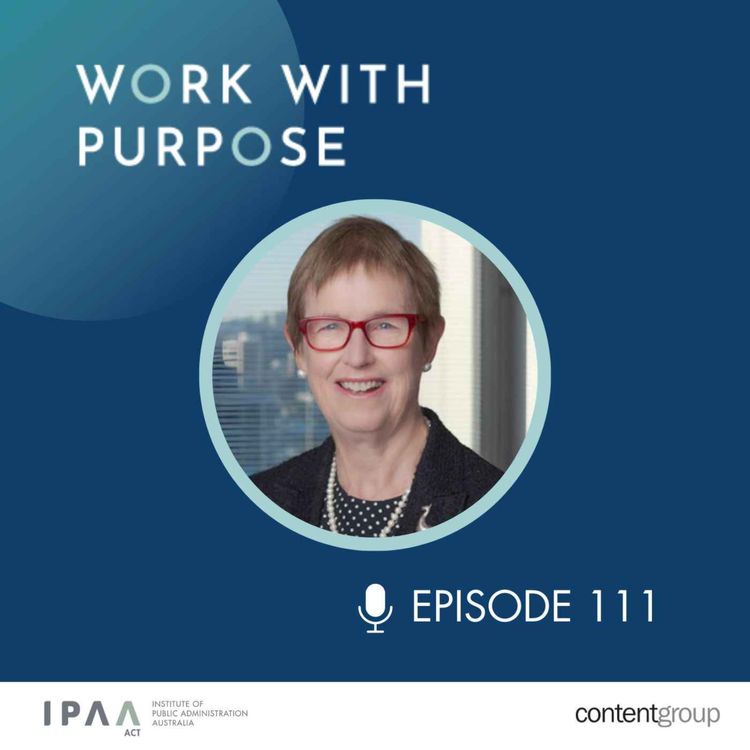
EP#111: A forever curious mind: Dr Wendy Craik AM FTSE
Dr Wendy Craik AM FTSE joins us for this episode reflecting on a career of curiosity and collaboration in service of Australia’s marine environment.
Dr Wendy Craik AM FTSE has had a long and distinguished career across science, not-for-profits and the public sector. What has she learned along the way, from her time as a PhD candidate in Canada researching fish to working on the first management plans for the Great Barrier Reef?
Find out on this episode of Work with Purpose as David Pembroke sits down with Wendy to discuss her golden rules for effective collaboration and trust in complex environments. Drawing on her experience at the reef and her time at the National Farmers Federation, Wendy encourages everyone not to let fear get in the way of a great opportunity.
Wendy also explores how social media is affecting growing cynicism and distrust in science and why everyone has a role to play in providing solid evidence to challenge misinformation.
Discussed in this episode:
· Being curious about people and opportunities
· The development of the first management plans of the Great Barrier Reef
· Building collaboration and trust, even if parties have different goals
· How to be open and honest about the things you don’t know
· The root cause of distrust in science
· What everyone can do to promote evidence
· Why she is optimistic about progress
· Advice on communicating science effectively and transparently
· Why any good relationship takes time to develop.
Shownotes:
More episodes
View all episodes
160. EP#160: Trust and pride in service with the Hon Patrick Gorman MP
46:53||Season 1, Ep. 160On this episode of Work with Purpose, the Hon Patrick Gorman, Assistant Minister for the Public Service, revisits performance, reform, and the future direction of the Australian Public Service. "It’s an incredibly patriotic thing to be a public servant", says Assistant Minister Gorman. At the same time, it requires consistent, positive frontline interactions as well as acting with integrity every day to ensure people continue to put their trust in the public service. So, what’s the minister’s vision for the future?On this episode, host David Pembroke, CEO of contentgroup and Assistant Minister Gorman dive into growing culturally and linguistically diverse representation at senior levels of the APS, and unpack AI‑driven economic change, climate transition, energy security, misinformation, and more.They also discuss the State of the Service Roadshow, and the importance of celebrating outstanding public sector initiatives, regional and remote service delivery, and engagement across the country through programs such as the Spirit of Service Awards.Key tips1. Competent service matters more than high‑level narratives or messaging. Remain consistent, and respectful in every interaction you have.2. Capability uplift needs to continue, this includes more diversity and the senior level. Empower and encourage those with diverse backgrounds.3. Use artificial intelligence and digital tools to improve productivity and services, in a secure and ethical way and with strong data governance to maintain public confidence. Show NotesPublic Service Amendment Act 2024 | APS ReformAPS Employee Census 2025 | Australian Public Service CommissionState of the Service Roadshow: 2026 | Australian Public Service CommissionSpirit of Service Awards | IPAA ACT
159. EP#159: The signals that shape careers: cultural diversity, leadership and change in the Australian public sector with Nu Nu Win and Jim Betts
51:23||Ep. 159Host David Pembroke, CEO of contentgroup, speaks with APS CALD Champion Jim Betts, Secretary of the Department of Infrastructure, Transport, Regional Development, Communications and the Art, and Nu Nu Win, assistant secretary at the Department of the Treasury, about cultural diversity in the Australian Public Service and the work underway to create a more inclusive and representative senior leadership pipeline. Together, they explore how to challenge assumptions and why the APS still has a long way to go in turning commitment into meaningful change. The episode highlights emerging initiatives across the APS, including sponsorship, stronger staff networks and clearer institutional signals to support fairness, inclusion and better outcomes for the community the APS serves.Key tips:Start with evidence, then act on it. Strong data helps move the conversation beyond assumptions and shows where barriers are real and where action is needed most.Leadership signals shape outcomes. When leaders show a visible commitment to fostering inclusion, it positively influences who feels encouraged to apply, grow and see a future in the Australian public service. Inclusion happens in everyday decisions. Look closely at small moments where choices are made about who is invited in, supported, encouraged or sponsored. These actions can shape long-term career outcomes.The APS has an opportunity to lead. APS leaders have the unique ability to coordinate, act deliberately, and build a workforce that better reflects the community it serves. Show notes:APS Culturally and Linguistically Diverse Employment Strategy and Action Plan | Australian Public Service CommissionModelling Australian Public Service Careers | Tax and Transfer Policy Institute, Crawford School of Public Policy, ANUCross-agency diversity networks (including CALD CONNECT) | Australian Public Service CommissionAPSC CALD Action Plan (2025–2028) | Australian Public Service Commission
158. EP#158: Why public service matters: Rob Heferen on systems, service and trust
01:02:09||Season 1, Ep. 158What does it take to lead with purpose in one of Australia’s most complex public institutions? In this episode of Work with Purpose, we hear from Rob Heferen, Commissioner of Taxation, about the responsibility of public servants to build trust, improve systems, and deliver better outcomes in complex, high pressure environments. Rob Heferen looks back on a career spanning tax policy, major reform and public sector leadership, from his early days in customs to leading the Australian Taxation Office.With host David Pembroke, CEO of contentgroup, he shares what has shaped his approach to leadership and what sets public service apart: the opportunity to work for something bigger than yourself and improve outcomes for the public as a whole. Rob and David discuss the importance of developing expertise, communicating clearly, working collaboratively, and leading change carefully in environments shaped by complexity, risk and rapid technological change. Key tips: Develop deep expertise quickly but always keep sight of the bigger picture. Communicate clearly and avoid speaking in specialist jargon or code. Be someone people want to work with: reliable, collaborative and trusted. Stay grounded in the mission of public service and focus on better outcomes for the public. In complex, high-risk environments, lead change carefully, but do not lose the confidence to think bigger and act bolder. Show notes: Australia’s Future Tax System Review | Australian TreasuryAustralian Taxation Office ATO AI transparency statement | Australian Taxation DepartmentThe Tyranny of Merit | Michael Sandel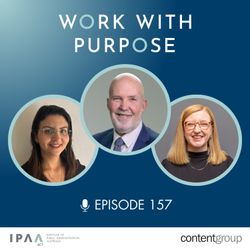
157. EP#157: More accessible healthcare for all: Australia’s Medicare Urgent Care Clinics
19:08||Season 1, Ep. 157Medicare Urgent Care Clinics offer free, walk-in care for urgent but non-life-threatening health issues. In this episode, we explore how the Department of Health and Aged Care turned a good idea into a service that’s taking pressure off busy emergency departments across Australia.Since opening in June 2023, Urgent Care Clinics have cared for over 2 million people and grown rapidly from an initial 50-clinic commitment to more than 90, with 137 expected by the end of 2025–26. It’s an impressive example of delivery at pace in the public sector, earning the Urgent Care Clinics team the 2025 Spirit of Service People’s Choice Award.Led by Adam Nettheim, Chief Customer Officer at Commonwealth Superannuation Corporation, Sarah Sinclair, Assistant Secretary, Urgent Care Branch and Sarah El-Sabagh, Director, Urgent Care Policy and Evaluation from the Department of Health, Disability and Ageing, this episode unpacks the practical decisions and partnerships behind this scale-up, with lessons you can apply in any service or program. They dive into what it takes to stand up quickly, build confidence with partners and providers, and make access easier for communities.*The People’s Choice Award is proudly sponsored by Commonwealth Superannuation Corporation.Key TipsDesign around the user: build services to fit real lives, remove friction, make access simple, and focus on what people need in the moment.Move at pace by partnering well: strong relationships across the system are the engine room of delivery.Keep listening after launch: build feedback loops early so you can improve in real time, not “set and forget”.Stay anchored to outcomes: success is a better experience for people and less pressure on frontline services.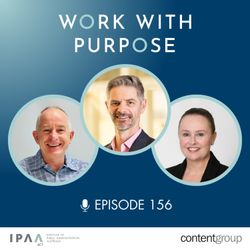
156. EP#156: From Paper Clips to Submarines: Why Procurement Matters in Government
42:22||Season 1, Ep. 156How does the government actually buy the things that keep Australia running, from everyday supplies to major infrastructure?In this episode of Work with Purpose, host Kate Driver speaks with Richard Windeyer, former Head of the APS Procurement and Contract Management Profession, and Deputy Secretary of the Department of Finance, along with Andrew Marsden and Kim Hunter, partners at O’Connor Marsden, to unpack something that quietly shapes almost every part of Australian life: government procurement.From paper clips to submarines, every ambulance, bridge, hospital, IT system, and research project has to be bought, managed, and justified. Together, our guests explore how more than $100 billion of taxpayer money each year is turned into public value, why integrity and transparency matter as much as price, and how both public servants and suppliers can navigate this space with confidence – especially in light of the recent changes to the Commonwealth Procurement Rules.Key Tips1. Start early: the most important procurement decisions happen at the beginning, when defining the problem, engaging the market, and designing the right approach.2. Talk to the market and do it well: early, transparent engagement helps agencies understand what is possible and leads to better outcomes while maintaining strong probity.3. Integrity and transparency make decisions defensible: managing conflicts of interest, documenting decisions clearly, and ensuring fairness are essential to maintaining public trust.4. Procurement is everyone’s business: if you design, approve, or manage work involving suppliers, you play a role in how public money delivers public value.Show Notes2025 Commonwealth Procurement Rules | Department of FinanceAustralian Government Contract Management Guide | Department of FinanceProcurement | Department of FinanceCommonwealth Procurement and Contract Management Training Suite | Australian Public Service Academy
155. EP#155: Revisiting '‘Own it’: Empowering neuro-affirming workstyles and environments with Joey Ballantyne & Robin Edmonds'
50:53||Season 1, Ep. 155Trigger warning: themes of mental health/sexual assault.Robin Edmonds from the Department of Infrastructure, Transport, Regional Development, Communication and the Arts and Joey Ballantyne of Grit n Grace Collective talk about neurodiversity, developing a strong sense of self, and supporting people to learn and work in a way that helps them thrive.When Joey Ballantyne, founder of Grit n Grace Collective, speaks about breaking the survive/burnout cycle, and her late autism diagnosis, it comes from the heart. Driven by her own experience, she started her own neuro-affirming professional development program, built to empower atypical women in the workplace.In this special Work with Purpose conversation, Joey and guest host Robin Edmonds, co-chair and co-founder of the Australian Public Sector Neurodiversity Community of Practice and assistant director, Media Reform at the Department of Infrastructure, Transport, Regional Development, Communication and the Arts, shed light on the experiences of neurodivergent women in the workplace, and the specific challenges they face. They also talk about ways to get to know yourself, and how managers can build inclusive team cultures that benefit everyone.Key TipsDevelop a strong sense of self and what you need in a work environment to succeedAs a leader, give agency to your staff to show you how the work best. For example, ask people how they want to receive feedbackBe clear about meeting purposes, take notes, and give people time to process.Show NotesGrit n Grace Collective Public Sector Neurodiversity Community of Practice | Australian Public Service Commission2024 APS Census | Australian Public Service Commission
154. EP#154: Revisiting 'The road to the top is paved with difficult conversations — a leadership chat with Ray Griggs AO CSC'
47:55||Season 1, Ep. 154On this episode of Work with Purpose, we hear from Ray Griggs AO CSC about what working in the navy has taught him about taking and giving feedback, and why difficult conversations are part and parcel of becoming a better leader.Ray Griggs AO CSC looks back at a long and distinguished career in the public sector – from Australia’s Defence Force to most recently the Department of Social Services. Along the way, he navigated many difficult conversations, had his views contested, and at times, had to manage failure. In this conversation with host David Pembroke, CEO of contentgroup, he tells us how these challenges contribute to growing as a leader – and as a human.They also discuss managing large-scale change in complex environments, why you should always do your own fact-checking, and how solutions through new technologies need to be co-designed with Australia’s communities.Key tips:How you respond to people’s views and ideas is crucial. Respond the way you’d like your own leaders to respond to you.Never neglect doing your own fact checking. Once you launch into the process, your credibility can be at risk.Work out how real a timeline is. Sometimes we impose unrealistic timelines on ourselves.
153. EP#153: Revisiting 'Care, kindness, and respect: A conversation with the Governor-General'
53:40||Season 1, Ep. 153In this landmark episode of Work with Purpose, host David Pembroke sits down with Her Excellency the Honourable Ms Sam Mostyn AC, Australia’s 28th Governor-General, for a deeply personal and wide-ranging conversation recorded at Government House.Marking one year and one day since her appointment, the Governor-General reflects on her journey from suburban Canberra to one of the nation’s highest offices. She shares insights into her upbringing, career, and the values that guide her leadership – care, kindness, and respect.Listeners will gain a rare glimpse into the evolving role of civic institutions, the importance of inclusive public service, and the power of storytelling in shaping national identity. From her early volunteerism to her work in law, sport, climate, and social justice, the Governor-General’s story is one of curiosity, courage, and commitment to community.In this episode, you’ll hear about her path to Governor-General, why care, kindness, and respect are central to her vision for modern leadership and public service, and how her diverse career shaped a holistic view of Australia’s institutions and the people who power them.This episode is a must-listen for anyone who cares about Australia’s future, the role of public service, and the values that bind us together.Key tipsChampion civics education. Help build a more informed and engaged society by promoting understanding of Australia’s democratic systems and institutionsCollaborate across sectors. Break down silos between public, private, and community sectors to foster innovation and shared purposeLead with compassion. Embed care and kindness into everyday decision-making – whether in policy, leadership, or community engagement.
152. EP#152: Designing for Delivery: How IP Australia Builds Trust, Innovation & Better Public Service
34:50||Season 1, Ep. 152Have you ever considered what it takes to design public services that keep pace with technology while staying genuinely human-centred?In this episode of Work with Purpose, IP Australia Deputy Director-General Margaret Tregurtha joins Wendy Cohen, Deputy CEO of IPAA, to explore how modern public institutions can foster innovation, build trust and deliver services that meet evolving community needs.Listeners will gain a clear understanding of how intellectual property underpins Australia’s economic and cultural wellbeing, why recognising and protecting First Nations knowledge is essential to a fair and modern IP system, and what responsible adoption of emerging technologies like AI really looks like in practice.The conversation also highlights the mindsets and capabilities needed to drive meaningful change inside government, from embedding transparency and inclusion to creating cultures that support curiosity and continuous improvement. It offers a practical and grounded look at what it takes to build public services that are trusted, adaptive and ready for the future.Key TakeawaysHuman centred design is essential for modern public services.True transformation happens when services are built around people's real needs and expectations, not just new technology.Protecting First Nations knowledge strengthens Australia's innovation system.Recognising and safeguarding Indigenous Cultural and Intellectual Property is vital for fairness, cultural resilience and a modern IP framework.Responsible innovation depends on clear governance and a culture of curiosity.Emerging technologies like AI deliver public value only when supported by strong risk frameworks, purposeful leadership and teams empowered to learn and experiment.