
Latest episode

21. Belarus as a buffer with Katia Glod
48:50||Season 3, Ep. 21The full-scale invasion of Ukraine by Russia in 2022 was partly staged through the border between Belarus and Ukraine. This is not by chance: despite gaining independence in 1991, with the collapse of the Soviet Union, since 1994 Belarus has been controlled by Alexander Lukashenko, a Russia-aligned dictator. As a result, it has remained a relatively unknown entity, alienated from the West while occupying a crucial geo-strategic stretch of land, between the Baltic states, Poland, Ukraine and Russia.Prior to 1991, Belarus enjoyed a very brief year of independence between 1918-19. And yet, it had long been a group of people who knew they were distinct, with their own language and identity — much as is the case today. Yet the increasing connection between the state and its neighbour Russia, and more significantly the dependence of the authoritarian Lukashenko upon Putin for his political survival, means the danger of being consumed by Russia is very real. This is potentially Ukraine, but without a democratically elected head of state, a fiercely independent populace and a powerful military.The US has recently taken an interest in Belarus, partly to buy its potash reserves and partly to annoy Canada and the European Union — which has never paid enough attention to Belarus, though it poses a significant threat to the eastern states. Katia Glod, Deputy Head of Foreign Policy at NEST is not only a native Belarusian but also a true expert on the state and its positions. In a must-listen conversation, she explains the complexities of the state as well as its entanglement with Russia and the war in Ukraine. A fascinating set of insights!This episode was recorded on 8 October 2026ChaptersA short modern history of BelarusLukashenko and the stolen electionBelarus and the war in UkrainePlaying both sides: from Minsk to TrumpMentionsNew Eurasian Strategies centre websiteKatia Glod’s article - The limits of Russian control: The case of BelarusBelarus–European Union border crisisRyanair Flight 4978 (the forced landing in Minsk)EU sanctions on Belarus - Council of the EUMinsk agreementsBelarus tests a new path back to the West - Kyiv IndependentTrump promotes a “massive” Belarus potash deal - EuronewsFollowKatia Glod LinkedIn X/TwitterIlana Bet-ElInstagram @women_leaders_podcastListen to this episode on our YouTube channelOur partner European Leadership Network Twitter LinkedIn Facebook websiteCreditsProduction: Florence FerrandoMusic: Let Good Times Roll, RA from #Uppbeat (free for Creators!): https://uppbeat.io/t/ra/let-good-times-rollLicense code: ZXIIIJUU2ISPZIJT
More episodes
View all episodes

20. The demise of democracy with Marci Shore
59:05||Season 3, Ep. 20As the world seems to stumble from crisis to crisis, be it conflicts or economic woes or ethnic violence, it sometimes seems as if we are living through the 1930s again — but in a rogue AI version. Whilst specific crises can be analysed and rationalised, there is a constant sense of déjà vu, be it in the rise of fascism, the total disrespect for any kind of rules, and the adoration of power for itself.Russia, led by Vladimir Putin, may have led the field in all three categories, and at the same time it has long pursued the goal of demolishing democracy, everywhere. More worrying is the rise of these inclinations in the US, undoubtedly fuelled by Russian interference but also entirely self imposed.To understand the severity of the moment, as well as how we got here, there is no-one more qualified than Marci Shore, Chair in European Intellectual History at the University of Toronto. An expert in fascism, as well as a keen observer of reality, she helps put past and present in perspective in a conversation that covers a fascinating range, from Chekov through Sarah Palin and Ratko Mladic.This episode was recorded on 24 September 2026ChaptersDiplomatic language and the return of political bluntnessTrump and the rejection of rulesDoes history repeat? The 1930s, patterns, and what is newPost-truth politics and how the internet floods the zoneAmerican democracy and structural weaknesses with the rise of the new rightEurope’s far right and the danger of normalising the abnormalMentionsMarci Shore’s articles and essaysVictor Klemperer – The Language of the Third ReichSigmund Freud – Civilization and Its DiscontentsMikhail Bulgakov – The White GuardSlavenka Drakulić – They Would Never Hurt a FlyAdam LeBor – The Last Days of BudapestFollowMarci Shore Bluesky, X/TwitterHer course “European Intellectual History since Nietzsche” (Yale website & Youtube)Her curated selection of material in various languages about the war in UkraineHer book “The Ukrainian Night”Her essay “With Shestov in Ukraine”, Liberties Journal of Culture and PoliticsIlana Bet-ElInstagram @women_leaders_podcastListen to this episode on our YouTube channelOur partner European Leadership Network Twitter LinkedIn Facebook websiteCreditsProduction: Florence FerrandoMusic: Let Good Times Roll, RA from #Uppbeat (free for Creators!): https://uppbeat.io/t/ra/let-good-times-rollLicense code: ZXIIIJUU2ISPZIJT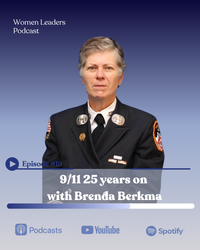
19. 9/11 25 years on with Brenda Berkman
57:04||Season 3, Ep. 19The background to the disaster that was 9/11 has been researched exhaustively, while the security and geopolitical outcomes — notably in Afghanistan, Iraq, the whole Middle East and many other parts of the world — are evident, with many effects felt to this day. But the event itself has receded into the past, and for younger generations is but history. The reality of two planes flown maliciously into the twin towers of the World Trade Centre in Manhattan, and the attempt to fly one into the Pentagon in Washington DC, is unknown to many, undoubtedly outside the USA.Brenda Berkman, the first female firefighter in the New York Fire Department, or indeed in the US, was there: she was a first responder. In a narrative often harrowing she recounts the reality of the day, in what was left of the World Trade Centre — as indeed the many months afterwards when the debris was cleared. From devastating detail and trauma of the event to ensuring the place of women in remembering 9/11, Brenda Berkman offers a gripping testimony to a day that changed world history. An important conversation!This episode was recorded on 11 September 2026ChaptersBrenda's journey to becoming the first female firefighter in NYCBrenda recounts her experience on 9-11Health impacts and long-term effects on respondersLessons learned and the future of women in firefightingBrenda's life after retirement and advocacy for womenMentionsYouTube- documentary Taking the HeatYouTube series - Pioneering Change as NYC’s First Female FirefighterPrints - Thirty-six Views of One World Trade Center9/11 Memorial & Museum - Honouring Four Women of Ground ZeroFollowBrenda Berkman: website Instagram LinkedInIlana Bet-ElInstagram @women_leaders_podcastListen to this episode on our YouTube channelOur partner European Leadership Network Twitter LinkedIn Facebook websiteCreditsProduction: Florence FerrandoMusic: Let Good Times Roll, RA from #Uppbeat (free for Creators!): https://uppbeat.io/t/ra/let-good-times-rollLicense code: ZXIIIJUU2ISPZIJT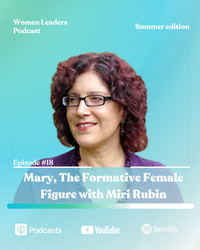
18. Mary, The Formative Female Figure with Miri Rubin
48:03||Season 3, Ep. 18Women Leaders concludes its summer season of women authorsThere is probably no more famous and pervasive female figure than Mary, mother of Christ. There are remarkably few known facts about this woman, but that has never stopped myths, ideas, imagery and music to evolve around her as a core element of the story of Christianity, and ultimately Western then global culture.In this last episode of our summer season of women authors, we discuss the evolution and significance of Mary, Mother of God: The History of the Virgin Mary with its author, Professor Miri Rubin. One of the most noted historians of the medieval and early modern periods, she helps us discover the many roads the idea of Mary has travelled, as well as a broader discussion on the Middle Ages and ideas of religion. A great conversation ranging from the first century AD to the late Dolly Parton!This episode was recorded on 27 August 2026ChaptersMiri Rubin's background and journey into medieval historyMary's centrality in Christian theology and practiceMary's role as a vessel in religious storiesMary in contemporary culture and popular mediaThe relevance of medieval history and Mary todayMentionsBook - Mother of God: A History of the Virgin Mary: Amazon UKBook - The Middle Ages: A Very Short Introduction: Amazon UKBook - Charity and Community in Medieval Cambridge: Amazon UKThe Annales ScholesPodcast - Our life in the classics with Mary Beard: SpotifyReadings - Oxford University Press - Very Short IntroductionsProject - The European Qur’anFollowMiri Rubin LinkedIn Queen Mary University of LondonIlana Bet-ElInstagram @women_leaders_podcastListen to this episode on our YouTube channelOur partner European Leadership Network Twitter LinkedIn Facebook websiteCreditsProduction: Florence FerrandoMusic: Let Good Times Roll, RA from #Uppbeat (free for Creators!): https://uppbeat.io/t/ra/let-good-times-rollLicense code: ZXIIIJUU2ISPZIJT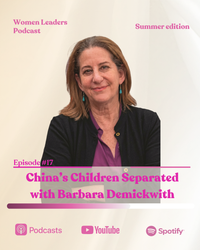
17. China’s Children Separated with Barbara Demick
45:59||Season 3, Ep. 17The summer season of women authors is truly global, taking us this time to China.The superpower image it now exudes overshadows realities in the near past, when poverty was rife and beyond the big cities hundreds of millions were in poverty and often illiterate. The outside world had little knowledge of this, and in the 1990s and early 2000s China was considered a safe source of babies for adoption while also doing a good deed. Tens of thousands of babies, mostly girls, were adopted by Western families, all assured these were abandoned due to the infamous “one child policy”. But reality turned out differently.Barbara Demick, award-winning journalist and author, penned the incredible Daughters of the Bamboo Grove: China’s Stolen Children and the Story of Separated Twins. An author of a number of previous celebrated volumes on North Korea, Tibet and Bosnia, she brings vast experience as an observer of humanity to her reporting and writing.In a fascinating conversation, we explore how her books were written, how she became involved with the story of the twins, and why China was and remains such a complex subject.This episode was recorded on 21 July 2026ChaptersReporting in conflict zones and repressive regimesThe story behind 'Daughters of the Bamboo Grove'Changes in rural China over the past 15 yearsThe evolution of China's laws and societyBarbara’s research and writing processMentionsBook - Daughters of the Bamboo Grove: UK Amazon US AmazonBook - Nothing To Envy: Real Lives In North Korea: UK Amazon US AmazonBook - Eat the Buddha: The Story of Modern Tibet Through the People of One Town UK Amazon US AmazonBook - Besieged: Life Under Fire on a Sarajevo Street: UK Amazon US AmazonArticle - China’s one child policy, BritannicaFollowBarbara Demick Website Instagram LinkedIn Twitter/XIlana Bet-ElInstagram @women_leaders_podcastListen to this episode on our YouTube channelOur partner European Leadership Network Twitter LinkedIn Facebook websiteCreditsProduction: Florence FerrandoMusic: Let Good Times Roll, RA from #Uppbeat (free for Creators!): https://uppbeat.io/t/ra/let-good-times-roll License code: ZXIIIJUU2ISPZIJT
16. Life, Love and War with Katherine Saad Feghali
46:51||Season 3, Ep. 16Women Leaders continues its summer series with women authors.Much has been written about the current horrors of Lebanon, but they really started long ago, in the civil war that raged between 1975-1990.As part of our women authors summer season, we turn to a novel written about coming of age in that period — to the brutality of war alongside the attempts at keeping normality alive, of food and family and nostalgia, of young love and loss, of the harsh destruction of commonality amongst different ethnicities in the face of brutality.Katherine Saad Feghali is the author of Glass Cedars, a roman à clef in which she recounts her love for Lebanon while observing its disintegration. A lyrical book that in many ways tells far more about the reality of Lebanon than any factual reporting. A touching and interesting conversation about destruction, PTSD and Lebanon!This episode was recorded on 11 August 2026ChaptersThe origins of Glass CedarsTurning personal tragedy into a missionThe universal human experience of migration and conflictThe role of women in Lebanon and the USThe importance of human stories over political narrativesMentionsBook - Glass Cedars - Amazon US & Amazon UKPoem - Epic of Gilgamesh - BritannicaAssociation - Education and Opportunities for LebanonFollowKatherine Saad Feghali LinkedIn InstagramIlana Bet-ElInstagram @women_leaders_podcastListen to this episode on our YouTube channelOur partner European Leadership Network Twitter LinkedIn Facebook websiteCreditsProduction: Florence FerrandoMusic: Let Good Times Roll, RA from #Uppbeat (free for Creators!): https://uppbeat.io/t/ra/let-good-times-roll License code: ZXIIIJUU2ISPZIJT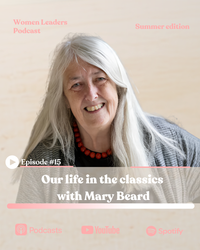
15. Our life in the classics with Mary Beard
47:32||Season 3, Ep. 15Women Leaders is having a relaxing summer with women authors.The Odyssey is a big summer hit, but it has been a hit for 3000 years: it is both a classic, and part of the classics, a broad field of study that Western culture has long been obsessed with. From legalities to laughter and from battles to bread, the ancient Greeks and Romans seem to have lived our lives then, while we seek out their lives now.Mary Beard is undoubtedly the most prominent classicist of our times, and her new book, Talking Classics: The Shock of the Old reflects most clearly on our longstanding relationship with the classical period and its ongoing relevance. A strong woman leader, she has authored many books, including the important Women & Power: A Manifesto.In a fun and fabulous conversation, Mary Beard discusses the significance of many issues past and present — and what she really thinks of The Odyssey, the film. Don’t miss it!This episode was recorded on 4 August 2026Chapters:What is a classicist?Use and abuse of classical culture in politicsOrigins of the silencing of women's voicesNolan’s Odyssey impact on female charactersMentionsThe Booker PrizesPodcast - Instant Classics with Charlotte Higgins: YouTube Spotify Apple Podcasts InstagramInstant Classics - Podcast Book Club on the OdysseyBook - Women in Power, a Manifesto (2017), AudibleBook - SPQR, a history of Ancient Rome (2015)Book - Talking Classics, The Shock of the Old (2026), AudibleBook - Samuel Butler The Authoress of the Odyssey (1922)Book - H.R Trevor-Roper History & imagination (1981)The Odyssey movieFollowMary Beard Cambridge University, InstagramIlana Bet-ElInstagram @women_leaders_podcastListen to this episode on our YouTube channelOur partner European Leadership Network Twitter LinkedIn Facebook websiteCreditsProduction: Florence FerrandoMusic: Let Good Times Roll, RA from #Uppbeat (free for Creators!): https://uppbeat.io/t/ra/let-good-times-rollLicense code: ZXIIIJUU2ISPZIJT