Share
Wind Power
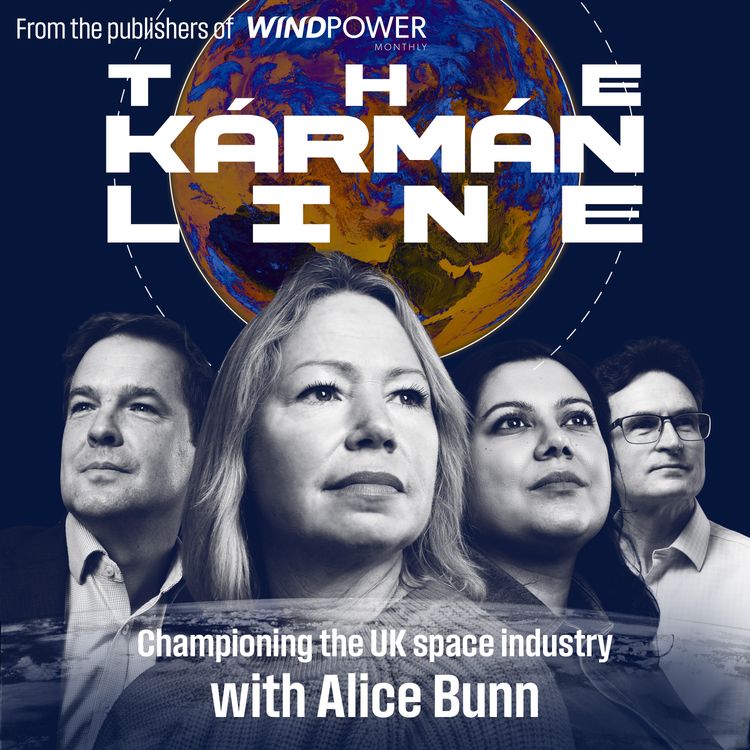
Why the business of space is everyone’s business
As of 2026, the UK space industry is a significant and strategic driver of the national economy, contributing over £19 billion in revenue and supporting tens of thousands of high-skilled jobs. Satellite-based services and data underpin roughly 18% of UK GDP, equivalent to approximately £454 billion of the wider economy. And the sector is growing exponentially.
But this is just the tip of the iceberg. For the space industry to fully realise its potential it needs more of the right people to understand what’s happening and get involved. People like policy makers, investors, regulators, planners, communicators, lawyers and consultants.
Dr Alice Bunn, the president of UK Space, and her panel of guests, Sam Alden co-CEO of Space Solar, Nick Shave managing director of Astroscale and Anushka Sharma founder of Naaut, discuss the surprising, awe inspiring business of space and make the compelling case for why more companies and investors should get involved.
Contributors:
Host:
Alice Bunn, President of UKspace
Dr Alice Bunn OBE FIMechE FRAeS CEng | LinkedIn
Guests:
Nick Shave, Managing Director of Astroscale
Astroscale: Overview | LinkedIn
Sam Adlen, CEO of Space Solar
Space Solar: Overview | LinkedIn
Anushka Sharma, founder of Naaut
Key topics covered:
Impact of Space on Everyday Life
- Practical Applications
- Environmental Monitoring
- Global Security
Sustainability and Innovation in Orbit
- Space Debris
- Manufacturing in Microgravity
- Space-Based Solar Power
Economic and Regulatory Landscape
- Cost Reduction
- Investment and Finance
- Regulation and Policy
The Future of Space Exploration
- New Platforms
- Academic Contribution
More episodes
View all episodes
14. Nordex on returning to profit, maintaining momentum and seeking new markets
18:44||Season 2, Ep. 14The Wind Power podcast speaks to Ibrahim Oezarslan, chief commercial officer at Nordex, about how the turbine firm has achieved its recent financial turnaround.Recorded at WindEnergy Hamburg conference last month, Oezarslan discusses how Nordex intends to maintain its new momentum and which markets it is targeting in Europe and beyond.Also on the agenda was how the turbine firm intends to manage reduced prices in Germany’s onshore wind auctions, whether the US is a safe wind market and whether cybersecurity concerns justify calling for non-Western turbine makers to be banned from selling their products within the EU.This episode was produced by Inga Marsden.
13. New onshore turbine models | WindEnergy Hamburg takeaways
25:28||Season 2, Ep. 13Welcome to the Wind Power News Review – hosted by Windpower Monthly's senior reporter, Robyn White, and Windpower Monthly's reporter, Orlando Jenkinson – along with our regular panellists, Sorcha Versteeg and Shashi Barla. This time on the News Review, we take a look at the new onshore wind turbine models announced by Vestas, Nordex and Envision. The new turbines feature larger rotor areas and offer the chance to boost efficiency, while presenting challenges too. We explore to what extent these new designs can impact the onshore wind industry. Secondly, the panel and hosts discuss our experiences at the recent WindEnergy Hamburg 2026 conference in Germany, comparing notes on the prevalent themes and talking points from one of the industry’s biggest events. This episode was produced by Inga Marsden.
12. Can the industry keep policymakers focused on the energy transition?
13:03||Season 2, Ep. 12As the world endures yet another energy price shock caused by geopolitical events, the Wind Power podcast asks how to keep the renewables transition high on policymakers’ agendas once the crisis has passed. Recorded at the WindEnergy Hamburg conference, senior representatives from WindEurope, Deep Wind Offshore, DNV and Perigus Energy gave their views on how to keep decision-makers focused on a strategic renewable energy build-out.This episode was produced by Inga Marsden.
11. WindEnergy Hamburg 2026 live
10:48||Season 2, Ep. 11Windpower Monthly took to the conference floor to ask delegates what they have learned so far from attending WindEnergy Hamburg 2026.Delegates, including GWEC policy analyst Joyce Lee, talked about fostering a spirit of collaboration between global regions, the need to see more women represented on conference panels and the sheer number of firms involved in the construction of wind projects.The interviewees also spoke about their personal motivations for joining the wind industry and what it means to them.This episode was produced by Inga Marsden, Hannah Holt and Giorgiana Mamuzelos.Windpower Monthly is the official podcast partner of the WindEnergy Hamburg conference.
10. German renewables chief dissects controversial grid and auction reforms
21:52||Season 2, Ep. 10In a special episode of the Wind Power podcast ahead of next week’s WindEnergy Hamburg conference, Bärbel Heidebroek, president of German wind energy association BWE, analyses government proposals to reform its onshore and offshore wind sectors.Heidebroek discussed controversial proposals to alleviate grid bottlenecks by cutting curtailment compensation for onshore wind developers and imposing power limits for turbines and warned they could jeopardise the country’s energy independence. She also talked about planned reforms to auction design for offshore wind projects and gave her views on the recent electoral success of the far right AfD party in the German state of Saxony-Anhalt.This episode was produced by Jude Owen and Czarina Deen.
9. Jonathan Cole on bridging the gap between fixed and floating wind
26:46||Season 2, Ep. 9Jonathan Cole, chief executive of new offshore wind technology company Neretek, talks to the Wind Power podcast about its BC90 foundation technology and the potential for “other deepwater” offshore wind to bridge the gap between fixed-bottom and floating projects.Cole discusses the UK’s new deepwater auction category, whether the BC90 can compete with floating wind on cost and the opportunities for the technology in other markets.He also reflects on the challenges facing the wider offshore wind industry.This episode was produced by Inga Marsden.
8. Eize de Vries – Turbine firms learn by scaling quickly and taking risks
30:29||Season 2, Ep. 8Eize de Vries, Windpower Monthly’s technology and market trends correspondent, explores the different approaches of Chinese and Western turbine manufacturers to scaling and takes a view on how floating wind can become a commercial reality. De Vries gives his opinion on what sort of mindset turbine firm bosses need to adopt to be commercially viable and discusses whether the turbine firms which are enjoying large order intakes today will be the same firms which are successful in the next decadeThis episode was produced by Inga Marsden.
7. US wind outlook | Sweden's defence concerns | TPI Composites | Offshore wind safety
30:34||Season 2, Ep. 7Welcome to the Wind Power News Review – hosted by Windpower Monthly's senior reporter, Robyn White, and Windpower Monthly's reporter, Orlando Jenkinson – along with our regular panellist, Shashi Barla. This time on the News Review, we examine the latest prospects for the US wind industry, where states are pushing back against a hostile federal government’s attacks on wind power while popular renewable energy tax credits expire. Next, we discuss Sweden’s rejection of 11 offshore wind farms over security concerns as it refocuses on greater state involvement and plans for future auctions.Moving back to the US, we examine the fallout after blade manufacturer TPI Composites completes its bankruptcy restructuring, and review what might be learned from its recent difficulties. Finally, we take a look at two collisions reported in ports servicing offshore wind projects in Denmark and the UK, and discuss how the industry can centre safety in so-called “edge” environments. This episode was produced by Inga Marsden.
Lord Heseltine: "You’re just playing in toy town”
15:17|Lord Heseltine tells the story of the birth of the European Space Agency. Why post-Apollo, when the US was spending £1.2 billion a year on space, the whole of Europe was spending just £200 million. Why the birth of ESA was driven by the self-interest of three major countries. Why the US general with a $29 billion budget for the Star Wars project wanted to invest in Heriot-Watt University in Edinburgh. Why, the idea that Britain could compete alone with the technologies that were accumulated and available to the American capitalist system was “simply laughable”. Why “being European is not selling out British interests”. And why Margaret Thatcher told him: “If you want to get on and put your budget into this, you can, but you're not getting any of mine." Join Alice and Lord Heseltine as they pick apart the negotiating contrivances and the wheeling and dealing to circumnavigate “turkeys not voting for Christmas” that ultimately put European space on the map.Contributors:Alice Bunn, President of UKspace Dr Alice Bunn OBE FIMechE FRAeS CEng | LinkedInUKspace: Overview | LinkedIn Lord Heseltine, Member of the House of LordsKey topics covered:Creation of the European Space Agency (ESA)US "Star Wars" program and brain drainGeopolitical case for European R&D collaborationImpact of Brexit on science and technology