Share
Wind Power
Vestas CTO Anders Nielsen on turbine sizes, skills and retirement
Season 1, Ep. 58
•
Vestas’ outgoing chief technology and operations officer, Anders Nielsen, talks about why the wind industry is reaching the end of the line on turbine sizes and what he is looking forward to in his retirement.
Nielsen handed over the reins as CTOO to his successor, Felix Henseler, on 1 September. He will leave Vestas at the end of 2025 after a five-year stint leading the turbine firm’s technology offer.
He spoke to Windpower Monthly’s editor, Ian Griggs, about his tenure at the Danish firm, including the impact of COVID, the war in Ukraine and the European wind industry’s competition with China.
This episode was produced by Inga Marsden.
More episodes
View all episodes
4. RWE onshore chief - Grid-blocking is like putting a towel on a deck chair
13:27||Season 2, Ep. 4In the third of a four-part series recorded at the recent WindEurope conference in Madrid, RWE’s onshore chief, Sopna Sury, spoke to the Wind Power podcast about grid bottlenecks how to engage communities with large energy infrastructure projectsWindpower Monthly editor Ian Griggs also spoke to Sury about the opportunities and challenges of the AI age and what it means for the wind industry – and future electricity consumption.This episode was produced by Inga Marsden.
3. Renewable UK CEO: ‘Drill baby, drill’? I say ‘spin baby, spin’
17:08||Season 2, Ep. 3In the second of a four-part series recorded at last month’s WindEurope conference in Madrid, Tara Singh, CEO of Renewable UK, talks to the Wind Power podcast about the current global energy crisis and how that makes the case for increasing the focus on renewables.Windpower Monthly editor Ian Griggs spoke to Singh about the political outlook for wind power in the UK and about how the industry should respond to anti-wind narratives.Singh also discussed how she would respond to US president Donald Trump’s ‘drill baby, drill’ mantra.This episode was produced by Inga Marsden.
2. Girish Tanti on Suzlon’s return to the European market
13:04||Season 2, Ep. 2In the first of a four-part series recorded at last month’s WindEurope conference in Madrid, Girish Tanti, co-founder and vice chairman of Suzlon, talks to the Wind Power podcast about returning to the European market with the company’s new 'Blue Sky' platform. In an interview recorded only 24 hours after the company launched its new Blue Sky turbine platform, Windpower Monthly editor Ian Griggs spoke to Tanti about how he rated Suzlon’s chances of being chosen by developers to power European projects against the bloc’s established incumbents.Tanti also discussed the specific challenges in the European market and whether the EU is currently a good trading environment for non-western turbine manufacturers.This episode was produced by Inga Marsden.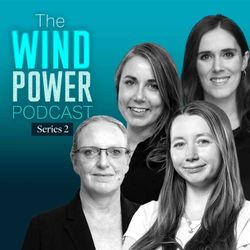
1. Women in wind power
50:06||Season 2, Ep. 1This time on the Wind Power Podcast, we focus on women in the wind power industry, speaking with three senior figures about progress on gender inclusion and the challenges that remain in the sector.Firstly, Rebecca Williams, deputy CEO of the Global Wind Energy Council (GWEC), shares a global view of how gender inclusion is evolving across the industry.Meanwhile, Juliette Sanders, chief communications officer at Energy UK – also known by her ‘windfluencer’ alter ego Killah Jules – discusses her career into wind and the day to day challenges women can face.Finally, Jane Cooper reflects on how participation has changed over time and what more can be done to attract and support women in the sector.This episode was produced by Inga Marsden.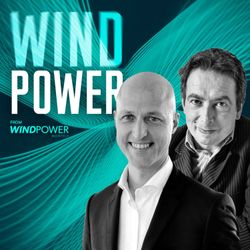
71. RWE’s offshore chief on energy security, targets and technology
30:38||Season 1, Ep. 71In a special episode of the Wind Power podcast ahead of next week's WindEurope conference in Madrid, RWE offshore chief Sven Utermöhlen discusses the contribution that wind energy can make to Europe’s future energy security. During this episode, Utermöhlen talked about why avoiding boom and bust cycles – and settling on the correct auction design – is even more important than the overall pace of the energy transition.Also on the agenda was how best to use Europe's wind power manufacturing base and whether there is a part to play for Chinese manfacturers in European wind projects.This episode was produced by Inga Marsden.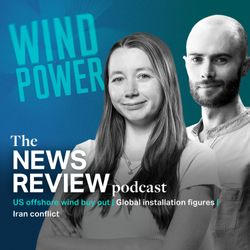
70. News review: US offshore wind buyout | Global installations | Iran conflict
28:31||Ep. 70Welcome to the Wind Power News Review – hosted by Windpower Monthly's senior reporter, Robyn White, and Windpower Monthly's reporter, Orlando Jenkinson – along with our regular panellists, Shashi Barla and Sorcha Versteeg.In this episode, we examine the escalating pressure on the US offshore wind sector. TotalEnergies has accepted the US government's $1 billion buyout of its offshore wind projects – what will this mean for the market?We also explore the latest global installation data, where Chinese OEMs have once again dominated annual additions. Do these figures show that Chinese OEMs are now major global players beyond their massive domestic market?Finally, we look at the growing impact of the conflict in Iran. With countries such as the UK and Germany accelerating wind auction plans in response, could other countries follow suit?This episode was produced by Inga Marsden.
Will Whitehorn: “We have to industrialise in space. It is an imperative”
26:34|How do we solve population pressure and climate crisis in space? How has GPS allowed us to provide 12% more food globally? How did the UK become a global leader in small satellite manufacture after the British Government said, “there’s no future for the UK satellite industry”? How did Elon Musk turn reusable rockets from science fiction to science fact in less than 20 years? What else are “Elon and Jeff” going to allow us to do? And why is SpaceX still “the elephant in the room”? Join Alice as she talks to Will Whitehorn, chair of giant space tech investor Seraphim and former president of Virgin Galactic, and they discuss the implications of “The Elon Musk show” and its legacy, “the beginnings of a competitive space industry of scale”. Contributors:Alice Bunn, President of UKspace Dr Alice Bunn OBE FIMechE FRAeS CEng | LinkedInUKspace: Overview | LinkedIn Will Whitehorn OBE, Seraphim Space Investment TrustWill Whitehorn OBE | LinkedInKey topics covered:UK satellite manufactureUK universitiesSpaceX valuationReuseable rocketsAgricultural managementPopulation pressureClimate crisisSolar powerData centres in spaceIndustrialising in space
69. The potential of wooden wind turbine components
26:18||Season 1, Ep. 69This time on the Wind Power Podcast, we spoke with two business leaders at the forefront of re-introducing wooden materials to the contemporary wind industry — Maria-Lina Hedlund, the CEO of wooden wind turbine tower company, Modvion, and Gustavo Lasierra, the co-founder of wooden blade manufacturer Voodin Blades. Humans have used wooden components to harness the power of the wind for centuries, and now the material is seeing a renaissance with these companies that claim wood is ideally suited for use in modern wind turbine manufacturing from towers to blades. Modvion and Voodin Blades use layers of wood called laminated veneer lumber (LVL) in their towers and blades respectively, and point out the many advantages using this material can have for wind power, from the cost savings and strength to weight ratios to lower maintenance actions and greater sustainability. Both firms have faced challenges getting the necessary approvals and permits from the relevant authorities to use their components with contemporary wind turbines, but are now seeking to expand their offering through partnerships with some of the major names in the European wind industry. This episode was produced by Inga Marsden. Windpower Monthly is now on Bluesky – follow us at @windpowermonthly.bsky.social for all the latest updates.
Space-Comm Expo: Jamming, spoofing, FOMO and farming
20:34|What did the Space-Comm Expo conference and exhibition tell us about connecting space and wider business? How does this manifest as tech connectivity in telecoms and why do farmers care about that? What did we learn about the benefits of extreme cold in manufacturing laboratories and why do pharmas care about that? How vulnerable are global logistics to the spoofing of navigation signals? And why is the UK government centralising space strategy in the Department for Science, Innovation and Technology? Join Alice and Jonners as they reflect on the UK space sector’s largest trade event and the “energy, diversity and …sheer scope of what this industry has to offer”. Contributors:Alice Bunn, President of UKspace Dr Alice Bunn OBE FIMechE FRAeS CEng | LinkedInUKspace: Overview | LinkedIn Jonathan Daves, The Karman LineJonathan Daves | LinkedIn Subscribe to The Karman LineApple: https://podcasts.apple.com/ca/podcast/the-k%C3%A1rm%C3%A1n-line/id1876605462Spotify: https://open.spotify.com/show/3qED4CgdRDxfKKzYNKZCIH?si=lZ-I4a19SPGLAJL-dHi4DQYouTube: https://www.youtube.com/@TheKármánLineUKKey topics covered:Space-Comm Expo, London, March 2026Conference overviewSector integrationInsuranceCustomer utilityGovernment roleFuture outlook Technological advancements· Telecoms· Manufacturing Defence and security· Satellite capabilities· Current threats