Share
Why Tell Stories?
Island 1961 (by Erland Cooper & Tove Jansson)
Following on from episode 9 (to sleep to dream) where we found ourselves asking 'why are dystopian narratives so ubiquitous and where are the stories addressing ideas about utopia?'. We've ended up on a small island that was once owned by Tove Jansson. This essay or meditation on what it means to seek out paradise has been beautifully scored by Erland Cooper and we believe, provides a rich and powerful exploration into what it is to imagine paradise.
Story Starts 00:03:04
Story Ends 00:22:42
Full Spotify Album Here
This will be the final episode of the WTS podcast season 1. But we'll be back soon with more celebrations of sonic storytelling. If you have a story (or know of one) that you think we should feature, then please get in touch at info@academicpodcastagency.com
More episodes
View all episodes
9. To Sleep To Dream (by Daniel Marcus Clark & Ear Films)
51:27||Season 1, Ep. 9In this episode we feature a 20min excerpt from the Ear Films production of 'To Sleep To Dream' narrated, written and directed by Daniel Marcus ClarkFull 90 min stereo cut can be found HEREA dystopian future where dreams have been made illegal, To sleep to dream questions the validity of a paradise where creativity and other human impulses must be hidden from the authorities.Dan and Will discuss the absurdity of the modern work place, the concept of simulations and the role of the dystopian narrative as a tool for cultures attempting to understand themselves.Story Starts:00:30:46Story Ends: 00:23:24We'd love it if you got in contact with us! Please write to: info@academicpodcastagency.com and let us know what you think of the show.
8. The Revenge (by Andrew Sachs)
51:26||Season 1, Ep. 8For this episode of the WTS podcast we are listening to the 1978 radio play 'The Revenge' by Andrew Sachs.A true experiment in audio story telling this is a radio play without any dialogue.Described by the producer as a simple thriller it was recorded over a single week in Reading and Archway (London), It features 11 actors and all real sounds recorded on location (no library, SFX). The principal actor was Andrew Sachs, It had a one page script and went on to be used as a tool for training future radio producers.It truly is an experiment worth listening to, but it does require and investment of attention. A full version of 'The Revenge' with Director and Producer interviews can be found here... and yes Andrew Sachs played Manuel in the hit comedy series Fawlty Towers - but he was also a very well respected radio producer!Story Start 00:03:56Story End 00:28:24We'd love it if you got in contact with us! Please write to: info@academicpodcastagency.com and let us know what you think of the show.
7. Bells In Europe (by Peter Leonhard Braun)
45:15||Season 1, Ep. 7For this episode on the WTS podcast Dan and Will listen to and discuss excerpts from the truly epic stereophonic documentary 'Bells In Europe' (1973)Written & directed by Peter Leonard Brawn (winner of the prix Italia) and recorded over 41 days across 9 counties - Bells in Europe is nothing less than a chronicle of humanity understood through the lens of the church bell.'They were made to serve the worship of God and also destruction for over the centuries, time after time - guns were cast from the bronze of bells. Bells as witness to human life, celebrating a birth or a battle. They themselves are indifferent to the occasion, being just so much metal. Mere instruments. It’s up to man to decide how to use them'.Story 1 (the birth of the bell) starts: 00:05:14Story 1 (the birth of the bell) ends: 00:15:00Story 2 (Bavarian wedding) starts: 00:24:20Story 2 (Bavarian wedding) ends: 00:32:52(the full unedited version of Bells in Europe can be found here)We'd love it if you got in contact with us! Please write to: info@academicpodcastagency.com and let us know what you think of the show.
6. Manhattan Tower (by Gordon Jenkins)
41:30||Season 1, Ep. 6This episode is a celebration of Gordon Jenkins' 1946 piece 'Manhattan Tower'. Described by the author as 'a love song to New York' it's a curious story of a romanticised city that might not be everything it's supposed to be. Dan and Will find themselves discussing the subject of psycho-geography and questioning how much influence any given place has in dictating the stories of the people that live there. Are we stories being told by the physical buildings in which we live?Story Starts: 00:04:12Story Ends: 00:20:37Psycho-geography (as thought about by Will Self)Chris Ware - Building Stories “I live not in myself, but I becomePortion of that around me: and to meHigh mountains are a feeling, but the humof human cities torture.”― George Gordon Byron,We'd love it if you got in contact with us! Please write to: info@academicpodcastagency.com and let us know what you think of the show.
5. The Naz (by Lord Buckley)
37:26||Season 1, Ep. 5For this episode of the Why Tell Stories Podcast, we enter the strange and wild world of Lord Buckley and his 1952 rapturous monologue 'The Naz'Lord Richard Buckley (April 5, 1906 – November 12, 1960) was an cabaret performer and recording artist - who the New York Times described as 'an unlikely persona ... part English royalty, part Dizzy Gillespie' and if you've never heard of him before you are in for an audio treat (which only gets better with repetition).Story Start: 00:02:17Story End: 00:12:09Dan and Will discuss the many ways storytelling can be an all powerful, culture shifting necessity even if you don't understand everything that's being said and consider the possibility that sometimes the facts might even get in the way.The book Chums discusses the tradition of the Eaton debating club, in which facts are frowned upon as an ineffective way to sell your story.A youtube trailer for the Herzog film My Best Fiend can be found hereWe'd love it if you got in contact with us! Please write to: info@academicpodcastagency.com and let us know what you think of the show.We'd love it if you got in contact with us! Please write to: info@academicpodcastagency.com and let us know what you think of the show.
4. Roger (by Ken Nordine)
29:23||Season 1, Ep. 4Dan and Will are very excited to share with you the wonderful world of Ken Nordine and his 1957 classic 'Roger'. What does a story like this mean? Can something this good be improvised? Was Ken Nordine really a jazz vocalist moonlighting as a teller of stories?Ken Nordine (April 13, 1920 – February 16, 2019) was an American voice-over and recording artist, best known for his series of word jazz albums.A large repository of his work can be found here: https://soundcloud.com/ken-nordine-official00:02:32 Story Stars00:07:39 Story EndsWe'd love it if you got in contact with us! Please write to: info@academicpodcastagency.com and let us know what you think of the show.
3. Comedy
52:50||Season 1, Ep. 3Dan and Will share a story called 'Comedy' and ask questions about the joke as a special form of storytelling. Does the comedian have a special role in society? And what exactly is the relationship between stories and dreams?Story starts: 00:03:41Story ends: 00:24:04Interweaving symbols of individuation in African and European fairy tales by Julian DavidWe'd love it if you got in contact with us! Please write to: info@academicpodcastagency.com and let us know what you think of the show.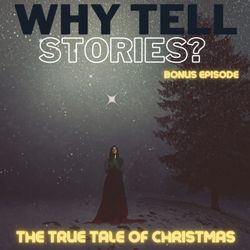
(Bonus Episode) The True Tale of Christmas
15:00|A little Christmas extra from everyone at the Why Tell Stories? Podcast: The True Tale of Christmas Happy Holidays to all! Dan & Willinfo@academicpodcastagency.com