Share
Who Jew Think You Are
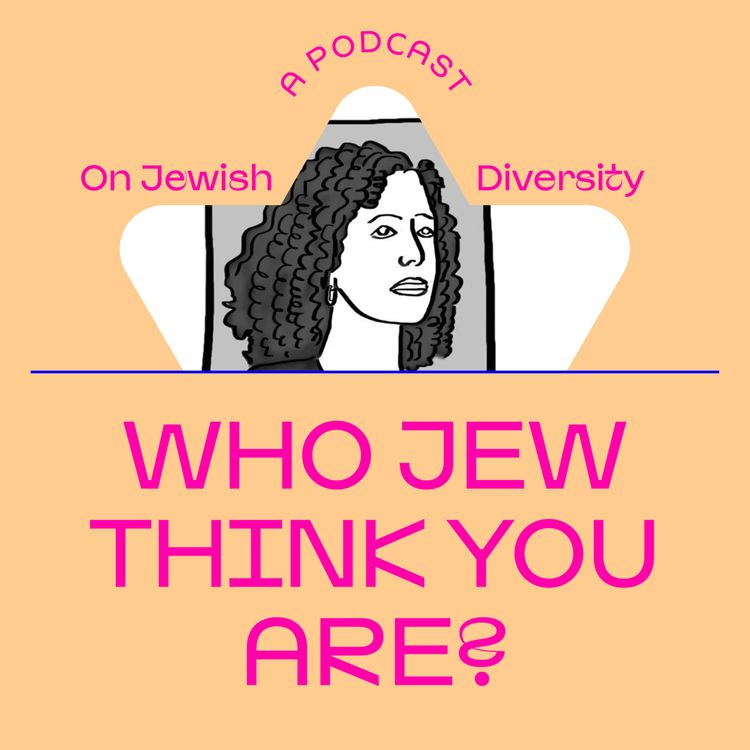
Other within the Other - with Carol Isaacs
“Other within the Other” - with Carol Isaacs
The Surreal McCoy - AKA Carol Isaacs
https://www.thesurrealmccoy.com/
The Wolf of Baghdad - Book/Graphic Novel
https://myriadeditions.com/books/the-wolf-of-baghdad/
Educator Guide for Wolf of Baghdad
https://www.mattreingold.ca/_files/ugd/b5e5dd_008584d7a470469a840e17c8c961137d.pdf
Growing up Mizrahi - Short Documentary
https://ukjewishfilm.org/film/growing-up-mizrahi/
Carol on Socials - Twitter Insta YouTube
History of the Jews of Iraq
https://en.wikipedia.org/wiki/History_of_the_Jews_in_Iraq
Recipe:
https://recipes.fandom.com/wiki/Kubba_Bamia
Kaukokaipuu - Finnish word for nostalgia for a place you’ve never been to.
Ahmed Mukhtar - Oud player Keith Clouston - Oud player Daniel Jonas
Transcript of episode
Show credits
Host / Producer: Eylan Ezekiel
Post-production: Communicating for Impact
Artwork: Emily Theodore
Music: Aleksafor utransndr Karabanov
Sound effects: Serge Quadrado
More episodes
View all episodes
7. Tales of Jewish Sudan: with Daisy Abboudi
53:04||Season 3, Ep. 7Our GuestDaisy Abboudi is a historian and the creator of Tales of Jewish Sudan, an oral history archive documenting the Jewish community of Sudan through interviews, photographs and recipes. She began the project in 2015, initially to record her family's recipes, and went on to interview around seventy former community members living in America, Israel, Geneva and beyond. She has also worked with Sephardi Voices UK, interviewing Jews displaced from across the Middle East and North Africa.Key TopicsOrigins: how Jews from across the Ottoman Empire - Iraqi, Egyptian, Syrian, Moroccan - came to settle in early twentieth-century SudanDeparture: British colonial administration, Sudanese independence in 1956, and the community's exodus by the mid-1960sYour GuideShort definitions and terms referenced in this episode:Jaha: a trickster figure from Middle Eastern and North African folklore, known across the region under various spellings (also Juha, Goha)Ottoman Empire: the Turkish-led empire that governed much of the Middle East, including Sudan in its earlier period, until its collapse after the First World WarWant to learn more?Explore past episodes that also trace displaced and multi-origin Jewish communities:S2E5 – Endangered, Not Erased, with Samantha Ellis: an Iraqi Jewish refugee family historyS2E9 – “I tick a lot of boxes”, with Shelley Silas: Baghdadi Jewish and Indian heritageReferences and ResourcesTales of Jewish Sudan, Daisy's oral history archive of the Sudanese Jewish communitySephardi Voices UK, the oral history project Daisy has also worked with
6. A World of Possibilities - Tim Franks
01:06:24||Season 3, Ep. 6Our guestTim Franks has presented Newshour, the flagship news programme on the BBC World Service, since 2013. Before that he spent almost twenty years as a reporter: the Troubles in Northern Ireland, Westminster and the Today programme, then nine years as a foreign correspondent in Washington, Brussels and Jerusalem. He won the Bayeux award for war correspondents for his reporting from Gaza. His book, The Lines We Draw: The Journalist, the Jew and an Argument About Identity, was published by Bloomsbury in 2025. He was raised in Birmingham, and now lives in London.Key topicsBeing a Jew and a journalist, The Sephardi roads: from Constantinople to Amsterdam,Reform, status, and who is allowed to say what is authentically JewishYour guideShort definitions for terms in this episode.Hazzan: cantor, the person who leads prayer in songHakham: Sephardi title for a rabbi or communal religious leaderCheder: Jewish school for childrenLeyning: chanting portions from the Torah aloud in synagogueBevis Marks: London's Spanish and Portuguese synagogue, the oldest in continuous use in BritainWant to learn more?The following episodes also explore the questions of ‘belonging’ in private / public:S2E3, “Being Seen Matters” - Yaffa Judah S1E9, British Black Jews - Kenneth Awele OkaforS3E2, Plural and Partial - Linda DangoorReferences and resourcesThe Lines We Draw, Tim Franks, Bloomsbury 2025Tim Franks interviewed about the book, J. The Jewish News of Northern CaliforniaTim's 2010 BBC ‘From Our Own Correspondent’ special piece W.E.B. Du Bois, The Souls of Black Folk (1903), on double consciousnessSupport the pod by reviewing this episode! Please share with a friend.If you can, please support with £5 via buymeacoffee - or subscribe at Substack.
5. “Inside the Bubble” with Renato Huarte Cuéllar - Live at Limmud25
48:14||Season 3, Ep. 5Renato Huarte Cuéllar is a philosopher, academic and choreographer based in Mexico City. He works across philosophy of education, philosophy of religion and Jewish studies, co-founded Limmud Mexico, and for nine years led the education programme of Mexico City's Jewish dance festival, Festival Aviv, the largest of its kind outside Israel. Recorded live at Limmud Festival 2025, this conversation illuminates the Jewish world of Mexico. There are around forty thousand Jews in Mexico, almost all in Mexico City: in communities organised by ethnic origin and gathered not around the synagogue but around a vast sports and cultural centre. Renato calls it the bubble: a world so complete you could be born, schooled, married and buried inside it. The question that runs through the whole conversation is what that completeness costs, and who gets seen, let in, or read as Jewish at all.Key TopicsConversos, the Inquisition, and Jews who are only now emergingColourism, class and belonging: who gets read as JewishYour GuideJudaizar: the verb used after the 1492 expulsion for conversos who kept Jewish practices, such as secretly lighting Shabbat candles.Güero: a Mexican word today meaning "blond", carrying a wider sense tied to social and economic class, from an older root meaning "empty of colour".Güerismo mexicano: term for being judged by the colour of your skin.Judíos emergentes: the recognised name in Latin America for emerging Jewish communities, groups building their own practice from outside the established world.Want to Learn More?If this conversation connected with you, these episodes are close neighbours:Unity through Diversity (Season 2, Episode 4): Dr Isaac Amon on Sephardi, Mizrahi and Ashkenazi heritage and the legal history of Jewish communities.Turk Passing (Season 1, Episode 5): Phillip Arditti on Turkish Jewish life and exploring his identity through art and theatre References and ResourcesAdraba, Renato's dance project, with work on YouTube Festival Aviv, Mexico City's Jewish dance festival.Centro Deportivo Israelita, the sports and cultural centre at the heart of the community.Guimel, the LGBTQ+ Jewish organisation in Mexico.Dani Rotstein's ReEmerge Project, on Jewish life and returning Jewish stories in Latin America.Find us elsewhere, here!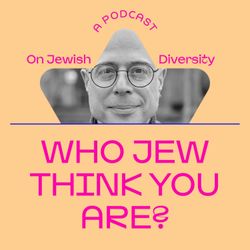
4. Poetic Roots - Kavita Ezekiel Mendonca
01:06:04||Season 3, Ep. 4Our GuestKavita Ezekiel Mendonca is a poet, teacher and the daughter of Nissim Ezekiel, widely regarded as the father of modern Indian poetry in English. Kavita means ‘Poem’ in Sanskrit. Born in Bombay into a Bene Israel family, Kavita grew up in multilingual family, encouraged to respect the many faiths in her community, and where her father made a deliberate choice not to follow the wave of Bene Israel emigration to Israel. His reason: if everyone goes, who stays and does something for this country? That question runs through this whole conversation.Kavita now lives in Calgary, where she writes and teaches. Her poetry draws on her Bene Israel heritage, her multilingual childhood, and the kitchens, synagogues and village visits that shaped her sense of who she is. In this episode, she reads her poem Give Me Oil in My Lamp, which quietly captures what Jewish identity can look like when it has nothing to prove.Key TopicsGrowing up Bene Israel in Bombay: religion, community and the world outside the doorNissim Ezekiel and his choice to stay in IndiaPoetry as inheritance and practiceYour GuideNissim Ezekiel (1924-2004): Indian poet widely regarded as the father of modern Indian poetry in English. Born in Bombay into a Bene Israel family, he published his first collection A Time to Change in 1952 and went on to define a new idiom for Indian writing: rooted in the everyday, sceptical of abstraction, deeply Indian and specifically Jewish at the same time.Bene Israel: One of the oldest Jewish communities in India, traditionally believed to have arrived on the Konkan coast of Maharashtra over two thousand years ago, possibly following a shipwreck. The community developed distinct traditions, including Marathi as a communal language and the malida ceremony. Aliyah: Hebrew for ascent, and a word used for immigration to Israel. Following the Partition of India, and through the 1950s, a significant number of Bene Israel families made aliyah, reducing the Mumbai community considerably.Konkan: The coastal strip of western India running through Maharashtra. The traditional homeland of the Bene Israel community and the setting of the shipwreck legend that forms part of Bene Israel origin stories. The village of Alibag, which features in Kavita's poem, sits near this coast.Want to Learn More?If this conversation connected with you, these episodes are close neighbours:A Jalebi and Challah Sandwich (Season 1, Episode 2): Penny interviews Eylan about his own Bene Israel and Ashkenazi heritage. The place to start if you want the context behind this episode.Memory as Resistance (Season 2, Episode 7): Eliaz Reuben-Dandeker, Bene Israel historian and artist based in Israel, on preserving what remains of Bene Israel material culture and memory.Being Seen Matters (Season 2, Episode 1): Yaffa Judah on her Bene Israel, Moroccan and English heritage, and the work of making mixed Jewish identity legible in British communal life.Identity is Overrated (Season 1, Episode 7): Dr Ophira Gamliel on Yemeni heritage, Asian Jewish communities, and the politics of Jewish languages.References and ResourcesKavita Ezekiel Mendonca's collections: Light of the Sabbath (2021), A Musical Poet and Father (memoir), Family Sunday and Other Poems (1989). Available via her website and through online booksellers.Nissim Ezekiel's work is collected in Collected Poems 1952-1988 (Oxford University Press). This Times of India article celebrates his centenary.Kenneth Robbins is a researcher and writer whose work on Indian Jewish communities includes field visits to Bene Israel sites along the Konkan coast and to the village of Alibag.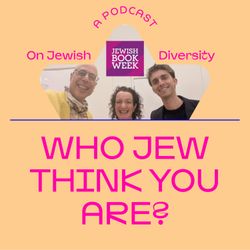
3. Baghdad to the Andes: Live! With Jordan Salama and Samantha Ellis
01:00:02||Season 3, Ep. 3Recorded live at Jewish Book Week in March 2026, this conversation brings together two writers whose books map Jewish histories that rarely make it onto the festival circuit. With a sold-out crowd at Kings Place in London, Samantha Ellis and Jordan Salama talk about language, loss, food, family archives, and what it means to carry more than one Jewish story at once.Our GuestsSamantha Ellis is a playwright, journalist and author, the daughter of Iraqi Jewish refugees. Her books include How to Be a Heroine and Take Courage: Anne Brontë and the Art of Life. Her latest, Chopping Onions on My Heart (published in the US as Always Carry Salt), explores Judeo-Iraqi Arabic, a language on the verge of extinction, and what we can and cannot pass on to our children. She also worked on the first two Paddington films.Jordan Salama is an award-winning writer whose journalism at The New Yorker covers migration, culture and the environment across the Americas. His second book, Stranger in the Desert, follows his great-grandfather's trail as a Syrian Jewish travelling salesman in the Argentine Andes in the 1920s, beginning with a binder of family history discovered in his grandfather's basement. Jewish Book Week is London’s longest running literary festival, hosted by the Jewish Literary Foundation. It attracts award-winning authors and thinkers every year for an exciting programme of debates, talks, and performances at Kings Place, London and online. Find out more here. Key TopicsArab Jews: why the term matters, why it's contested, and what it opens upJewish futures: a generational shift in who is telling these stories and why nowYour GuideJudeo-Iraqi Arabic: the Jewish dialect of Arabic spoken by Iraqi Jews, now critically endangeredKubba shwandar: Iraqi Jewish dumplings of lamb and rice, cooked in a sweet and sour beetroot sauceTurcos: the name given to Arabic-speaking Ottoman immigrants in Latin America, Jewish and Christian alikeWant to learn more?Samantha Ellis appeared previously in Season 2: S2E5 Endangered, Not Erased Explore related conversations on Iraqi/Sephardi identity:S3 E2 Plural and Partial with Linda Dangoor S2 E9 Echoes of Aden at the Table with Claudia Mendoza S1 E6 Other Within the Other with Carol IsaacsSupport the podcast!To help keep this project going:You can make a one-off donation of as little as £5 at Buy Me a Coffee, Or subscribe on Substack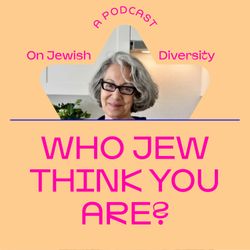
2. Plural and Partial - Linda Dangoor
42:46||Season 3, Ep. 2Our GuestLinda Dangoor is a designer, painter and ceramicist, and the author of two cookbooks. Flavours of Babylon (first published 2011) celebrates the recipes of her Baghdadi Jewish heritage. Her second book, From the Tigris to the Thames (Green Bean Books, 2025), is part memoir, part cookbook, tracing her journey from Baghdad through Beirut, London, Ibiza and Paris. Praised by Yotam Ottolenghi, Claudia Roden, Giles Coren and Nigella Lawson - and Eylan (!). Linda studied painting and graphic design at the Central School in London and is a member of the Society of Designer Craftsmen.Website: lindadangoor.com | Recipes: lindadangoorcooks.com | Instagram: @lindadangoorcreativeliving Key Topics• Food as identity: Why Linda argues food belongs to the place it comes from, not just the community that cooks it, and why she resists the label 'Jewish food'• Fear and concealment: What it meant to be Jewish in mid-century Baghdad, the word Israel banned at Passover, and the cost of decades of keeping Jewish identity quiet• Nostalgia versus memory: The distinction Linda draws between looking back with longing and simply saying how it was Your GuideShort definitions and terms referenced in this episode: • Babylonian Jews: A Jewish community from Mesopotamia (modern Iraq) who trace their origins to the exile of Judahite captives to Babylon in the sixth century BCE. Distinct from Sephardi and Ashkenazi communities, though often grouped under the broader Mizrahi label• T'beet: A traditional Iraqi Jewish Shabbat overnight dish. Recipe here• 'Our identity is at once plural and partial': A phrase from Salman Rushdie's 1982 essay Imaginary Homelands, published in the London Review of Books. Want to learn more?Explore past episodes that also reflect on displacement, Baghdadi Jewish heritage, and food as identity:• S2E5: Endangered, Not Erased with Samantha Ellis: Iraqi Jewish refugee heritage and the author of Chopping Onions on My Heart• S2E9: I Tick a Lot of Boxes with Shelley Silas: Baghdadi Jewish and Indian identity, playwright• S1E6: Other Within the Other with Carol Isaacs: Iraqi Jewish heritage and The Wolf of Baghdad References and Resources• From the Tigris to the Thames by Linda Dangoor (Green Bean Books, 2025)• Flavours of Babylon by Linda Dangoor (Green Bean Books)• Linda Dangoor's recipes at lindadangoorcooks.com• Imaginary Homelands by Salman Rushdie, London Review of Books, 7 October 1982• Nigella Lawson's Cookbook Corner review of From the Tigris to the Thames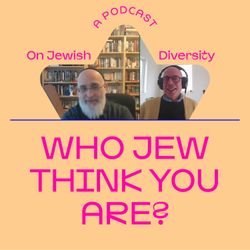
1. "You've got to Think for Yourselves!"
58:01||Season 3, Ep. 1About This EpisodeDaniel Jonas (guest from S2) got in touch having listened to every episode of "Who Jew Think You Are?"He had questions - 4 of them - just in time for Passover. Questions about the assumptions and biases Eylan has, and what he’s learned from two seasons of conversations.This is the result: an episode where the host becomes the guest, and is held to account for views on faith, Zionism and liberal values; testing blindspots, and exploring together the evolving sense of what a broader Jewish identity can mean.About Daniel JonasDaniel Jonas has Iraqi-Indian Sephardi heritage and brings a background in corporate innovation and interfaith dialogue to his engagement with Jewish tradition. He thinks seriously about Judaism as a legal and ethical framework, and about what honest inquiry requires. He appeared in Season 2 (S2E3: ‘Everything needs to change’).Key TopicsThe assumptions baked into the podcast Jewish essentialism: if everything can be Jewish, is anything Jewish?Zionism: what the word still means, and where Eylan actually standsDoes this podcast matter?Referenced in the episodeThe Guide for the Perplexed Maimonides. Daniel cites it as the origin of honest inquiry within JudaismRabbi Louis Jacobs ‘Judaism does not have a systematic theology’The Lindy EffectMonty Python’s Life of Brian ‘the most Jewish film ever made’Past episodes referencedS2E4 Unity Through Diversity (Dr Isaac Amon)S2E6 Dream and Still Rise (Michael Lomotey)S2E2 A Persian Perspective on Nationalism and Identity (Professor Yaacov Yadgar)S1E9 British Black Jews (Kenneth Awele Okafor)Season 3 Coming soon
01:41||Season 3Spring is in the air and Eylan has news about Season 3.Thank you for subscribing, and for your support of the podcast!You'll get the new episodes arrive as they arrive from April, lucky you.If you know someone who is Jewish, Jew'ish, or Jew-Curious why not share this podcast feed with them, so they can join us in the Jewniverse!There are articles, extras and a community space on Substack - so why not find us there too.The audio was recorded at Lye Valley Nature Reserve in Oxford - which is well worth the visit any time of year - but especially in Springtime!(By the way, next time I record a trailer, I won’t end so many sentences on a rising intonation, or uptalk. It was pretty cringy listening back)10. Who Jew Think We Can Become? - Eylan Ezekiel
13:24||Season 2, Ep. 10In the Season 2 finale, host Eylan Ezekiel pauses to reflect on the journey of Who Jew Think You Are? - from its origins as a personal quest for connection, to a broader exploration of Jewish futures. Reviewing the contributions of guests across the season, Eylan discusses how the events of October 7th shifted the conversation from recovery to reckoning, the generational divides around Zionism and identity, and how the provocation that "everything needs to change" acts as a guide for future conversations.About the HostEylan Ezekiel is a writer, producer, and the creator of Who Jew Think You Are?. Drawing on his own Indian-Jewish heritage, Eylan created this space to amplify Jewish voices from the margins - exploring how colonialism, nationalism, and migration shape not only who we are, but who we want to be.Key TopicsThe Pivot: How guest Daniel Jonas’s assertion that "everything needs to change" became the anchor for this podcast’s future.October 7th & Its Aftermath: Navigating the intense pain and polarisation within the community.Generational Shifts: Analysing recent data showing how younger Jews are finding new political homes.Looking Ahead: How Season 3 of Who Jew Think You Are? will focus on re-imagining Jewish futures, solidarity, and new frameworks for belonging.Your GuideShort definitions and terms referenced in this episode:Ashkenormativity: The assumption that Ashkenazi (European) culture and history is the standard Jewish experience.Ubuntu: A Southern African philosophy often translated as "I am because we are."Chevruta: An approach to study in which a pair of students analyse, discuss and debate a text.Halakha: The collective body of religious laws derived from the Torah.Want to learn more?Dive into the full conversations featured in this episode by starting at the beginning of Season 2, or going back to Season 1!References & ResourcesJewish Policy Research - The end of two party politics? (JPR): The institute behind the data cited regarding young Jews and their shifting views on Zionism and political affiliation.Jewish Policy Research - Two years after the October 7 attacks: British Jewish views on antisemitism, Israel and Jewish life: The report into wider generational shift in attitudes.