Share
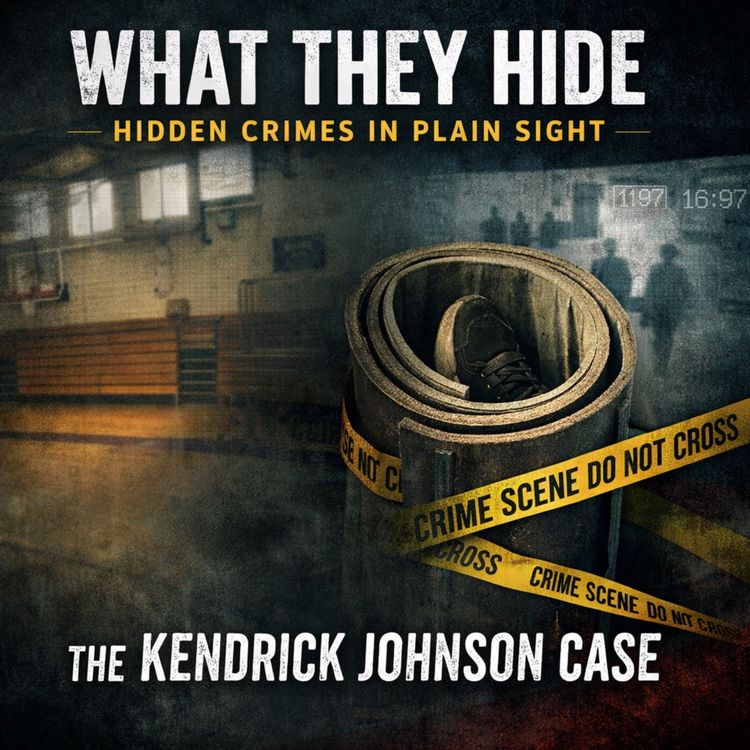
What They Hide: Hidden Crimes in Plain Sight
Found Upside Down in a Gym Mat… The Case That Still Doesn’t Make Sense
In January 2013, seventeen-year-old Kendrick Johnson was found dead inside a rolled gym mat at his high school in Valdosta, Georgia.
What initially appeared to be a tragic and unusual accident quickly became one of the most debated and controversial cases in recent memory.
Authorities concluded that Kendrick’s death was the result of positional asphyxia, an accident that occurred while attempting to retrieve a shoe from inside the mat.
But for Kendrick’s family, that explanation never made sense.
Over the years, conflicting autopsy results, questions around evidence, and gaps in the timeline have fueled ongoing public debate. Multiple investigations — including reviews by state and federal authorities — have upheld the original conclusion.
Yet the case continues to divide opinion.
In this episode of What They Hide: Hidden Crimes in Plain Sight, we explore:
- The final day of Kendrick Johnson
- The discovery inside the gym
- The official investigation and forensic findings
- The family’s fight for answers
- The conflicting evidence that keeps the case alive today
More than a decade later, this remains a case where facts, belief, and uncertainty collide — raising one question that still lingers:
What really happened?
📚 SourcesResearch for this episode is based on publicly available records, investigative reporting, and official findings, including:
- Georgia Bureau of Investigation (GBI) case files and official statements
- U.S. Department of Justice (DOJ) review and closure reports
- Lowndes County Sheriff’s Office investigation summaries
- Official autopsy report (2013) and independent autopsy findings
- CNN — coverage of the Kendrick Johnson case and investigation updates
- BBC News — international reporting on the case
- The New York Times — reporting on controversy and legal developments
- The Guardian — analysis of the case and public response
- The Washington Post — coverage of investigations and DOJ involvement
- Valdosta Daily Times — local reporting and timeline details
- ABC News / NBC News — investigative summaries and interviews
- Publicly available interviews with the Johnson family and legal representatives
This case remains the subject of ongoing public debate. While official investigations have concluded Kendrick Johnson’s death was accidental, alternative interpretations and concerns raised by the family and others are also discussed in this episode.
The aim of this episode is to present the case clearly, respectfully, and without speculation presented as fact.
Music by Mubert
whattheyhidepod@gmnail.com
More episodes
View all episodes
15. Jimmy Savile part 3
33:25||Season 1, Ep. 15PART 3 — THE RECKONINGFor decades, the image held.A trusted figure.A familiar voice.A man welcomed into institutions built on care.Then the truth began to surface.In Part 3 of this series, we confront the full scale of the case surrounding Jimmy Savile — as allegations became evidence, voices became testimony, and a national figure became the centre of one of the most disturbing scandals in British history.What began as a single investigation quickly became something much larger.Hundreds of victims.Multiple institutions.Decades of offending.This episode explores:The flood of voices that emerged after Savile’s deathThe confirmed scale of abuse documented by official investigationsThe media explosion that brought the story into the public eyeThe role of institutions including the BBC and the National Health ServiceThe failures that allowed the pattern to continue for so longThe human impact behind the numbersThis is not just the story of what happened.It is the story of how it was allowed to happen.And the question that remains:Could it have been stopped?📚 SOURCESThis episode is based on official reports, verified investigations, and long-form journalism, including:Official Reports & InvestigationsMetropolitan Police Service & NSPCC (2013) Giving Victims a Voice — detailed report documenting offences and victim accountsNational Health Service Investigations (2014) Multiple reports into Savile’s activities across NHS hospitals, including Stoke Mandeville HospitalDepartment of Health & NHS Trust safeguarding reviewsJournalism & DocumentariesITV — Exposure: The Other Side of Jimmy Savile (2012)BBC News & InvestigationsThe Guardian — investigative reporting and analysisBBC Panorama — institutional response coverageBooks & Long-Form ResearchDan Davies — In Plain Sight: The Life and Lies of Jimmy SavileKate Lampard & Ed Marsden — NHS investigation reports and summariesAdditional archival reporting from UK national pressContext & Supporting MaterialPublic records relating to Savile’s broadcasting careerHistorical context around Top of the PopsReporting on safeguarding failures and institutional accountability⚠️ NOTE TO LISTENERSThis episode contains discussion of abuse and institutional failure.Care has been taken to present this story responsibly, without graphic detail, while reflecting the seriousness of the case.🎧 SERIES NOTEThis is Part 3 of a three-part series.Part 1 — The Making of ControlPart 2 — The SilencePart 3 — The ReckoningMusic by MUBERTwhattheyhidepod@gmail.com
14. Jimmy Savile part 2
42:59||Season 1, Ep. 14PART 2 — THE SILENCEFor decades, the image never cracked.A familiar face on television.A trusted presence in hospitals.A man welcomed into institutions built on care.But behind that image…A pattern was forming.In Part 2 of this three-part series, we move beyond the rise of Jimmy Savile and into the reality that existed beneath it — a pattern of behaviour that repeated across years, locations, and victims.This episode examines how that pattern continued in plain sight, and why it was never fully stopped.We explore:How similar accounts emerged across different environmentsThe culture within institutions like the BBC and wider public lifeThe role of reputation, hierarchy, and fear in preventing actionSavile’s access to hospitals, including Stoke Mandeville HospitalThe early signs, concerns, and moments that were noticed — but never escalatedHow proximity to influence and public trust reinforced his positionAs more voices began to come forward after his death, a much larger picture emerged.Not a single incident.Not a misunderstanding.But a pattern.Repeated.Over decades.This episode focuses on the silence that allowed it to continue — and the systems that failed to stop it.📚 SOURCESThis episode is based on official investigations, verified reporting, and long-form research, including:Official Reports & InvestigationsMetropolitan Police Service & NSPCC (2013) Giving Victims a Voice — comprehensive report into Savile’s offences and victim accountsNational Health Service Investigations (2014) Reports into Savile’s activities across multiple NHS hospitals, including Stoke MandevilleDepartment of Health reviews into safeguarding failuresJournalism & DocumentariesITV — Exposure: The Other Side of Jimmy Savile (2012)BBC News & InvestigationsThe Guardian — extensive investigative reportingBBC Panorama — analysis of institutional failuresBooks & Long-Form ResearchDan Davies — In Plain Sight: The Life and Lies of Jimmy SavileKate Lampard & Ed Marsden — NHS investigation reports and summariesAdditional reporting from UK national press archivesContext & Supporting MaterialPublic records of Savile’s broadcasting careerHistorical context around Top of the Pops and BBC cultureReporting into safeguarding failures across institutions⚠️ NOTE TO LISTENERSThis episode discusses a real case involving abuse and institutional failure.Care has been taken to present this story responsibly, without graphic detail, while reflecting the seriousness of the events.Part 2 focuses on the pattern of behaviour and the silence that allowed it to continue.Part 3 will examine the full scale of the case, the investigations that followed, and the wider impact.Music by MUBERTwhattheyhidepod@gmail.com
13. Jimmy Savile, The making of control
36:29||Season 1, Ep. 13PART 1 — THE MAKING OF CONTROLFor decades, he was one of the most recognisable faces in Britain.A television personality.A radio DJ.A charity fundraiser.A man trusted in hospitals, institutions, and homes across the country.But long before the truth came out…The foundations were already in place.In Part 1 of this three-part series, we examine the early life and rise of Jimmy Savile — from his upbringing in Leeds to his rise through radio and television, including his work with Radio Luxembourg and the BBC.We explore how Savile built a public image that allowed him unprecedented access to institutions such as National Health Service hospitals, including Stoke Mandeville Hospital — and how familiarity, reputation, and trust created an environment where questions were rarely asked.This episode focuses on:Savile’s early life and formative influencesHis rise through radio and televisionThe creation of his public personaHis access to hospitals and institutionsThe early rumours and why they never escalatedThis is not the story of exposure.Not yet.This is the story of how everything was put in place…Before anyone realised what was happening.📚 SOURCESThis episode is based on publicly available investigations, official reports, and reputable journalism, including:Official Reports & InvestigationsMetropolitan Police Service & NSPCC Joint Report (2013) Giving Victims a Voice — detailing the scale and pattern of abuseNational Health Service Investigations (2014) Reports into Savile’s activities across multiple NHS hospitals, including Stoke MandevilleDepartment of Health & NHS Trust internal reviews and safeguarding reportsJournalism & Documentary SourcesBBC News — reporting on Savile investigations and institutional responseITV — Exposure: The Other Side of Jimmy Savile (2012)The Guardian — investigative reporting and analysisBBC Panorama — coverage of the scandal and aftermathBooks & Long-Form ReportingDan Davies — In Plain Sight: The Life and Lies of Jimmy SavileKate Lampard & Ed Marsden — NHS and Savile investigation summariesAdditional long-form journalism and archival reporting from UK national pressAdditional ContextPublic records relating to Savile’s broadcasting careerHistorical reporting on Top of the Pops and UK media cultureReporting connected to investigations involving Haut de la Garenne⚠️ IMPORTANT NOTEThis episode discusses a real case involving abuse and institutional failure.Care has been taken to present information accurately and responsibly, without graphic detail.Part 1 focuses on background, access, and early warning signs.Part 2 will examine the pattern of abuse and the silence that allowed it to continue.Music by MUBERT whattheyhidepod@gmail.com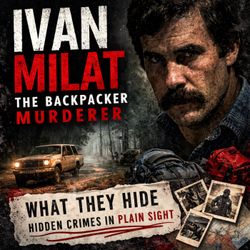
11. Ivan Milat Part 2
54:38||Season 1, Ep. 11In the early 1990s, a stretch of forest south of Sydney became the centre of one of Australia’s most disturbing murder investigations.Belanglo State Forest had long been a quiet expanse of bushland along the highways used by backpackers travelling between Sydney and Melbourne. But when police began uncovering human remains hidden beneath the trees, a terrifying pattern emerged.Young travellers from across the world had disappeared along the same roads. Many had been hitchhiking. Many had last been seen accepting rides from strangers.And somewhere along those highways, a killer had been waiting.In this two-part episode of What They Hide: Hidden Crimes in Plain Sight, we take a deep investigative look at the crimes of Ivan Milat, the man who would become known as Australia’s “Backpacker Murderer.”This series explores:The discovery of multiple victims inside Belanglo State ForestThe stories of the seven young travellers whose journeys ended thereHow investigators slowly uncovered a pattern linking the disappearancesThe surviving witness who helped identify the killerThe investigation that led police to Ivan MilatThe 1996 trial that revealed the full horror of the crimesMore than three decades later, the Belanglo murders remain one of the most infamous serial killer cases in Australian history — a chilling reminder of how easily violence can remain hidden along the most ordinary roads.SourcesResearch for this episode drew from court records, investigative journalism, and historical reporting including:BooksMark Whittaker & Les Kennedy — Sins of the Brother: The Definitive Story of Ivan Milat and the Backpacker MurdersClive Small & Tom Gilling — Milat: Inside Australia’s Biggest ManhuntGordon Burn — Happy Like Murderers (context on serial crime investigation culture)Court and Legal RecordsR v Ivan Milat (1996) — Supreme Court of New South Wales trial recordsOfficial sentencing remarks and court summaries relating to Milat’s convictionsJournalism & ReportingBBC News archival reporting on the Belanglo murdersThe Guardian coverage of the investigation and trialThe Sydney Morning Herald reporting on the Belanglo search and police operationThe Australian investigative reporting on the Milat casePolice and Investigation ReportingHistorical summaries of the New South Wales Police Task Force investigationContemporary reporting on the Belanglo State Forest search operationsMusic by Mubertwhattheyhidepod@gmail.comwhat they hide pod on all socials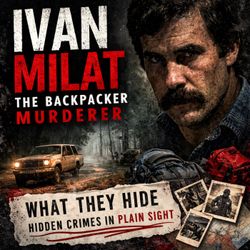
10. Ivan Milat Part 1
50:13||Season 1, Ep. 10In the early 1990s, a stretch of forest south of Sydney became the centre of one of Australia’s most disturbing murder investigations.Belanglo State Forest had long been a quiet expanse of bushland along the highways used by backpackers travelling between Sydney and Melbourne. But when police began uncovering human remains hidden beneath the trees, a terrifying pattern emerged.Young travellers from across the world had disappeared along the same roads. Many had been hitchhiking. Many had last been seen accepting rides from strangers.And somewhere along those highways, a killer had been waiting.In this two-part episode of What They Hide: Hidden Crimes in Plain Sight, we take a deep investigative look at the crimes of Ivan Milat, the man who would become known as Australia’s “Backpacker Murderer.”This series explores:The discovery of multiple victims inside Belanglo State ForestThe stories of the seven young travellers whose journeys ended thereHow investigators slowly uncovered a pattern linking the disappearancesThe surviving witness who helped identify the killerThe investigation that led police to Ivan MilatThe 1996 trial that revealed the full horror of the crimesMore than three decades later, the Belanglo murders remain one of the most infamous serial killer cases in Australian history — a chilling reminder of how easily violence can remain hidden along the most ordinary roads.SourcesResearch for this episode drew from court records, investigative journalism, and historical reporting including:BooksMark Whittaker & Les Kennedy — Sins of the Brother: The Definitive Story of Ivan Milat and the Backpacker MurdersClive Small & Tom Gilling — Milat: Inside Australia’s Biggest ManhuntGordon Burn — Happy Like Murderers (context on serial crime investigation culture)Court and Legal RecordsR v Ivan Milat (1996) — Supreme Court of New South Wales trial recordsOfficial sentencing remarks and court summaries relating to Milat’s convictionsJournalism & ReportingBBC News archival reporting on the Belanglo murdersThe Guardian coverage of the investigation and trialThe Sydney Morning Herald reporting on the Belanglo search and police operationThe Australian investigative reporting on the Milat casePolice and Investigation ReportingHistorical summaries of the New South Wales Police Task Force investigationContemporary reporting on the Belanglo State Forest search operationsMusic by: MUBERT Whattheyhidepod@gmail.com@whattheyhidepod on all the socials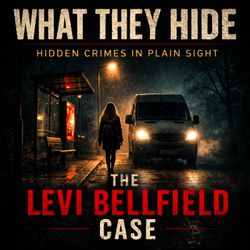
9. Levi Bellfield
50:40||Season 1, Ep. 9In the early 2000s, a series of brutal attacks on young women began unfolding across the quiet suburbs of West London.At first, the crimes appeared unconnected. A young woman walking home after a night out. Another crossing a quiet green late in the evening. A student struck by a car in what initially appeared to be a hit-and-run. Each attack shocked the local community, but detectives struggled to find a clear pattern.But slowly, investigators began to realise something far more disturbing.A man had been driving the streets of West London at night, watching bus stops, following women walking alone, and striking without warning.His name was Levi Bellfield.In this episode of What They Hide: Hidden Crimes in Plain Sight, we take a deep investigative dive into the crimes of the man who became known as the Bus Stop Killer.This episode explores:The murder of Marsha McDonnell in Hampton in 2003The murder of Amélie Delagrange on Twickenham Green in 2004The attempted murder of Kate Sheedy, whose survival helped investigators begin closing in on the attackerThe disappearance and murder of 13-year-old Milly Dowler, a case that shocked the entire countryHow police finally identified and arrested Levi BellfieldThe trials that led to multiple whole life sentencesAnd the unsettling reality that Bellfield had been living an ordinary life while stalking the streets of London for victimsMore than two decades later, the case remains one of the most disturbing examples of a violent predator operating hidden in plain sight.SourcesThis episode was researched using court records, investigative journalism, and historical reporting from the following sources:BooksChristopher Berry-Dee — Levi Bellfield: The Bus Stop KillerDavid Wilson & Elizabeth Yardley — Serial Killers: Hunting Britain's Most Evil MurderersCourt and Legal RecordsR v Levi Bellfield (2008) – Old Bailey trial recordsR v Levi Bellfield (2011) – Milly Dowler murder trialJournalism & Archival ReportingBBC News Archive coverage of the Bellfield investigations and trialsThe Guardian reporting on the Bellfield murders and court proceedingsThe Independent coverage of the Milly Dowler case and Bellfield convictionsThe Telegraph investigative reporting on the West London attacksPolice and Official ReportingMetropolitan Police investigation summaries relating to the Bellfield murdersHistorical reporting on the Operation Ruby investigation
8.1. Update: Ian Huntley dies after prison attack
05:12||Season 1, Ep. 8.1
8. Ian Huntley
50:18||Season 1, Ep. 8On August 4th, 2002, ten-year-old best friends Holly Wells and Jessica Chapman left home in the Cambridgeshire town of Soham to buy sweets. They were wearing matching Manchester United shirts with “Beckham 7” on the back.They never returned.What followed was one of the largest missing-person investigations in modern British history. As volunteers searched fields and waterways and the nation watched the girls’ photograph circulate across the world, a man from within the community stepped forward to help.He gave interviews.He spoke calmly to reporters.He described the last time he had seen the girls.That man was Ian Huntley, the caretaker at the local secondary school.Within weeks, investigators would uncover a devastating truth: the man standing in front of cameras appealing for information was the same man responsible for the girls’ deaths.In this episode of What They Hide: Hidden Crimes in Plain Sight, we take a deep investigative look at:The disappearance of Holly Wells and Jessica ChapmanIan Huntley’s chilling media appearances during the searchThe investigation that slowly closed in on himThe courtroom trial that exposed the truthThe role of Maxine Carr and the false alibi that delayed justiceThe systemic failures revealed by the Bichard InquiryWe also examine how this case reshaped safeguarding laws in the United Kingdom and forced the country to confront how warning signs can be missed when information isn’t shared.Because sometimes the most disturbing crimes are not hidden in darkness.They unfold in plain sight.Listener discretion advised.SourcesThis episode was researched using publicly available records, court reporting, and investigative journalism from the following sources:Official ReportsThe Bichard Inquiry Report (2004) – UK Government investigation into police intelligence failures related to the Soham murdersUK Home Office documentation on safeguarding reforms and information sharingCourt and Legal ReportingCoverage from the Old Bailey trial of Ian Huntley (2003)Sentencing statements and official court recordsBooksSoham: The Real Story — by David James SmithThe Soham Murders — investigative reporting compiled from court proceedings and police sourcesJournalism & Media ArchivesBBC News archive reporting on the Soham murders and the trialThe Guardian investigative coverage of the case and the Bichard InquiryThe Independent reporting on the investigation and legal proceedingsThe Telegraph coverage of the trial and aftermathDocumentaries and Broadcast ReportingBBC documentary coverage of the Soham murdersChannel 4 investigative reporting on the Bichard Inquiry and policing reformsMusic By MUBERTwhattheyhidepod@gmail.com