Latest episode
16. Season Wrap Up
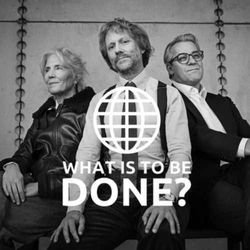
42:15||Season 1, Ep. 16Joel, Sasja and Carolina reflect on the season's 15 episodes, which have explored growth and economic systems from widely different perspectives -- from techno-optimists to advocates of an entirely new economic system. They conclude that the series has succeeded in keeping the tension between different viewpoints alive, but that they want to meet more entrepreneurs in the next season.The conversation moves through several themes: AI's dual role as both resource drain and potential solution; the financial system's short-termism as a structural barrier to transition; the need for political reform (including around corporate law and quarterly reporting); and a new report associated with Piketty on global justice and concrete steps toward a more equitable world within planetary boundaries.They also highlight the weakening of democracy as a deeply troubling parallel process, alongside the climate crisis, the AI boom and demographic shifts, and want to explore this further next season. Other topics flagged for season 2 include rewilding, religion and social development, Buckminster Fuller's systems thinking, and AI from multiple angles.
More episodes
View all episodes
15. Regenerative Economics with John B. Fullerton
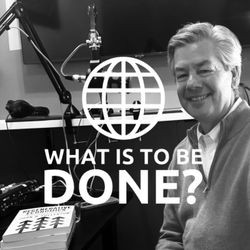
01:00:33||Season 1, Ep. 15We spoke with John Fullerton, author of Regenerative Economics and former top banker, about why the economic system isn't broken and working exactly as designed. And that's the problem.His core argument: we built the economy like a machine. But life doesn't work like a machine. And no amount of carbon taxes or ESG reporting will fix a design flaw that deep.What would it look like to build an economy like a living system instead?That's what this conversation is about.BackgroundJohn spent nearly 20 years at J.P. Morgan before leaving in 2001. The September 11 attacks, which he witnessed firsthand, prompted a deep personal search for meaning. He began reading widely outside finance, including Limits to Growth, and eventually developed the framework of regenerative economics.The Core Problem: Economy as MachineThe root of today's economic crisis lies in how neoclassical economics was founded: 19th-century mathematicians deliberately modeled it on Newtonian physics, treating the economy as a machine rather than a living organism. Two critical errors followed, ignoring the second law of thermodynamics (entropy) and assuming time is reversible. The Nordhaus Nobel Prize, which deemed a 3.5°C temperature rise acceptable, is a product of this flawed thinking.Regenerative vs. Other Economic FrameworksEnvironmental economics (Nordhaus) uses externalities, useful as a concept, but inadequate because not all harms can be priced or fixed with money.Ecological economics (Herman Daly) was a major leap, re-embedding the economy within the biosphere, but still frames things as a trade-off between growth and sustainability.Regenerative economics goes further, treating the economy as a living system governed by emergence, adaptive cycles, and self-organization, not top-down management toward preset goals.Co-Inherited Wealth and the CommonsDrawing on Peter Barnes' work, John argues that natural resources, the internet, mathematical knowledge, and accumulated technological progress are all co-inherited wealth, shared assets that the private sector currently uses for free. He estimates that privately owned wealth represents only about 13% of total real wealth. A proper institution of the commons, similar to Norway's oil fund or Alaska's oil trust, could govern these shared assets, generate universal revenues, and make the economy self-fueling.Practical PathwaysRather than one grand plan, John points to many existing examples:The Mondragón cooperative in Spain, managing 80 businesses as a single ecosystem for 80 yearsBioregional movements and decentralized food systemsThe opportunity presented by the "silver tsunami", as aging baby boomers exit their privately owned businesses, there's a chance to buy and reorganize half the global economy into place-based regenerative ecosystemsOn AI and EnergyJohn believes the current AI boom is likely a financial bubble. That said, the massive energy demand it creates is already spurring engineering innovation in efficiency, the challenge is directing that ingenuity toward systemic health rather than billionaire-making.The Path Forward John sees this as fundamentally a re-education and paradigm shift project. Drawing on Ilya Prigogine's mathematics, he argues that when systems are far from equilibrium, small "islands of coherence" can shift the whole. His online community (withlife.net) is one such island. The transformation may happen suddenly and unexpectedly, like the fall of the Berlin Wall or through painful collapse first. Either way, he believes the regenerative economy is already emerging, even if we can't fully see it yet.
14. Seduce, Don't Preach with Olly Lawder from Revolt
50:56||Season 1, Ep. 14This week we sit down with Olly Lawder, a strategist and storyteller with extensive experience in sustainability communications. We trace the arc of sustainability communication from its origins in corporate philanthropy and early CSR, through the rise of ambitious net zero targets and "rock star CEOs," to the more cautious and compliance-driven moment we find ourselves in today. Along the way, we ask an uncomfortable question: did the movement win over the corporate world while losing voters and consumers?Olly has spent 20 years helping major global brands figure out how to make sustainable choices genuinely desirable, not as a moral duty, but as something people actually want. The closer sustainability gets to the real reason someone buys something, the more powerful it becomes. Nobody buys a perfume for the recycled packaging. But if the sustainably sourced vanilla makes it smell more complex, more unique, more seductive? We dig into why terms like "net zero" and "degrowth" leave people cold, what the fossil fuel industry understands about communications that the sustainability movement still doesn't, and why the pendulum will eventually have to swing back, because none of the fundamental problems have gone away.
13. Post Growth Pensions with Steve Rocco
49:23||Season 1, Ep. 13In our latest episode of What is to be Done, we sat down with Steve Rocco, co-founder of the Arketa Institute, to talk about one of the most fundamental challenges of our time: the gap between modern science and the economic theories that still govern our financial systems. What makes Steve's perspective particularly striking is where it comes from. He has spent his career inside the financial system, from trading desks at Bank of America and Goldman Sachs to impact investing, green bonds and private placements. It is precisely that experience, he argues, that made the contradictions impossible to ignore.His argument is straightforward but radical. The neoclassical economics that dominates our institutions, business schools and financial markets was built before much of what we now know about the biosphere and planetary boundaries. Ecological economics offers a different framework, one where the economy exists within nature, not alongside it.A central theme in the conversation is the concept of multi-capital, the idea that wealth cannot be reduced to financial capital alone. Social capital, natural capital and community are not soft add-ons but fundamental components of a functioning and sustainable economy. The episode also digs into what a post-growth pension system might look like in practice. Steve makes the case that pension funds are not just a financial instrument but a political one, and potentially a powerful lever for change. Pensioners sit on boards of trustees. They are also voters. That combination, he argues, is deeply underestimated.The episode does not offer easy answers, but it reframes the question in a way that feels both urgent and, oddly, hopeful.
12. Business transformation in Japan and migration with Joel & Sasja
57:38||Season 1, Ep. 12While the rest of the world debates whether to take sustainability seriously, Japan is quietly getting on with it. In this episode, your co-host Sasja takes centre stage. Based part-time in Tokyo, where he manages Japan's first domestically-run mid-cap impact fund, Sasja brings four years of on-the-ground experience to one of the world's most underreported sustainability stories. We explore the physical reality of climate change hitting Japan right now, why Japanese companies are building ESG equity stories that outpace Europe, and what a warming world means for the one thing no politician wants to talk about: mass migration.The future won't wait. Neither should you.
11. Regenerative Business Models & Growth Potential with Joel & Carolina
40:52||Season 1, Ep. 11In this episode, Joel and Carolina explore the green transition from a growth perspective. From China's record-breaking solar installations to India's emergence as a global scaling platform for climate technologies, the shift toward a cleaner economy is accelerating, just not where most people are looking. We also dig into why Western economies remain stuck in fossil fuel dependency despite the obvious strategic and economic case for renewables, and what it will take to break free from legacy thinking.At the heart of the conversation is the idea of regenerative business, moving beyond ESG checklists and "doing less harm" toward business models that actively restore ecological, social, and economic systems. We look at real companies already doing this: from flooring to offshore wind to space-based Earth observation. We also discuss the potential of more accurate and precise metrics for impact and fewer but sharper KPI's for business transformation.
10. Creating Shared Value with Marc Pfitzer
53:59||Season 1, Ep. 10In this session we explore the idea of Shared Value. It is easy to assume that corporations have always existed exclusively to maximize returns for shareholders. But historically that was not always the case. In the nineteenth century many U.S. states required companies to demonstrate a societal benefit in order to obtain limited liability.Over time this view shifted. A famous turning point came in 1919 when the Dodge brothers sued Henry Ford after he chose to reinvest profits in higher wages and community development rather than maximizing dividends. The court ruled that a corporation should be run primarily for the profit of its shareholders. Decades later this idea became deeply influential through the work of Milton Friedman.But as globalization expanded and environmental and social challenges became more visible, alternative ideas began to re-emerge. In 2006, Michael E. Porter introduced the concept of Creating Shared Value: the idea that companies can strengthen their competitiveness by understanding and expanding the value they create for society.Nearly twenty years later, however, the practical challenge remains. Many companies say sustainability is integrated into their strategy, yet in practice it often sits in a silo. Financial performance and sustainability metrics are reported side by side, but rarely is there a serious attempt to understand how they actually influence one another.If sustainable business development is to become possible, companies need better ways to connect impact with financial performance.To explore how this can be done in practice, we invited Marc Pfitzer, a global strategy advisor since 30 + years, with several articles on todays subject published in the Harvard Business Review and he also lecture at the Stockholm School of Economics.