Share
The Wes Cecil Podcast
The History of Philosophy in 16 Questions - Q11: Why Golden?
The History of Philosophy in 16 Questions - Q11: Why Golden?
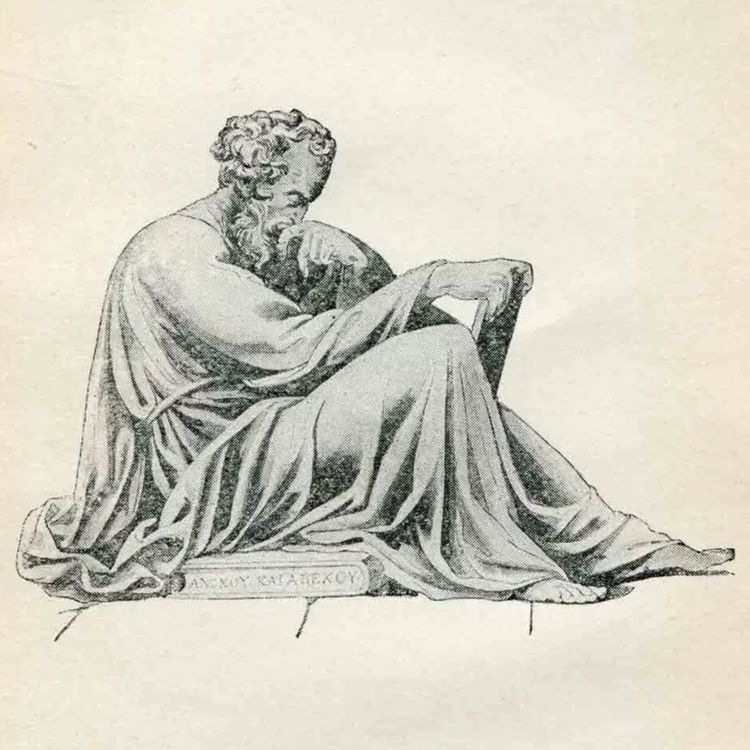
800 ad Abbasid Capital is established in Baghdad displacing the Umayids
801-873 Al Kindi and the Translation Movement
980-1037 Avicenna Medicine, Philosophy Bukhara
1126-1200 Averroes and the Al-Andalus
1258 Mongols sack Baghdad and destroy most libraries and books
Muḥammad ibn Mūsā al-Khwārizmī played a significant role in the development of algebra, arithmetic and Hindu-Arabic numerals. He has been described as the father of algebra. Another Persian mathematician, Omar Khayyam, is credited with identifying the foundations of algebraic geometry and found the general geometric solution of the cubic equation. His book Treatise on Demonstrations of Problems of Algebra (1070), which laid down the principles of algebra, is part of the body of Persian mathematics that was eventually transmitted to Europe. Yet another Persian mathematician, Sharaf al-Dīn al-Tūsī, found algebraic and numerical solutions to various cases of cubic equations. He also developed the concept of a function.
Ibn al-Haytham was the first to explain that vision occurs when light reflects from an object and then passes to one's eyes. And he was the first to point out that vision occurs in the brain, rather than in the eyes. He was also an early proponent of the concept that a hypothesis must be proved by experiments based on confirmable procedures or mathematical evidence—hence understanding the scientific method five centuries before Renaissance scientists.
Hospitals, Pharmacies, medical case studies, drug testing, trade with China, Travel writing, histories, philosophy, linguistic studies, literature, educational institutions, hydrology, astronomy.
Sign-up for Wes’s PATREON to get your questions answered by Wes!
Plus, gain access to course materials, reading lists, peer discussions, bonus lectures, and Wes’s weekly diaries from France. Only $2 / month.
More episodes
View all episodes
1. House of the Intellect - Ep. 1
43:02||Season 2, Ep. 1INTELLECTUAL HOMELESSNESS:This series will explore the contemporary state of the world of arts and ideas and how we can begin to build lives centered around culture and philosophy. We are often misled as to the nature and purpose of intellectual pursuits. I hope to clarify the history and cultural forces that shape our understanding of and participation in the house of the intellect. Unfortunately, Barzun’s book The House of the Intellect is currently out of print. The Internet Archive has a copy available online at The house of intellect : Barzun, Jacques, 1907- : Free Download, Borrow, and Streaming : Internet Archive. Articles I refer to in the lecture:The Elite College Students Who Can’t Read Books - The AtlanticStudents Are Unprepared to Read Books — Minding The CampusSign-up for Wes’s PATREON to get your questions answered by Wes!Plus, gain access to course materials, reading lists, bonus lectures, and Wes’s weekly diaries from France. Only $2 / month.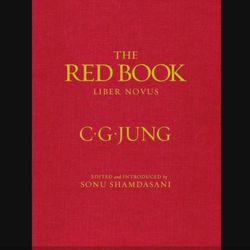
1. Reading Jung's The Red Book - Ep. 1
28:15||Season 3, Ep. 1A work that I think embodies, quite consciously on the part of Jung, many of the contradictions, challenges, and paradoxes of the modern mind trying to come to grips with a world that simply does not cohere with our general materialist, rationalist worldview. I hope to use this as both a great text to explore and an example of how one can read in a very different manner. It was working with great teachers who helped me learn to read in this particular way and in doing this exercise together I hope to model and share what I have been fortunate enough to learn. I recommend the reader's guide rather than the larger, more expensive, and more beautiful full sized illustrated version because I am an aggressive notetaker and underliner. However, your tastes may vary. For the first reading session please read the Prologue “The Way of What is to Come” and Chapters One and Two.Sign-up for Wes’s PATREON to get your questions answered by Wes!Plus, gain access to course materials, reading lists, bonus lectures, and Wes’s weekly diaries from France. Only $2 / month.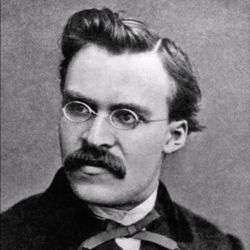
1. Major Thinkers - Friedrich Nietzsche - Ep. 1
01:11:11||Season 4, Ep. 1MAJOR THINKERS - NIETZSCHE - EP. 1 An intellectual biography of Nietzsche kicks off this series discussing the life and philosophy of a series of major thinkers. I explore some of the key ideas and influences that shaped Nietzsche’s thinking including his loathing of Christianity and the influence of classical literature in shaping his ethical outlook. This is an improved audio version of a lecture I delivered over a decade ago. Sign-up for Wes’s PATREON to get your questions answered by Wes!Plus, gain access to course materials, reading lists, bonus lectures, and Wes’s weekly diaries from France. Only $2 / month.
2. House of the Intellect - Ep. 2
47:10||Season 2, Ep. 2DIGNITY AND INTEGRITY: It may seem a bit abstract, which I imagine it is, however I feel the disappearance of the concepts of Dignity and Integrity from the world of education, art, philosophy and culture generally is one of the greatest challenges to a sense of intellectual community today. Recognizing our own dignity allows us to appreciate the value of our contributions to the world of ideas and well as appreciate those of others. This dignity arises from and is reinforced by personal integrity towards ourselves and work. Unfortunately, these concepts have almost completely disappeared. Simply put, these are the only possible foundations on which the House of the Intellect can be built. I would love to hear your thoughts, examples, and questions related to these ideas. Again, I’ll try to respond to them in a future questions and answers segment. For further reading and general confusion:Integrity (Stanford Encyclopedia of Philosophy)Dignity (Stanford Encyclopedia of Philosophy)Sign-up for Wes’s PATREON to get your questions answered by Wes!Plus, gain access to course materials, reading lists, bonus lectures, and Wes’s weekly diaries from France. Only $2 / month.
2. Reading Jung's The Red Book - Ep. 2
36:38||Season 3, Ep. 2Wow, so I did mention this is a crazy, difficult text didn’t I? So Jung’s conscious attempt to break from the thought processes and values of his society created an intellectual and emotional crisis that shaped the creation of the Red Book. The most significant note for contemporary readers is that he is trying to return in some way to the approaches to knowledge and wisdom that shaped the first 4,000 years of civilization. This makes the book difficult to read on a number of levels including his rejection of the assumptions that allow us to understand arguments in general. For next time please read Chapters Three - Five. And be warned, not that you haven’t realized this already, the crazy isn’t going to stop.Sign-up for Wes’s PATREON to get your questions answered by Wes!Plus, gain access to course materials, reading lists, bonus lectures, and Wes’s weekly diaries from France. Only $2 / month.
2. Major Thinkers - Karl Marx - Ep. 2
01:22:10||Season 4, Ep. 2Karl Marx is one of the most influential thinkers in the history of the world. This lecture reviews his background and some of the events that formed his thinking as a means of putting his core ideas into a historical frame. A hopefully much more listenable version of this early recording. Karl Marx 1847 A link to the Economic and Philosophical manuscripts of 1847 which is perhaps the best place to get an introductory perspective on Marx’s thinking.Sign-up for Wes’s PATREON to get your questions answered by Wes!Plus, gain access to course materials, reading lists, bonus lectures, and Wes’s weekly diaries from France. Only $2 / month.
3. House of the Intellect - Ep. 3
45:34||Season 2, Ep. 3FREE YOUR MIND:Our culture's bias towards technology, specialization, and bureaucracy all mitigate against having a mind that is free to pursue one’s own ideas and to allow the time and predilection to participate in the House of the Intellect. Here I use the example of medical doctors who, over the course of the last 80 years, have been transformed from key participants in the House of the Intellect to narrow specialists who now lack the education, inclination, and cultural environment to be valuable participants. Having our minds free and avoiding self-contempt and cynicism are fundamental to creating the peculiar mental habits necessary to the House of the Intellect. A Few Notable Doctors: W. Somerset MaughamWilliam Carlos WilliamsAnton ChekhovArthur Conan DoyleMikhail BulgakovJohn KeatsErasmus DarwinSigmund FreudCharles DarwinSign-up for Wes’s PATREON to get your questions answered by Wes!Plus, gain access to course materials, reading lists, bonus lectures, and Wes’s weekly diaries from France. Only $2 / month.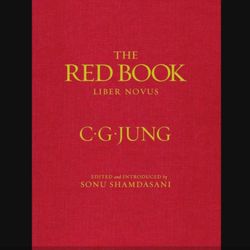
3. Reading Jung's The Red Book - Ep. 3
32:56||Season 3, Ep. 3HOW TO KILL THE HERO:The power of Jung’s approach becomes a little more clear as we move into these later chapters. Jung is quite explicitly at war with his inherited cultural values. While it is one thing to recognize this, it is very much more difficult to try and reimagine one’s values - and hence one’s understanding of the self. Jung tries to murder the image of the hero - casting himself as an honorless assassin. He also articulates the powerful insight that the message Jesus teaches us is that we can torture and kill the gods. Siegfried from the Niebelungenlied:Now Siegfried was of noble birth, a prince without peer,His fame had spread so widely, all held him dear.His strength was like no other; his deeds could not be missed,For he had conquered dragons and the Nibelung's treasure list.In Burgundy’s bright court, his presence was a light,With golden hair and armor, he dazzled every knight.The ladies gazed in wonder, the men sang of his skill,For none could match bold Siegfried’s grace and will.As an exercise, make a list of all of the key values you sense in our culture - the importance of wealth for instance - and then try and embrace not just rejecting those values but actually overthrowing them. While it is generally fairly straightforward to make such a list, to actually internally transform ourselves, as Jung is striving to do, is extremely difficult.Sign-up for Wes’s PATREON to get your questions answered by Wes!Plus, gain access to course materials, reading lists, bonus lectures, and Wes’s weekly diaries from France. Only $2 / month.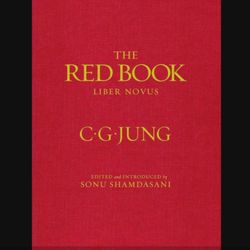
4. Q & A: Reading Jung's The Red Book - Ep. 4
34:12||Season 3, Ep. 4Q & A #1 - READING JUNG'S THE RED BOOKWes and Jeremy take questions from Patreon Members on Episodes 1 & 2Sign-up for Wes’s PATREON to get your questions answered by Wes!Plus, gain access to course materials, reading lists, bonus lectures, and Wes’s weekly diaries from France. Only $2 / month.