Share
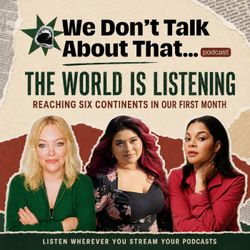
We Don't Talk About That Podcast
Conversations We Were Never Meant To Have with Linda Coogan Byrne + Special Guests
Latest episode
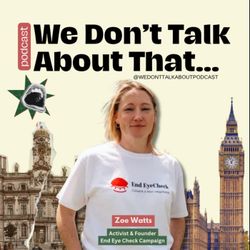
10. End Eye Check Part 2: Zoe Watts on Sexual Violence, Survivor Advocacy and Fighting Back
01:15:11||Season 1, Ep. 10In Part 2 of our special "End Eye Check Campaign" interview on We Don't Talk About That, hosts Linda Coogan Byrne, Sangeeta Kalsi, and Ndidi O are joined by Zoe Watts, founder of the End Eye Check Campaign.They discuss drug-facilitated rape, image-based abuse, the failures of policing and justice systems, and the devastating impact these crimes have on survivors. Zoe also explores the power of collective action, survivor-led advocacy, and why challenging the culture of silence around violence against women matters now more than ever.This is a conversation about survival, accountability, justice and the women refusing to look away.Content warning: This episode contains discussions of rape, sexual violence, coercive control, image-based abuse and trauma.Follow: @wedonttalkaboutpodcastSupport & Further InformationIf you have been affected by any of the issues discussed in this episode, including rape, sexual assault, drug-facilitated rape, image-based abuse or online sexual exploitation, support is available and don't forget to check out endeyecheck.org.United KingdomRape Crisis England & Waleshttps://rapecrisis.org.ukRape Crisis Scotlandhttps://www.rapecrisisscotland.org.ukThe Survivors Trusthttps://www.thesurvivorstrust.orgIrelandDublin Rape Crisis Centrehttps://www.drcc.ieRape Crisis Network Irelandhttps://www.rcni.ieWomen's Aidhttps://www.womensaid.ieUnited StatesRAINN (Rape, Abuse & Incest National Network)https://www.rainn.orgEndEyeCheck CampaignLearn more about the EndEyeCheck campaign and the work being carried out by survivors and advocates:https://www.endeyecheck.comIf you are in immediate danger, please contact emergency services in your country or seek support from a trusted person, healthcare professional or local crisis service.
More episodes
View all episodes
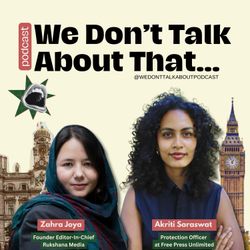
9. Silenced, Not Erased: Five Years of Gender Apartheid in Afghanistan
48:54||Season 1, Ep. 9In this special collaborative episode of We Don’t Talk About That, host Linda Coogan Byrne steps back and the show is led by guest Sangeeta Kalsi, development editor at Fourth Wave Feminist Magazine, to mark five years since the Taliban returned to power in Afghanistan.Our special guests are Afghan journalist Zahra Joya, founder and editor-in-chief of Rukhshana Media, and Akriti Saraswat, Protection Officer for Safety and Gender at Free Press Unlimited.Zahra founded Rukhshana Media to ensure that the lives of Afghan women were documented by Afghan women. Now working from exile, she leads a team of female journalists who continue reporting from inside Afghanistan, often secretly and at enormous personal risk.Akriti works internationally to protect journalists facing violence, persecution, displacement and gender-based threats and speaks about what meaningful support must look like when physical safety is only one part of survival.Together, they discuss what five years of Taliban rule have meant for women and girls, the systematic erasure of women from education, employment and public life, the dangers faced by female journalists, exile, trauma and the international community’s failure to hold the Taliban accountable.This is a conversation about journalism, resistance and what happens when women’s rights are treated as negotiable. Above all, it is a call to listen to Afghan women, support their work and use the freedoms we still possess to demand political action.How you can help support Afghan women:Support Rukhshana Media and help Afghan women journalists continue reporting from inside the country.Support Free Press Unlimited and its emergency assistance for journalists facing threats, violence and displacement.Support the Malala Fund’s Afghanistan Initiative, which funds Afghan-led organisations working to keep girls learning.Support online education for Afghan women and girls, including the Herat Online School.Support Sahar Education, which provides educational and digital-skills programmes for Afghan girls and women.Support the Afghan Women’s Fund, providing emergency assistance to women's rights defenders and at-risk Afghan women.Support UN Women’s work in Afghanistan, including urgent services and programmes defending women’s rights.Join the campaign to Stop Gender Apartheid and call for gender apartheid to be recognised as an international crime.Listeners can also contact their elected representatives and foreign ministers and ask their governments to publicly recognise Taliban rule as a system of gender apartheid, support its codification as a crime against humanity and refuse any political normalisation of the Taliban that abandons Afghan women and girls.This episode contains discussion of gender-based violence, persecution and trauma.Follow We Don’t Talk About That for future conversations exploring culture, equality, power and the stories we are too often told not to discuss.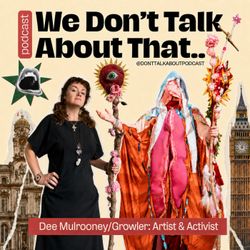
8. “Even If Everything Goes to Shit, We Must Remember We Are Magical” | Dee Mulrooney
01:07:38||Season 1, Ep. 8In this episode of We Don't Talk About That, hosts Linda Coogan Byrne and Ndidi O are joined by Irish artist, performer and activist Dee Mulrooney. Dee discusses art, exile, class, trauma and the transformative power of female rage. We also meet Growler at the end of the podcast, Dee’s award-winning alter ego: an 80-something-year-old drum-banging shamanic vulva with a tongue like a lash and a heart of gold. Through storytelling, song, comedy and performance, Growler gives voice to the forgotten woman and transmutes collective pain into something fierce, sacred and gloriously unruly.Intro music:"Call Me Queen"Written and performed by Ndidi O.Used with permission.Follow We Don't Talk About That for future conversations exploring culture, equality, power and the stories we are too often told not to discuss.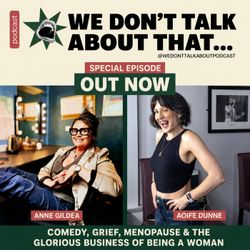
7. Good Grief: Laughing Through Cancer and Loss | Anne Gildea & Aoife Dunne
53:00||Season 1, Ep. 7In this episode of We Don't Talk About That, hosts Linda Coogan Byrne and Ndidi O are joined by Irish comedians and storytellers Anne Gildea and Aoife Dunne.Anne Gildea is a comedian, writer and founding member of The Nualas. Her solo work has tackled cancer, menopause and the magnificent absurdity of being a woman in Ireland. Her latest show, Further Adventures in Womaning, continues that journey, with her new production, You’re Welcome, arriving next year.Aoife Dunne’s debut show, Good Grief, grew from the sudden death of her mother when Aoife was just 23, the years of responsibility that followed and her eventual return to the creative life she had set aside.Together, they talk candidly about grief, cancer, menopause, caring for others, women in comedy and what happens when life dismantles the person you thought you were. It is funny, frank and gloriously unsentimental, because sometimes laughter is not a distraction from the difficult stuff. It is how we survive it.Intro music:"Call Me Queen"Written and performed by Ndidi O.Used with permission.Follow We Don't Talk About That for future conversations exploring culture, equality, power and the stories we are too often told not to discuss.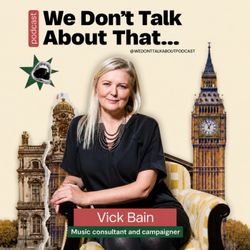
6. The Music Industry Says It Wants Equality. Does It? | Vick Bain
51:18||Season 1, Ep. 6In this episode of We Don't Talk About That, hosts Linda Coogan Byrne and Ndidi O are joined by Vick Bain, music industry consultant, researcher, campaigner and founder of The F-List for Music.With more than 25 years’ experience in the music business, Vick is the former CEO of the British Academy of Songwriters, Composers and Authors, now The Ivors Academy. Her influential research, including Counting the Music Industry, has exposed the grim under-representation of women across UK record labels and music publishing.Together, they discuss misogyny in music, gender inequality, industry gatekeeping, women’s career progression and the structural barriers that continue to push talented women out of the business.At its heart, this is a frank conversation about power, opportunity and what must change if the music industry is ever to become genuinely equal.Intro music:"Call Me Queen"Written and performed by Ndidi O.Used with permission.Follow We Don't Talk About That for future conversations exploring culture, equality, power and the stories we are too often told not to discuss.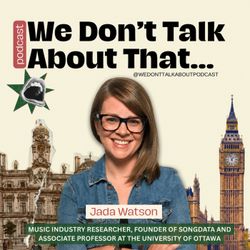
5. Country Radio Is Failing Women. Jada Watson Has the Data.
54:17||Season 1, Ep. 5In this episode of We Don't Talk About That, hosts Linda Coogan Byrne and Ndidi O are joined by Jada Watson, founder of SongData and Associate Professor at the University of Ottawa.Through SongData, Jada uses music industry data to uncover gender and racial inequalities across radio, streaming and the wider music business. Her research has helped shape broadcasting policy and challenge long-held assumptions about representation in music.Together they discuss gender equity, radio airplay, music policy, industry gatekeeping and how data can drive meaningful cultural change.At its heart, this is a conversation about who gets heard, who gets overlooked, and why the numbers tell a story the music industry can no longer ignore.Intro music:"Call Me Queen"Written and performed by Ndidi O.Used with permission.For more information about Fourth Wave, visit:https://fourthwave.onlineFollow them on medium: https://medium.com/fourth-wave Follow We Don't Talk About That for future conversations exploring culture, equality, power and the stories we are too often told not to discuss.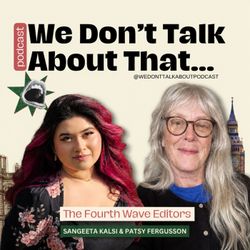
4. Who Gets to Speak? The Women Publishing What Mainstream Media Won’t | Patsy Fergusson & Sangeeta Kalsi
01:13:37||Season 1, Ep. 4In this episode of We Don't Talk About That, hosts Linda Coogan Byrne and Ndidi O sit down with Patsy Fergusson and Sangeeta Kalsi of Fourth Wave, one of Medium's leading independent feminist publications. Together they explore feminist media, representation, digital activism and the role independent journalism plays in amplifying the voices of women and marginalised communities around the world. Drawing on their experiences as editors, writers and advocates, Patsy and Sangeeta discuss power, storytelling, online culture and why creating spaces for women to be heard remains as important as ever. At its heart, this is a conversation about visibility, voice and the stories that have the power to shape culture.Intro music:"Call Me Queen"Written and performed by Ndidi O.Used with permission.For more information about Fourth Wave, visit:https://fourthwave.onlineFollow them on medium: https://medium.com/fourth-wave Follow We Don't Talk About That for future conversations exploring culture, equality, power and the stories we are too often told not to discuss.