Share
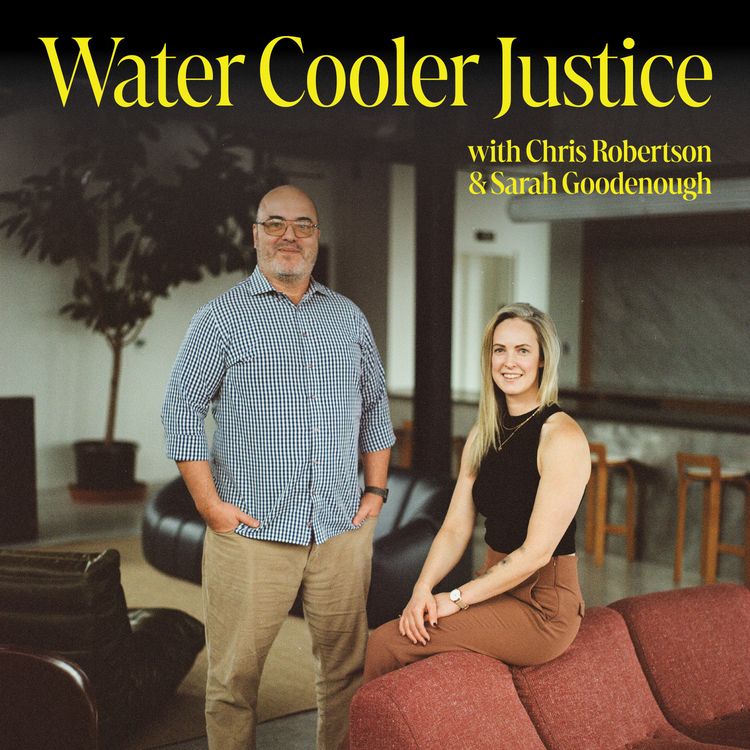
Water Cooler Justice
Mechalchuk v. Galaxy Motors with Barry Fisher and Stuart Rudner
Season 1, Ep. 3
•
This episode is all about just cause. Chris Robertson, Barry Fisher, and Stuart Rudner discuss the implications of dishonesty in the workplace, the standards of conduct expected from senior employees, and the legal principles surrounding just cause dismissals. The panel emphasizes the importance of integrity and the contextual approach courts take in employment law. They also discuss practical strategies for employees facing confrontational meetings and the potential consequences of dishonesty.
Is there a case you'd like to hear us talk about? Do you have a story you'd like to share with our panel? Reach out to us at: watercoolerjustice@gmail.com
More episodes
View all episodes
10. Wigdor v. Facebook and Liggett v. Veeva with Ellen Low and Sean Bawden
43:15||Season 1, Ep. 10"Two compensation schemes that look almost identical on paper can lead to wildly different outcomes.”Chris Robertson and Sarah Goodenough are joined by employment lawyers Ellen Low and Sean Bawden to unpack the murky and increasingly high-stakes world of restricted stock units (RSUs). In this episode, the panel compares Wigdor v. Facebook Canada and Liggett v. Veeva Software System, two recent Ontario cases involving equity compensation, termination, and notice, with sharply divergent results.The conversation explores why RSUs continue to sit in a legal grey zone, how courts are navigating the tension between the Employment Standards Act and common law reasonable notice, and why precise drafting (or the lack of it) can mean the difference between forfeiting millions or recovering vested compensation. The panel also debates whether RSUs should be treated as wages or benefits, the role of good faith and discretion in forfeiture decisions, and what these cases signal for employers and employees alike as equity-based compensation becomes more common.Is there a case you'd like to hear us talk about? Do you have a story you'd like to share with our panel? Reach out to us at: watercoolerjustice@gmail.com9. Chan v. NYX Capital Corp with Ellen Low and Matthew Dewar
41:41||Season 1, Ep. 9Ellen Low and Matthew Dewar join Chris Robertson and Sarah Goodenough to discuss Chan v. NYX Capital Corp. This case explores the limits of probationary employment and what happens when employers attempt to contract out of the Employment Standards Act. The panel dives into the meaning and implications of the phrase “at any time for any reason” in termination clauses, and why small drafting choices can make or break enforceability. With a mix of humour and technical insight, they reveal how two simple words, “legally permissible”, might be the key to getting it right.Is there a case you'd like to hear us talk about? Do you have a story you'd like to share with our panel? Reach out to us at: watercoolerjustice@gmail.com8. Kondaj v. Crossbridge with Barry Fisher and Robert Richler
45:48||Season 1, Ep. 8"The toughest cases in the world to predict the outcome are short service people. There’s no other word for it, they’re just a complete and utter mess." Barry Fisher and Robert Richler join Chris Robertson to discuss Kondaj v. Crossbridge Condominiums. In this episode, the panel unpacks the complexities of determining reasonable notice for short-service employees and explores whether notice functions as an objective calculation, a bridge to re-employment, or simply a judicial “crapshoot.”7. Preston v. Cervus Equipment Corporation and Bertsch vs. Datastealth Inc. with Matthew Fisher and Matthew Certosimo
38:30||Season 1, Ep. 7"We have put all this work in and none of it will matter if the decimal is in the wrong place, or the release has two extra words we didn't notice." Matthew Fisher and Matthew Certosimo join Chris Robertson and Sarah Goodenough to discuss Preston v. Cervus Equipment Corporation and Bertsch v. Datastealth Inc. The common theme in these two cases is that employment law is not as unfair to employers as it is often alleged. It is, rather, a heavily technical process for both sides. Both these cases show that the devil is truly in the details.Is there a case you'd like to hear us talk about? Do you have a story you'd like to share with our panel? Reach out to us at: watercoolerjustice@gmail.com6. Galea v. Wal-Mart with Muneeza Sheikh and Ellen Low
41:58||Season 1, Ep. 6"Do you think that awards are going up? Or do they seem stuck?" Muneeza Sheikh and Ellen Low join Chris Robertson and Sarah Goodenough to discuss Galea v. Walmart. Here, the topic of punitive damages in the world of employment law is described in length, and the panel talks about the implications damages might have in cases with larger corporate wrongdoers. Additionally, the panel gets into the reasoning behind why awards may differ dramatically on a case to case basis.Is there a case you’d like to hear us talk about? Do you have a story you’d like to share with our panel? Reach out to us at: watercoolerjustice@gmail.com5. Dufault v. Township of Ignace with Barry Fisher and Stuart Rudner
36:42||Season 1, Ep. 5Stuart Rudner and Barry Fisher join Chris Robertson and Sarah Goodenough to discuss Dufault v. The Township of Ignace. They discuss how the termination provision was struck not only for violating Waksdale but went further identifying new attacks on termination provisions including "at any time", a phrase that is as ubiquitous as "without cause" in employment agreements. They explore the challenges faced by both employees and employers, the complexities of legal language in contracts, and the need for clearer guidelines in employment agreements.Is there a case you'd like to hear us talk about? Do you have a story you'd like to share with our panel? Reach out to us at: watercoolerjustice@gmail.com
4. Mediation with Barry Fisher and Andrew Monkhouse
48:47||Season 1, Ep. 4Let's talk about mediation. In this episode of Water Cooler Justice, Chris Robertson discusses the intricacies of mediation in employment law with Andrew Monkhouse and Barry Fisher. They explore the mandatory mediation system in Ontario and the impact of contingency fees on mediation outcomes. The conversation also delves into the challenges faced in settling disputes and the various mediation styles employed by mediators.Is there a case you'd like to hear us talk about? Do you have a story you'd like to share with our panel? Reach out to us at: watercoolerjustice@gmail.com
2. Wall v. M.H. Rowe Sheet Metal Fabricating Inc. with Barry Fisher and Matt Dewar
33:48||Season 1, Ep. 2"This is a classic example of what judges should do."Chris, Barry, and Matt Dewar discuss a recent wrongful dismissal case. The panel explores notice periods, the implications of COVID-19 on job searches, and the legal arguments surrounding mitigation of damages. They delve into the strategies employed by both the employer and the employee, providing insights into employment law practices and the challenges faced in the current job market. In this conversation, we discuss the complexities of employment law, focusing on the significance of transferable skills, the volume of job applications, and the challenges faced by both employees and employers in proving mitigation efforts. The discussion highlights the nuances of the legal framework surrounding employment and the practical realities of job searching.Is there a case you'd like to hear us talk about? Do you have a story you'd like to share with our panel? Reach out to us at: watercoolerjustice@gmail.com