Share
Voices of British Ballet
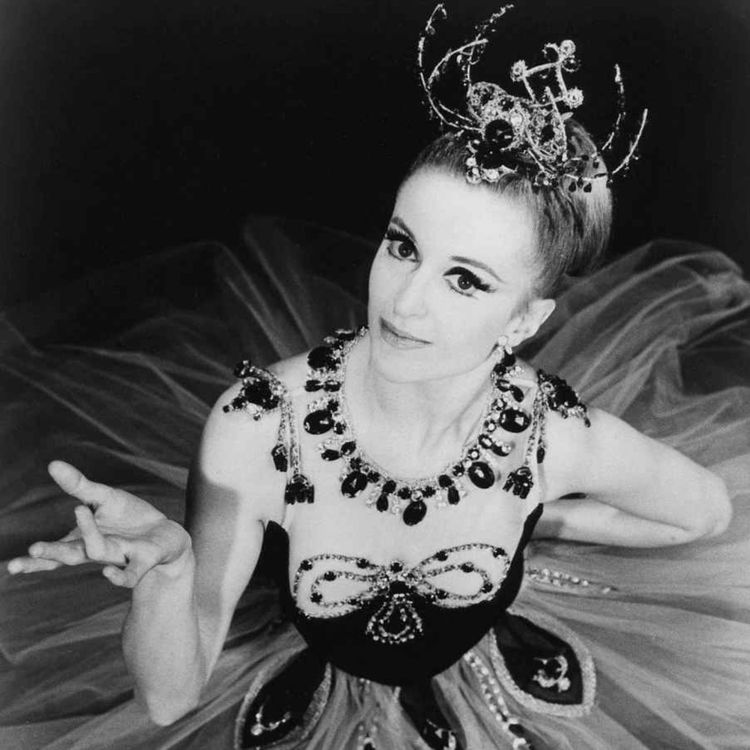
Violette Verdy
Violette Verdy’s laughter and intelligence endlessly shine through in this discussion with Clement Crisp. She explains how, as dancer and actress, music was the core of her existence. She talks about working with George Balanchine, of doing new pieces with him, his musical sophistication in dealing with difficult scores, and of the spiritual dimension to his work. Jerome Robbins, with whom she also worked, was a complete perfectionist, and in Balanchine’s view, the American choreographer. Yet, at the height of his career and fame, Robbins always regarded Balanchine as his only master.
The interview is introduced by the dance writer Alastair Macaulay in conversation with Natalie Steed.
Violette Verdy, originally Nelly Armande Guillerm, was born in Brittany, France, in 1933. In 1942 her mother took her to Paris to acquire the best ballet training available, studying under Carlotta Zambelli, Rousanne Sarkissian and Viktor Gsovsky. By 1945 she was in the corps de ballet for Roland Petit and then part of his Ballets des Champs-Elysees. In 1949 she starred in Ludwig Berger’s film Dream Ballerina (released in 1950), when she changed her name to Violette Verdy. In 1953 she made her first trip to America, again with Petit and his Les Ballets de Paris. The following year, as well as dancing with London Festival Ballet, she danced at La Scala, Milan, in two ballets by Alfred Rodrigues and also in Coppélia and Giselle with Ballet Rambert.
The next phase of her life began when Nora Kaye asked her to join American Ballet Theatre in 1957. Verdy went on to join Balanchine at New York City Ballet in 1958. While she continued to dance with many companies in many countries, it was with Balanchine and Robbins that her brilliance shone brightest, and where many leading roles were created on her. Her two decades in New York secured her place in ballet history.
Violette Verdy retired from dancing in 1977. She became the first female Artistic Director of the Paris Opéra until 1980. Her directorial skills honed, she went on to Boston Ballet, where she stayed until 1984 and then became Distinguished Professor of Music (Ballet) at Jacobs School of Music in Indiana University. In her later years she undertook guest teaching residences with many of the leading ballet companies in the world, including the Bolshoi, where she was the first foreign teacher to work there since the 1917 revolution. She was given many honours and awards, not least the Légion D’Honneur. She could dance, act, choreograph, direct, teach and, most of all, inspire. But all her answers were in the music and the multiple layers of meaning that imbued her dancing began and ended with that. Violette Verdy died in Bloomington, Indiana in 2016.
More episodes
View all episodes
73. Reflections: Anna Pavlova
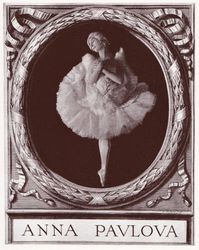
27:05||Ep. 73As part of Voices of British Ballet’s Reflections series Jane Pritchard, curator of Dance at the Victoria and Albert Museum, talks to Patricia Linton, founder and director of Voices of British Ballet, about the Russian ballerina Anna Pavlova and her influence on Frederick Ashton.Anna Pavlova is one of the few names in ballet whose fame was worldwide and enduring. Apart from her unrivalled quality as a dancer, in her later years she did more than any of her contemporaries to bring ballet to audiences all over the world, often to audiences with no previous experience of the artform.Born in St Petersburg in 1881, Pavlova entered the Imperial Ballet School in 1891 after being inspired by a performance of The Sleeping Beauty at the Maryinsky Theatre in 1890. Her teachers included Pavel Gerdt, Christian Johansson and, later, Enrico Cecchetti. In 1897 she first danced on the Maryinsky stage, and graduated in 1899 in False Dryads, a ballet arranged by Gerdt. She danced Giselle in 1903, Princess Aurora in 1908 and Nikiya (from Marius Petipa’s La Bayadère) in 1909. She was accorded ballerina status in 1906, the year when she also danced in Moscow and began a famous and long-lasting partnership with Mikhail Mordkin. In 1907, she created Armida in Mikhail Fokine’s Le Pavillon d’Armide, and in the same year he created on her Pavlova’s famous Dying Swan solo, with which she became indissolubly linked. In all she danced 18 major roles on the Maryinsky stage on which she also appeared with Vaslav Nijinksy in Les Sylphides.Pavlova began touring abroad in 1908, partnered first by Adolph Bolm and then by Nicholas Legat. In 1909 she was Serge Diaghilev’s first ballerina for his Ballets Russes in Paris. She made her debuts in London and New York in 1910, and in 1912 she bought Ivy House in London, which became her permanent home.The ballerina made her final Russian appearance in June 1914. She then formed her own company, consisting mainly of British dancers. She was sympathetic to the work of Fokine and had danced in several of Diaghilev’s early seasons, but after leaving Russia she preferred the autonomy of her own company, using her own repertoire and conforming to her tastes. For some this could seem mediocre and unexciting, but Pavlova had triumphant success all over the world, and she inspired many people with a love and enthusiasm for ballet, including notably the young Frederick Ashton, when she came to perform in Lima, Peru, where he was living as a schoolboy.Anna Pavlova married Victor Dandré in 1914, who outlived her. She died in Holland in 1931.Reflections is a collection of personal responses to the topics and ideas that our archives highlight. These illuminating recordings sit alongside the Grace Notes section of our website. Grace Notes is a nod to the musical practice of embellishment, and also to British composer Arthur Bliss, who used the words to describe his “Grace Notes on Ballet” in Peter Noble’s 1949 book, British Ballet.Dancers spend their careers engaging with the ideas of choreographers. Thus, having a colourful and enriched perspective on the world around them is essential. Ballet does not live in a bubble. These embellishments, both written on our website, and recorded in this special Reflections series, show the wider social and artistic context from which ballet springs and within which it thrives.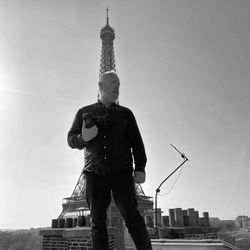
72. Rick Guest
01:02:27||Ep. 72In this 2023 interview with Jonathan Gray, dance writer and former editor of Dancing Times magazine, photographer Rick Guest talks about the inspiration and surprise he found when working with dancers for the first time, and is especially illuminating about his collaboration with Edward Watson, the former principal dancer with The Royal Ballet. Talking fluently and expansively, Guest reveals in the interview how an “outsider” eye can help bring a different, and contemporary, angle to the world of dance.Rick Guest began his career in photography in his late twenties, following studies in science at school and university. Although he received no formal training, Guest soon gained a reputation for his work in the advertising, fashion and music industries. Guest later found inspiration in the world of ballet and dance where his portraits of dancers and choreographers, often made in collaboration with the stylist Olivia Pomp, have received wide acclaim. His dance photography was regularly featured on the cover of Dancing Times magazine and other publications. In addition, Guest has published several photographic folios on dance, including What Lies Beneath and Language of the Soul, and his work is included in the collection of the National Portrait Gallery in London. His most recent work includes a new folio, Strength and Grace: Portraits of The Royal Ballet School, which was commissioned to mark the centenary of The Royal Ballet School.
71. Christopher Bruce
19:11||Ep. 71Christopher Bruce is one of the great names in British dance. Here, in a conversation with the dance critic Mark Monahan in 2017, he describes his early days in Ballet Rambert, and his relationship with Marie Rambert herself. He talks about the transition of the Rambert company from classical to a contemporary dance ensemble and locates his own work within that framework. He also speaks warmly of Norman Morrice, and of Morrice’s important, but sometimes overlooked, role in the development of Ballet Rambert. The interview is introduced by Mark Monahan, Chief Dance Critic of the Telegraph.Christopher Bruce was born in Leicester in 1945. He began studying dance at the Ballet Rambert School in 1956, and joined Ballet Rambert in 1963, appearing in such works as Don Quixote and Coppélia. In 1975, by which time Rambert had become a contemporary rather than a classical dance company, he became associate director of the company and, from 1979 until 1987, associate choreographer. Increasingly in demand internationally as a choreographer, he then left Rambert. He returned at the company’s re-launch in 1994 as artistic director, a post he held until 2002.Bruce choreographed the Andrew Lloyd-Webber/Alan Ayckbourn musical Jeeves at Her Majesty’s Theatre in London in 1975. As well as choreographing for Rambert, he has created works for English National Ballet (with whom he has a long association), Nederlands Dans Theater, Houston Ballet, the Cullberg Ballet and The Royal Ballet, among others. His works include Cruel Garden, Ghost Dances, Sergeant Early’s Dream, Swansong, Moonshine and Rooster. His choreography can be seen as a fusion of classical ballet and modern dance, sometimes with autobiographical references, and there is often a political meaning as well. As one of the leading British choreographers of his era, in 2009 Bruce was appointed a CBE for his services to dance. Since 2009 he has been an honorary visiting professor at the University of Exeter.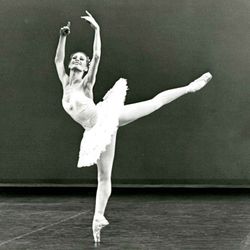
70. Janette Mulligan
19:09||Ep. 70The energy in Janette Mulligan’s voice reveals what a vibrant dancer she was. Her enthusiasm for the whole gamut of performing shines through, from correct hair styles and clean shoes right through to an irrepressible vitality of spirit. In this interview with Patricia Linton, founder and director of Voices of British Ballet, she describes her audition for London Festival Ballet (LFB) in 1977 when the company was under the direction of Beryl Grey. The interview, which was recorded in 2006, is introduced by the dance writer and editor Deborah Weiss, who had performed alongside Mulligan when they were both members of LFB.Janette Mulligan was born in Townsville, Australia, in 1957. She started ballet lessons with Marilyn Stratford at the age of six, later studying with Joyce Munroe, and then with Ann Roberts. She joined The Australian Ballet School in 1974. Following successful auditions for various companies, Janette briefly joined Ballet Victoria, before obtaining a contract with London Festival Ballet. Janette spent 14 years with the company, eventually becoming a senior principal dancer. She went on to have an extensive international career as a teacher, including stints as ballet mistress with the Royal Danish Ballet and Queensland Ballet. She has been a guest teacher across the globe and is now a teacher and senior faculty member of Queensland National Ballet School in Australia.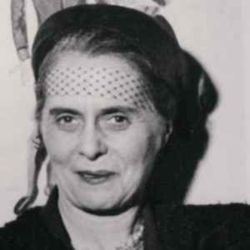
69. Celebrating Ninette de Valois: an interview with Gailene Stock
17:37||Ep. 69In 2026 Voices of British Ballet is celebrating the life of Ninette de Valois, to mark the centenary of the Royal Ballet School, with a series of interviews and special episodes that illuminate her life and artistic practice.In this episode, Jay Jolley, introduces an interview with Gailene Stock who was the Director of the Royal Ballet School from 1999 until her death in 2014. The interview with Gailene was recorded in 2011 at a conference dedicated to Ninette de Valois and Gailene talks about meeting de Valois as a student at the Royal Ballet School aged 16 and reflects on de Valois' achievements.Jay Jolley is a former Assistant Director of the Royal Ballet School was one of the organisers of that conference in 2011.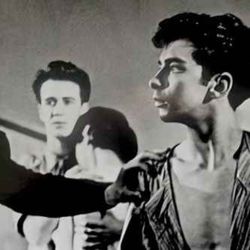
68. Alan Cunliffe
20:22||Ep. 68Here is Alan Cunliffe talking to Patricia Linton, founder and director of Voices of British Ballet. Inspired by watching pantomimes with his mother at the Harrow Coliseum in the 1950s, Cunliffe broke with the family military tradition and decided to pursue life as a dancer. He is another terrific example of the grit and sticking power needed to come close to one’s dreams. In this conversation, which was recorded in 2013, Cunliffe takes us through some early points in his dancing career. His story is also a good reminder that there are many things in the theatre that one can be part of when it is time to hang up the dancing shoes. In Cunliffe’s case it was dance photography. The interview is introduced by Jane Pritchard, Curator of Dance, Theatre and Performance at the V&A.Alan Cunliffe was born into a military family in Portsmouth in 1937. When he was a child, he often went to see the pantomime at the Harrow Coliseum, and it was there that he first saw Ballet Rambert and became fascinated by dance. Alan left school at the age of 15 and became a window dresser but regularly took Saturday morning ballet classes with Barbara Vernon and John Gregory. His first dancing job was with Welsh National Opera. He then joined The Royal Ballet Upper School and, two years later in 1960, joined Ballet Rambert. His four years with Ballet Rambert was followed by a short time with Sadler’s Wells Opera Ballet. During his dancing years, Cunliffe had developed a love of photography. He became apprenticed to the great dance photographer, Anthony Crickmay, and after some time as Crickmay’s assistant, he opened his own photographic studio. He remained passionate about dance photography for the rest of his life. Alan Cunliffe died in 2020.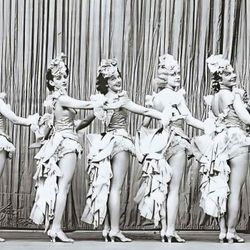
67. Felicity Sands Widdrington
13:46||Ep. 67The fate of many a dancer is discussed at the end of the interview featured in this episode. Adventures are recounted with unaffected humour and a deliciously 1930s delivery. In this interview with Patricia Linton, founder and director of Voices of British Ballet, Felicity Sands-Widdrington talks about becoming a Bluebell Girl in Paris and being stuck in prison when World War Two broke out, before getting back to London via Switzerland and France. The interview was recorded in 2003. Felicity Sands (later Felicity Sands-Widdrington) was born in Kalgoorlie, Western Australia, in 1917. She took ballet classes in Perth with Linley Wilson, and came to London in 1936, partly to complete her Royal Academy of Dance exams and, when there, she trained under Olive Handley. She then got a job working on a film in Vienna, (Premiere 1937 directed by Géza von Bolváry) along with 100 other female dancers in a spectacular dance sequence.After that, Felicity danced professionally in France, Italy, Austria and Switzerland, and eventually joined the Bluebell Girls at the Lido de Paris. During her dancing career she was always the only Australian in whatever company she was appearing. She was dancing in Milan in 1939 just before World War Two broke out. Two days before Italy joined the war, she and some of her colleagues were arrested and thrown into prison, wrongly suspected of being involved with gun runners. After a few days they were released and escorted by the Italian police to the Swiss border. She got into France and was able to get back to London on one of the last boats to leave for England.Back in London in 1940, Felicity thought show dancing was “no way to conduct yourself in the war”, so she drove ambulances, before working in the Postal and Censorship Office in the famous Room 99. She had married in 1940, and after the war never returned to professional dancing.The photograph shows Felicity in a Bluebell line up in 1939 in Milan.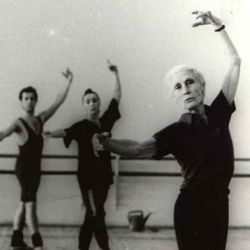
66. Barbara Vernon
24:39||Ep. 66In this interview with Patricia Linton, founder and director of Voices of British Ballet, Barbara Vernon illustrates that it is not all plain sailing out of the mainstream of the ballet world and gives a glimpse of a different sort of struggle, where dedication and belief are not quite enough – especially without funds. The interview, which was recorded in 2003, is introduced by the dance historian Jane Pritchard.Born in 1918, Barbara Vernon’s mother was aware that she was an artistic child and supported her in her endeavours. Her first ballet classes were in Birmingham, where she trained in the syllabus as set by the Royal Academy of Dance (RAD). From the age of 16, she danced with various small groups, but it was whilst performing in pantomime at the Gaiety Theatre in Dublin that her future life was set. There, she heard about the teaching of a Russian émigré ballet master, Nicholas Legat. When back in London in 1936, she joined his classes at 46, Colet Gardens. Legat died the following year, and Vernon then found her way to Léonide Massine’s studio in Monte Carlo, where she learnt a wonderful variety of repertoire. These two momentous happenings – the teaching of Legat and the repertoire of Massine – were to shape and inform the whole of Vernon’s future life. During World War Two, she danced with various companies, including Mona Inglesby’s International Ballet, and the Anglo-Polish Ballet. It was whilst she was in the latter company that she met John Gregory, the multi-talented actor, artist, dancer and writer, John Gregory. The couple married in 1945 and later had two children together. In 1949 the pair created the School of Russian Classical Ballet in Chelsea, which developed into the Harlequin Ballet ten years later. This little group took ballet to the people for the following decade. From that time onwards they taught, lectured and wrote, and in 1995 the couple inaugurated the Legat Foundation. John Gregory died in 1996, and Barbara Vernon in 2007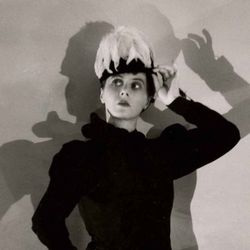
65. Celebrating Ninette de Valois - a conversation with Giannadrea Poesio
33:59||Ep. 65In 2026 Voices of British Ballet is celebrating the life of Ninette de Valois, to mark the centenary of the Royal Ballet School, with a series of interviews and special episodes that illuminate her life and artistic practice.In this episode, Dr Anna Meadmore, Manager of Special Collections at the Royal Ballet School, introduces an interview with the writer and ballet historian Giannandrea Poesio. The interview was recorded in 2011 at a conference dedicated to Ninette de Valois where Giannandrea Poesio was one of the delegates. He talks with Patricia Linton about two meetings he had with de Valois and how she gave him the nickname “Cecchetti Boy”. He discusses Ninette de Valois’ reservations about the Cecchetti method and explores the use of historical mime in present day performance.Anna Meadmore was one of the organisers of that conference in 2011 and reflects on the importance of dance history to the education and training of new dancers and choreographers. She also talks about Giannandrea’s talk at the conference about mime in ballet and the influence of Giuseppina Cecchetti and Francesca Zanfretta.Giannadrea Poesio died in 2017.