Share
Voices of British Ballet
Jill Tookey
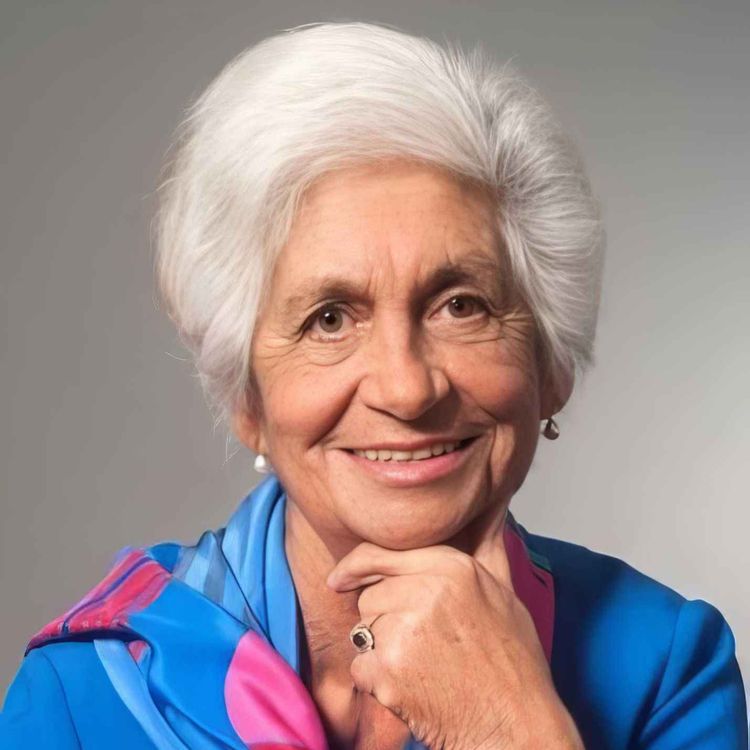
Jill Tookey, the founder of National Youth Ballet of Great Britain (NYB), in conversation here with Frank Freeman, explains how she set about it, and what her vision was. She gives a breathtaking insight into how all the different and necessary strands of activity plait together to create something worthwhile. She speaks engagingly about some of the ballets created for NYB, and about working on them with esteemed members of the ballet world, such as John Lanchbery and Wayne Sleep. The interview was recorded in 2010 and is introduced by Anna Meadmore.
Born in Kent in 1937, Jill Tookey arrived at what was to be her dancing destiny by an unusual route. She had enjoyed ballet as a child but was swallowed up by the fashion industry of the 1960s, becoming fashion editor for both Woman and Beauty and Honey magazines. By the 1980s, and as mother of four children, she had begun writing childrens’ books. Pedro the Parrot, published by Thames and Hudson, was to be the springboard for an extraordinary adventure. To set Pedro dancing, music was found and also a choreographer. From there Tookey never looked back. She was alert to the huge interest in dancing and performance in the young and how, with the right build up, they could channel their excitement into something truly worthwhile.
By 1988 Tookey had founded the National Youth Ballet of Great Britain (NYB) and she remained its artistic director until she died in 2016. She was always able to see the bigger picture as well as the details, with many ballets specially created for NYB and many young choreographers and dancers encouraged. As a result of her inspired and energetic leadership, literally thousands of children have had opportunities to enjoy the magical world of the theatre, with a number going on to dance professionally. Jill Tookey was appointed a CBE in 2016, but died that same year, and, sadly, was unable to collect her award. She was represented at the investiture by her ten-year-old granddaughter, who had danced with NYB for four years.
More episodes
View all episodes
66. Barbara Vernon
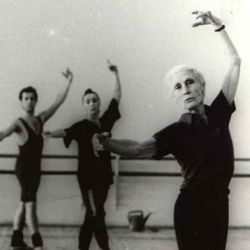
24:39||Ep. 66In this interview with Patricia Linton, founder and director of Voices of British Ballet, Barbara Vernon illustrates that it is not all plain sailing out of the mainstream of the ballet world and gives a glimpse of a different sort of struggle, where dedication and belief are not quite enough – especially without funds. The interview, which was recorded in 2003, is introduced by the dance historian Jane Pritchard.Born in 1918, Barbara Vernon’s mother was aware that she was an artistic child and supported her in her endeavours. Her first ballet classes were in Birmingham, where she trained in the syllabus as set by the Royal Academy of Dance (RAD). From the age of 16, she danced with various small groups, but it was whilst performing in pantomime at the Gaiety Theatre in Dublin that her future life was set. There, she heard about the teaching of a Russian émigré ballet master, Nicholas Legat. When back in London in 1936, she joined his classes at 46, Colet Gardens. Legat died the following year, and Vernon then found her way to Léonide Massine’s studio in Monte Carlo, where she learnt a wonderful variety of repertoire. These two momentous happenings – the teaching of Legat and the repertoire of Massine – were to shape and inform the whole of Vernon’s future life. During World War Two, she danced with various companies, including Mona Inglesby’s International Ballet, and the Anglo-Polish Ballet. It was whilst she was in the latter company that she met John Gregory, the multi-talented actor, artist, dancer and writer, John Gregory. The couple married in 1945 and later had two children together. In 1949 the pair created the School of Russian Classical Ballet in Chelsea, which developed into the Harlequin Ballet ten years later. This little group took ballet to the people for the following decade. From that time onwards they taught, lectured and wrote, and in 1995 the couple inaugurated the Legat Foundation. John Gregory died in 1996, and Barbara Vernon in 2007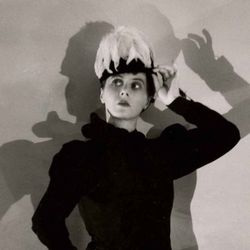
65. Celebrating Ninette de Valois - a conversation with Giannadrea Poesio
33:59||Ep. 65In 2026 Voices of British Ballet is celebrating the life of Ninette de Valois, to mark the centenary of the Royal Ballet School, with a series of interviews and special episodes that illuminate her life and artistic practice.In this episode, Dr Anna Meadmore, Manager of Special Collections at the Royal Ballet School, introduces an interview with the writer and ballet historian Giannandrea Poesio. The interview was recorded in 2011 at a conference dedicated to Ninette de Valois where Giannandrea Poesio was one of the delegates. He talks with Patricia Linton about two meetings he had with de Valois and how she gave him the nickname “Cecchetti Boy”. He discusses Ninette de Valois’ reservations about the Cecchetti method and explores the use of historical mime in present day performance.Anna Meadmore was one of the organisers of that conference in 2011 and reflects on the importance of dance history to the education and training of new dancers and choreographers. She also talks about Giannandrea’s talk at the conference about mime in ballet and the influence of Giuseppina Cecchetti and Francesca Zanfretta.Giannadrea Poesio died in 2017.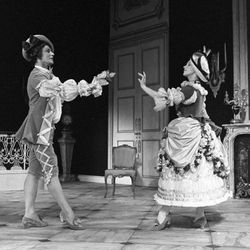
64. Robert Harrold
25:57||Ep. 64It really does seem true that dancers in the difficult years of World War Two were happy to exist on the bare minimum. The common bond was that they all loved dancing and that appeared to keep them going. In this interview with the dancer and teacher Robert Harrold, which was recorded in 2007, Patricia Linton, founder and director of Voices of British Ballet, talks with him about a career that commenced during a time of conflict. The interview is introduced by Jane Pritchard. Robert Harrold was born in Wolverhampton in 1923. His first dancing lessons were in Birmingham with Evelyn Goodwin, and his stage career began with the Anglo-Polish Ballet in 1940. For the next few years, he danced with Ballet Rambert, where he experienced a fine repertoire of ballets with an enviable range of choreographers, in which he often partnered Rambert’s charismatic ballerina of the time, Sally Gilmour. During the later years of World War Two, Harrold was a member of the Central Pool of Artists (CPA), and he was a part of groups that entertained the troops in Italy, via India, Ceylon and Australia. After the war he danced in musical theatre and television and began to develop his choreographic ability. Most important was the beginning of his lifelong love and involvement with National and Folk Dance. He was a tireless advocate of this form of dance and, along with his friend and mentor Helen Windgrave, wrote books and formed groups – notably the Modial Company – and educational enterprises to interest people in general and to win converts if possible! Dancer, teacher, examiner, adjudicator and writer, Robert Harrold had a very full and busy life in dance and contributed unstintingly to the many ventures in which he was involved. In 1986 he received the Imperial Award for Outstanding Services to the Imperial Society of Teachers of Dancing (ISTD), an organisation he had been involved with for many years.Photograph: CAPRICCIO by Richard Strauss; Valerie Davie and Robert Harrold as the Dancers Conducted by Pritchard; Directed by Rennert; Scenery Designed by Lennon; Costumes designed by Powell; Glyndebourne Festival Opera; Glyndebourne, Lewes, East Sussex, UK; 1963; © Glyndebourne Productions Ltd.; Credit: Guy Gravett / Glyndebourne Productions Ltd. / ArenaPAL ;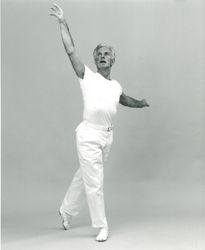
63. Roger Tully
21:10||Ep. 63There is so much in this short interview to love and revere. Roger Tully was a legendary teacher, who was an inspiration to many dancers over many years. He had strong and very definite ideas about dancing and technique, but he was always looking beyond – to maybe something spiritual. He was a teacher who in the great early Twentieth-Century tradition of teachers, taught outside institutions. For the art of dance to live on, long may this independent spirit last and flourish. In this interview, which was recorded in 2020, Roger Tully talks to the dancer, choreographer and writer Jennifer Jackson, who was also one of his pupils.Roger Tully was born in London in 1928. After National Service and training as an optician, his love of dance led him to study with Marie Rambert at her school. He went on to study with Cleo Nordi, Lydia Kyasht, Stanislas Idzikowski and, above all, with Kathleen Crofton, who had herself studied under the former Imperial Russian ballerina Olga Preobrajenska and danced with the Anna Pavlova company. His association with Crofton, which lasted for many years until she herself departed to the USA in 1966, asking him to take over her classes, was perhaps the central influence on his own approach to dance and to teaching.From 1949 until 1951 Tully danced with Ballet Rambert, and then with International Ballet until it’s closure in 1953. He also worked on the musical stage and with Walter Gore’s London Ballet, where he partnered Paula Hinton. In the 1960s he danced in the USA and in Canada with Les Grands Ballets Canadiens.In 1977, Tully bought a house in Bedford Gardens in Kensington and established a studio there, where he taught until he moved away from London in 2015. He remained independent of established schools and teaching systems and his classes, in which he taught all levels, from beginners to established professionals including principal dancers from major companies, gained an enviable reputation for their grounding in the classical tradition. His teaching was much valued by those looking for something different from the norm. He addressed the person who dances and stressed artistry rather than gymnastic virtuosity. His approach, however, was systematically thought out, looking to move with the body’s natural weight, rather than fighting against it, so as to achieve a true sense of vertical balance and stability. In this quest he was also influenced by his study of classical sculpture. In 2011 he published The Song Sings the Bird: A Manual on the Teaching of Classical Dance, in which he sums up his decades of experience in the teaching of ballet.As well as working in Bedford Gardens, he also taught ballet at Pineapple Studio and Dance Works in London and to ballroom dancers in Helsinki, as well as master classes in Paris, Rome, and Tokyo. Even after he had moved away from London to Haywards Heath in Sussex, he continued to teach right up to his death in 2020, at the age of 91.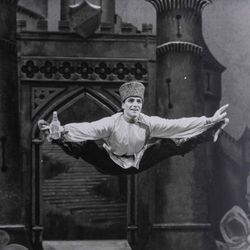
62. Kevin Richmond
16:05||Ep. 62This interview is a reminder of how lucky we in Britain have been with our great choreographers – in this case Christopher Bruce. Talking to Deborah Weiss, dance writer, editor and former first soloist with London Festival Ballet, Kevin Richmond also reminds us about taking chances, fun and friendship. The interview was recorded in 2018 and is introduced by Deborah Weiss.Born in Nottingham in 1958, Kevin Richmond was the eldest of three boys. His interest in theatre began at primary school where he was encouraged to participate in drama classes. At the age of ten he was recruited as a child actor to appear in a number of productions, including Waiting for Godot with Peter O’Toole and in the 1972 Harold Becker film The Ragman’s Daughter. Initially, Richmond wasn’t keen to learn to dance but was convinced by his teachers that it may help his acting career.Richmond’s first professional dance job was with an education project called Dance for Everyone when Richmond was just 17. He joined London Festival Ballet in 1977 under the directorship of Beryl Grey and remained with the company, now English National Ballet, for 22 years. He worked with five directors during this time and among his most memorable experiences was working with the choreographer Christopher Bruce on Swansong. Bruce created the ballet on Richmond, Matz Skoog and Koen Onzia in 1987 and this work and its cast were celebrated worldwide. Other important roles included the title role in Christopher Hampson’s Scrooge, Tybalt in Romeo and Juliet and Dr Coppélius in Coppélia.After retiring from the stage, Richmond completed the Professional Dancer’s Teaching Diploma at the Royal Academy of Dance and taught at London Studio Centre, Basler Ballett, Cathy Sharp Dance Ensemble and latterly, at the Zürcher Hochschule der Künst in Zürich where he taught the BA in Contemporary Dance course. He also taught as a guest teacher with many companies including Rambert. He became ill with cancer in 2018 and died the following year.The photograph shows Kevin Richmond in The Nutcracker; Kevin Richmond; Peter Schaufuss production; Designs by David Walker; English National Ballet; 1986; at the London Coliseum; London, UK; Photo by Bill Cooper licensed by Areanpal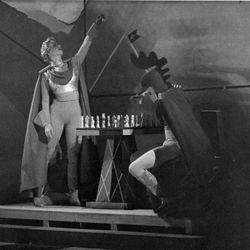
61. Celebrating Ninette de Valois: Checkmate
40:20||Ep. 61The second in our series of special episodes to celebrate the 100th anniversary of the founding of Ninette de Valois’ Academy for Choregraphic Art in March 1926, and to mark 25 years since de Valois' death. Patricia Linton talks to Dr Anna Meadmore, archivist at The Royal Ballet School about de Valois ballet, Checkmate.Checkmate is one of the only two ballets by Ninette de Valois to survive in the repertoire. It makes allegorical use of a chess game to represent a battle between love and death. Arthur Bliss, the composer, and Edward McKnight Kauffer, the designer, worked with de Valois’ ideas in a way that made perfect sense of the ensuing battle, and testified to her commitment to Serge Diaghilev’s ideas on the importance of music and design in ballet. The action of the chess pieces is foreshadowed in a prologue in which the skeletal hand of death plays chess with the figure of love and suggests that what we are about to see is in some way pre-determined. The chess pieces from pawn and knight to King and Queen make their moves as if guided by the hand of fate. The Black Queen powers her way across the board, dominating all around her. After the thunderous chaos and brutal murder of her would-be lover the Red Knight, the climatic finale sees the Red King goaded out of his inertia. His feeble resistance prompts the Queen to administer the coup de grace: ‘checkmate indeed’. The ballet was first performed at the Théâtre des Champs Élysées, Paris in 1937, with June Brae as the Black Queen, Harold Turner as the Red Knight, and Robert Helpmann and Pamela May as the Red King and Queen.The photograph shows Sadler’s Wells Ballet in Checkmate at the Royal Opera House, 1947. Love (Jean Bedells) and Death (Franklin White) deliberate over a game of chess in the Prologue to Ninette de Valois’ ballet Credit: Frank Sharman/Royal Opera House/ArenaPAL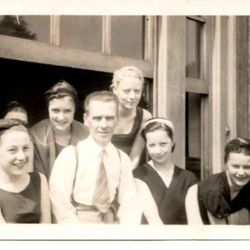
59. Patricia Thorburn
16:00||Ep. 59Here, Patricia Thorburn throws a little light on finding jobs with Patricia Linton, founder and director of Voices of British Ballet. The interview, which was recorded in 2003, is introduced by dance historian Jane Pritchard.Patricia Thorburn was born in Peebles, Scotland, and was a student of Mrs Bell Hardy in Edinburgh. In 1937, she auditioned and then studied at the Sadler’s Wells Ballet School and made her debut with the Carl Rosa Opera in 1938. In 1939 and 1940 she served with the Auxiliary Territorial Service (ATS) but joined the Anglo Polish Ballet in 1940 and remained with the company until 1942. Following this, she appeared in a number of London shows, and married John Arnold in 1945 before joining the Sadler’s Wells Ballet at the Royal Opera House, Covent Garden, in 1946 to boost the numbers in their extraordinary production of The Sleeping Beauty.Thorburn then danced as a member of the Agnes de Mille Ballet in the stage musical London Town. She retired from the company in 1947. Using her ballet training as a basis, she went to study with Sigurd Leeder at his School of Dance at Dartington Hall, Devon, to expand her horizons. She pioneered a Pure Movement course to help actors move more naturally on stage and screen and, working under her married name of Patricia Arnold, started to teach movement and historical dance at the London Academy of Music and Dramatic Art (LAMDA) in 1955, where she became head of Movement from 1963 until 1972. She also taught at the Guildhall School of Music and Drama. Thorburn taught well beyond the age of 75, and even after retirement was often asked back to teach masterclasses.The photograph shows Patricia Thorburn with fellow classmates from Sadler's Wells Ballet School with Nicholas Segeyev in the centre in 1937 / 1938. Photo courtesy of Patricia Thorburn.
58. Irina Baronova
28:19||Ep. 58What agony to hear this gorgeous, beguiling woman lament the lack of interest she feels was shown to her generation in passing on their knowledge and experience to the next. Irina Baronova’s no nonsense approach is mysteriously interwoven with intuitive artistry – we could expect no less from one of the original “Baby Ballerinas” of the Ballet Russe de Monte Carlo. In this interview, recorded in 2006, Irina Baronova is interviewed by Patricia Linton, founder and director of Voices of British Ballet. The interview is introduced by Jane Pritchard of the V&A.Irina Baronova was a Russian-born ballerina and actress, known as one of the “Baby ballerinas” of the Ballet Russe de Monte Carlo. She was born in Petrograd in 1919. Her father, Mikhail Baronov, was a lieutenant in the Imperial Navy, and in 1920 he and his family had to flee the country following the Russian Revolution. They crossed the border into Romania disguised as peasants and eventually settled in Bucharest. They had no money in a foreign country where they did not know or speak the language. Baronov eventually found a job at a factory, and the family spent the following years living in the city slums.At the age of seven, Baronova began taking her first ballet classes when her mother (who was a ballet enthusiast) found her a teacher, Madame Majaiska, a former corps de ballet member of the Imperial Russian Ballet. She was also a refugee from Russia and so conducted Baronova’s classes in the kitchen of her one-bedroom house, using the kitchen table as a barre. To provide Irina with professional training, the family moved to Paris when she was ten years old, where she was taught by Olga Preobrajenska and Mathilde Kschessinska. In 1930, at the age of 11, Baronova made her debut at the Paris Opéra. The catalyst for her career came in 1932, just before her 13th birthday, when George Balanchine engaged her for the Ballet Russe de Monte Carlo, along with the equally youthful Tamara Toumanova and Tatiana Riabouchinska. The English critic Arnold Haskell dubbed this illustrious trio the “Baby Ballerinas”.Baronova was 14 when she was given her first principal role, as Odette in Act II of Swan Lake, in which she was partnered by Anton Dolin. At the age of 17, she eloped with an older Russian man, German (Jerry) Sevastianov, in order to get married. Their marriage came two years later, in 1938, with a ceremony in Sydney, Australia. Baronova then joined Ballet Theatre (now American Ballet Theatre) in the United States of America, subsequently divorcing Sevastianov. In 1946, in the United Kingdon, she met the theatrical agent Cecil Tennant who asked her to marry him, which she did, retiring from her career in ballet at the age of 27. Between 1940 and 1951, Baronova appeared in several films, including Ealing Studio’s Train of Events (1949). Much later she worked as ballet mistress on the 1980 Hollywood film Nijinsky. During her marriage to Tennant, she gave birth to three children: Victoria, Irina and Robert. In 1967, Tennant was killed in a car accident, and Baronova subsequently moved to Switzerland. She then resumed her marriage with her first husband, Sevastianov, who died in 1974. Baronova then began teaching master classes in the UK and the USA. In 1986 she staged Mikhail Fokine’s Les Sylphides for The Australian Ballet, and in 1992 returned to Russia to help the Maryinsky Theatre with an archival project. In 1996 she received a Vaslav Nijinsky Medal in Poland and an honorary doctorate from the North Carolina School of the Arts. In 2000, she went to live in Australia with her daughter, Irina. In 2005 she appeared in a documentary on the Ballet Russe, and published her autobiography Irina: Ballet, Life and Love. She died in her sleep in Byron Bay, Australia, on June 28, 2008, at the age of 89.