Share
Voices from CEPS Ideas Lab
S1.25. Is Europe protecting migrant’s rights? Ft. Sergio Carrera
Season 1, Ep. 25
•
Migration has become a highly politicised area of discussion in the last decade with the refugee crisis, illegal migration and more recently Ukraine refugees. With so much movement within the European continent the EU institutions have the duty to enforce the law upon Member States and ensure migrants’ rights are respected, which is not always the case.
Our host Tom Parker is joined by Sergio Carrera, senior research fellow at CEPS and Head of Justice and Home Affairs unit. Together, they will discuss migration, fundamental rights and the dangerous consequences of failing to enforce the law for the future of Europe.
For more information on Sergio Carrera and CEPS check this link.
Watch this episode here
More episodes
View all episodes
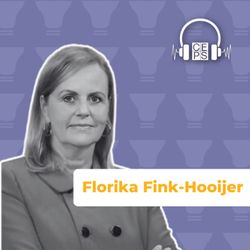
4. S2.4 Beyond Covid: How Europe prepares for the next health emergency ft. Florika Fink-Hooijer
21:17||Season 2, Ep. 4In a world of overlapping crises, from pandemics to conflict, how prepared is Europe to respond to the next health emergency? Joining host Aoife White is Florika Fink-Hooijer, who leads the EU’s Health Emergency Preparedness and Response Authority (HERA). Created in the wake of Covid-19, HERA is designed to ensure Europe is no longer caught off guard. From early detection and research to stockpiling vaccines and medical countermeasures, it takes an “end-to-end” approach to managing health threats. In this episode, Fink-Hooijer outlines the four major risks Europe must prepare for: future pandemics, antimicrobial resistance, climate-driven diseases, and chemical, biological, radiological and nuclear threats. As geopolitical instability rises, health security is increasingly linked to defence, with medical countermeasures becoming strategic assets. The conversation also explores lessons from Ukraine, the growing importance of global cooperation, and the risks of turning away from multilateral systems in favour of more transactional approaches.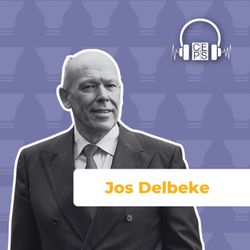
3. S2.3 Pricing carbon: Europe’s climate strategy under pressure ft. Jos Delbeke
16:58||Season 2, Ep. 3As Europe’s green transition faces growing political and economic pressure, can the EU stay the course on climate action? Joining host Aoife White is Jos Delbeke, a key architect of the EU’s Emissions Trading System (ETS). In this episode, Delbeke explains how carbon pricing works and why it remains central to Europe’s climate strategy. As companies call for slower reforms and continued free allowances, he argues that the system is doing what it was designed to do: drive investment in clean technologies while cutting emissions. The conversation explores rising concerns about competitiveness, particularly in energy-intensive industries, and the growing pressure from global players like China and the United States. Are current fears justified or is this a moment of transition rather than crisis? Delbeke also makes the case that climate policy is not just about emissions, but about security: reducing dependence on fossil fuel imports and strengthening Europe’s economic resilience. Despite political pushback and global uncertainty, he remains cautiously optimistic, pointing to rapid advances in clean technology and tangible progress in reducing emissions.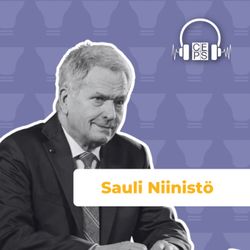
2. S2.2 Prepared or Not? Lessons from Finland on Russia and security ft. Sauli Niinistö
13:10||Season 2, Ep. 2As Europe faces an increasingly uncertain security environment, are we truly prepared for what lies ahead?Joining host Aoife White is Sauli Niinistö, Former President of Finland, who reflects on how Europe’s mindset on security has shifted.Drawing on Finland’s long history of navigating relations with Russia, Niinistö shares practical lessons on resilience, preparedness and deterrence and highlights the importance of being ready not just for military threats, but also for hybrid challenges. While public concern about security is rising across Europe, Niinistö stresses that awareness must translate into action. A stronger Europe, he argues, is essential not only to deter conflict, but to maintain peace.The conversation also explores the future of European defence, the role of NATO and the need for a more coordinated — and potentially broader — European security framework.
1. S2.1 The “fat chicken” problem: Europe in an age of power politics ft. Nathalie Tocci
21:34||Season 2, Ep. 1In a year marked by escalating global crises, from Ukraine to Gaza, Iran to Greenland, where does Europe stand and is it still guided by the values it claims to uphold?Joining host Aoife White is Nathalie Tocci, Director of the Institute of International Affairs, who offers a candid assessment of the European Union’s role in a rapidly shifting geopolitical landscape.While Europe has shown unexpected unity in supporting Ukraine, deeper fractures are emerging when it comes to upholding international norms and responding consistently to global conflicts. Tocci argues that the EU may be facing a more profound challenge than policy failure: a crisis of identity. Has Europe moved beyond hypocrisy, not by living up to its values, but by abandoning them altogether? And if so, what does that mean for its credibility, its citizens, and its place in the world?
33. S1.33. Does GDPR need to be reformed? ft. Paula Gürtler
07:27||Season 1, Ep. 33The EU’s General Data Protection Regulation (GDPR) was designed to protect privacy and personal data, but its enforcement has been rather lacking across Member States. Some argue that it no longer fully delivers on its original ambitions whereas others denounce it unnecessarily burdens SMEs with regulation. Our host, Tom Parker, is joined by Paula Gurtler, Associate Researcher in the Global Governance, Regulation, Innovation and Digital Economy (GRID) unit at CEPS. Her work focuses on Applied Ethics and in particular the ethics of new technology. Together, they talk potential reforms, the need for agility in data regulation, and how GDPR interacts with newer legislative frameworks such as the Data Act. For more information on Paula Reiners and the work of CEPS, visit this link. Watch this episode here
32. S1.32. On women’s health and its challenges ft. Cosima Lenz
07:49||Season 1, Ep. 32Women’s health includes well-being across all life stages and while reproductive health is often the focus, there are many overlooked areas such as mental health or diseases prevention that require attention. Greater investment in these often-overlooked areas of research could yield social but also economic benefits worldwide. Our host, Tom Parker, is joined by Cosima Lenz, associate researcher in the Global Governance, Regulation, Innovation and Digital Economy (GRID) Unit, specializing in global health policy. Together they discuss the economic benefits of investing in women’s health, and how policy shifts can help close gaps in research and healthcare access. For more information on Cosima Lenz and her work at CEPS, visit this link. Watch this episode here
31. S1.31. Does Europe need a climate bad bank? ft. Nicole Reynolds
09:54||Season 1, Ep. 31The EU is going to miss its target of net-zero emissions by 2050 unless it greatly accelerates the transition to a sustainable economy. A climate bad bank is a tool the EU could use in order to smooth out the transition by directing investment to green sectors from carbon intensive industries while also providing financial stability. Our host is joined by Nicole Reynolds, Associate Research Fellow at CEPS, her work centres around policy issues in AI, sustainability, climate and development finance. They explore the importance of EU competitiveness and the need for financial guarantees to attract investment. For more information on sustainable finance and EU policies, visit this link. Watch this episode here
30. S1.30. How can European pension funds be leveraged to fund Europe’s industry? ft. Apostolos Thomadakis
06:47||Season 1, Ep. 30Pension funds play an important role as institutional investors in financing Europe's key sectors. However, their current use is limited, especially compared to more liberalised markets as the U.S. Leveraging these funds is key to give European start-ups and innovators the financial boost they need to compete globally Our host, Tom Parker, is joined by Apostolos Thomadakis, Head of research at the European Capital Markets Institute (ECMI), an independent research institute run by CEPS’ Financial Markets and Institutions Unit. Both will discuss how Europe can encourage pension funds to invest in high-growth sectors like AI, clean energy, and digital infrastructure. For more information on Apostolos Thomadakis and the work of CEPS, visit this link. Watch this episode here
29. S1.29. Europe and Global Health Diplomacy ft. Louise Bengtsson
11:06||Season 1, Ep. 29Health diplomacy is undergoing significant transformations. Traditional approaches are being challenged, and we are far from reaching the health goals of the Agenda 2030. Geopolitical uncertainty has undermined the traditional multilateral initiatives, while new international donors and regional organisations are playing an increasingly important role in Global Health Diplomacy. Our host is joined by Louise Bengtsson, Associate Research Fellow at CEPS in the Global Governance, Regulation, Innovation and Digital Economy (GRID) Unit at CEPS. Her research focuses on the EU institutions and the EU’s role in global health. Together, they discuss how the EU navigates the new health diplomacy landscape, and the consequences of political decisions on Global Health systems. For more information on Louise Bengtsson and the work of CEPS, visit this link. Watch this episode here