Share
Urban Walking Festival
Women in the City
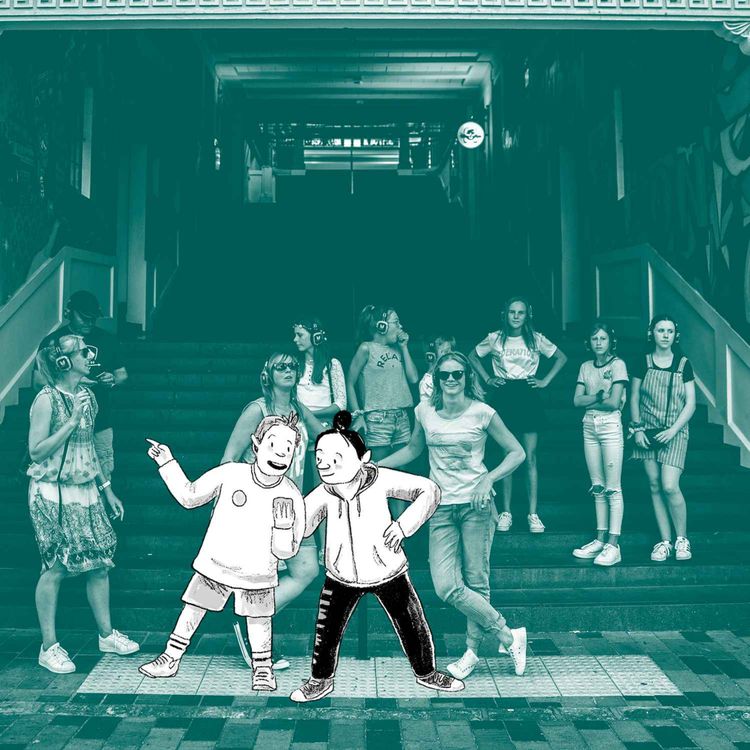
Women in the City is an immersive audio walk created to celebrate Women in Tāmaki Makaurau. The walk is a kaleidoscope of real-life stories, biographies of iconic wāhine, anecdotes and everyday women woven together through a fictional narrative.
The women’s voices come together in a beautifully curated audio story that celebrates their legacy as women who live, work, love, lose, forgive and find their own path to feel alive in the city.
Discover the city with them.
Start: Takatai Square
Stop One: 20 Commerce St
Stop Two: Jean Batten Place
Stop Three: Freyburg Square
Stop Four: Khartoum Place
Stop Five: Aotea Square
Continue at a self paced amble via Myers Park, St Kevins Arcade and Karangahape Road.
Wheel friendly route via Mayoral Drive and Queen St.
Stop: Walk ends at the Rainbow Bridge Karangahape Road
Audio duration:
1 hour 18 min
Follow the map on google https://www.google.com/maps/d/viewer?mid=1jeUg-_bB3NOi8MXQGHdV_RoPExLw00Rt&ll=-36.851354474589606%2C174.76274254999998&z=15
Or download a pdf guide
Presented by Papaya Stories and Auckland Transport:
Papaya Stories is an Auckland-based creative events and well-being company built on the power of creative storytelling, immersive arts and play, mindfulness, and positive psychology.
More episodes
View all episodes
Te hā o te ora
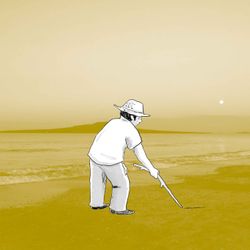
01:19:54|An audio guided walk in both te reo Māori and English narrated by a māmā and educator who has tribal connections to Ngai Tai and Ngati Porou, Davika Wilson.Our walk travels from Northcote. Immersing ourselves in sound we voyage in the domains of Tāne, through the soon to be opened regenerative Te Ara Awataha project and other greenway corridors.Concepts of wai are explored as pakiwaitara are shared through rongo (sound) connecting with Lake Pūpuke. We end in the domains of Tangaroa at Takapuna on the shores of Tikapa Moana with Rangitoto in sight.Over the duration of the walk Davika walks alongside you to navigate connections with te taiao (our natural environment) within the constraints of urban living and being a Māmā.Through a process of tau (attunement) and whakatā (mindfulness) Davika guides you into an awareness of hā, or breathing that will carry you through the subsequent stages of the walk as she shares, through well being, storytelling, connection and identity.A taonga pūoro composition by Aroha Jensen Inside My Papahou, Symphony #3 weaves through the walk.Start your walk on Pearn Crescent in Northcote outside the Northcote Development Info Centre. Make your way to Takapuna via Akoranga and Lake Pupuke finishing at the Takpuna Beach Holiday Park. See a map here: https://goo.gl/maps/MjadLMgUadGeKmgQ9 This is a suggested route. Not all walking paths appear on google maps and new greenway paths will open over 2023. We encourage to you make route adjustments as you walk.At the end of the walk you are invited to draw your reflections onto the sands of Takapuna Beach. Share your sand drawings with the hashtag #urbanwalkingfestival on your preferred platform.Concept, script and voice: Davika WilsonProducer: Grayson Goffe, WhakamanatiaAudio Engineer: Aroha JensenMusic: Aroha Jensen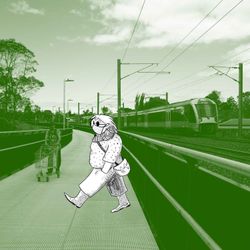
Sleeper Class (SL)
41:42|Sleeper Class (SL) is a musical journey to be listened to while walking along the New Lynn to Avondale shared path, in Auckland. Following the flow the landscape, at times it rushes with the train and at others drops into soft contemplation. The name of the piece refers to a common overnight train ticket.The musicians that form Te Rama Ake Roa draw from a variety of improvisation traditions including taonga pūoro, jazz and Hindustani music. Together, they take the shared path as a score for melodies and rhythms that carry you along the 40 minute walk. Their response forms a cultural junction inspired by the clatter of wheels and chuff of engines.Accompanying your walk will be Hindustani singer Balamohan Shingade, taonga pūoro artists and percussionists Abigail Aroha Jensen and Larsen Tito-Taylor, double bassist Eamon Edmundson-Wells, saxophonist Callum Passells and modular synth artist Parks.Take a journey with Te Rama Ake Roa.You can start your walk at either the corner of Hetana St and Totara Ave, New Lynn or Blockhouse Bay Road, opposite Tait St, Avondale.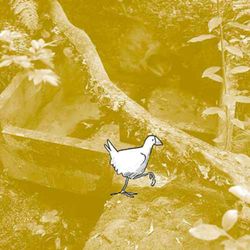
The Waters Flow
47:35|The Water’s Flow tells the story of the creation of a new stream bed and the ways it has and will transform Northcote. Come with us on a journey along the new waterway and learn how it was dreamed up, and what we hope it will be. In late 2022 the waters will first flow the length of the new Te Ara Awataha greenway. To celebrate this moment Kaipatiki Project restoration activator Neil Henderson shares the stories of how the stream came to be and guides you in spotting the secrets of its ecology, the species he hopes to see make the water their home, and the ones he’s hoping we avoid – like the riverbed shopping trolley. Discover the places where you can see this stream and imagine its future with us. Created byThe Kaipatiki project in partnership with the Urban Walking Festival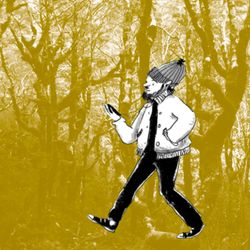
2. Voices of the Ngahere
12:00||Season 1, Ep. 2This track is designed to be experienced in the ngahere / forest.Go for a walk in a forest near you, listen to the track and take some time to consider our questions:How does your forest sound? How does it make you feel?What can you hear in your forest?What are the sounds of a healthy forest? Of an unhealthy forest?Can you make your own sounds or music in/with your ngahere?“Close your eyes and let your mind drift off to a ngahere not far away from here. Think about your place in this world and your role as kaitiaki. Let your worries drift away and enjoy the voices of the ngahere.”Voices of the Ngahere was created by Konini School, Room 20 with Tash van SchaardenburgToitū te Ngahere: Art in schools for forest healthThis soundscape was created as part of a commission for the Urban Walking Festival. Students at Kauri Park School in Tāmaki / Auckland worked in collaboration with sound artist Tash van Schaardenburg, learning to take field recordings, then consider how these could be combined to create an experience of the forest.It is one part of a collaborative research project with researchers from the University of Auckland | Waipapa Taumata Rau. The students are supported to examine the implications for their communities and local environments of two plant pathogens: kauri dieback caused by Phytopthora agathidicida, and the fungal disease myrtle rust, Austropucinia psidii.Combining science, mātauranga Māori and the arts, the students explore ways to contribute to ngahere ora as kaitiaki, finding ways to generate positive social and ecological action in their schools and communities, sharing messages of concern, hope and connection with ngahere ora.The resulting soundscape captures the children’s exploration of their local forest environment through sound. In response to the threatening pathogens kauri dieback and myrtle rust they asked, how can listening to the forest evoke how we feel about it? What does a healthy forest sound like? We invite you to walk through your local bush and listen.Presented by the Urban Walking Festival, with support from Eke Panuku, Auckland Transport and the Biological Heritage National Science Challenge programme Ngā Rākau Taketake.1. Pieces of Us
05:56||Season 1, Ep. 1This tracks is designed to be experienced in the ngahere / forest. Go for a walk in a forest near you, listen to the track and take some time to consider our questions:How does your forest sound? How does it make you feel?What can you hear in your forest?What are the sounds of a healthy forest? Of an unhealthy forest?Can you make your own sounds or music in/with your ngahere?Pieces of Us was edited by Charley, Mckenzie, Elise, Holly, Madison, Lucy, Henry, Suka, Samantha, Lilly. “We are students at Kauri Park School. We are children from the ages of 9 - 11 who love our native bush and we have been working to create a beautiful soundtrack for you to enjoy. It contains sounds from our piano and from our very own bush. We hope you enjoy it.”Toitū te Ngahere: Art in schools for forest healthThis soundscape was created as part of a commission for the Urban Walking Festival. Students at Kauri Park School in Tāmaki / Auckland worked in collaboration with sound artist Tash van Schaardenburg, learning to take field recordings, then consider how these could be combined to create an experience of the forest. It is one part of a collaborative research project with researchers from the University of Auckland | Waipapa Taumata Rau. The students are supported to examine the implications for their communities and local environments of two plant pathogens: kauri dieback caused by Phytopthora agathidicida, and the fungal disease myrtle rust, Austropucinia psidii.Combining science, mātauranga Māori and the arts, the students explore ways to contribute to ngahere ora as kaitiaki, finding ways to generate positive social and ecological action in their schools and communities, sharing messages of concern, hope and connection with ngahere ora.The resulting soundscape captures the children’s exploration of their local forest environment through sound. In response to the threatening pathogens kauri dieback and myrtle rust they asked, how can listening to the forest evoke how we feel about it? What does a healthy forest sound like? We invite you to walk through your local bush and listen.Presented by the Urban Walking Festival, with support from Eke Panuku, Auckland Transport and the Biological Heritage National Science Challenge programme Ngā Rākau Taketake.