Under the Lens
All Episodes
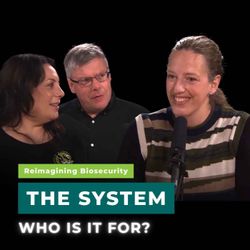
8. Reimagining Biosecurity: Who is the system actually for?
56:46||Season 2, Ep. 8Biosecurity is often thought of as systems and agencies. But communities, people, and places are also doing the long term work, often with little resourcing and even less say in how it gets done. In this episode Dr Sylvia Nissen, political scientist and human geographer at Lincoln University, joins Amanda and Peter to explore what role communities actually play in biosecurity responses, where the system falls short, and what a more community embedded approach might look like. If we are talking shared responsibility, is there shared resourcing?Follow us:YouTubeInstagramLinkedIn00:00 Reimagining Biosecurity00:51 Podcast Welcome01:29 Meet Dr Sylvia Nissen02:35 System Today vs Ideal04:01 Communities in Response06:44 Defining Community Publics08:27 Command and Control Limits13:07 Resourcing and Burnout17:21 Biosecurity System Overview19:12 Trade Driven Origins26:52 Conservation Gets Sidelined29:44 Patchwork Policy Problems30:19 Community Conservation Disconnect32:02 Funding That Lasts33:34 Motivation and Authority35:14 Crisis Response Lessons38:50 Handover Gaps and Boundaries41:59 Rebuilding Trust Spaces45:59 Real Time Information Networks52:14 Community Embedded Biosecurity54:47 Reimagining the System56:05 Closing Thanks and Wrap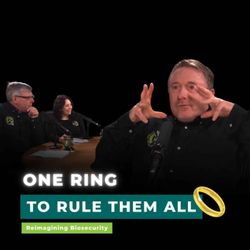
7. Reimagining Biosecurity: One ring to rule them all
01:03:06||Season 2, Ep. 7Season two of Under the Lens is here, and we are starting somewhere unexpected. Fellow co-hosts Amanda and Peter turn the lens on Nick Waipara, drawing on his 25 years in biosecurity to ask what a reimagined system would actually look like. From the kauri dieback story and the community networks that first raised the alarm, to the gaps in our science system and the feast and famine of community funding, Nick is candid about where the system falls short and hopeful about where it is heading. If you see something unusual out there in the environment, tell someone. Your observations could make the difference between a successful biosecurity response and an unsuccessful one. iNaturalist is a great place to start.Follow us:YouTubeInstagramLinkedIn Chapters:00:00 Magic Wand Biosecurity00:37 Season Two Kickoff03:09 Sticks Versus Carrots05:50 Research Ready Response07:46 Trust Networks First08:42 Kauri Dieback Alarm14:19 Embedding Communities17:52 Nick Origin Story22:04 Reactive Funding Gaps27:11 Skills Succession Crisis30:24 Local Knowledge Wins33:08 Vanishing Experts34:41 Science Must Be Public38:19 Communication Skills Shift41:37 Building Community Trust42:26 How Councils Manage Pests44:51 Research Behind Policy Fights51:46 Biosecurity Action Plan Future56:06 International Links Local Weeds59:27 Final Advice Report Sightings
6. Can we go there? Your feedback, your questions and what’s coming next
39:38||Season 2, Ep. 6Your feedback, your questions and what’s coming next.Season one sparked more conversation than we expected. In this episode your three co-hosts Amanda, Peter, and Nick work through the feedback, comments, and questions that came in after season one, covering weeds, kauri dieback, and genetic modification. The GM debate generated the most heat, and what came out of it was bigger than the technology itself, a conversation about ownership, oversight, food security, and food sovereignty, brought into sharp focus by COVID and a recent fuel crisis. We also celebrate a remarkable community effort, a 14,000 tree kauri refuge being established at Taieri Beach as a seed bank while science works toward a solution for kauri dieback. The episode closes with a preview of season two, which turns the lens on the biosecurity system itself.Follow us:YouTubeInstagramLinkedInChapters: 00:00 Welcome Back00:26 Season One Feedback01:32 Weeds Episode Praise02:19 Hay Fever and Pine Trees05:26 The GM Debate Reactions06:51 Can We Go There08:06 GM Hype vs Reality09:55 Food, GM and Imports15:06 Fuel Crisis and Food Security16:31 A Tool, Not a Category18:55 Ownership and Sovereignty20:52 A Food Security Wake Up Call22:10 GMO Power and Oversight22:52 Hybrid Seeds Explained24:04 The Canterbury Seed Economy25:02 Capitalism and Our Food System26:16 Beetroot and Identity28:09 A Kauri Refuge Forest32:20 Weed Funding and Biocontrol36:31 Agapanthus and Prevention37:19 Season Two Tease39:07 Thanks and Sign Off
5. Under the Lens: Weeds Hidden in Plain Sight
50:36||Season 1, Ep. 5Weeds are everywhere in Aotearoa New Zealand. They creep along roadsides, smother forest edges, clog waterways and hydrodams, and quietly take over harbour hillsides. Most of us just see green.In this conversation, Professor Margaret Stanley, recently recognised as Science Communicator of the Year, helps us see what is really going on in that green backdrop. She explains what makes a plant a weed, why only a small fraction of introduced species become invasive, and how new weeds continue to “jump the fence” from gardens, forestry, horticulture and houseplants.We look at problem species like banana passionfruit, ragwort, agapanthus, climbing asparagus, aquatic weeds and more. Margaret talks through the tools we currently have, from herbicides and hand-pulling to biocontrol agents like beetles and rust fungi, and why each tool has limits.The episode also explores how climate change will shift weed ranges, why aquatic weeds are so hard to manage, and how nursery choices, urban planting and cultural values shape the plants around us. Above all, it highlights the role of communities in early detection and prevention through tools like iNaturalist, local council programmes and on-the-ground volunteer mahi.4. Under the Lens: The Great Genetic Modification Debate in Aotearoa New Zealand
51:47||Season 1, Ep. 4Genetic modification has shaped public debate in Aotearoa New Zealand for more than 25 years, influencing how we think about risk, responsibility and the future of our environment. This episode unpacks what genes and DNA actually are, how gene editing and genetic modification work, and why these tools have become so central to conversations about pests, diseases and climate change.Our hosts revisit the early 2000s Royal Commission on Genetic Modification, the surge of public concern that followed, and how the science has advanced in the decades since. They explore the differences between gene editing, transgenesis and synthetic biology, the benefits and limitations of each, and the global momentum that is pushing these technologies forward. The kōrero also explains how forensics, medicine, agriculture and pest control already rely on genetic tools, often in ways most people never see.We also look at the ethical, cultural and regulatory questions that guide how Aotearoa New Zealand uses these technologies, including who takes the risk, who benefits and how Māori and communities are involved in decision making. The episode highlights both the promise of genetic tools and the responsibilities that come with them as the country enters a pivotal moment in shaping its future with the Gene Technology Bill.3. Under the Lens: Kauri Dieback, Where Biodiversity Intersects with Biosecurity
01:00:05||Season 1, Ep. 3Kauri dieback, caused by the pathogen Phytophthora agathidicida, has reshaped how Aotearoa New Zealand understands risk, responsibility, and care for the natural world. This episode unpacks the biology of the pathogen, the cultural significance of kauri, and the long journey from confusion to coordinated response.Our hosts revisit the early days when dead and dying kauri began raising alarms, the rapid surge in concern from communities, and the urgent scramble to understand a pathogen unlike anything researchers had dealt with before. They explore how soil, water, animals, and people move the disease, why early management had to adapt quickly, and how molecular tools reshaped what we know about this organism.We also look at the important contributions of iwi, community groups, scientists, landowners, and volunteers who stepped into leadership roles during a time of uncertainty. The episode highlights both the complexity of the challenge and the resilience of those determined to keep kauri standing.2. Under the Lens: Three Bios, One Outbreak: Lessons from PSA
49:16||Season 1, Ep. 2The PSA outbreak changed the trajectory of Aotearoa New Zealand’s kiwifruit industry and revealed just how tightly our “three bios” are linked. In this episode, we revisit one of the country’s most significant biological events to unpack how biosecurity, biodiversity, and bioprotection collide in real time.Using PSA as our lens, we trace the story from the first signs of incursion through to industry-wide impact, rapid scientific response, community collaboration, and the innovations that helped growers rebuild. Along the way, the team also touches on recent hornet scares and what they reveal about how quickly biological threats can escalate.This episode shows that the three bios are not policy terms, but interconnected systems that shape the health of our landscapes, the resilience of our industries, and the futures of the communities that depend on them.Revisiting PSA is not just looking back at a crisis. It is understanding a blueprint for how Aotearoa New Zealand can learn, adapt, and strengthen resilience as new threats emerge.1. Under the Lens: The Intricacies of Bioprotection in Aotearoa New Zealand
42:25||Season 1, Ep. 1In our very first episode of 'Under the Lens', co-hosts Professor Amanda Black, Professor Peter Dearden and Dr Nick Waipara discuss the complexities of bioprotection in Aotearoa New Zealand. They delve into the necessity of managing all ecosystems in Aotearoa New Zealand, the challenges of returning to a 'natural state', and the interconnectedness of bioprotection with agriculture, conservation, and community health.The conversation highlights the goal of bioprotection to develop sustainable tools and practices that balance productivity with environmental conservation.The discussion also touches on the importance of community involvement and the long and often challenging journey of scientific research, emphasising the need for innovation and collaboration to address environmental issues effectively.
loading...