Share
The Traveling Image Makers
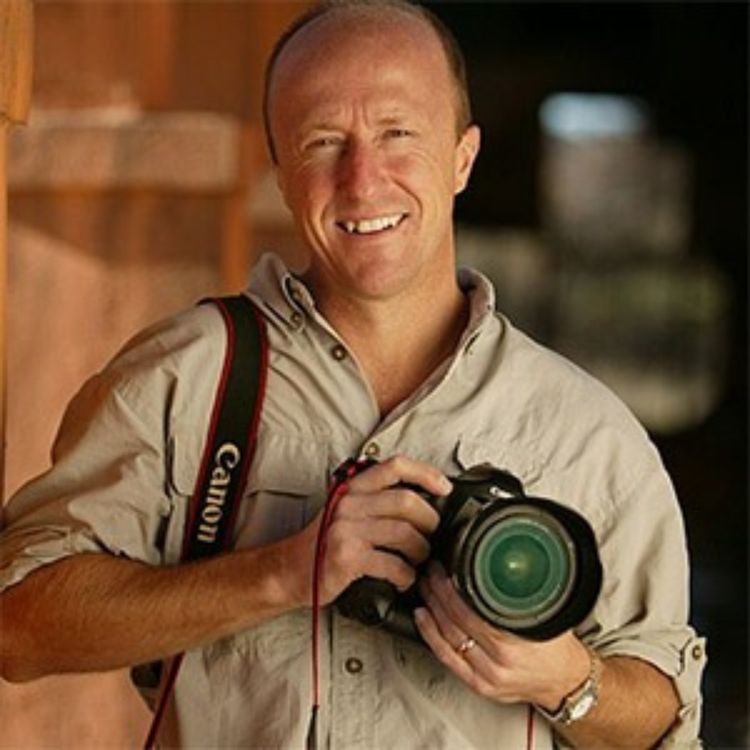
TTIM 109 – Karl Grobl in Cambodia
Peering well beyond the surface of unfolding stories, Karl’s photographs reveal the heart, and sometimes, heart-wrenching truth. His images offer viewers intimate glimpses into the lives of ordinary people worldwide, and provide us with the opportunity to reflect and understand their personal struggles and triumphs.
With a keen awareness and reverence for human dignity, Karl creates photographs that not only educate and motivate but also stir the viewers’ deep emotion.
Grobl specializes in humanitarian photojournalism, documenting relief efforts and development work of NGOs worldwide. His clients include World Vision, World Relief, World Emergency Relief, Freedom from Hunger, Catholic Relief Services, Family Health International, Pan American Development Foundation and many more.
Karl has worked for more than 85 different NGOs in over 50 countries, including Sudan, Uganda, Burkina Faso, Ghana, Guinea, Peru, Bolivia, Cambodia, Vietnam, Haiti, Sri Lanka, Philippines, and Senegal, Indonesia, Afghanistan, and Sudan. Covering issues including conflict, post-conflict resolution and reconstruction, HIV/AIDS, prostitution, human trafficking, malaria, cholera, environmental degradation as well as micro-finance and education; Karl’s images have helped countless NGO’s illustrate their programs on Annual Reports, websites and in all sorts of communications.
“My goal is always to create high-impact, evocative images which not only inform, but also spark the desire to become involved… images that cause reflection upon and empathy with another human being’s struggle, all the while, respecting the dignity of those who appear in the photos. When successful, my imagery reveals a common humanity, allowing viewers to see a bit of themselves in other human beings, half a world away. Beyond just providing information… the images should motivate viewers to take action”.
Karl’s images have appeared in publications such as Newsweek, CNN, Geo, Town and Country magazine and The Chronicle of Philanthropy, but the largest majority of his photos appear in the annual reports, newsletters and communications materials of his humanitarian organization clients. Karl’s non-NGO work is represented by Zuma Press, the premier international editorial picture agency and wire service. His 2005 Haiti photo-story “City of God” was nominated for a World Press Photo Award.
Following the 2004 Indian Ocean tsunami Karl spent more than a month embedded with five different non-governmental organizations documenting tsunami relief efforts in India, Sri Lanka and Indonesia. One year later he returned to document the reconstruction. He has covered post conflict peacebuilding efforts in Sri Lanka, Afghanistan and East Timor, HIV/Aids issues in Africa and Asia as well as Human trafficking in Cambodia and the Philippines.
In addition to his rigorous international travel schedule, Karl teaches photography workshops and leads international photography tours. He is a regular lecturer on photography and photojournalism and a long time member of the National Press Photographers Association. Karl is a member of the Advisory Counsel of Focus For Humanity, a non profit organization, who’s mission is to provide financial support, resources and training for professional and amateur photographers wishing to work with NGOs. He also works as a technical consultant for several photographic and photography-related technology companies and was featured in a world wide advertising campaign for SanDisk memory cards.
Duration 46m 27s.
More episodes
View all episodes
191. TTIM 191 – Ibarionex Perello and Diversity in Photography
56:34||Ep. 191A few weeks ago I had a conversation on this podcast with our common friend Valérie Jardin. Most of the discussion we had was centered around an article published on the New York Daily News and titled When your photograph harms me: New York should look to curb unconsensual photography of women.It would have been easy to discount the article as yet another rant about street photography and its purported invasion of privacy, but the fact that it was written by an Asian woman got me thinking.It made me think that photography is mostly a white guys’ club. Women are a minority and people of color, especially black, are an even smaller minority. Black women photographers? I don’t know any, personally.We white guys often tend to overlook this fact and can become race-blind and gender-blind. When I look at the issue of photographing strangers in the street, it’s easy for me to think that I should apply a sort of golden rule: I am not going to treat others in ways that I wouldn’t want to be treated, but is that enough?The problem with that attitude is that I try to imagine how I would feel if I were in front of the camera, but I’m a white guy, not a woman of color, for example. Maybe I should try to imagine what it feels like to be in front of the camera as a woman of color. It might not be exactly the same. In order to get a different perspective on this issue, I invited Ibarionex Perello to the show. Ibarionex is not only a great street photographer, and educator, and a podcast host (his show, The Candid Frame, has published 560 episodes as of today) but he's also a black person. I thought it would be interesting to hear how it feels to be both in front and behind a camera as a person of color, in today's world and especially in the USA.
190. TTIM 190 – Mattias Sjölund and the Magic of Scandinavia
44:39||Ep. 190Our guest this week is Swedish landscape photographer Mattias Sjölund. Mattias has an inherent passion for photographing and hiking in nature. He is the founder of Foto Magica, one of the leading organizers of photo tours and workshops in Scandinavia.We asked Mattias about his favorite wilderness locations in and around Sweden and discovered a number of places that are not excessively popular yet, but are definitely deserving of a visit, including Abisko, Knuthöjdsmossen, Gotland Rauks, and Jämtland. LinksFoto MagicaPersonal websiteInstagram
189. Matt Bishop, an Australian in Rome
43:28||Ep. 189Matt Bishop, our guest for this week’s episode of the podcast, is an Australian who visited Italy many years ago, fell in love with the place and one of its people and never looked back.Matt was raised up in the small seaside town of Sorrento, Australia. During his childhood years there was certainly a strong artistic background that influenced his photography later in life. Matt was drawn toward landscape photography after spending months climbing the mountains in Switzerland, and after soon arriving in London in 2002, he purchased his first 35mm Camera. Over the years his progression into capturing landscapes was a slow experimental one, until recently where his workflow in digital photography became far more refined. Today Matt resides in Rome, Italy, surrounded by ancient forests, medieval castles, rolling pastures and alpine jagged mountains.In recent years his main photographic projects involve collaborating with Pentax Europe, the Landscape Photography Workshops in Patagonia, private post production instructions in Rome, and recently discovering new locations in the surrounding “Medieval Italy”.Together with Matt, we explored his favorite locations for landscape photography in Italy, including Tuscany, the Dolomites, and the less well known, but equally stunning, region of Abruzzo. We also talked about his experiences in Patagonia.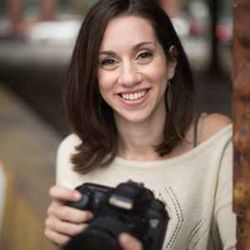
188. Jordana Wright in Belize
33:00||Ep. 188We're super happy to have again as a guest on our podcast Jordana Wright, who we already interviewed in episode TTIM 104 – Jordana Wright and The Enthusiast’s Guide to Travel Photography.Jordana says of herself: "I’ve had a camera in my hand for over 75% of my life. Originally it was a plastic point-and-shoot and a fresh roll of Kodak but these days, well, things in the photography world have changed exponentially. While my gear budget has grown a bit, my love for framing the world in a little box remains the same. My camera has taken me to some amazing places and introduced me to some of my favorite creatures. I’ve been lucky enough to make a living at photography for the past 14 years. When I’m not actively looking through the viewfinder, I write about photography and creativity (my first book “The Enthusiast’s Guide to Travel Photography” was published in 2018) and teach photography through workshops, classes, and private tutoring. I currently live in San Ignacio, Belize."Last time we spoke, more than three years ago, Jordana was still living in cold an windy Chicago, but recently she moved to Belize, a country about which we really wanted to learn more, so what better opportunity than to ask a recent resident and an extraordinary travel photographer about its beauties and about the practicalities of living there?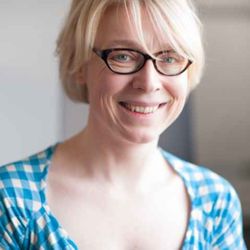
187. Else Kramer, the Photosopher
42:40||Ep. 187This week's guest of the show is Else Kramer, who likes to define herself as a Renaissance woman, a photosopher, making the visible invisible, a coach to gifted women and a wearer of polka-dot dresses.Here is how Else talks about herself on her website:"I spend most of my day looking at the world in wonder, marvelling at all the amazing miracles to be seen.And I’m very lucky that the past 10 years of my life have been centred around helping others do the same, through online projects, keynotes and live workshops.I love using new technology to empower people to be more creative and better appreciate both their world and art.I embraced smartphone photography when I got my first iPhone - the 3S. I believed (as I still do) that this was the start of a Visual Revolution, where everyone would be able to tell their own stories through images. I was the first person to give smartphone photography workshops in the Netherlands, and have run many online projects helping people see with fresh eyes using their smartphones since."With Else, we explored the intersection of photography and visual arts, especially painting, and looked at several examples of artists that we believe should be of inspiration to all photographers.
186. Darlene Hildebrandt and Artificial Intelligence
43:20||Ep. 186Darlene Hildebrandt is the creator of Digital Photo Mentor. She has been a professional photographer for over 30 years, and as such, she has photographed everything from soup to hay—literally—including doing food photography; weddings; family portraits; corporate events and products.After a forced change of direction (a.k.a. divorce), she left her photography studio behind and moved on to other aspects of photography—including sales, fine art, and travel. She finally landed on teaching and couldn’t be happier. She's written for and has been published on websites and in newspapers around the world, and was also the Managing Editor of Digital Photography School for 5 years, one of the most popular photography sites on the internet.We talked about Venice and its recent 1600th birthday, Canada's wine country, Nova Scotia, and Toronto. We also discussed the growing importance of Artificial Intelligence in the field of photography, what people can use it today for, and where we are headed.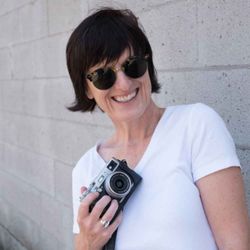
185. Valérie Jardin on Consensual Street Photography
43:19||Ep. 185Our guest on this week’s episode of the podcast is Valérie Jardin.Valérie is a visual storyteller recognized internationally for her street photography. She leads workshops worldwide, writes books, produces a weekly podcast, and is an official X Photographer for Fujifilm USA.We asked Valérie for her thoughts on an article by Levi Sim, provocatively titled Taking street photography should be illegal. In the article, Levi reflects on his approach to street photography, after having read another article, written by Jean Son for the New York Daily News and titled When your photograph harms me: New York should look to curb unconsensual photography of women.When we practice street photography and take pictures of strangers–sometimes without our subject’s awareness–a small minority of photographers behave like everything is allowed. Other are more considerate and will follow a basic rule: don’t put others in a situation we wouldn’t want to be in ourselves.But is that really enough? When we think like this, don’t we run the risk of ignoring differences of gender, age or ethnicity? If a man photographs a woman, is it enough for him to ask “Would I like to be photographed, as a man?” Wouldn’t it be more appropriate to ask instead “Would I like to be photographed, if I were a woman?”These were the questions that those articles raised and that we wanted to discuss with our guest. We hope you will appreciate the answers.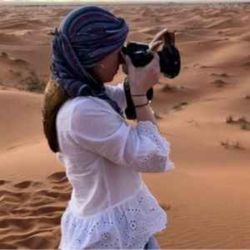
184. A Conversation With Charlotte Brett
40:03||Ep. 184Charlotte Brett is a landscape and travel photographer based just outside London. With a passion to see and photograph diverse places around the world, in recent years she has travelled to China, Morocco, Cuba, Ecuador and The Seychelles. As well as capturing big landscapes and cityscapes, Charlotte loves to photograph the details, colours and people of the places she visits to give a sense of a country’s culture and history. She was recently approached by high-end travel library, 4Corners Images, who will be representing her work commercially going forward.
183. Storytelling
51:35||Ep. 183Does every picture tell a story? What does it actually take to create storytelling photographs? This week, Ugo, Ralph and special guest Kav Dadfar discuss the ins and outs of storytelling in travel photography.