Share
Trees A Crowd
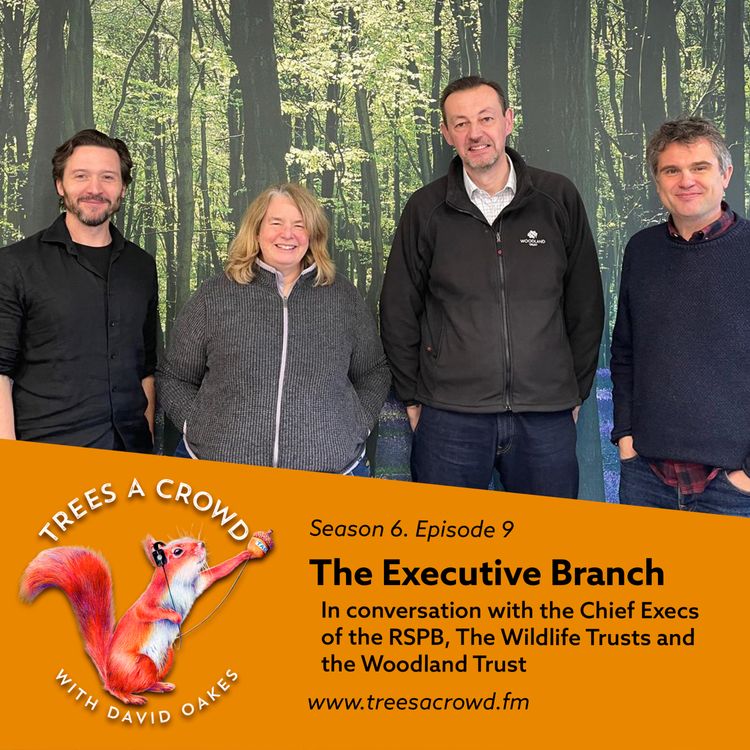
The Executive Branch: Beccy Speight (RSPB), Darren Moorcroft (Woodland Trust) and Craig Bennett (The Wildlife Trusts)
Around a table at the Woodland Trust's headquarters in Grantham, David sits down with three of the most powerful voices in British conservation: Darren Moorcroft, Chief Executive of the Woodland Trust; Craig Bennett OBE, Chief Executive of The Wildlife Trusts; and Beccy Speight, Chief Executive of the RSPB - between them, custodians of millions of members, thousands of nature reserves, and decades of hard-won environmental progress.
It is, on paper, a story of success. The RSPB alone counts more members than every major UK political party combined. The Woodland Trust manages 1,200 sites, all free and open to anyone. The Wildlife Trusts have more nature reserves than McDonald's has restaurants - and if an ambitious bid for a vast estate in Northumberland succeeds, their newest will be the size of Athens. (Put that in your Veggie Burger, Ronald!) And yet the State of Nature reports - co-authored by all three organisations since 2013 - tell a grimmer story: the UK remains one of the most nature-depleted countries on the planet. So if these organisations are succeeding, why is there less wildlife in Britain today than when the first report was published?
What follows is a candid, wide-ranging conversation about why that gap persists - and, more importantly, what it will take to close it. The trio are frank about the limits of their power and the outsized influence of ideology on Downing Street, but also clear-eyed about what is changing: public awareness is shifting, businesses are moving beyond philanthropy, and a growing movement is starting to feel "...like a wave that can be pushed further up the beach than ever before."
All three believe that tipping-point is closer than it looks. As Craig puts it: if you got rid of the economy, nature would be fine. If you got rid of nature, there would be no economy. Get that truth to land in the right places - and the next State of Nature report might finally tell a different story.
More episodes
View all episodes
11. Zack Polanski: Wild Card at the Wild Summit
27:10||Season 6, Ep. 11Recorded live at the Wild Summit, Zack Polanski, leader of the Green Party of England and Wales, sits down with David Oakes to talk about what his "Green Britain" could actually look like. They probe the paradox at the heart of nature access, whether the Green Party's environmental and social-justice instincts really pull in the same direction, and why Zack thinks capping corporate money in politics is a necessary precondition for making our country more full of nature. Along the way: commitments on bottom trawling and grouse moors, the UK's legal target to protect 30% of green and blue spaces by 2030, and a belief that education lies at the heart of all of it. With time running out for the planet, champions of biodiversity are in short supply near the ballot box. Under Zack's leadership, is Britain destined for a Green Party - or just green, partly?
10. Painted Dogs of Hwange: Where the Wild Pack Runs
01:05:57||Season 6, Ep. 10Recorded on the outskirts of Hwange National Park in Zimbabwe, this episode drops David into the high-stakes reality of animal conservation. Guided by Peter Blinston and his team at Painted Dog Conservation, David joins the people whose work keeps Lycaon pictus alive in the buffer zone:Belinda Ncube, PDC’s first female ranger, whose story runs from childhood bush camp to leading a unit of women in a landscape still shaped by patriarchal assumptions;Adraino Sitole, who began as a community volunteer after a Painted dog was killed in a snare just moments from his village, and now tracks poachers with trained sniffer dogs while helping remove thousands of wire traps from the bush;and David Kuvawoga, PDC's Director of Operations, who literally takes Oakes from patrol to rapid response - explaining how the team uses radio alerts and 24/7 tracking to push packs away from snares, highways and other anthropogenic threats, and why, in this context, the low risk of ‘...a habituated wild dog is better than a dead wild dog.’Painted Dogs may be Africa’s most effective large hunter, but they cannot outrun snares, disease spillover from domestic animals, a barage of road vehicles, or the human economics that drive bushmeat poaching in the first place. In this episode, David wrestles, in real time, with the moral knot at the heart of modern conservation: when drought, food insecurity and job scarcity push people towards the wild, removing snares is urgent, life-saving triage - yet it’s also only a sticking plaster if the conditions that put the wire in the bush remain unchanged. What emerges is the logic of PDC’s approach: conservation that extends beyond tracking collars and snare patrols into community investment - education, employment, youth programmes, and practical alternatives - because long-term ecological security in Hwange doesn’t begin with the dogs. It begins with the people who share their land.
8. Rakan Zahawi: Giant ambitions at the Charles Darwin Foundation
32:44||Season 6, Ep. 8Following on from two episodes recorded on San Cristóbal Island, this episode finds David having set sail across the Galapagos archipelago for Santa Cruz; destination: the headquarters of the Charles Darwin Foundation — the research institution founded alongside the Galápagos National Park, and still at the heart of how science becomes conservation on the islands.Joining David is Rakan Zahawi, CDF’s relatively new Chief Executive. Rakan is a botanist and restoration ecologist who arrived after running botanical gardens in Hawaii and Costa Rica, and now helps steer one of the most ambitious ecological recovery efforts anywhere on the planet. At the centre of this conversation is the Floreana Project: a multi-decade initiative to restore the Galapagos island of Floreana to a natural state, one pre-dating humankind’s arrival in the Galapagos. By tackling invasive species at scale and rebuilding ecosystem function from the ground up, Rakan explains why removing cats and rodents is only the start, and how quickly native wildlife can rebound when pressure lifts — from finches and reptiles to the startling reappearance of the Galápagos Rail for the first time since Darwin’s 1835 visit. With that groundwork laid, attention turns to what comes next: a carefully sequenced programme of reintroductions, led by the recent (last week, no less!) return of giant tortoises to Floreana — hybrids, standing in for a lineage wiped out long ago — as a headline step in a restoration story decades in the making. All that, plus the methodical science behind biocontrol, the worries of a parasitic “avian vampire fly” that threatens Galápagos avian life, and what lies ahead for CDF and its present and future partnerships.This episode was recorded live at the Charles Darwin Science Centre on Isla Santa Cruz in the Galápagos.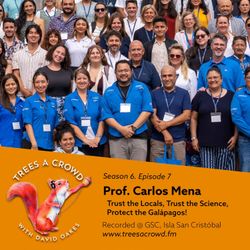
7. Prof. Carlos Mena: Trust the Locals, Trust the Science, Protect the Galápagos
36:59||Season 6, Ep. 7This episode finds David in conversation with the Galápagos-born geographer, Director of Universidad San Francisco de Quito’s Galápagos campus and Co-Director of the Galápagos Science Centre, Professor Carlos F. Mena (recorded with a chorus of barking sea lions providing an unmistakably local backdrop!)From a NASA fellowship and early work modelling human behaviour in the Amazon, Carlos explains how his research led to a simple, uncomfortable truth: conservation succeeds or fails at the level of families. In places where survival is precarious, the forest becomes a bank account — and any environmental message that ignores poverty, health and education is doomed to stay theoretical.From there, the conversation moves to the Galápagos as a living, inhabited system: a place of extraordinary protection and extraordinary pressure. Carlos describes the islands’ dependence on tourism, the “fortress conservation” model that tightly regulates both people and nature, and the political push to open the archipelago to outside investment. They explore how the Science Centre builds trust with local communities after a history of extractive science, why co-authorship and two-way learning matter, and how citizen-science livelihoods emerged in the shock of COVID.The episode ends where it began — with sea lions spilling into town — as Carlos unpacks the new sea lion management plan, the challenge of educating residents and tourists alike, and the looming threat of disease in small, irreplaceable populations.This episode was recorded live at the Galápagos Science Centre on Isla San Cristóbal in the Galápagos.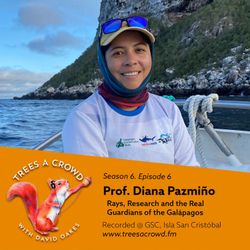
6. Prof. Diana Pazmiño: Rays, Research and the Real Guardians of the Galápagos
55:18||Season 6, Ep. 6A Galápagos native – born on Isla Isabela – marine biologist and conservation geneticist Diana Pazmiño focuses her research on rays, sharks, and the human communities that live alongside them.In this relaxed discussion with David Oakes, Diana explains why she brings conservation science home, how education shapes what gets noticed, valued, and protected, and what ‘protected’ actually means in practice – especially in those liminal spaces where rules and regulations require regular enforcement.Nothing epitomises Diana’s belief in the value of education more than the project she initiated on the archipelago – The Gill’s Club. Empowering girls aged 8 to 12 across the four inhabited islands of the Galápagos through experiential learning in marine science and conservation, The Gill’s Club fosters a strong bond with the ocean, develops aquatic skills, critical thinking, and female leadership.They also explore what happens when conservation becomes purely prohibitive, how bans can drive use underground, and why durable protection depends on local buy-in, education, and a sense of shared identity that’s still being built.This episode was recorded live at the Galápagos Science Centre on Isla San Cristóbal in the Galápagos.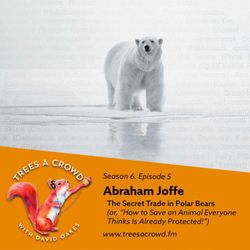
5. Abraham Joffe: The Secret Trade in Polar Bears (or, “How to Save an Animal Everyone Thinks Is Already Protected!”)
34:59||Season 6, Ep. 5In the second of two CITES-centric episodes, this episode finds David in conversation with Australian filmmaker Abraham Joffe – director of Trade Secret, the award-winning documentary exposing the global trade in polar bear skins. While climate change relentlessly erodes the sea ice these animals depend on, Abraham reveals how polar bears are still legally trophy-hunted, skinned and sold as luxury rugs and taxidermy, their fate decided in conference halls thousands of miles from the Arctic.David and Abraham explore how Trade Secret follows journalists, advocates and Arctic guides – including previous guest Iris Ho – as they investigate both legal and illegal polar bear markets, and push for the species to be “uplisted” to the highest level of CITES protection. Along the way, they discuss the blurred line between filmmaking and journalism, the ethical weight that comes with shaping a story in the edit, and the power – and limits – of a documentary to change international policy.Crucially, the conversation also turns north, to the Indigenous communities who have lived alongside polar bears for generations. Abraham reflects on the cultural and subsistence importance of traditional hunting, how little money actually reaches those communities from the luxury trade, and why giving polar bears the protection they deserve doesn’t have to mean erasing the people who share their icy home.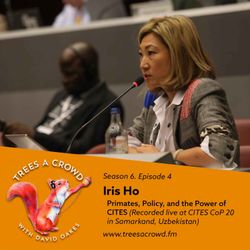
4. Iris Ho: Primates, Policy, and the Power of CITES
31:12||Season 6, Ep. 4Recorded on the outskirts of Samarkand, Uzbekistan, this episode finds David at the 20th Conference of the Parties to CITES – the global treaty that has regulated international trade in endangered species for the past 50 years. Inside, beneath flickering lights, 185 nation-states haggle over commas, clauses and quotas; at the back of the room sit conservation NGOs, animal welfare groups, trophy-hunting lobbyists, biomedical interests and import–export industries, all vying to shape the fate of the world’s wildlife.Amid this diplomatic circus, just outside the expo centre, David sits down lakeside with Iris Ho, a proudly self-professed “CITES nerd”. Born in Taiwan and now based in Washington, DC, Iris is Head of Campaigns and Policy at the Pan-African Sanctuary Alliance (PASA) – the largest network of accredited primate sanctuaries in Africa. She explains how PASA’s work caring for rescued primates on the ground connects directly to the policies debated in those halls, and why a single well-crafted decision can protect far more animals than any one sanctuary ever could.Together, they explore Iris’s efforts to up-list the golden-bellied mangabey to the highest level of CITES protection, to re-establish an international great ape enforcement task force, and the troubling case of a private “rescue centre” in India that has imported tens of thousands of wild animals under highly questionable circumstances. Along the way, Iris reflects on growing up in a Taiwan where shark fin soup went unchallenged, the quiet shift in public attitudes she’s witnessed across Asia, and how daily walks in her local DC nature reserve give her the strength to keep fighting for the natural world.It’s an episode about primates and policy, hope and heartbreak – and about why, if we truly care for the wild lives we share this planet with, we might all need to become just a little bit more “nerdy” about treaties like CITES.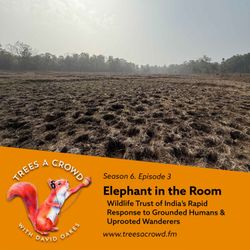
3. Elephant in the Room: Wildlife Trust of India’s Rapid Response to Grounded Humans & Uprooted Wanderers
18:49||Season 6, Ep. 3Following on from the conversation with Dr Bhaskar Choudhury in the previous episode...Recorded further south, near Bandhavgarh National Park in the Indian state of Madhya Pradesh, this bonus episode is with Amrit Menon, department head of the Wildlife Trust of India’s (WTI) Wild Aid division. This conversation looks not solely at rescue and rehabilitation, but at coexistence. What happens when wild animals are forced from their traditional habitats into states that have never before had to co-exist with them? For example, how do local farming communities adapt to life when their new neighbours are forty-five elephants strong?This conversation details the WTI’s Rapid Action Projects - RAPS — funded in part by David Shepherd Wildlife Foundation. Think of RAPS as conservation’s Thunderbirds: small, nimble teams that drop into crisis zones, offer immediate help, and try to stop future problems before they grow. We’ll then head into the field — to meet with some of the farmers facing the daily reality of elephantine visits, and the RAP project manager there on the floor, Meghna Bandyopadhyay.With thanks to David Shepherd Wildlife Foundation for making this episode possible.