Share
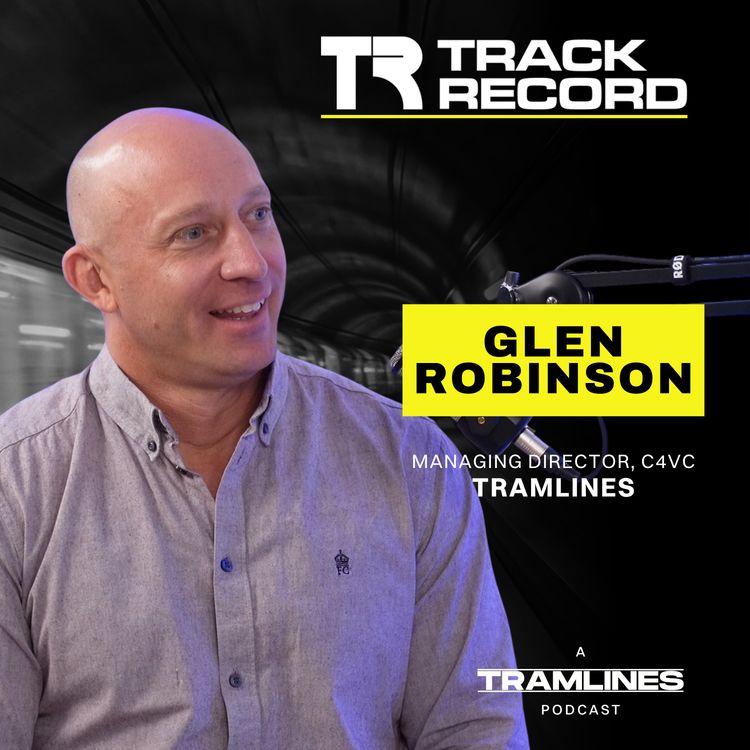
Track Record by Tramlines
Glen Robinson | AI isn't coming for your experts. It needs them.
In this episode of Track Record, Albert Azis-Clauson speaks with Glen Robinson, Managing Director of C4VC, the Centre for Value Creation at Tramlines.
Glen explains why people are now the source code of technology.
As AI infrastructure, models, and tools become increasingly commoditised, he argues that the most durable advantage sits with domain experts and the tacit knowledge they have built over years inside an industry.
We trace Glen’s unconventional route into technology and his early experience at Amazon Web Services, before examining why Netflix’s transition from DVDs to streaming took eight years and what that teaches leaders about AI adoption.
The conversation explores how enterprises can apply venture-building methods to innovation, let 1,000 flowers bloom without losing control, and turn internal expertise into intellectual property that changes the value of the business.
Key moments:
00:00 Introduction
01:36 Glen’s unconventional route into technology
04:23 Discovering cloud and joining AWS
08:25 Why adaptability matters more than strength
09:29 Why Glen left Microsoft for Tramlines
13:19 Why Netflix beat Blockbuster
16:57 Peace, war, and wonder in technological change
18:44 How enterprises should balance delivery and innovation
19:49 How generative AI changes value creation
23:33 Scaling domain expertise inside enterprise
28:35 The transformation cliff and enterprise inertia
29:56 Applying venture-building methods inside enterprise
32:52 Why people are now the source code of technology
33:19 How to govern bottom-up innovation
35:27 How AI changes enterprise value
38:29 Why cost reduction is too narrow a goal
43:47 Where Glen would invest £100m
47:01 Next on Track Record
Track Record is produced by Tramlines. We are industrialising AI through domain expert led startups, mid-market acquisitions, and enterprise partnership. If you'd like to learn more about how we're transforming industries, get in touch.
Learn more at https://www.tramlines.com
More episodes
View all episodes

8. Craig Donaldson | Create Fans: Why Business is About People
55:09||Season 1, Ep. 8Craig Donaldson grew up during the miners' strike, ran 84 bank branches in East Africa at 25, and went on to be the founding CEO of Metro Bank. Now he is the Executive Chairman of Tramlines. He tells Albert what pubs taught him about people, why he started a bank when everyone else was cutting costs, and why domain experts with the right support deserve a chance even if they never become unicorns.Key Moments:00:00 Introduction01:44 A background to Craig's early life03:10 From technologist to banker04:13 Pubs, tills and "business is people"05:08 84 branches in East Africa at 2506:14 Why people took a chance on him07:37 RBS and the global financial crisis08:08 Learning from the hard times09:08 Intellect, interpersonal skills and hard work10:15 Resilience and boss watching11:56 From doing to leading13:50 Dave Craggs and the curve on the graph16:24 Energy from someone else closing the deal17:29 Why start a bank?18:17 The zig and the zag19:38 A call from Vernon Hill20:52 The first new high street bank in over 100 years22:23 Printing cards in store24:04 Create fans24:51 Fail fast25:31 Seven years to IPO27:17 Proof points and stage gates28:48 Statements, post boxes and mirrors30:41 What Metro taught him32:21 Human-led businesses in an AI world34:24 Leaving Metro Bank38:37 Meeting Albert and telling him everything41:37 How Tramlines started44:33 Discipline, and AI as a tool46:17 What excites Craig now48:54 Why experienced people come to Tramlines51:44 The £100m question52:52 Advice for Albert54:52 Close
7. Daniel Lanyon | The Journalist Who Became an Investor
46:57||Season 1, Ep. 7Daniel Lanyon started out as a journalist in Istanbul in 2010, joined The Times' foreign desk as a freelancer, and followed the money into financial journalism. He went on to help build AltFi, a publication covering fintech, from around 2016 until it was bought by a family office. Along the way he met the early teams at Revolut and Monzo, when Revolut had just one product and a team of 10 or 20.He is now Managing Director of Funds at Tramlines. In this episode of Track Record, Albert asks how that career shaped the way Daniel now thinks about founders, investing and AI. They cover how his years as a reporter taught Daniel to judge founders, why he thinks domain experts could overtake the 'Stanford dropout', and how to keep a clear head about AI.Key Moments:00:00 Introduction01:43 Daniel's role at Tramlines02:40 Istanbul, Tintin and becoming a journalist05:28 The Times, The Grocer and following the money06:31 From financial markets to fintech08:19 Why UK Fintech took off09:15 Branches: from moat to millstone10:08 Revolut, Monzo and Starling in the early days11:50 Three tracks: a business, a cycle and investors13:28 A football hedge fund and a buoy on a beach14:17 AltFi and learning to sell16:49 Inside versus outside17:18 The 2021 boom and the downturn18:49 Deciding to become an investor20:12 Meeting Albert21:23 VC as a five-year-old's football match22:24 Where the value lies now23:31 Why the best founders are domain experts25:12 When the big names caught on25:53 "I will never have an app-only bank"27:25 Scaling domain expertise with AI28:52 Going earlier: meeting founders before they quit31:10 Consultancy as a way in32:59 What AI changes for investors35:09 Everyone at Tramlines was at the front36:19 Keeping two sets of books38:29 Analog in an AI world39:13 How to get to the front of AI40:40 Think, plan, do41:40 Three ways to use two sets of books43:06 The £100m question45:21 Advice for Albert46:24 Closing remarks
6. Francesca Hodgson | Start With the Problem, Not the Idea
48:11||Season 1, Ep. 6Francesca Hodgson has built a venture-backed fintech, coached hundreds of founders in the last few months alone, and runs the SPARK incubator at King's College, Cambridge. She talks to Albert about why founders should start with the problem rather than the idea, what raising money really cost her, and why AI makes it more important, not less, to know what you are looking for.Key Moments:00:00 Introduction01:23 Francesca's background02:57 Relationships, trust and discovering your purpose05:43 How Fran coaches: starting with the problem07:56 The trouble with the big idea10:31 Vision, the minimum viable business and the beachhead11:25 Build with, not for12:55 The seven validation gateways15:11 Raising 15 million with 5% of the equity16:32 Revenue, the funding people overlook17:58 There's always a cost19:27 Women founders and the funding gap24:40 Why venture capital is a hammer25:58 The loneliness of a venture-backed founder27:45 Separating governance from management29:01 Psychological safety and leadership styles31:03 Shared ownership and collaboration33:41 AI amplifies what you put in36:15 The false sense of security39:02 Domain expertise plus AI expertise40:32 Thought processing, AI slop and checking the output42:43 Where the opportunity is for founders44:13 The barrier to innovation is now the ability to speak45:38 Where Francesca would invest £100m47:31 Closing remarks
5. Edward Keelan | AI, Growth and the future of VC
50:18||Season 1, Ep. 5As AI is makes software faster and cheaper to build, it changes what investors should look for, how companies sell, how enterprises adopt technology and where defensibility comes from.In this episode of Track Record, Albert Azis-Clauson talks to Edward Keelan, a partner at Octopus Ventures, about the shift from traditional SaaS metrics to a world where pricing, retention and outcomes are still being worked out. They discuss why revenue and the speed of revenue growth matter earlier than many founders expect, why enterprise AI adoption is closer to workflow transformation than buying software off the shelf, and why customer relationships are becoming more consulting-like.Ed also shares his experience of moving from Rolls-Royce and a startup into venture, and they discuss socio-economic access to capital, education, personal relationships and the risk of relationship-led investing reproducing existing networks.The conversation ends with a shared challenge to early-stage VC: as technology becomes easier to build, domain expertise, customer knowledge and the ability to deliver in a specific vertical may become the more durable advantage.Key Moments:00:00 Introduction: Ed Keelan on AI and investment02:29 From Rolls-Royce and startups to Octopus05:24 Why entrepreneurs and small companies matter09:39 AI outreach and the return of personal relationships12:53 Socio-economic access, education and aspiration20:29 How AI is changing growth-stage investing23:54 Pricing, product-market fit and unsettled metrics27:04 Enterprise adoption and transformation30:16 Where AI creates value and changes work33:57 Customer relationships, services and workflow design36:54 Domain expertise and the changing sales team41:09 Vertical software, defensibility and scale44:28 What investors should measure now46:58 The future of VC and the role of operating partners49:03 Octopus Ventures and closing thoughts
4. Erica Young | How to Build a Network
51:16||Season 1, Ep. 4In this conversation, Albert Azis-Clauson speaks with network scientist and Director of Networks at Tramlines, Erica Young.Erica explains how a personal project to map the people she met after moving to London led her into network science, and why relationships create value that compounds over time.We examine how AI could change relationship management, why trust becomes more important as products become easier to build and online content harder to verify, and why traditional networking events do not work for everyone.The conversation explores how to approach new relationships without making them transactional, how a case of a junior job offer led to a board seat, and how different network shapes support discovery, coordination, and resilience. Erica closes by explaining why she would invest £100m in social capital and why one relationship-building habit, sustained for 10 years, can have an extraordinary effect.Key moments:00:00 Introduction01:25 From a personal project to network science05:33 Why network value compounds07:39 How VC incentives weaken collective networks12:11 How AI can transform relationship management15:49 Why relationships become more defensible with AI18:25 Networking beyond extrovert-designed events19:47 Why investment-or-nothing is too narrow21:31 How a junior job opportunity led to a board seat22:48 Explore versus exploit27:43 The daisy and the ball of yarn32:29 How to assess your network34:34 How a chance Airbnb encounter changed Erica's career39:38 Why the teenagers were the AI experts in the room41:14 How to cultivate and maintain relationships45:39 Why some work friendships disappear48:42 Where Erica would invest £100m50:03 One habit sustained for 10 years
2. Emily Turner | The Five Things Every Founder Must Build
50:46||Season 1, Ep. 2In this episode of Track Record, Albert Azis-Clauson speaks with Emily Turner, CEO of HSBC Innovation Banking UK. Emily explains why every founder needs to develop five areas of their company: the product, customer, team, investor, and business model. As each develops at a different speed, founders should focus their attention on whichever is moving most slowly. The conversation explores how AI could give service businesses software-like economics, and why Emily is looking at companies outside London. Key Moments:00:00 Introduction01:42 The state of venture and innovation04:44 Why global investors are backing UK companies08:01 AI, deep tech, and commercialisation11:14 The five areas every founder must develop15:00 Founder factories and the value of experience20:04 How venture economics are changing27:02 How venture funds create returns29:29 Choosing the right investors32:24 Pensions, debt, and secondary liquidity34:11 Where capital has yet to reach37:06 How AI helps companies focus38:31 Can service businesses achieve software economics?42:58 Why early-stage investing comes down to people44:22 Problem obsession and complementary founders47:13 Equity, incentives, and employee liquidity48:41 Why Emily would invest outside London50:09 Next on Track Record.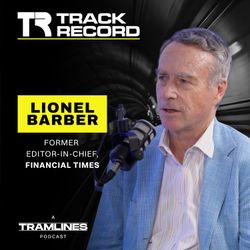
1. Lionel Barber | From Disruption to Growth: Britain's AI Opportunity
33:52||Season 1, Ep. 1In this episode, Albert Azis-Clauson sits down with Lionel Barber, former editor of the Financial Times, to explore Britain’s economic future and whether AI could help the country rediscover its confidence, productivity and appetite for growth.They discuss why Britain’s decline may be overstated, what prevents promising companies from reaching scale, and how AI is changing the relationship between talent, capital and value creation.Lionel also reflects on the leadership lessons he learned at the Financial Times: setting a clear destination, adapting the business model, building closer customer relationships and knowing when to delegate.Key Moments:00:00 Introduction01:18 The agony of the entrepreneur04:03 Britain's AI Opportunity09:33 The Barriers and challenges to innovation in the UK11:42 Masayoshi Son: Game Maker13:44 The golden age for entrepreneurs15:37 How will government adapt to AI?20:10 The Changing Value Equation in an AI Economy21:08 What does leadership look like?25:40 Trust, Authority and the Human Factor27:53 Where would Lionel invest £100m?30:55 Lionel's advice for Albert32:43 Closing remarks
Introducing Track Record
00:40|Track Record by Tramlines is a new podcast; exploring how AI is reshaping investment, finance, and business.Each episode brings financial leaders, investors, founders, economists, and policymakers into conversation about what is changing now, and where money and opportunity are moving as a result.Made for investors, founders, and business owners, it offers a practical view of the AI economy from the people doing the work.Full episodes available from 19 August.