Share
Tonal - Rivers Beyond Sewage
TONAL - Meeting River as a Living Being with Peter Reason
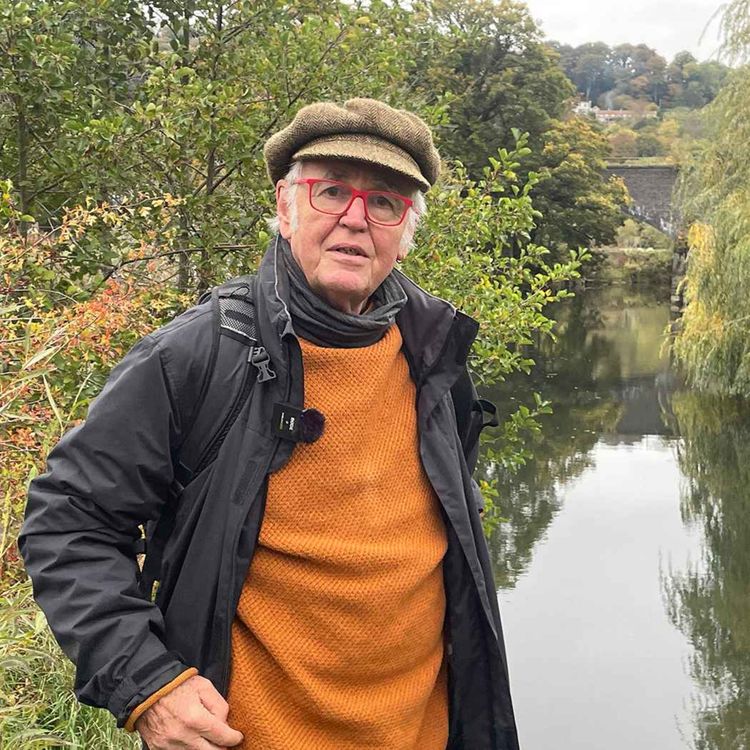
Peter Reason generously invites us into his (normally solo) ritual visit with the confluence of the Rivers Avon and Frome at Freshford, sharing his mantra and his invocation to the rivers. He speaks movingly about his solitary practice of meeting with rivers as living beings, and the ongoing co-operative enquiry that accompanies it - 'Living Waters'.
In the two hours we spent together with the rivers we were talking, but it was at least as much the minutes spent in quiet observation and reflection that made it resonant. Peter talks about how the world speaks in a symbolic register through, for example, creaturely visitations (six kingfishers!). He tells how this work has led him from humanist to animist philosophy.
Peter Reason is Professor Emeritus at the University of Bath and previously Director of the Centre for Action Research in Professional Practice, and an international leader in the development of participative approaches to inquiry. His work links the tradition of nature writing with the ecological crisis of our times. His books include Spindrift: A wilderness pilgrimage at sea, In Search of Grace: An ecological pilgrimage, and most recently (with artist Sarah Gillespie) On Presence: Essays | Drawings; and On Sentience: Essays | Drawings.
Love and learn your rivers by subscribing to new episodes :)
Visit the website - https://www.tonal-uk.com/
Follow Feral Practice - https://www.instagram.com/feralpractice/
More episodes
View all episodes
Fighting for Nature with Barrister for the Earth Mónica Feria-Tinta
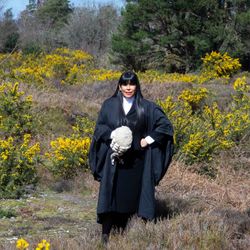
49:27|When we heard that Mónica Feria Tinta was coming to Bath to promote her new book ‘A Barrister for the Earth’, we grabbed our chance to meet her for a conversation on the banks of the Avon. Mónica is a leading expert on environmental and climate change law. She has crafted daring new legal arguments that draw on constitutional, human rights, and international legislation. We talk about her winning cases have hit the headlines, such as the protection of the Los Cedros cloud forest in Colombia against a Canadian mining company. With no indigenous people inhabiting the forest to represent, Mónica’s client became the forest itself. On the basis of detailed scientific research that showed how irreplaceable the forest was in terms of biodiversity, she successfully claimed them as a legal personality, able to take up law against their own destruction. Los Cedros has become a beacon of hope for people in Britain, as we fight to end the pollution of rivers and desecration of lands and trees. Many groups now look to Rights of Nature law with hope, and in the case of Love Our Ouse (see earlier podcast with Matthew Bird) Mónica was a key advisor. What are we doing to the world? A lot of harm. Why do we seek happiness in the acquisition of things instead of living a good life? Mónica brings passion to the legal process with values that draw on her Andean ancestry (she moved to the UK as a refugee from the civil war in Peru) and her love of nature in England. She lives in Surrey and speaks movingly about her grief at the loss of her friend the oak tree outside her bedroom window, and how it helped her understand the fight for Chester, a London Plane tree in a coastal town in Essex that was under threat of felling for development.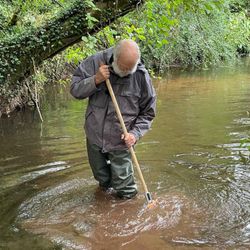
Riverfly Sampling with Richard Adeney
21:50|We join Richard on his monthly visit to River Tone in Runnington, to learn how riverfly kick sampling works. For three minutes, Richard kicks up the mud/gravel/stones of the river and catches the creatures that float free in his net, then we count and identify them. Like pond dipping, it’s great fun, but somewhat fiendish because most of the minibeasts are, well, tiny, especially in the winter. It’s also very important, because riverflies are the ‘canaries in the coalmine’ of river health. There has been a severe drop in numbers of riverflies in our polluted riverscapes since the 60s. We met Richard in a lovely, rural bit of river, and so together we find quite a lot to marvel at, including larvae of Caddis, Mayflies, Olives, Stone Clingers and Damselfly. Learn a bit about the riverflies' lifecycles, and enjoy this peaceful live-action episode, starring River Tone on a mild damp September day. More info here: https://www.riverflies.org/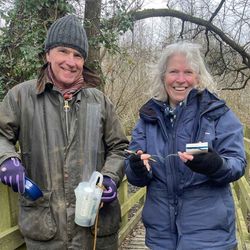
Being a Water Guardian with Dot and Mike Isgrove
22:10|Join experienced water guardians Dot and Mike as they conduct their monthly survey of the Standle Stream and Westford Stream, to the west of Wellington. Dot and Mike are fellow members of Transition Town Wellington’s Water Guardians group. Many of us in the group are volunteer citizen scientists testing the water quality in the rivers and streams near us. Managed by the Westcountry Rivers Trust, volunteers visit the same site/s each month to make observations of the current condition of the river and any blockages or problems, note the wildlife and any invasive species. We take samples of river water that we test for phosphate, total dissolved solids (all the potential pollutants that dissolve in water), turbidity (the opposite of clarity) and temperature. It’s a bit like the river getting a monthly check up with their community nurse. It doesn’t cover everything – perhaps not as much as we would like – for example we can’t test for the kinds of bacteria that make swimmers sick, but it gives an overview of trends and spikes once you have an archive from over the months and years.
The Poetry of Water with Graeme Ryan
34:27|One for the poets, artists, dabblers and ponderers among you (all those watery allusions). We visited the Tone above Clatworthy Reservoir with Fire River Poet Graeme Ryan and we jumped straight in to comparing our artistic processes and philosophies. How do poets and artists reach out towards the living world or look to their inner living world, and how these connect. What and where is consciousness? How does interspecies communication take place? Do we believe in a creator? Coleridge’s concept of the divinely inspired imagination, which echoes the processes that formed the planet. Life at the quantum level. Poetry as healing, in the context of a damaged world.What does this all have to do with rivers you may ask? Well, Graeme is expressive and eloquent (did we mention he was a poet) about rivers, and is also inspired by them. He suggests a river is an incredibly dynamic being that is going through metamorphosis all the time. “Where we are caught up in our in our own individual identities and bags of skin, a river is just profligate.” That idea has really stayed with us.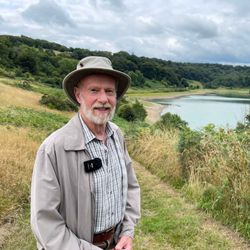
Gone Fishing in a Climate Crisis with angler Simon Ratsey
39:24|Clatworthy Reservoir is a leisure fishery and the main water supply for people in the Tone Valley. It is sparkling but low when we meet there in the summer drought. Simon spent much of his youth fishing on the River Tone and, once it was created, on Clatworthy Reservoir. He is, in his own words, “obsessive” about weather and about fishing. He has kept detailed records on both these topics for decades (counting, for example, all the tiny pond snails in a trout’s stomach, daily rainfall and temperature). Simon paints a uniquely broad and detailed picture of how the climate crisis and the introduction of invasive species can devastate an aquatic ecosystem. In the 60s and early 70s, Clatworthy was abundant with diverse life. Now largely empty, the fishery stocks the lake with large, fat Rainbow Trout for the benefit of anglers. The fish lose weight till they are caught. Link to Simon’s paper on the ecology of the lake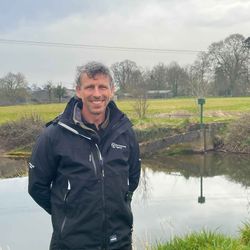
Crimes and Misdemeanours on our Waterways with Oliver Hill
38:53|Olly’s job is to find and solve the causes of river pollution. Every misconnected pipe contributes to damage. In a rural area like Somerset, with thousands of small farms and houses with private water, slurry and sewage systems, it’s challenging to stay on top of it all. As we walk around the lanes and fields about a mile upstream of Taunton’s official bathing place he points out some recent problems – a nursing home that had wastewater pipes going straight to the river, a vast dairy farm which leaked slurry, an illegal dump of soil in the river. From wild swimmers to migrating salmon and the invertebrates and gravel they depend upon, the whole ecology can suffer 'death by a thousand cuts'. Love and learn your rivers by subscribing to new episodes :)Visit the website - https://www.tonal-uk.com/Follow Feral Practice - https://www.instagram.com/feralpractice/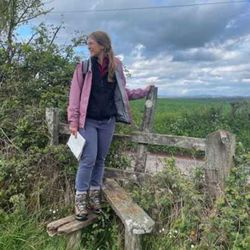
TONAL - Farming, Soil and Water with Joanna Uglow
37:21|Soil scientist and environmentalist Jo says she has her dream job, because working for the Farming and Wildlife Advisory Group is where she can make the most difference. If the Environment Agency is the stick, FWAG are the carrot, helping farmers find ways to work with nature as they grow food, and access the funds they need to support the changes.We get granular (pun intended) about soil, farming practices and crops, as we circle and visit the rather sad Hillfarrance Brook - one of the tributaries of the River Tone in ‘poor ecological status’. In this seeming rural idyll problems can be harder to root out, because they are widely dispersed and easily hidden. FWAG’s new project “Upper Tone 360’ hopes to do just that, and so bring health back to the brook, and the river it feeds.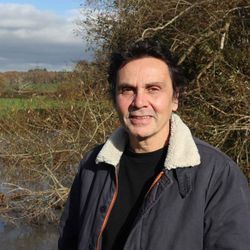
TONAL - Pioneering Rights for Rivers with Matthew Bird of Love Our Ouse
35:12|Love Our Ouse made headlines all around the world when their motion to develop a charter of rights for the River Ouse was passed at a Lewes District Council meeting back in 2023. “It was this torrent of interest… globally. I’ve lost track of all the stuff we’ve done, but one that stands out is talking to Al Jazeera about rights of the Sussex Ouse!”Two years and innumerable hours of work later, with the support of a passionate team of collaborators and organisations, international lawyers and local citizens, the Council passed a pioneering charter that enshrines eight rights of the River Ouse. Matthew talks about how it came about, and what needs to happen next to bring these words into practice. The charter is an inspiration and perhaps a blueprint for other communities seeking to celebrate, protect and act for their river.