Share

The General & The Journalist
What's happening to the Ukrainian children taken by Russia?
•
Tom and Patrick have been in Ukraine updating the story of the tens of thousands of Ukrainian children abducted by Russia following their full-scale invasion. Some have been fostered or adopted by Russian families, but the vast majority are thought to have been funnelled into re-education camps. And now, as some of these children reach adulthood, that means new concerns amongst the Ukrainian authorities.
More episodes
View all episodes

Israel’s election: Could Netanyahu finally lose power?
41:54|Israel votes next week and Benjamin Netanyahu faces a defining election as former IDF chief Gadi Eisenkot challenges his grip on power. After three years of war, Israel faces mounting security threats, international isolation and deep political divisions. But even if Netanyahu loses, a new government may struggle to change course.Tom speaks to Alon Pinkas, a former Israeli diplomat and adviser to Prime Minister Ehud Barak, and Danny Citrinowicz, a former Israeli Defence Intelligence office to explore whether the election could end the Netanyahu era – and what a change of government might mean for Gaza, Iran and the wider Middle East.Get in touch: generalandjournalist@thetimes.co.uk04:57 Is Netanyahu heading for defeat?11:28 Will Arab voters decide Israel’s election?17:27 Is Israel safer after three years of war?25:02 What would change if Netanyahu loses?32:30 Could Netanyahu face prison if he loses power?Guests: Alon Pinkas, former Israeli diplomat and Danny Citrinowicz, a former Israeli Defence and Senior Researcher at the Institute for National Security StudiesHosts: General Patrick Sanders and Tom Newton DunnPatrick brings his experience as a former head of the British Army to the podcast. He is also a Conservative peer and advises the party on defence.Producer: Julia WebsterExecutive producer: Priyanka DeladiaImage: Dana Chan, Getty
Q&A: Trump’s Russia deal, Taiwan’s future, and new global alliances
17:56|In this month's Q&A, Patrick and Tom examine Donald Trump’s controversial deal to buy Russian diesel, the shifting world order, and the threats facing Western security. Plus, they consider a listener’s idea for bringing veterans closer to the public.Send your questions in to generalandjournalist@thetimes.co.ukHosts: General Sir Patrick Sanders and Tom Newton DunnPatrick brings his experience as a former head of the British Army to the podcast. He is also a Conservative peer and advises the party on defence.Producer: Julia WebsterExecutive producer: Priyanka Deladia Hosted on Acast. See acast.com/privacy for more information.
Havana Syndrome: Did a secret weapon derail US-Cuba relations?
42:39|For a decade, US spies and diplomats have reported mysterious symptoms including strange noises, sudden pressure and debilitating neurological symptoms… but no one has definitively explained why. Now, two investigative journalists say they have uncovered new evidence of a suspected microwave weapon, a Russian connection and a US government failure to confront the truth. Their new book, The Havana Syndrome: Secret Weapons, a Government Cover-Up, and the Greatest Spy Mystery of Our Time, raises fresh questions about intelligence failures, covert warfare and a mystery that may be far from over. Is Russia behind these mysterious events and has the US government been hiding what it knows?Get in touch: generalandjournalist@thetimes.co.uk04:00 The first mysterious attacks16:57 The alleged Russian microwave weapon26:29 The scientific evidence and scepticism29:24 Was there a government cover-up?35:23 Is the mystery still unfolding?Guests: Michael Rey and Oriana Zill de Granados, investigative producers for CBS’s 60 MinutesHosts: General Sir Patrick Sanders and Tom Newton DunnPatrick brings his experience as a former head of the British Army to the podcast. He is also a Conservative peer and advises the party on defence.Producer: Julia WebsterExecutive producer: Priyanka DeladiaImage: GettyClips: BBC, TODAY, 6 News AustraliaHosted on Acast. See acast.com/privacy for more information.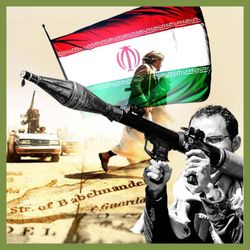
How Iran helped turn the Houthis into a global threat
29:46|The Houthis have advanced along Yemen’s Red Sea coast threatening one of the world’s most important shipping routes through Bab al-Mandab. Yemeni government forces are fighting back, but the Iran-backed group’s ability to disrupt global trade and strike across the region continues to grow.Yemen expert Nadwa Al-Dawsari joins Tom and Patrick to explain how the Houthis became a regional military power, how much control Iran really has over them, and whether Yemen is becoming another front in Tehran’s wider proxy war. So, how far can the Houthis expand, and can they be stopped?Get in touch: generalandjournalist@thetimes.co.uk00:49 — The Houthis fight to seize Yemen’s Red Sea coast02:58 — How Iran helped build Houthi military power07:01 — Why the Bab el-Mandeb threatens global shipping14:07 — Who are the Houthis and their enemies22:13 — Can the US stop the Houthi threat?Guest: Nadwa Al-Dawsari, Fellow at the Centre on Armed Groups and Associate Fellow at the Middle East InstituteHosts: General Sir Patrick Sanders and Tom Newton DunnPatrick brings his experience as a former head of the British Army to the podcast. He is also a Conservative peer and advises the party on defence.Producers: Julia Webster with help from Robert WallaceExecutive producer: Priyanka DeladiaImage: Denise Kelly, Getty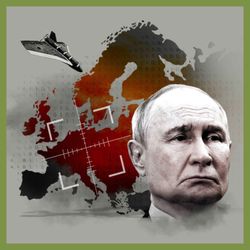
Will Putin attack NATO? Former MI6 chief on Russia’s next move
34:48|As Russia steps up sabotage, interference and intimidation across Europe, how far is Vladimir Putin prepared to go?Former MI6 chief Sir John Scarlett joins Tom and Patrick to explain what Putin wants in Ukraine, whether Russia could escalate into a direct confrontation with NATO, and why intelligence back channels may be crucial to preventing escalation.Get in touch: generalandjournalist@thetimes.co.uk05:28 - Did the West misjudge Putin?09:46 - Is Putin under pressure?15:04 - What does Putin want in Ukraine?17:30 - Russia’s hybrid war against NATO23:49 - Why the CIA Chief went to MoscowGuest: Sir John Scarlett, former MI6 Chief and co-founder of SC StrategyHosts: General Sir Patrick Sanders and Tom Newton DunnPatrick brings his experience as a former head of the British Army to the podcast. He is also a Conservative peer and advises the party on defence.Producer: Julia Webster, Shabnam GrewalExecutive producer: Priyanka DeladiaImage: Kathia Mestanza, Getty
EXPLAINER: How America's aircraft carrier crisis reveals a military decline
09:27|America has 11 aircraft carriers. So why is the US Navy struggling to deploy more than three at once?In this bonus video explainer, The Sunday Times’s Mark Urban examines the growing strain on America’s carrier fleet. These 100,000-ton floating airfields have long been symbols of US military power, but delayed ships, lengthy repairs and overstretched crews are making it increasingly difficult to keep them at sea. If Washington cannot reliably deploy the fleet it already has, what does that mean for America’s ability to project power around the world – and are aircraft carriers becoming a symbol not of US strength, but of its limits?00:00 – America’s aircraft carrier problem00:53 – Delayed ships and ageing carriers02:24 – Trump’s proposed carrier redesign03:25 – Longer deployments, greater strain04:50 – The carrier gap in the Pacific06:09 – The $25 billion carrier group at risk07:30 – The cost to the wider fleet08:38 – Shipyard decline and military powerGet in touch: generalandjournalist@thetimes.co.ukProducer: Yasmin Butt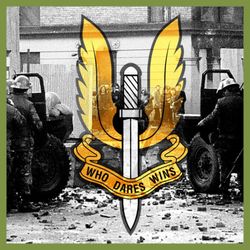
Is the future of the SAS at risk?
37:57|More than 25 years after the Good Friday Agreement, Britain remains bitterly divided over how to resolve legacy cases from the Troubles. The government’s new Northern Ireland Troubles Bill would allow some halted inquests to resume and reform the system for investigating legacy cases, with ministers insisting that veterans will be protected from unnecessary repeat investigations.But former senior SAS veterans Jamie Lowther-Pinkerton and George Simm argue it could reopen the door to repeated investigations that erode soldiers’ trust in the Government and ultimately weaken the SAS itself. Can Britain deliver justice for the past without undermining the soldiers it may need for the wars of the future?Get in touch: generalandjournalist@thetimes.co.uk00:47 – Inside the SAS10:24 – Northern Ireland legacy lawfare16:29 – Loughgall and shoot-to-kill claims22:15 – How lawfare is damaging the SAS27:30 – The fight to protect British soldiersGuests: Former SAS Squadron Commander Jamie Lowther-Pinkerton and former SAS Regimental Sergeant Major George SimmHosts: Tom Newton DunnProducer: Julia WebsterExecutive producer: Priyanka DeladiaImage: Kathia Mestanza, GettyHosted on Acast. See acast.com/privacy for more information.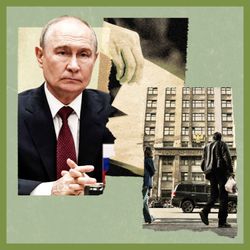
Russia’s war “will last as long as Putin lives”
37:15|Russia is holding its first State Duma election since the full-scale invasion of Ukraine, but the Kremlin has worked to ensure the outcome is never truly in doubt. Nina Khrushcheva, great-granddaughter of the former Soviet leader Nikita Khrushchev, joins us to examine what the vote reveals about Putin’s rule and how the war in Ukraine is mounting pressure on Putin. With public patience under strain and unease growing among the elite, how much longer can Putin keep pressing this war on?Get in touch: generalandjournalist@thetimes.co.uk 00:55 – Nina Khrushcheva on Putin’s Russia 07:50 – Inside Russia’s rigged election 16:37 – Putin’s mobilisation gamble 23:04 – Russia’s war economy and breaking point 30:04 – Putin’s escalating threat to NATOGuest: Nina Khrushcheva, professor of International Affairs at The New School in New York CityHosts: General Sir Patrick Sanders and Tom Newton DunnPatrick brings his experience as a former head of the British Army to the podcast. He is also a Conservative peer and advises the party on defence.Producer: Julia Webster, Shabnam GrewalExecutive producer: Dan Box, Tim Walklate Image: Dana Chan, Getty Hosted on Acast. See acast.com/privacy for more information.
Who really blew up the Nord Stream pipeline?
44:00|It was one of the most audacious acts of sabotage in modern history - in September 2022, explosions ripped through the Nord Stream pipelines carrying natural gas from Russia underneath the Baltic Sea. The attack reshaped European geo-politics but at the time, no one knew who ordered the bombing, or carried it out. Journalist Bojan Pancevski has spent three years tracing the operation - and says the answers to those questions involve a tiny team of divers, a rented yacht and a former erotic model known only as ‘Freya’. Get in touch: generalandjournalist@thetimes.co.uk00:00 – Who blew up Nord Stream?02:55 – Why Nord Stream mattered06:39 – Inside the sabotage mission17:19 – Russia, CIA or Ukraine?24:00 – Evidence, arrests and who ordered itGuest: Bojan Pancevski, chief European political correspondent for the Wall Street JournalHosts: Tom Newton DunnProducer: Julia WebsterExecutive producer: Dan BoxImage: Kathia Mestanza, GettyClips: Getty Images, Danish Defence CommandHosted on Acast. See acast.com/privacy for more information.