Share
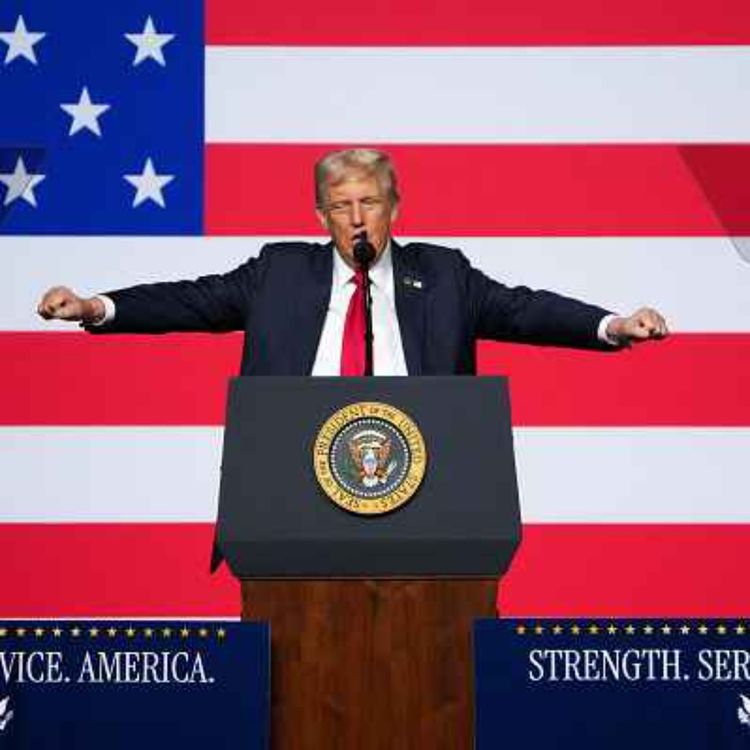
The General & The Journalist
What does the military do when a president goes rogue?
As President Trump orders the Texas National Guard into Chicago, America stands poised on the brink of a constitutional crisis. With troops already stationed in Los Angeles and Washington, D.C., critics charge that the president is wielding the military as a political weapon. At the same time, Trump is reshaping the upper ranks of the armed forces, sidelining those who have challenged his authority. Authoritarianism and democracy look more finely balanced than at any time in living memory. So, how far does presidential power truly extend when it comes to deploying soldiers on home soil? And to whom do America’s generals ultimately answer?
Hosts: Tom Newton Dunn & General Sir Patrick Sanders
Photo: Getty Images
Clips: 10 News, BBC, The New York Times, AP, CBS News, The White House, MSNBC
Get in touch: generalandjournalist@thetimes.co.uk
More episodes
View all episodes
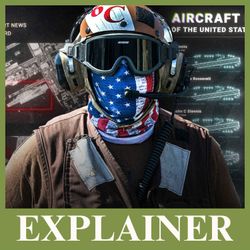
EXPLAINER: How America's aircraft carrier crisis reveals a military decline
09:27|America has 11 aircraft carriers. So why is the US Navy struggling to deploy more than three at once?In this bonus video explainer, The Sunday Times’s Mark Urban examines the growing strain on America’s carrier fleet. These 100,000-ton floating airfields have long been symbols of US military power, but delayed ships, lengthy repairs and overstretched crews are making it increasingly difficult to keep them at sea. If Washington cannot reliably deploy the fleet it already has, what does that mean for America’s ability to project power around the world – and are aircraft carriers becoming a symbol not of US strength, but of its limits?00:00 – America’s aircraft carrier problem00:53 – Delayed ships and ageing carriers02:24 – Trump’s proposed carrier redesign03:25 – Longer deployments, greater strain04:50 – The carrier gap in the Pacific06:09 – The $25 billion carrier group at risk07:30 – The cost to the wider fleet08:38 – Shipyard decline and military powerGet in touch: generalandjournalist@thetimes.co.ukProducer: Yasmin Butt
Is the future of the SAS at risk?
37:57|More than 25 years after the Good Friday Agreement, Britain remains bitterly divided over how to resolve legacy cases from the Troubles. The government’s new Northern Ireland Troubles Bill would allow some halted inquests to resume and reform the system for investigating legacy cases, with ministers insisting that veterans will be protected from unnecessary repeat investigations.But former senior SAS veterans Jamie Lowther-Pinkerton and George Simm argue it could reopen the door to repeated investigations that erode soldiers’ trust in the Government and ultimately weaken the SAS itself. Can Britain deliver justice for the past without undermining the soldiers it may need for the wars of the future?Get in touch: generalandjournalist@thetimes.co.uk00:47 – Inside the SAS10:24 – Northern Ireland legacy lawfare16:29 – Loughgall and shoot-to-kill claims22:15 – How lawfare is damaging the SAS27:30 – The fight to protect British soldiersGuests: Former SAS Squadron Commander Jamie Lowther-Pinkerton and former SAS Regimental Sergeant Major George SimmHosts: Tom Newton DunnProducer: Julia WebsterExecutive producer: Priyanka DeladiaImage: Kathia Mestanza, GettyHosted on Acast. See acast.com/privacy for more information.
Russia’s war “will last as long as Putin lives”
37:15|Russia is holding its first State Duma election since the full-scale invasion of Ukraine, but the Kremlin has worked to ensure the outcome is never truly in doubt. Nina Khrushcheva, great-granddaughter of the former Soviet leader Nikita Khrushchev, joins us to examine what the vote reveals about Putin’s rule and how the war in Ukraine is mounting pressure on Putin. With public patience under strain and unease growing among the elite, how much longer can Putin keep pressing this war on?Get in touch: generalandjournalist@thetimes.co.uk 00:55 – Nina Khrushcheva on Putin’s Russia 07:50 – Inside Russia’s rigged election 16:37 – Putin’s mobilisation gamble 23:04 – Russia’s war economy and breaking point 30:04 – Putin’s escalating threat to NATOGuest: Nina Khrushcheva, professor of International Affairs at The New School in New York CityHosts: General Sir Patrick Sanders and Tom Newton DunnPatrick brings his experience as a former head of the British Army to the podcast. He is also a Conservative peer and advises the party on defence.Producer: Julia Webster, Shabnam GrewalExecutive producer: Dan Box, Tim Walklate Image: Dana Chan, Getty Hosted on Acast. See acast.com/privacy for more information.
Who really blew up the Nord Stream pipeline?
44:00|It was one of the most audacious acts of sabotage in modern history - in September 2022, explosions ripped through the Nord Stream pipelines carrying natural gas from Russia underneath the Baltic Sea. The attack reshaped European geo-politics but at the time, no one knew who ordered the bombing, or carried it out. Journalist Bojan Pancevski has spent three years tracing the operation - and says the answers to those questions involve a tiny team of divers, a rented yacht and a former erotic model known only as ‘Freya’. Get in touch: generalandjournalist@thetimes.co.uk00:00 – Who blew up Nord Stream?02:55 – Why Nord Stream mattered06:39 – Inside the sabotage mission17:19 – Russia, CIA or Ukraine?24:00 – Evidence, arrests and who ordered itGuest: Bojan Pancevski, chief European political correspondent for the Wall Street JournalHosts: Tom Newton DunnProducer: Julia WebsterExecutive producer: Dan BoxImage: Kathia Mestanza, GettyClips: Getty Images, Danish Defence CommandHosted on Acast. See acast.com/privacy for more information.
EXPLAINER: Could Russia Attack NATO by 2030?
07:48|Across Nato’s eastern flank, defence planners are increasingly focused on one date: 2030. War games, military assessments and troop deployments are being shaped around a stark question – could Moscow be ready to test Nato within the next few years?The Times’s defence editor Larisa Brown examines why 2030 has become such a crucial deadline for European defence, how Russia could try to probe Nato’s borders and whether the alliance is moving fast enough to deter Vladimir Putin.Get in touch: generalandjournalist@thetimes.co.ukProducer: Jack Feeney
The new Middle East: Can a ‘NATO of the East’ work?
38:19|Saudi Arabia, Turkey and Pakistan have signed the Mecca Pact, a new defence alliance built around the promise that an attack on one is an attack on all.Together they bring Saudi money and religious authority, Turkey’s military strength and defence industry and Pakistan’s army and nuclear power. But would any of them really go to war for the others? Tom and Patrick are joined by Lieutenant General Sir Simon Mayall to explore why the pact has emerged now. Is it a response to Iran’s decline, growing doubts over America’s reliability or the changing relationship with Israel? Or is the Mecca Pact merely a strategic hedge, or the beginning of a new balance of power in the Middle East?How do you think the Mecca Defence Alliance will impact the region? Get in touch: generalandjournalist@thetimes.co.uk00:00 - Mecca Pact Explained05:04 - Saudi–Turkey–Pakistan Defence Alliance13:02 - Why the Mecca Pact Matters Now23:32 - Is the Mecca Pact a New NATO?32:53 - Future of Middle East SecurityGuest: Ltn Gen Sir Simon Mayall, KBE, CB, retired British Army officer and a Middle East Adviser at the Ministry of Defence.Hosts: General Sir Patrick Sanders and Tom Newton Dunn.Patrick brings his experience as a former head of the British Army to the podcast. He is also a Conservative peer and advises the party on defence.Producer: Julia Webster and Shabnam GrewalExecutive producer: Priyanka Deladia Image: Dana Chan, GettyClips: GettyHosted on Acast. See acast.com/privacy for more information.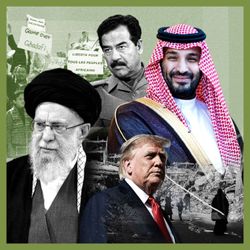
The new Middle East: The battle to shape a region
45:13|For more than a century, the Middle East has been made and remade by collapsing empires, colonial borders, revolutions, wars and powerful rulers. Now, Iran is weakening, Gulf states are becoming more influential and old alliances are shifting again. Historian Simon Sebag Montefiore joins Tom and Patrick to discuss how the modern Middle East was forged and why the forces that shaped it are still at work today. Who is gaining power, who is losing it, and are we watching the birth of a new regional order?Who do you think is reshaping the new Middle East? Get in touch: generalandjournalist@thetimes.co.ukChapters: 00:00 — How the modern Middle East was made13:15 — Colonialism, Sykes-Picot and the birth of “zombie states”23:45 — Is the term “Middle East” now obsolete? 29:30 — Iran’s regional empire and the October 7 wars36:45 — Six converging theatres—and reasons for hopeThe Cauldron: The Making of the Modern Middle East by Simon Sebag Montefiore is available in stores nowGuest: Simon Sebag Montefiore, British historian and authorHosts: General Sir Patrick Sanders and Tom Newton DunnPatrick brings his experience as a former head of the British Army to the podcast. He is also a Conservative peer and advises the party on defence.Producer: Julia WebsterExecutive producer: Priyanka Deladia Image: Dana Chan, GettyClips: GettyHosted on Acast. See acast.com/privacy for more information.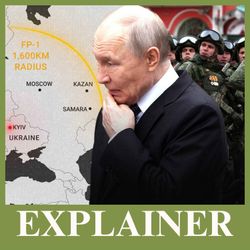
EXPLAINER: Why Russia Is Burning Through 35,000 Soldiers A Month
07:45|Ukraine’s drone campaign is reaching deeper into Russia than ever before, striking oil terminals, ships and targets around Moscow and St Petersburg. As casualties rise and attacks put growing pressure on Russia’s economy and war machine, is Ukraine beginning to change the course of the conflict?In this bonus audio explainer, The Sunday Times’s Mark Urban examines how Ukraine’s long-range strikes are testing Russia’s defences – and whether Vladimir Putin is approaching a serious turning point in the war.Get in touch: generalandjournalist@thetimes.co.uk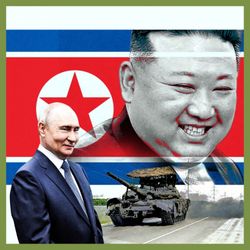
How Putin made North Korea richer – and more dangerous
41:38|North Korea has supplied Russia with millions of artillery rounds, thousands of troops and workers for its drone factories to support its war in Ukraine. In return, Russian money, food, energy and weapons are reviving Pyongyang’s economy, giving it military battlefield experience and potentially advancing Kim Jong Un’s nuclear and missile capabilities.Dr Victor Cha, former White House national security official and one of America’s leading Korea experts, joins The General & The Journalist to explain how Russia has made an isolated regime richer and more dangerous. How powerful has North Korea become? Why have decades of denuclearisation diplomacy failed? And could talks with Washington loosen Kim’s alliance with Putin?Should the West accept a nuclear North Korea? Get in touch: generalandjournalist@thetimes.co.ukChapters: 00:00 North Korea’s economic boom08:31 Russia fuels Kim Jong Un14:18 China, Russia and North Korea18:32 North Korea’s nuclear threat26:16 Why denuclearisation failed33:46 Kim Jong Un’s successor and futureGuest: Dr Victor Cha, president of the Geopolitics and Foreign Policy Department and Korea Chair at the Center for Strategic and International StudiesHosts: General Sir Patrick Sanders and Tom Newton DunnPatrick brings his experience as a former head of the British Army to the podcast. He is also a Conservative peer and advises the party on defence. Producer: Julia WebsterExecutive producer: Priyanka Deladia Image: Dana Chan, GettyClips: Reuters, Getty