Share
Those Who Are About To Dive with Dr. Glund
Album 2. Track 3. Butty's Blues
Having narrowly avoided becoming permanent members of a 4/20 council (attendance optional, memory unreliable), your hosts Chaz Charles and the Voluptuary of Sonic Discernment, Dr. Glund, return to the sacred excavation site…
Colosseum
Track by bloody track. No safety net. No edit machine mercy.
This week’s descent lands us squarely in the curious, blues-soaked corner of Valentyne Suite…
A track that may or may not be about a sandwich.
(It is not about a sandwich.)
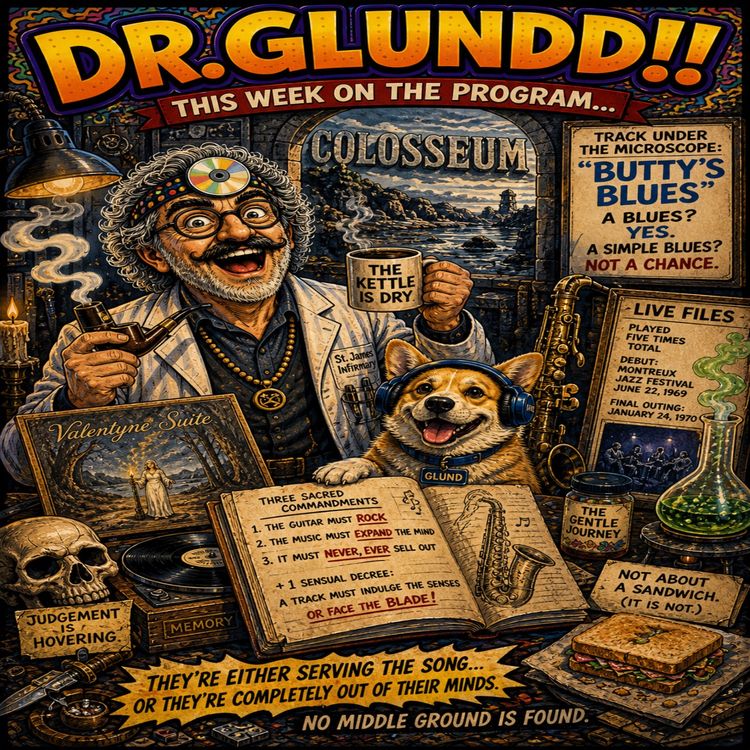
TRACK UNDER THE MICROSCOPE:“Butty’s Blues” — Colosseum
A laid-back blues? Yes.
A simple blues? Not a chance.
This is Colosseum doing what they do best—taking something structurally familiar and quietly mutating it until it starts breathing on its own.
What begins as a seemingly straight 12-bar framework (dismissed by the uncultured as “tarted up”) quickly reveals:
- Horn arrangements that arrive like uninvited aristocrats
- A rhythm section that refuses to sit still
- Guitar lines that smolder rather than scream
- And a sax presence that may, in fact, be narrating events from another dimension
Dr. Glund identifies the key paradox:
“They’re either serving the song… or they’re completely out of their minds.”No middle ground is found.
SONIC AUTOPSY:- Jon Hiseman: Not merely keeping time—installing infrastructure
- Dave Greenslade: Laying down organ textures like a suspiciously groovy fog
- Tony Reeves: Bass lines clocked, measured, and spiritually approved
- Dick Heckstall-Smith: Delivering a solo that may have been smuggled in from a jazz club after hours
- James Litherland: Tone so relaxed it nearly escapes the studio mix entirely
Verdict:
This is not a showcase track.
This is a controlled drift into blues abstraction—a band choosing restraint… and still sounding like they might combust.
LIVE FILES UNCOVERED:From the archives:
- Played five times total
- Debuted at Montreux Jazz Festival, June 22, 1969
- Final known outing: January 24, 1970
The live version?
Longer. Meaner. No horns.
And somehow… more dangerous.
TRACKS LISTENED TO / DIGRESSION ZONE (PROCEED WITH CAUTION):Because discipline is for other podcasts:
- A full archaeological excavation of a Montreux performance rabbit hole
- The shocking revelation that “Butty” is, in fact, a person (not bacon-based)
- Speculative casting:
- “What if Robert Plant fronted Colosseum?”
- Followed immediately by:
- “What if literally any British blues singer did?”
- A brief but sincere defense of Litherland’s vocal abilities
- The phrase: “They just know shapes.”
- A missed 4/20 party explained via “method acting”
- The consumption of something called “The Gentle Journey” (results mixed)
- Academic discussion of whether improvisation = genius or confusion
- The ongoing theory that Colosseum is:
- Either a masterclass in composition
- Or five men confidently guessing at the same time
Administer “Butty’s Blues” under the following conditions:
- Lighting: low, suspicious
- Volume: conversationally irresponsible
- Beverage: optional, but historically encouraged
- Attention span: uninterrupted
Repeat until:
- You begin noticing the spaces between notes
- You start defending horn arrangements in casual conversation
- Or you find yourself explaining why this song was only played five times
Colosseum does not hand you the blues.
They reinterpret it in real time, then walk away before you can ask questions.
The blade of judgement… remains hovering.
Here’s to ya Clay Cole—mind the butty.
More episodes
View all episodes
23. Album 4. Track 2. Time Lament
55:52||Season 1, Ep. 23THIS WEEK ON THE PROGRAM…Chaz Charles and the Voluptuary of Sound, Dr. Glund, continue their descent into Colosseum’s Daughter of Time.And apparently nobody told Colosseum that albums are occasionally supposed to cheer you up.This week:“TIME LAMENT”Six minutes and thirteen seconds of strings, brass, jazz, rock, theatrical weirdness and Chris Farlowe singing like the sands of time have personally wronged him.It is ambitious.It is bizarre.It may also require antidepressants.The studio recording piles on the layers: shifting rhythms, pastoral passages, strings, brass and a section Chaz and the Doctor decide sounds suspiciously like a circus on acid. Meanwhile, Chris Farlowe delivers two brief verses about ghosts, bitter memories and the relentless passage of time.You know…Party music.The guys dig into the track’s unusual construction and the increasingly obvious realization that Daughter of Time has a mood—and that mood is roughly:We’re all getting older and everything is terrible.Then come the live versions.An April 1970 BBC performance captures Colosseum during a fascinating personnel transition: no Farlowe, no Mark Clarke, Clem Clempson in place and Barbara Thompson contributing to the proceedings.Then they reach the later John Peel session.Now it’s Hiseman. Greenslade. Clempson. Heckstall-Smith. Clarke. Farlowe.And Chris Farlowe changes everything.The song gets heavier, bigger and considerably more intense. Without the studio strings and brass, Colosseum has to create all that drama themselves—and Farlowe responds by delivering approximately seventeen tons of emotional force.Which leads to another uncomfortable modern observation:AI might imitate the instruments.But good luck manufacturing another Chris Farlowe.And then…THE DIGRESSION.Someone notices that the bass player on the studio recording isn’t Mark Clarke.It’s Louis Cennamo.That sends Chaz and the Doctor wandering through Cennamo’s résumé—Renaissance, Steamhammer and Armageddon—before sampling Steamhammer’s sprawling Speech album.And somehow that leads to…SIR LORD BALTIMORE.A Brooklyn power trio making astonishingly heavy music in 1970.“Master Heartache.”“Hard Rain Falling.”“Hell Hound.”Chaz’s metalhead brain promptly explodes.Suddenly the Colosseum podcast has become an investigation into the origins of American heavy metal, why nobody talks about Sir Lord Baltimore—and whether a certain Canadian power trio might have been paying attention.Uh-oh, Alex.The Doctor has opened a door that probably should have remained closed.Eventually somebody remembers they were discussing “Time Lament.”Along the way: Lawrence Welk in a Dodge, psycho clowns, a circus on acid, 22-minute Steamhammer excursions, Cactus, Dr. Glund remembering the Fillmore, and two old dogs discovering that considerably older dogs can still teach them new tricks.And underneath all the chaos remains one strange, ambitious, melancholy piece of music.“Time Lament” is weird.It’s theatrical.It’s progressive.It’s moody as hell.It’s absolutely Colosseum.The guitar rocks.The mind expands.Nobody sells out.The Blade of Judgment remains sheathed.Now somebody cheer up the Doctor.Let’s go grab a visky.
22. Album 4. Track 1. Three Score And Ten
39:03||Season 1, Ep. 22THIS WEEK ON THE PROGRAM…Chaz Charles and the Voluptuary of Sound, Dr. Glund, arrive properly at Daughter of Time.And Colosseum apparently have something to say.Quite a lot, actually.This week’s descent begins with one of the most direct and politically charged tracks the band had recorded to this point…THREE SCORE AND TENWar.Race.East versus West.Politicians dancing while gold pulls the strings.Environmental ruin.Humanity collectively sticking its head in the sand.You know…Light entertainment.TRACK UNDER THE MICROSCOPE“Three Score and Ten” — ColosseumThis is the sound of the next great Colosseum lineup arriving fully armed:Chris Farlowe. Clem Clempson. Mark Clarke. Dave Greenslade. Dick Heckstall-Smith. Jon Hiseman.The production feels bigger. The instruments have room to breathe. Hiseman’s drums absolutely slam, and Farlowe attacks the lyric like someone has personally offended him.But underneath all that power is a surprisingly grim message.“Three score and ten” gives humanity its biblical seventy years, and Colosseum spend the song asking a fairly uncomfortable question:What the hell are we doing with them?Vietnam. The Cold War. Black and white waiting to fight. Medals gleaming in the sunlight. A world choking on the mess it created while the puppets keep dancing.This may be the most overt political statement Colosseum have made yet.And musically?Fucking powerful.DIGRESSION ZONEALL ROADS APPARENTLY LEAD TO RUSHBecause contemplating mankind’s inevitable destruction naturally makes Chaz think of…Rush.First up: “Bastille Day.”Caress of Steel enters the operating theater, Geddy Lee reaches dangerous vocal altitudes, and Alex Lifeson once again demonstrates that tone is in the fingers.Then comes “Anthem,” Neil Peart’s arrival, his enormous legacy, and the impossible question of replacing the irreplaceable.That leads into Rush’s return to the stage and Anika Nilles taking on one of the most scrutinized drum chairs in rock history.Different drummer.Different approach.Same living music.And then Dr. Glund changes direction completely.THE ELVIN BISHOP INCIDENTElvin Bishop Group — “Sweet Potato”Blues. Groove. Gibson guitar tone.And before anyone can regain control, the Doctor has wandered into a story involving gin, bullfrog beer, a red wig, a cat and some deeply questionable decision-making.At which point Chaz finally remembers:“This is a Colosseum show.”Too late.The damage has been done.HIGHLIGHTSJon Hiseman proving that “busy” and “musical” are not remotely the same thing.Chris Farlowe apparently attempting to sing through concrete.The realization that Daughter of Time represents a genuine leap forward in Colosseum’s sound.Chaz attempting to convert Dr. Glund to Caress of Steel.Dr. Glund resisting.Neil Peart receiving the respect he deserves without turning his legacy into a museum exhibit.And an episode that somehow travels from mankind’s impending destruction to Elvin Bishop and bullfrog beer.YOUR PRESCRIPTIONAdminister one full dose of:“Three Score and Ten.”Volume should be sufficient for Jon Hiseman’s drums to rearrange nearby furniture.Listen for Farlowe’s vocal force, Clempson finding his place inside the machine, Mark Clarke reshaping the bottom end, Heckstall-Smith bringing the brass artillery and Greenslade quietly holding the whole thing together.Possible side effects include:Reconsidering Caress of Steel.Defending Neil Peart to strangers.Searching for old Elvin Bishop records.And suddenly asking yourself…What happens then?The guitar rocks.The mind expands.Nobody sells out.The Blade of Judgment remains sheathed.Let’s go grab a visky.
21. Album 3. Track 6. Bolero
37:35||Season 1, Ep. 21THIS WEEK ON THE PROGRAM…Having successfully climbed the Rope Ladder to the Moon, Chaz Charles and the Voluptuary of Sonic Discernment, Dr. Glund, return to The Grass Is Greener for something that sounds suspiciously respectable…“Bolero.”Maurice Ravel had an idea.Start quietly.Repeat the theme.Keep building.Keep building.Keep building.Then Colosseum got hold of it.TRACK UNDER THE MICROSCOPEBolero — ColosseumThe familiar Bolero framework is there—but in the hands of Colosseum it swings, growls, expands and eventually becomes something considerably less polite.The Doctor and Chaz dig into the band's treatment and discover exactly why this seemingly unlikely piece belongs in the Colosseum universe.The rhythm keeps pushing forward.The dynamics keep building.The band keeps adding muscle.And Clem Clempson apparently hears Ravel and thinks:Needs more guitar.But then comes the larger question…What happens when everybody else gets hold of Bolero?TRACKS LISTENED TO / DIGRESSION ZONE(BOLERO APPARENTLY BELONGS TO EVERYBODY)Jeff Beck — “Beck’s Bolero”→ One of the great early monuments to psychedelic electric guitar.→ Huge tone. Huge space.→ Backwards sounds hiding in the mono mix.→ And further evidence that Jeff Beck was already communicating with another planet.SRC→ Detroit psychedelia enters the examination room.→ “In the Hall of the Mountain King” gives way to Bolero.→ MC5 and Stooges territory lurks nearby.→ And the influence of Beck becomes difficult to ignore.The Move→ The future ELO family tree makes an appearance.→ Their Bolero contribution lasts approximately long enough to confirm that it exists.→ Possibly the shortest musical selection ever played on the program.Jimi Hendrix / Buddy Miles→ A mysterious recording supposedly connected to Bolero.→ Jimi noodles.→ Jimi explores.→ Jimi wanders off toward the horizon.→ Nobody particularly wants to stop him.Because even Hendrix noodling is still Hendrix.Benny Goodman→ Bolero goes big band.→ Proof that rock musicians were hardly the first people to look at Ravel’s repeating rhythmic machine and think:We could do something with that.And suddenly the episode becomes less about one Colosseum track and more about the strange gravitational pull of a composition musicians have been bending, stretching and rebuilding for generations.HIGHLIGHTS YOU DID NOT ASK FOR BUT ARE GETTING ANYWAYMaurice Ravel imagined sitting in the audience wondering what the hell Colosseum has done to his composition.Jeff Beck’s guitar tone receives the expected level of worship.The Doctor produces SRC from the Detroit psychedelic archives.Edvard Grieg briefly enters the proceedings through “In the Hall of the Mountain King.”Jimi Hendrix takes an extended scenic route through the fretboard.The practical difficulties of keeping eight, nine or twelve musicians together on a tour bus without a toilet are considered.And the central musicological question of the episode is finally resolved:It’s all about the booty, baby.YOUR PRESCRIPTIONAdminister one dose of Colosseum — “Bolero.”Then compare liberally with:Jeff Beck.SRC.The Move.Jimi Hendrix.Benny Goodman.Recommended conditions:A proper stereo.Enough volume to appreciate the crescendo.A willingness to hear the same basic musical idea mutate repeatedly.And absolutely no expectation that anyone involved will play it the way Maurice Ravel intended.Possible side effects include:Searching for increasingly obscure versions of Bolero.Unexpected appreciation for Detroit psychedelia.Digging through Hendrix bootlegs.Attempting to determine exactly how many musicians can fit aboard a bus before civilization collapses.And discovering that a piece written by a French composer in the 1920s can somehow lead directly to Jeff Beck, Colosseum, Jimi Hendrix and Benny Goodman.The Doctor’s verdict?Every version examined somehow manages to pass the Glundian tests.The Blade of Judgment remains sheathed.Ravel survives.Barely.Here’s to ya, Clay Cole.Let’s go grab a visky...or not??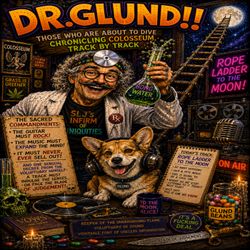
20. Album 3. Track 5. Rope Ladder To The Moon
54:55||Season 1, Ep. 20THIS WEEK ON THE PROGRAM…This week, Chaz Charles and Doctor Glund grab hold of one of Colosseum’s strangest musical excursions…Rope Ladder to the Moon.Written by Jack Bruce and Pete Brown, the song begins as something almost folk-like and becomes, in Colosseum’s hands, a sprawling psychedelic jazz-rock playground of vibraphone, Hammond, saxophones, guitar, bass and Jon Hiseman apparently deciding that conventional song structure is merely a suggestion.And then they hear it live.TRACK UNDER THE MICROSCOPERope Ladder to the Moon — ColosseumOne song.Several decades.Almost no rules.Chaz and the Doctor trace the song from Jack Bruce’s restrained original through Colosseum’s studio treatment, the magnificent 1971 Colosseum Live performance, and the reunited band’s radically different 1994 version.Along the way:Clem Clempson proves he can sound remarkably Farlowe-ish when required.Dick Heckstall-Smith plays two saxophones because apparently one is for amateurs.Dave Greenslade moves effortlessly between piano, Hammond and vibes.Mark Clarke reminds everyone that bass can be a lead instrument.Chris Farlowe attacks the live version with absolutely no regard for human safety.Jon Hiseman repeatedly makes you think the song is ending before starting the whole damned machine again.The Doctor’s diagnosis?“Well-constructed self-indulgence.”The highest possible compliment.TRACKS LISTENED TO / DIGRESSION ZONEJack Bruce – “Rope Ladder to the Moon”→ The original blueprint.→ Shorter, quieter and almost coffeehouse folk.→ Colosseum apparently heard it and thought: Needs another six minutes.Colosseum – “Rope Ladder to the Moon”→ The Grass Is Greener.→ Colosseum Live.→ The 1994 reunion.→ Same song. Completely different animals.Then somebody discovers another rope.Brian Auger & Julie Driscoll→ “Rope Ladder to the Moon.”→ “Indian Rope Man.”→ “The Flesh Failures (Let the Sunshine In).”→ “Season of the Witch.”→ Hammond-heavy British jazz-rock opens another enormous rabbit hole.And suddenly Chaz discovers Julie Driscoll—her unusual phrasing, precise enunciation, soulful delivery and what the Doctor can only describe as her “science-fiction voice.”Naturally, this eventually leads to Driscoll sharing a stage with Chris Farlowe.The predicted mushroom cloud follows.HIGHLIGHTS YOU DID NOT ASK FOR BUT ARE GETTING ANYWAYDick Heckstall-Smith demonstrating that two saxophones are better than one.The possible bondage implications of “Indian Rope Man.”Chaz discovering an entirely new Julie Driscoll rabbit hole.The realization that these shows really do make themselves.YOUR PRESCRIPTIONAdminister one “Rope Ladder to the Moon.”For maximum effectiveness, compare:Jack Bruce’s original.Colosseum’s studio version.The 1971 live monster.The 1994 reunion version.Recommended accompaniment:A proper hi-fi.A questionable beverage.Enough uninterrupted time for Jon Hiseman to finish whatever the hell he’s doing.Possible side effects include:Buying a vibraphone.Developing an unhealthy interest in Brian Auger.Hearing Julie Driscoll’s voice in science-fiction movies that do not actually contain Julie Driscoll.And discovering that nine-and-a-half minutes of well-constructed self-indulgence may not be nearly enough.The Glundian tests are passed on all counts.The Blade of Judgment remains sheathed.Let’s go grab a visky.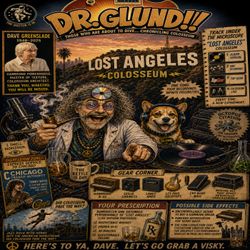
19. Album 3. Track 2. Lost Angeles
56:37||Season 1, Ep. 19This week, Chaz Charles and Doctor Glund return to one of Colosseum's greatest live landmarks…"Lost Angeles."What begins as a standout track on The Grass Is Greener quickly grows into one of the band's defining concert pieces—a musical playground that evolved through BBC sessions, radio broadcasts, and the legendary Colosseum Live album into something that seemed to reinvent itself every time it was performed.Before the music begins, however, the show pauses to acknowledge the passing of founding keyboard maestro Dave Greenslade.The Hammond powerhouse. The master of texture. The unexpected vibraphonist. One of the architects of the unmistakable Colosseum sound.Chaz and the Doctor reflect on Greenslade's enormous contribution to the band, his unmistakable keyboard style, and the countless moments where his playing transformed great songs into unforgettable ones. A proper celebration of his remarkable career is promised in a future episode.Then...The Hammond starts growling.TRACK UNDER THE MICROSCOPE"Lost Angeles" — ColosseumOne song.Four recordings.Infinite possibilities.From the original studio version through multiple BBC performances and finally the explosive Colosseum Liveinterpretation, Chaz and the Doctor follow the evolution of one of Colosseum's greatest musical statements.Along the way they discover:Dave Greenslade driving the entire band with his unmistakable Hammond sound.The vibraphone quietly adding colours that somehow become essential.Clem Clempson delivering guitar tones that continue to satisfy the First Commandment without appeal.Jon Hiseman once again earning the Octopus Citation for Limb Independence.Mark Clarke's bass becoming a melodic force rather than simply keeping time.Chris Farlowe proving exactly why he became such an important part of Colosseum's live identity.The verdict?This isn't just a song.It's the band's laboratory.Every performance becomes another experiment.TRACKS LISTENED TO / DIGRESSION ZONE (EXPRESS SERVICE TO CHICAGO)Because every Colosseum conversation eventually finds another branch of the family tree...Colosseum – "Lost Angeles"→ Original album version→ BBC recordings→ Top Gear→ Colosseum Live→ One composition becoming an ever-expanding live masterpiece.Then...The discussion crosses the Atlantic.Chicago Transit Authority→ Terry Kath receives the admiration he has always deserved.→ One of rock's truly great—and too often overlooked—guitarists.→ Jazz-rock with horns reaches the American mainstream.→ The fascinating question emerges:Did Colosseum help blaze the trail that Chicago would go on to make commercially enormous?Gear Corner→ Hammond B-3s.→ Leslie cabinets.→ Laney amplifiers.→ Les Paul Goldtops.→ Cry Baby wah pedals.→ The heroic—and entirely unreasonable—task of moving all that equipment from gig to gig.HIGHLIGHTS YOU DID NOT ASK FOR BUT ARE GETTING ANYWAYA heartfelt tribute to Dave Greenslade.The search for the definitive version of "Lost Angeles."Vigorous appreciation of Hammond organs and why nothing else quite sounds like one.The mystery of the airborne gentleman on the Colosseum Live album cover.The phrase "Chugga chugga" once again accepted as perfectly valid musical terminology.Terry Kath receiving a standing ovation from two lifelong guitar fanatics.Yet more evidence that Colosseum should have conquered a far larger audience than history allowed.YOUR PRESCRIPTIONAdminister one extended performance of "Lost Angeles."Preferably the live version.Volume should be set to "questionable."Recommended accompaniment:A respectable whiskey.A proper hi-fi.Thirty uninterrupted minutes.An appreciation for musicians who somehow know exactly what the other five are about to do before they do it.Possible side effects include:An uncontrollable desire to buy a Hammond organ.A renewed appreciation for Terry Kath.And the firm conviction that Colosseum created one of the greatest live performance vehicles in progressive jazz-rock history.Here's to ya, Dave.Let's go grab a visky.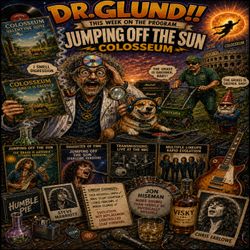
18. Album 3. Track 1. Jumping Off The Sun
41:50||Season 1, Ep. 18Fresh from untangling one of the strangest release strategies in progressive rock history, Chaz Charles and the Voluptuary of Sound, Dr. Glund, turn their attention to The Grass Is Greener—the mysterious U.S.-only Colosseum album that looked suspiciously like Valentyne Suite... because, well... half of it was.What begins as an investigation into a confusing record release quickly transforms into a celebration of one of Colosseum's greatest lineup changes, as Dave "Clem" Clempson, Chris Farlowe, and Mark Clarke announce themselves with all the subtlety of a freight train.And somewhere along the way...Dr. Glund accidentally discovers he's been wrong about who was singing one of his favorite Colosseum tracks for decades.TRACK UNDER THE MICROSCOPE:Jumping Off the Sun — ColosseumOne song.Four different recordings.Multiple vocalists.Several decades of Colosseum history.One increasingly bewildered Doctor.The investigation begins with The Grass Is Greener, where Chaz and Dr. Glund piece together exactly how this transitional album came to exist—and why generations of fans (including Dr. Glund himself) have been confused by it.Along the way they uncover:Clem Clempson's explosive debut with the bandThe revelation that Clem—not Litherland, not Farlowe—sings the original studio recordingChris Farlowe's later Daughter of Time interpretationBBC live performances that showcase both evolving lineupsMark Clarke's arrival and the chemistry that transformed Colosseum's rhythm sectionJon Hiseman somehow playing even more drums than should be physically possibleThe verdict?This wasn't simply a personnel change.It was a controlled evolutionary leap.TRACKS LISTENED TO / DIGRESSION ZONE (ABANDON HOPE):Because no investigation remains confined to a single album...The Grass Is Greener→ Why identical album covers confused collectors for fifty years→ Dr. Glund confesses to giving away his original copy because he thought it was a duplicateDaughter of Time→ Comparing Chris Farlowe's vocal treatment of Jumping Off the Sun→ The surprising differences in production and arrangementTransmissions: Live at the BBC→ Rare BBC recordings documenting the band's rapid evolution→ Live evidence that Clem's guitar work was every bit as devastating onstageHumble Pie→ An extended appreciation of Clem Clempson's post-Colosseum career→ Steve Marriott, wah pedals, Les Pauls, raw British hard rock, and enough Marshall amplification to rearrange nearby weather systemsHIGHLIGHTS YOU DID NOT ASK FOR BUT ARE GETTING ANYWAY:The phrase "I smell digression."Multiple declarations that Jon Hiseman deserves far more recognition among great rock drummersA groundskeeper arriving mid-recording to fertilize the lawn—proving that yes, the grass really is greener"Barrel-chested" becoming the official unit of measurement for Chris Farlowe's vocal powerA spontaneous Humble Pie appreciation society breaking out before anyone could stop itThe realization that every version of Jumping Off the Sun has something uniquely brilliant to offerPRESCRIPTION:Administer Jumping Off the Sun in all available forms:The original Grass Is Greener versionThe Daughter of Time remakeBBC live recordingsAny performance featuring Clem with a Les Paul plugged directly into excessive British amplificationRecommended conditions:Stereo speakersHealthy skepticism toward old album creditsA willingness to fall down several delightful rabbit holesPossible side effects include:Buying back records you foolishly gave away decades agoSpending the afternoon comparing Colosseum lineups like baseball statisticsUnexpected Humble Pie binge-listeningDeclaring Jon Hiseman criminally underrated to complete strangersAvoid operating heavy machinery unless it is a Hammond organ.The Blade of Judgment remains firmly in its scabbard.Glory. Across every version.Here's to ya, Clay Cole. Let's go grab a 'visky. 🍻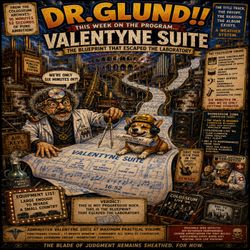
17. Album 2. Track 5. Valentyne Suite
42:33||Season 1, Ep. 17Having survived another descent into the Colosseum archives—and possibly a heatwave-induced hallucination—your hosts Chaz Charles and the Voluptuary of Sound, Dr. Glund, arrive at the towering centerpiece of Valentyne Suite: a 16-minute, 52-second monument to ambition, improvisation, and the complete abandonment of commercial restraint.This week’s mission:VALENTYNE SUITEThe title track.The payoff.The reason the album exists.The moment Colosseum stop being merely a band and become a weather system.TRACK UNDER THE MICROSCOPE:Valentyne Suite — ColosseumWhat follows is less a song review and more an archaeological excavation of one of progressive jazz-rock’s foundational texts.Dr. Glund and Chaz trace the suite through its many movements, marveling at:Dave Greenslade simultaneously conquering Hammond organ and vibraphone dutiesJon Hiseman attacking the drums with enough force to power a small municipalityTony Reeves quietly proving yet again that he may be one of the most criminally overlooked bassists of the eraDick Heckstall-Smith and company navigating abrupt musical turns that somehow never derail the locomotiveA composition that changes shape so often it feels like several albums occurring at onceThe Doctor repeatedly notes that six minutes into the track, they are somehow only getting started.Verdict:This is not progressive rock.This is the blueprint that escaped the laboratory.TRACKS LISTENED TO / DIGRESSION ZONE (ABANDON HOPE):Because no Colosseum discussion can remain on the rails indefinitely:The Grass Is Greener→ A discussion of the American release and its altered track listing→ Includes a confession involving a long-ago record giveaway and immediate collector's remorseColosseum Live '94→ Evidence that the suite remained a monster decades later→ Features the arrival of Clem Clempson and Chris Farlowe in full flightBBC and television performances from 1969→ Investigated like recently unearthed Dead Sea Scrolls→ Prompting further research missionsHIGHLIGHTS YOU DID NOT ASK FOR BUT ARE GETTING ANYWAY:The phrase “Air Keys” becoming a legitimate performance techniqueA lengthy investigation into disappearing guitars in Spotify mixesSwiss engineering being blamed for audio anomaliesThe realization that Colosseum concerts in 1969 likely required enough equipment to invade a small country“Be the energy you want in the world” somehow becoming official podcast philosophyPRESCRIPTION:Administer Valentyne Suite at maximum practical volume.Recommended conditions:A functioning stereoAn uninterrupted 17-minute windowA willingness to surrender all sense of conventional song structureOptional Hammond organMandatory curiosityPossible side effects include:Air-keyboard performanceSudden appreciation for Tony ReevesQuestioning every modern radio edit you've ever heardSpending the rest of the week searching for live versions from 1969Discontinue use only if:Your speakers begin smokingYou start pricing vintage Leslie cabinetsOr Jon Hiseman appears in a dream demanding a tighter rhythm sectionThe blade of judgment remains sheathed.For now.Here's to ya, Clay Cole. Let's go grab a 'visky. 🍻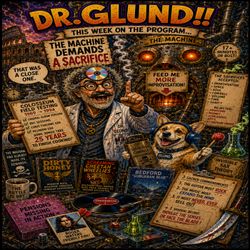
16. Album 2. Track 4. The Machine Demands A Sacrifice
45:09||Season 1, Ep. 16THIS WEEK ON THE PROGRAM…Having once again survived the relentless demands of modern life without acquiring a pension, your hosts Chaz Charles and the Voluptuary of Sound, Dr. Glund, return to the labyrinthine depths of Colosseum's Valentyne Suite.This week's sacrificial offering:THE MACHINE DEMANDS A SACRIFICEA title that sounds less like a song and more like a warning label.What begins as a brief, mysterious piece on the album becomes something far stranger when followed through Colosseum's live history—a shape-shifting musical organism that refuses to stay in one form for very long.TRACK UNDER THE MICROSCOPEThe Machine Demands a Sacrifice – ColosseumThe Doctor and Chaz investigate:Why every late-'60s musician seemed deeply suspicious of "The Machine"Whether Pete Brown was writing social commentary, science fiction, or bothHow a compact album track evolved into a live improvisational weaponWhy every subsequent version seems determined to outgrow the lastAlong the way, the pair compare:The original James Litherland versionEarly BBC performancesThe Chris Farlowe-era live arrangementsThe reunion-era interpretation that may finally reveal what the song wanted to be all alongVerdict:Not every Colosseum track arrives fully assembled.Some require decades of field testing.TRACKS LISTENED TO / DIGRESSION ZONE (SYSTEM ERROR: CONVERSATION OFF COURSE)Dirty Honey→ Modern rock delivered with maximum swagger and minimum compromise→ Proof that guitar bands have not yet gone extinctScreaming Cheetah Wheelies→ Southern-fried groove rock with riffs thick enough to require excavation equipment→ Further evidence that the '90s produced more than flannel and existential dreadBedford – "Suburban Blue"→ A welcome reminder that younger musicians are still capable of making glorious noise→ Restores a small but measurable amount of faith in humanityHIGHLIGHTS YOU DID NOT ASK FOR BUT ARE GETTING ANYWAYThe mysterious disappearance of pensionsRoger Waters catching friendly fire for building an entire career out of childhood traumaAn investigation into suspicious cowbell deploymentInvisible saxophone theoriesThe realization that Colosseum rarely played the same song the same way twiceDr. Glund determining that some songs simply need twenty-five years to finish cookingPRESCRIPTIONTake one dose of The Machine Demands a Sacrifice followed immediately by at least one live version.Repeat until:The arrangement finally reveals itselfThe cowbell mystery is solvedOr you find yourself arguing that every song should be seventeen minutes longAvoid operating heavy machinery.The machine has already made its demands.Here's to ya Clay Cole, let's go grab a visky.