Share
Third Sector
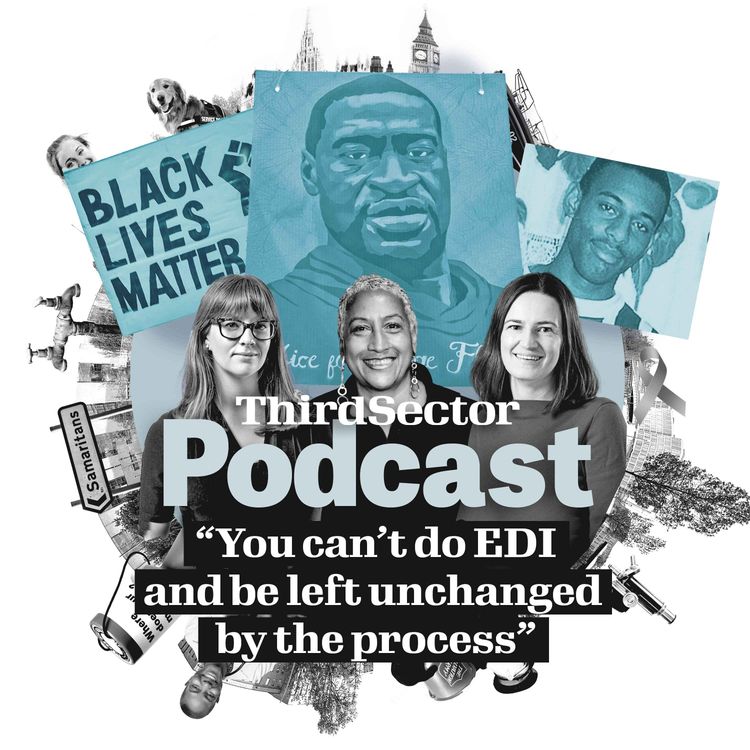
How to undertake meaningful anti-racism work
•
Lucinda Rouse and Emily Burt are joined by Joy Warmington, chief executive of the equality charity Brap.
Joy highlights some of the limitations of standard equity, diversity and inclusion approaches and explains why adopting a flexible and responsive mindset is preferable to following an EDI toolkit.
She shares her optimism that racism will be eliminated in the future and provides tips for charity leaders seeking to place their anti-racism commitments at the heart of their operations.
Listen to The Quiet Revolution.
Tell us what you think of the Third Sector Podcast! Please take five minutes to let us know how we can bring you the most relevant, useful content. To fill in the survey, click here.
More episodes
View all episodes

How important is the return on investment metric in fundraising?
30:42|Emily Burt and Andy Ricketts hear from the fundraising specialist Caroline Richardson and Paul Courtney, director of fundraising at Children’s Hospice South West.Caroline and Paul discuss how ROI is used in fundraising, and the importance of treating the measurement as one data point in a wider context.And Caroline explains why a decrease in fundraising ROI is not necessarily a bad thing, after her research found a year-on-year decline.
Professionalising the fundraising sector
32:35|Senior reporter Emily Harle is joined by Katie Docherty, chief executive of the Chartered Institute of Fundraising.She talks about the significant developments in fundraising over the past five years, the evolution of CIoF’s flagship conference and the need for chief executives and sector leaders to recognise fundraising as a serious profession if they want to grow organisational income.And four years on from her pledge to make the fundraising profession a safer place, Docherty reflects on the need for charities to empower fundraisers to raise the alarm if they feel unsafe, and develop codes of conduct that hold donors accountable for their behaviour.
What can Black feminist leadership teach the charity sector?
32:00|Third Sector editor Emily Burt and senior multimedia reporter Lucinda Rouse are joined by Jules Lynch, founder and chief executive of the Global Girl project. Jules discusses how leading with Black feminist principles empowers her charity to take a collaborative and trust-based approach to developing service offerings, sharing funding and resources. She discusses how the colonial origins of charitable models prevent those with power in the sector from working in meaningful partnership with communities, and why letting go of that power is an uncomfortable but essential step toward driving change in the sector. And Jules argues that, while conversations around decentralising power are beginning to enter the mainstream, change is rarely linear.
Grantmaking, working with government and encouraging volunteering
35:14|Matt Hyde, chief executive of the Lloyds Bank Foundation for England and Wales, talks to Third Sector deputy editor Andy Ricketts about volunteering, working with government and the grantmaker's new strategy. Matt discusses the foundation's ambition to ensure everyone in England and Wales is living 'in a good place' and how it hopes to increase overall giving levels to voluntary sector organisations.He talks about working with government and, as a member of the Civil Society Council, what his hopes are for the sector under Andy Burnham's new government.The co-founder of The Big Help Out also sets out what he thinks the charity sector can learn from the volunteering initiative, which this year joined forces with The Big Lunch.
The side effects of the Ice Bucket Challenge on the MND Association
33:10|Third Sector editor Emily Burt and senior multimedia reporter Lucinda Rouse are joined by Tanya Curry, chief executive of the MND Association.Tanya recalls how the MND Association was thrust into the limelight thanks to the Ice Bucket Challenge social media phenomenon in the summer of 2014.She describes the effects of the raised profile and £7m cash injection on the charity in the years that followed, and how its systems and processes needed to catch up.She stresses the need to pause and make a plan in the face of pressure to mobilise when everything is considered urgent.
Commission critical, Burnham’s DCMS reshuffle and CAF Bank chaos
30:14|Host Emily Burt is joined by Third Sector colleagues Andy Ricketts and Emily Harle to talk about three significant sector stories from the past month.Andy recounts an “embarrassing misstep” for the Charity Commission, after the regulator was found to have committed a contempt of parliament in seeking to prevent a set of critical reports from being laid before the house. Emily Harle hears from one of the whistleblowers at the heart of the row. The team discuss Prime Minister Andy Burnham’s first days in post, including the decision to move the Office for the Impact Economy from the Cabinet Office to the Department for Culture, Media and Sport. And Emily reports on the CAF Bank outage that has left thousands of charities unable to pay staff, suppliers and bills.
Why every charity should be thinking about operational research
28:02|Editor Emily Burt and deputy editor Andy Ricketts are joined by Dr Colette Fletcher, executive director of the Operational Research Society, and Rebecca Goldring, performance and partnership area manager at Porchlight. Colette discusses the history of operational research and its current function as one of the world’s “best-kept secrets”: underpinning everything from traffic systems to Chris Whitty’s slide decks during the Covid-19 pandemic. And Rebecca shares how Porchlight has worked in partnership with volunteers at the ORS to transform a disorganised pot of data into a clear and confident narrative for stakeholders. Click here to learn more about the Operational Research Society, or to express your interest in a partnership.
How local infrastructure drives a resilient voluntary sector
27:48|Editor Emily Burt and senior reporter Emily Harle are joined by Maddy Desforges, chief executive of the local infrastructure membership body Navca. They discuss the challenges around funding infrastructure organisations, working with local government and the risks that can come with a broad operational remit. Maddy also shares the opportunities for local charities and infrastructure organisations that may come as an increasing push for devolution seeks to place neighbourhoods and communities at the heart of policymaking.
How Black Minds Matter UK is future-proofing its work
35:44|Editor Emily Burt and reporter Dami Adewale are joined by Danielle Bridge, chief executive of Black Minds Matter UK. They discuss BMMUK’s ‘back-to-front’ journey, from a crowdfunded project that received £1.5m in its first six months of existence to a charity that must become sustainable in a world where supporting Black lives is no longer at the top of the political and public agenda. You can listen to the episode below, or wherever you get your podcasts:Tell us what you think of the Third Sector Podcast! Please take five minutes to let us know how we can bring you the most relevant, useful content. To fill in the survey, click here.