Share
Thinking Through with LJ
Understanding Haiti Development Dilemmas with Roddy Denor and Martin Alexis
Roddy Denor and Martin Alexis unfold Haiti's development dilemmas. Between the 80s and 90s, there came the Structural Adjustment Programs. These, are a set of combined loans and policies with strings attached directed at restoring political and economically weak nations, most of them emerging from civil wars. The path for the intended restoration was to create conditions to increase foreign direct investments, reduction of taxes and prohibitive regulations, less state interference in the economy, and of course, this followed the boom of international non-governmental organizations and development agencies. it is in this late setting that both Roddy and Martin walk their intellect to carve their statement.
Sources
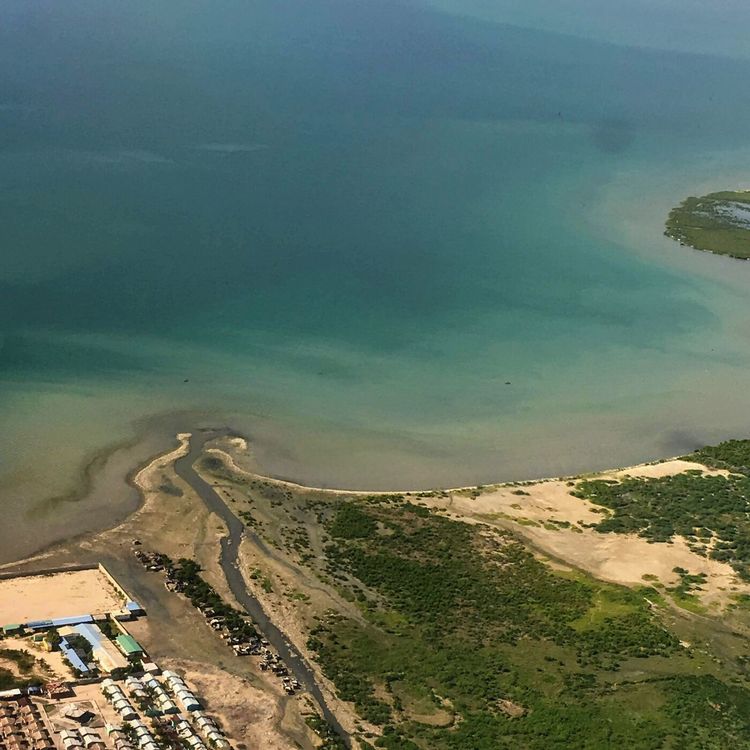
Episode cover Photo by Claudia Altamimi on Unsplash
Leroy, D. (1991a). IMF Structural Adjustment Programs: The case of Haiti, Part 1. https://ruor.uottawa.ca/bitstream/10393/24980/1/1991_leroy_dominique.pdf
Leroy, D. (1991b). IMF Structural Adjustment Programs: The case of Haiti, Part 2. https://ruor.uottawa.ca/bitstream/10393/24980/2/1991_leroy_dominique_part2.pdf
Weisbrot, M. (1997, January). Structural adjustment in Haiti. Monthly Review, 48(8), 25+. https://link.gale.com/apps/doc/A442779610/AONE?u=anon~3612484d&sid=googleScholar&xid=fceed8a7
Support the showMore episodes
View all episodes
Perspectives and questions towards state making in Africa with Ali Kaba
24:05|Perspectives and questions towards state making in Africa. A discussion with Ali Kaba a Ph.D. researcher at The American University. And yes, I mean Africa as a continent, not a country. Some of Ali’s research interests include customary land governance, rural migration, and foreign investment in local communities. Ali previously worked as a Program Director and Senior Researcher at the Sustainable Development Institute (SDI). A Liberian-based Non-Governmental Organization committed to transforming decision-making processes in land and natural resources.Photo by James Wiseman on UnsplashBuzzsprout - Let's get your podcast launched! Start for FREEDisclaimer: This post contains affiliate links. If you make a purchase, I may receive a commission at no extra cost to you.Support the show
15. Final Episode: Rounding Up Anti-Corruption Best Practices in Global Policies with Valentina Lana
41:57||Ep. 15In this last episode of three, Valentina Lana, a Lecturer at the Sciences Po law school in Paris, rounds up the best anti-corruption practices in global policies. As the last piece of her proposed knowledge map, Valentina ends with a set of positive tones, a takeaway for institutions and people determined to embrace an anti-corruption system.Photo by Markus Spiske on UnsplashAdditional Material:UN. (2022). UN Office of the Iraq Program—Oil-for-Food. https://www.un.org/depts/oip/sector-food.htmlTransparency International. (2013). Oil-for-food programme plagued by ‘lack of transparency’ and…. Transparency.Org. https://www.transparency.org/en/press/oil-for-food-programme-plagued-by-lack-of-transparency-and-scandalous-conflAn Inquiry on the U.N. Iraq Oil-for-Food Programme | NYU School of Law. (n.d.-a). Retrieved August 24, 2022, from https://www.law.nyu.edu/news/IILJ_IRAQ_OILFOODAn Inquiry on the U.N. Iraq Oil-for-Food Programme | NYU School of Law. (n.d.-b). https://www.law.nyu.edu/news/IILJ_IRAQ_OILFOODDuke University School of Law. (2013, October 11). Investigating the United Nations Oil-For-Food Program. https://www.youtube.com/watch?v=Zvhyg3zbqH0Support the show
14. Comparative anti corruption laws: US France and UK with Valentina Lana
41:34||Ep. 14Valentina Lana, a Lecturer at the Sciences Po law school in Paris, discusses the US, France, and UK anti-corruption laws. She describes best practices to create robust corporate programs to deter, prevent and combat corruption.Photo by Jason Leung on UnsplashSupport the show
13. Understanding democracy and ethnic conflicts in Kenya with Victor Uhuru
47:29||Ep. 13With Victor Uhuru a community organizer, conflict analyst, and specialist in Monitoring and Evaluation, I discuss the trends of democracy and ethnic conflicts in Kenya as it applies to his understanding of what the country awaits for brighter governance and an inclusive system. He argues on the intricacies of lack of public participation and discrepancies in coordinated efforts for better accountability while also highlighting the greatest achievements Kenya as a nation has reached.Leopoldino JeronimoCover Image by Kurious From PixabySupport the show
12. Corruption in Times of Crisis with Valentina Lana
37:56||Ep. 12Valentina Lana, a Lecturer at the Sciences Po law school in Paris discusses the concepts, magnitude, and nuances of the fight against corruption. In this series, Valentina sets the ground for her next few episodes in the legal framework guiding the global work of the anti-corruption-based advocacy in public, private and societal landscapes.ReferencesLana, V. & Sapin, M. (2022, April 14). Guest Post: France’s Anticorruption Turnaround–and the Path Forward. GAB | The Global Anticorruption Blog. https://globalanticorruptionblog.com/2022/04/14/guest-post-frances-anticorruption-turnaround-and-the-path-forward/Lana, V. (2022). Covid19: A better humanity is incubating. Émile Magazine. https://www.emilemagazine.fr/article/2020/5/12/better-days-ahead-a-better-humanity-is-incubatingOECD. (2021). OECD - Public Integrity Indicators. https://oecd-public-integrity-indicators.org/OECD. (2022). Opening remarks, followed by “Strengthening political integrity.” https://oecd-events.org/gacif2022/onlinesession/b0571382-9b7a-ec11-94f6-a04a5e7d3e1cTransparency International. (2021a). 2021 Corruption Perceptions Index—Explore the results. Transparency.Org. https://www.transparency.org/en/cpi/2021Transparency International. (2021b). Corruption Perception Index 2021. https://images.transparencycdn.org/images/CPI2021_Report_EN-web.pdfSupport the show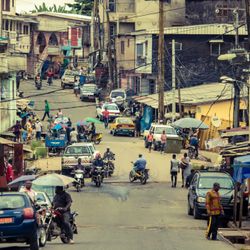
11. Sustained Peace and Development: a regional analysis with Morris Kromah
46:50||Ep. 11Phamolie Morris orris Kromah breaks it down to de essence of sustained peace and development for ECOWAS, the Economic West Africa Society. He elaborates on what sets back the economic growth while also acknowledging the major tipping progress to date. Among the key detailed statistics, he also delivers a qualifying analysis driving a reflection on the autonomy of the region and the African Union, as it relates to its functional external funding source. Moreover, what exactly will drive progress in the region, and if not ambitious what about the continent? Photo by Edouard TAMBA on UnsplashSupport the show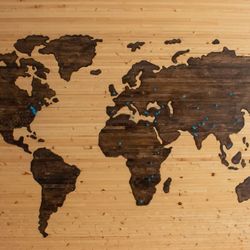
10. The world diversity: Political and Economilitary Systems – One or multiple?
01:07:27||Ep. 10Political and Economilitary discussions make the flow of this episode's discussion with Anastasia Bannikova, Elizabeth Morgan, and Phamolie Morris Kromah. From the imperialist beginnings, in the structure of power dynamics, the ongoing conflicts come to light as a result of historical accounts of what; the way wars and other conflicts have been negotiated and unsustainably settled in addition to the structural system of political and economilitary bases that dominates the militarization of the world and divide, which includes the long-lasting quest of identity between the powerful economies, the West versus Russia and the others in between. whether it is a quest for a global democratic world or a more coexisting diverse world of multiple systems.Here are the readings we recommend: Lowe, P. (2016). The rise of the BRICS in the global economy. Teaching Geography, 41(2), 50–53. https://www.jstor.org/stable/26455170Motyl, A. J. (1996). Russia, Ukraine, and the West: What are America’s Interests? American Foreign Policy Interests, 18(1), 14–20. https://doi.org/10.1080/10803920.1996.10391918Motyl, A. J. (Ed.). (2001a). Encyclopedia of nationalism. Academic Press.Motyl, A. J. (2001b). Imperial ends: The decay, collapse, and revival of empires. Columbia University Press.Motyl, A. J., Ruble, B. A., & Shevtsova, L. (2004). Russia’s Engagement with the West: Transformation and Integration in the Twenty-First Century. Taylor & Francis Group. http://ebookcentral.proquest.com/lib/brandeis-ebooks/detail.action?docID=4605363NW, 1615 L. St, Washington, S. 800, & Inquiries, D. 20036 U.-419-4300 | M.-857-8562 | F.-419-4372 | M. (2022, March 15). Public Expresses Mixed Views of U.S. Response to Russia’s Invasion of Ukraine. Pew Research Center - U.S. Politics & Policy. https://www.pewresearch.org/politics/2022/03/15/public-expresses-mixed-views-of-u-s-response-to-russias-invasion-of-ukraine/Snyder, T. (2018). The road to unfreedom: Russia, Europe, America (First paperback edition). Tim Duggan Books.Stevis-Gridneff, M., Levenson, M., & Erlanger, S. (2022, April 7). What Happened on Day 43 of Russia’s Invasion of Ukraine. The New York Times. https://www.nytimes.com/live/2022/04/07/world/ukraine-russia-war-newsPhoto by Brett Zeck on UnsplashSupport the show
9. Coercive and Nuclear Negotiations with Professor Eugene B. Kogan
31:25||Ep. 9To understand what Coercive and Nuclear Negotiations are I discuss with Professor Eugene B. Kogan, a researcher and an expert in the power dynamics of negotiation. This is also the core of his fast-paced and interactive pro-seminar offering an in-depth introduction to the principles and dynamics of coercive and nuclear negotiations around the world with a focus on a few conflicts for reference.The world is now overwhelmed with a few ongoing negotiation processes over conflicts with multiple actors in the global north and south countries. Although the list of these conflicts might be probably endless depending on how each conflict is reported and to who it affects, different data sources and conflict analysis have put together some for our benefit and focused discernment. The Armed Conflict Location & Event Data Project (ACLED) reported last February 2022 that Ethiopia, Yemen, The Sahel, Nigeria, Afghanistan, Lebanon, Sudan, Haiti, Colombia, and Myanmar would be the 10 conflicts to watch this year (ACLED, 2022).While the International Crises Group went further to pinpoint Ukraine, Israel-Palestine, Afghanistan, Iran Versus the US and Israel, Ethiopia, Yemen, Islamist Militants in Africa, and Ethiopia as the most concerning 10 conflicts to watch in 2022 (International Crisis Group, 2021).But the Center for Preventive Action under the Council on Foreign Affairs provide another set of survey results of their version of the conflicts to watch this year which included Afghanistan, Haiti, Lebanon, Venezuela, China Taiwan, Iran, Israel, Mexico, North Korea, Ukraine, and Russia and added a Cyberattack on US critical infrastructure (Stares, 2022)Eugene Kogan, is a professor of conflict resolution at Harvard, Brandeis, and other Universities. He is also a Co-Author of the book Mediation: Negotiation by other moves. In addition, he has also been engaged in delivering an analytical message and strategies a contribute to sustainable negotiation processes. Episode cover Photo by Humphrey Muleba on UnsplashHere are the readings we recommend: Walsh, C. (2022, March 18). Finding exit to war in Ukraine. Harvard Gazette. https://news.harvard.edu/gazette/story/2022/03/finding-exit-to-war-in-ukraine/ Kogan, E. B. (2022, March 7). Without giving in, a united West needs to offer Putin a face-saving way out | Opinion. Newsweek. https://www.newsweek.com/without-giving-united-west-needs-offer-putin-face-saving-way-out-opinion-1685551Robert J. Art and Patrick Cronin, The United States and Coercive Diplomacy. (Washington, D.C.: U.S. Institute of Peace, 2003), Introduction and Conclusion.Alain Lempereur, Jacques Salzer, Aurelien Colson, Michele Pekar, Eugene B. Kogan, Mediation: Negotiation by Other Moves (Wiley 2021), Chapter 1. James K. Sebenius and Eugene B. Kogan, HenrSupport the show