Share
The Veil
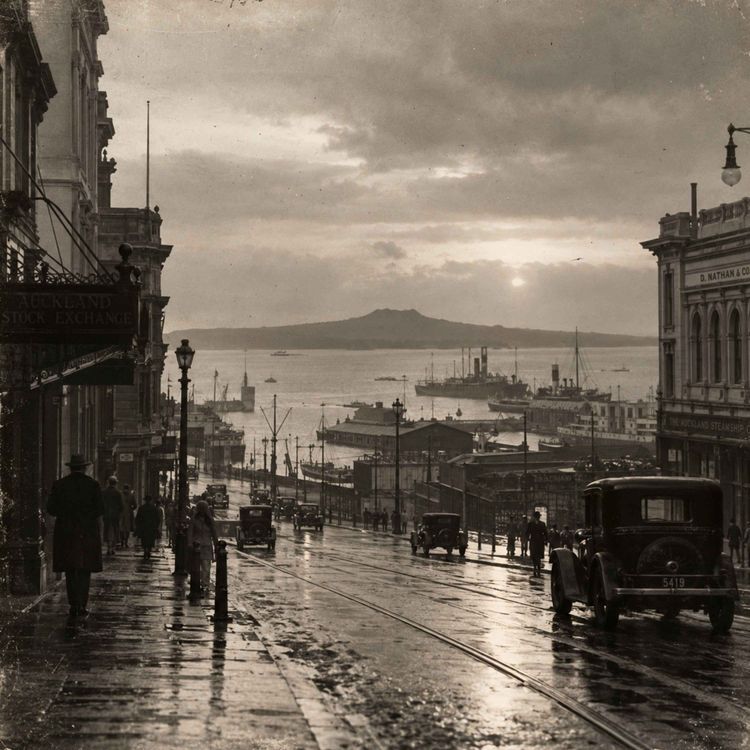
E66 | Auckland Unsolved | Who Killed Elsie Walker?
On the night of 1 October 1928, seventeen-year-old Elsie Walker vanished from her aunt and uncle's farm at Pāpāmoa, near Te Puke, in her apron and sand shoes. The family car vanished with her. By morning it was parked in a Papatoetoe street, with fuel for about 275 kilometres burned and a wheel changed on the road. Four days later a boy found Elsie's body under scrub in a scoria pit at Panmure. Police said she had driven herself. The coroner said she couldn't drive, that a man was at the wheel, and that he could not say who. Two inquiries, a 15,000-signature petition and a change to the law later, the case has never been solved.
A NOTE ON SOURCING
Elsie's cousin, William Alfred Bayly, was publicly suspected at the time but was never charged with any offence connected to her death. At the 1929 inquest he swore he was in Auckland on 1 October 1928, and the police told the inquest they had found no evidence placing him anywhere near Pāpāmoa. The later claims that he was seen on a train that day came from witnesses whose earlier statements to police contradicted them, and the Minister of Justice rejected them. No court ever made any finding about him in relation to Elsie Walker. In 1934 he was convicted of murdering Samuel and Christobel Lakey at Ruawaro, and he was executed that year. That conviction is not evidence about Elsie's death, and this episode does not treat it as such. He is named because everyone involved is long dead, the suspicion against him is part of the public historical record, and it shaped everything that followed.
Courtroom testimony in this episode comes from the New Zealand Herald's day-by-day reporting of the January 1929 inquest. It is close to verbatim but it is press gallery reporting, not a transcript. The coroner's original file (Archives New Zealand, J46 1929/187) has not been digitised and was not consulted. One claim reported only by NZ Truth is not used in the narration. The coroner's open finding still stands: death from concussion following a blow to the head, with nothing to show whether the blow was accidental or deliberate.
SOURCES
New Zealand Herald, inquest coverage, 8 Oct 1928 to 26 Jan 1929, and follow-up coverage Feb to Nov 1929, via Papers Past: paperspast.natlib.govt.nz
Coroner's finding, reported in "The Tamaki Mystery: Open Verdict Given", NZ Herald, 26 Jan 1929: paperspast.natlib.govt.nz/newspapers/NZH19290126.2.105
Auckland Star, 6 and 8 Oct 1928, via Papers Past
NZ Truth, "New developments in Elsie Walker mystery", 8 Aug 1929: paperspast.natlib.govt.nz/newspapers/NZTR19290808.2.26
"Police Exonerated", report of the Page Commission, NZ Herald, 5 Apr 1929: paperspast.natlib.govt.nz/newspapers/NZH19290405.2.114
Statement by the Minister of Justice on the Elsie Walker case, AJHR 1929, H-28: paperspast.natlib.govt.nz/parliamentary/AJHR1929-I.2.3.2.33
Public Petitions Committee reports, AJHR 1929, I-01 (Petition No. 414): paperspast.natlib.govt.nz/parliamentary/AJHR1929-I.2.3.3.1
Police annual report, AJHR 1929, H-16
"Reopening of Inquests: Legislation Passed", Auckland Star, 30 Sep 1930, via Papers Past
"Elsie Walker's Death: Reference in Bayly Case", Pahiatua Herald, 18 Jan 1934, via Papers Past
Northcroft clemency memorial, reported in NZ Herald, 14 Jul 1934, via Papers Past
Dictionary of New Zealand Biography, "Bayly, William Alfred": teara.govt.nz/en/biographies/4b15/bayly-william-alfred
Archives New Zealand catalogue, coronial records for the Walker and Lakey cases: collections.archives.govt.nz
While some dramatic license is taken during the retelling of these stories, but you can be sure that these true crime stories are all based 100% on real events and facts.
If you would like to suggest a case, you can message us via our website at www.brevityplus.com
Subscribers get ad free listening to The Veil and all of our podcasts. Please consider subscribing to support our work.
This podcast is researched, and written by the Brevity Studios team using AI tools, and is narrated in its entirety by - Ryan Wolf.
More episodes
View all episodes
76. E74 | Feature Series | 5 4 3 2 1 - Part One: The Overpass
41:50||Season 1, Ep. 765, 4, 3, 2, 1: The Incredible True Story of How Australian Police Trapped Daniel Morcombe’s Killer, Part One of ThreeOn Sunday 7 December 2003, thirteen year old Daniel Morcombe walked from his family’s farm at Palmwoods to wait for a bus under the Kiel Mountain Road overpass on Queensland’s Sunshine Coast. He was going to Sunshine Plaza to buy Christmas presents for his family. The bus was running late, and when it finally came it drove straight past him. Minutes later, the next bus found nobody there. What followed became the largest investigation in Queensland’s history: thousands of interviews, a hunt for a blue car, a million dollar reward and a family who never stopped pushing. Seven years on, a coronial inquest put a man in the witness box for two days, and he gave nothing away. But on the flight home, someone sat down beside him.This is Part One of a three part series. Subscribers get all three parts today. On the free feed, Part Two, The Gang, is out Wednesday and Part Three follows on Friday.SUBSCRIBEOne Brevity Studios subscription unlocks every part of every series on the day it launches, plus all of Guilt: https://guilt.supportingcast.fm/FURTHER READINGKate Kyriacou, The Sting: The Undercover Operation That Caught Daniel Morcombe’s Killer (Echo Publishing). This series relies heavily on Kate’s reporting, and her book is highly recommended: https://booktopia.com.au/the-sting-kate-kyriacou/book/9781760681036.htmlTHE DANIEL MORCOMBE FOUNDATIONBruce and Denise Morcombe founded the Daniel Morcombe Foundation in 2005 to teach children how to keep themselves safe. Learn more about their work: https://danielmorcombe.com.auSupport the foundation: https://danielmorcombe.com.au/get-involved/A NOTE ON SOURCINGBrett Peter Cowan was convicted in 2014 of the murder of Daniel Morcombe. His appeal was dismissed by the Queensland Court of Appeal in 2015 and the High Court refused special leave in 2016. His earlier offending is described only as recorded by the coroner and the Court of Appeal. Every other person of interest in the investigation is unnamed, and none has been charged with any offence relating to Daniel. Persons of interest at the inquest were identified by code under suppression orders. The account of the bus and roadside witnesses follows the 2019 coronial findings, which note that some accounts conflict. Details of Daniel’s life and family come from Kate Kyriacou’s The Sting and from published interviews with the Morcombe family, and are attributed on air.SOURCESCoroners Court of Queensland, findings of inquest into the death of Daniel James Morcombe, State Coroner Terry Ryan, 5 Apr 2019R v Cowan [2013] QSC 337, 12 Dec 2013R v Cowan; R v Cowan; Ex parte Attorney-General (Qld) [2015] QCA 87, 21 May 2015Cowan v The Queen [2016] HCATrans 57, 11 Mar 2016Kate Kyriacou, The Sting (Echo Publishing, 2015)ABC News, coverage of the inquest, 1 and 6 Apr 2011ABC News, 2009 (reward appeal) and 3 Dec 2012 (committal)ABC 7.30, interview with former detective Kenneth KingStephanie Wood, Brisbane Times / Sydney Morning Herald, 2014 (trial coverage)Brisbane Times, 2015 (Daniel Morcombe Foundation)Newcastle Herald, 2023 (interview with Bruce Morcombe)SUPPORTThis episode deals with the abduction of a child. If it raises anything for you: Lifeline 13 11 14 (Australia), Kids Helpline 1800 55 1800 (Australia), 1737 (New Zealand).Written and Researched with AI assistance and fact-checked against the coronial findings and court judgments. A Brevity Studios production. https://theguiltpodcast.com | https://brevityplus.com
75. E73 | Listener Cases | Who Killed Allison Newstead?
33:59||Season 1, Ep. 75Subscribe to The Veil get ad free listening, bonus episodes and early release and listen on any platform via Supporting Cast here:https://guilt.supportingcast.fm/On Wednesday 6 October 1993, seventeen year old Allison Newstead went into Cessnock, a coal town in the NSW Hunter Valley, and never came home. Her car was found the next morning in the ex-servicemen's club carpark. A week later two men walking a bush track near the disused Pelton colliery found her body under two sheets of corrugated iron. She had no wounds and no fractures, toxicology ruled out an overdose, and the cause of her death has never been established. Her clothes turned up a year later in a plastic bag in other bushland. A man charged with concealing her body was acquitted in 1997. Police now say several people may have been there when Allison died. Who were they, and why has nobody spoken?Thanks to listener Caroline for suggesting this case.IF YOU KNOW SOMETHINGThe NSW Government reward of $750,000 for information into Allison's death still stands. The case is with the State Crime Command's Unsolved Homicide Unit, Strike Force Bain. Police especially want to hear from people who knew Allison in 1993 and have never spoken to them, including anyone who may have been present when she died or who knows the circumstances of her death.Crime Stoppers: 1800 333 000 or nsw.crimestoppers.com.au. Information is treated in strict confidence. Please do not report information via NSW Police social media pages.The NSW Legislative Council inquiry into unsolved murders and long-term missing persons cases (1965 to 2010) is taking submissions until 30 October 2026: parliament.nsw.gov.au (search "unsolved murders inquiry").A NOTE ON SOURCINGNo one has ever been convicted in connection with Allison's death. The 1994 inquest was terminated and referred to the DPP, so no coronial finding exists. A man charged with concealing her body and perverting the course of justice was acquitted by a jury in 1997; he is not guilty in law and is not named. A second man, per 2013 reporting, pleaded guilty to supplying amphetamines; no court has linked that offence to her death. The account of three people denying they saw Allison that night is her mother's, given to the Daily Telegraph in 2013; police have made no finding against anyone. The 1993 timeline comes from AAP reports in the Canberra Times. The purse detail is from 2018 reporting only. Police say evidence including her clothing is being re-examined; no result has been published. The working theory in Part Three is the host's reading of the public record, not a finding of any court or coroner. As of 26 October 2026 nobody has been charged over how Allison died.SOURCESNSW Police, $750,000 reward, Death of Allison Newstead: police.nsw.gov.au/can_you_help_us/rewardsNSW Government Gazette No. 11, 3 Feb 1995, p700 (reward notice, 9 Dec 1994), via TroveCanberra Times (AAP), 10, 11, 15, 16 and 17 Oct 1993, via TroveJanet Fife-Yeomans, Daily Telegraph, 7 Oct 2013Belinda-Jane Davis, Maitland Mercury / Newcastle Herald, Oct 2013Matt Carr and Nick Bielby, Newcastle Herald, 5 and 6 Oct 2018Krystal Sellars, Cessnock Advertiser, 29 Jun 2022; Gabriel Fowler, Newcastle Herald, 23 Jun 2022 (Operation Veritas)Carly Cook, ABC News, 22 Oct 2022Simon McCarthy and Sam Rigney, Newcastle Herald, 22 and 23 Oct 2022NSW LC Portfolio Committee No. 1, inquiry into unsolved murders and long-term missing persons cases, hearing transcript 11 Jun 2026 and terms of referenceCessnock Advertiser, Pelton colliery history, 2016SUPPORTThis episode discusses the death of a teenager and its effect on her family. If it raises anything for you: Lifeline 13 11 14 (Australia), 1737 (New Zealand).
74. E72 | Listener Cases | The Disappearance of Iraena Asher
37:55||Season 1, Ep. 74At 9pm on Sunday 10 October 2004, 25 year old Iraena Asher rang 111 from a house on Piha Road. She said she was afraid, that a man was pressuring her for sex, and that she had been given drugs. Police sent a taxi, which went to the wrong side of Auckland. A local family took her in for four hours. Just after 1am she walked out into a stormy night, and she was last seen naked under a streetlight, walking down Seaview Road towards the beach. A coroner found she went into the sea and drowned, and that the police failure to send a car contributed. Her body has never been found, and nobody saw her beyond the second streetlight.IF YOU KNOW SOMETHINGIf you were at Piha on the night of 10 to 11 October 2004, stayed at the Piha camp ground that weekend, or know anything about Iraena's last day or her disappearance, please contact:Police non emergency: 105, or online at police.govt.nzCrime Stoppers (anonymous): 0800 555 111, crimestoppers-nz.orgA NOTE ON SOURCINGThe heart of this episode is the Police Complaints Authority report of 18 January 2006, which includes transcripts of Iraena's calls with police, and the High Court judgment Carroll v Coroner's Court at Auckland [2013] NZHC 906, which reproduces parts of Coroner Peter Ryan's 2012 findings. The full coronial findings were not available online and were not obtained.Nobody has ever been charged in connection with Iraena's disappearance, and the coroner found no evidence of foul play. The people at the Piha Road house are not named in this episode, and some witnesses at the inquest had name suppression. Nothing in this episode suggests wrongdoing by anyone at that house.In 2013 the High Court quashed the coroner's finding that Julia Woodhouse, Bobbie Carroll and Henry Woodhouse contributed to her death, finding it rested on speculation. The findings that Iraena drowned and that the police failure contributed still stand.Some details, including where the taxi went and accounts of the inquest evidence, come from contemporaneous reporting in the NZ Herald, Stuff and RNZ.SOURCESPolice Complaints Authority, report on the 111 call made by Iraena Asher, 18 Jan 2006 (ipca.govt.nz)Carroll v Coroner's Court at Auckland [2013] NZHC 906, 29 Apr 2013 (coronerscourt.govt.nz)NZ Police media releases, 12 to 28 Oct and 30 Nov 2004, 28 Feb 2005, 3 Jan 2023Communications Centres Service Centre Independent External Review, May 2005NZ Herald, Juliet Rowan, 15 Nov 2004; Anna Leask, 17 and 19 Jul 2012; Phil Taylor, 20 Sep 2019Stuff, Kirsty Johnston, 18 Jul 2012RNZ, 17 and 19 Jul 2012; 29 Apr 2013; Sam Olley, 16 Jan 2023NZ Listener, Sarah Catherall, 22 Jan 2024SUPPORTThis episode discusses mental illness, a disappearance, sexual pressure and drowning. If it has raised anything for you:1737, free call or text, any timeSafe to Talk (sexual harm): 0800 044 334Alcohol Drug Helpline: 0800 787 797Youthline: 0800 376 633
73. E71 | Listener Cases | The Mysterious Death of Phoebe Handsjuk
33:36||Season 1, Ep. 73On 2 December 2010, 24 year old Phoebe Handsjuk was found dying in the ground floor refuse room of her St Kilda Road apartment building, after coming down the rubbish chute from the twelfth floor. Police first treated it as suicide. Her grandfather, a retired detective, did not believe she could have climbed in. In 2014 Coroner Peter White found she entered the chute herself in a sleepwalking-like state brought on by Stilnox and alcohol, and that no one else was involved. The family has never accepted it, and the questions about the chute, the lost CCTV and the missing notes remain.Suggested by listener Angela.IN MEMORYPhoebe Handsjuk, 9 May 1986 to 2 December 2010. Baillee Schneider, 19 February 1993 to 23 June 2018.A NOTE ON SOURCINGThis episode is built on two published coronial findings: Coroner Peter White's finding into Phoebe's death (COR 2010 4605, 10 December 2014, amended February 2015) and Deputy State Coroner Caitlin English's finding into Baillee's death (COR 2018 3002, 23 April 2020). Coroner White found Phoebe's death was not the result of an assault by, or with the aid of, any other person. Coroner English found Baillee's death was not suspicious. The man both women were in a relationship with is not named. He has never been charged with any offence, he denied any involvement on oath, both coroners found no one else was involved, and nothing in this episode suggests otherwise. The Coroners Court of Victoria made non-publication orders over parts of the inquest material in Phoebe's case; this episode uses only the published finding and open court reporting. Phoebe's family does not accept the finding.SOURCESCoroners Court of Victoria, Finding into death with inquest, Phoebe Handsjuk, COR 2010 4605: coronerscourt.vic.gov.auCoroners Court of Victoria, Finding into death without inquest, Baillee Petra Schneider, COR 2018 3002: coronerscourt.vic.gov.auABC News, 9 August 2013 and 10 December 2014; 21 June 2018The Age and Sydney Morning Herald, Richard Baker and Michael Bachelard, Phoebe's Fall (2016) and related reporting; Richard Baker, 24 June 2019 and 16 June 2020Wendy Carlisle, RadioDoc Review, Vol 3(2), 2017Robin Bowles, Into the Darkness: The Mysterious Death of Phoebe Handsjuk (Scribe, 2016)Premier of Victoria, Coroners Court appeal process to be reviewed, 16 December 2016; Victorian Coronial Council, report on rights to appeal coronial findings, 2017phoebehandsjuk.com (family site)SUPPORTThis episode discusses depression and a death by suicide. If you are struggling, please reach out.Australia: Lifeline 13 11 14, Beyond Blue 1300 22 4636, Suicide Call Back Service 1300 659 467.New Zealand: 1737 (call or text), Lifeline 0800 543 354.
72. E70 | Listener Cases | Who Killed Gordana Kotoveski?
36:40||Season 1, Ep. 72On a Thursday night in November 1994, sixteen year old Gordana Kotevski left Charlestown Square to walk about 500 metres to her aunt's house on Powell Street. A passing driver saw two young men at a white Toyota Hilux, then a girl walking with a shopping bag. Minutes later her aunt heard screams and men's voices. Gordana's torn bag and her purse were left near the house. A 2003 inquest found she was deceased, most likely as a result of foul play. In 2026 police searched properties at Edgeworth and West Wallsend, excavated an Edgeworth backyard, and appealed for two anonymous callers from 1994 and 1996. Nobody has ever been charged.Suggested by listener Rene.IF YOU KNOW SOMETHINGA NSW Government reward of $1,000,000 is offered for information leading to the arrest and conviction of any person or persons responsible for Gordana's disappearance.Crime Stoppers: 1800 333 000 or nsw.crimestoppers.com.au (confidential).Strike Force Bambil, Belmont Detectives: 02 4922 8774, SFBambil@police.nsw.gov.au (per NSW Police, June 2026).Police want to hear from the man who rang Newcastle Police Station about 6.50pm on Monday 5 December 1994, and the man who rang KOFM Newcastle about 9.25pm on Wednesday 18 September 1996, and from anyone who saw a light coloured, single cab Toyota Hilux with a silver work tray around Charlestown in late 1994.The NSW Legislative Council inquiry into unsolved murders and long term missing persons cases (1965 to 2010) names Gordana, Robyn Hickie and Amanda Robinson in its terms of reference. Submissions close 30 October 2026.A NOTE ON SOURCINGNobody has ever been charged over Gordana's disappearance and no court has found anyone responsible. Corey Lovett was named as a person of interest at the 2003 inquest; he has never been charged and is presumed innocent. The allegation about him was never tested, and we could not find whether he gave evidence. He is named because the inquest named him and the lost statement is part of the case. The written 2003 finding is not published online; inquest evidence comes from contemporaneous ABC and Sydney Morning Herald court reports. Police have not said what was seized in April 2026 or what the May excavation found. The theory in Part Three is the host's reading of the public record, not a police or coronial finding. The investigation is open.SOURCESNSW Police reward page and releases, 4 May and 26 June 2026: police.nsw.gov.auSMH, Greg Wendt, Witness hypnosis called for in lost girl case, 6 Nov 2002SMH, Les Kennedy, On the scent without a clue, 9 Jul 2003ABC News, 5 and 6 Mar 2003; 27 Feb 2009; 25 May 2022; 24 Nov 2023; 18 Jul 2025; 4 May 2026ABC News, Hickie and Robinson rewards, 16 Aug 2021; Torana lead, 25 Nov 2019Newcastle Herald, 2009 to 2026 coverage, incl. Dan Proudman (2011)Newcastle Weekly, Rod Thompson, 2024 to 2026New Idea, 2020 (Peggy Kotevski interview)news.com.au, Nathan Jolly, 2016NSW Legislative Council, Q&A No. 78 (2023) and inquiry 3148 terms of referenceNSW Coroners Court, State Coroner's report on deaths in custody 2006 (Coroners Act 1980 s 19)Crime Commission Act 2012 (NSW), ss 21, 24, 39, 39AAAP, October 2024 (police statement on common offender)Australian Missing Persons Register profile: missingpersons.gov.auSUPPORTThis episode discusses the abduction and suspected murder of a teenager. Australia: Lifeline 13 11 14, 1800RESPECT 1800 737 732. New Zealand: 1737, Safe to Talk 0800 044 334.
71. E69 | Auckland Unsolved | Who Killed Katrina Jefferies?
37:20||Season 1, Ep. 71At about 7.30pm on Sunday 10 July 2005, 22-year-old Katrina Jefferies left the Mt Roskill home she shared with her mother, her younger brother and her 20-month-old son. On the morning of Tuesday 12 July she was found partly undressed on a bank beside Waikowhai Road, wrapped in a red tarpaulin, a yellow raincoat and black rubbish bags, about a kilometre from home. She had been killed somewhere else. The police have never said how she died. They have traced everything found with her to one Mt Roskill address, and believe more than one person knows what happened. As of October 2026, nobody has been charged.IF YOU KNOW SOMETHINGPolice want to hear from anyone who saw Katrina between the evening of Sunday 10 July and Tuesday 12 July 2005, or who knows where she went and who she was with. They also want to hear from anyone who was in Waikowhai Reserve or around Hillsborough Road in the early hours of Tuesday 12 July 2005. And they are asking about the red tarpaulin, the yellow Stormwear raincoat, the black rubbish bags, a framed river and mountain print signed "Haver", and a piece of marine plywood found with her, and about the clothes she left home in, which have never been found: blue tracksuit pants, a black duffle coat, burgundy slip-on shoes (size 10), a peaked cap and a black Walkman cassette player.Call 0800 COLD CASE (0800 2653 2273), use the cold case contact form at police.govt.nz, or call Police on 105. Anonymous information: Crime Stoppers 0800 555 111 or crimestoppers-nz.org. A NOTE ON SOURCINGNobody has ever been charged with Katrina's death, and no court has made any finding against any person. In November 2011 Coroner Gordon Matenga found that she died at the hands of another and suppressed the cause of death, which has never been published. We did not obtain the full text of the finding and rely on contemporaneous reporting of it. The man charged in 2014 after Operation Lyra interviews was convicted of offending against other women; police have said those charges were unrelated to Katrina, and nothing in the public record connects him to her death. The 2016 claim reported by One News is untested. The investigation remains open.SOURCESNZ Police, Cold Case: Katrina Jefferies, 2005: police.govt.nz/stolenwanted/coldcase/2019/katrina-jefferies-2005NZ Police releases, 13, 14 and 21 Jul 2005, 26 Aug 2005, 25 Jun 2007 and 23 Jun 2019Kirsty Wynn, "Haunted by the death of Katrina", Herald on Sunday, 31 Jul 2005Martin Johnston, NZ Herald, 26 Aug 2005NZPA, "Murdered woman died 'highly unusual death'", 26 Jul 2005, and "Mother thinks of her murdered daughter every day", 26 Jun 2007, via nzherald.co.nzNZ Herald, "Jefferies family now have body", 19 Jul 2005; "New murder information 'contradicts earlier statement'", 3 Jul 2007; "Woman claims lead on 2005 cold case", 20 Apr 2016Elizabeth Binning and Louisa Cleave, "Unsolved: the murder mysteries of 2005", NZ Herald, 2 Jan 2006"More false confessions in cold case", NZPA via ODT, 21 Nov 2011Jared Savage, NZ Herald, 24 May 2016 and 23 Jun 2019RNZ and 1News, 23 Jun 2019High Court sentencing in the Marie Jamieson case, [2010] NZHC 540SUPPORTThis episode discusses the killing of a young mother. If it raises anything for you: 1737 (call or text), Victim Support 0800 842 846, Alcohol Drug Helpline 0800 787 797.
70. E68 | Auckland Unsolved | The Murder of Claire Hills
34:05||Season 1, Ep. 70Before dawn on 28 April 1998, Claire "Lisa" Hills, a 30-year-old McDonald's shift manager, left her Herne Bay flat for a 3.30am start at Auckland Airport and never arrived. About three hours later a woman walking on Māngere Mountain watched a man set a car alight beside the sports clubrooms, then came face to face with him as he ran. Lisa was in the back seat, alive but probably unconscious. A DNA profile believed to be her killer's has excluded the police's original prime suspect and around 300 other men, and it has never matched anyone on the New Zealand or Australian databanks. Police say all they need is a name.IF YOU KNOW SOMETHINGCall Operation Hills on 0800 OP HILLS (0800 674 4557) or Police on 105. To stay anonymous, call Crime Stoppers on 0800 555 111. Police have asked about: anyone who saw a black Mazda Familia hatchback in South Auckland between 3am and 6am on 28 April 1998; the steering wheel lock missing from her car; where the killer got the petrol, which police believe he brought in a container; a slim man in dark clothing, possibly in a hooded sweatshirt, seen running from Māngere Domain towards the motorway and Māngere Bridge shops; and anyone with concerns about a person's behaviour after April 1998. Police say they can assure confidentiality, and that simply offering a name could be the key.A NOTE ON SOURCINGNo one has ever been charged in connection with Lisa's death, and no court has made any finding against any person. The coroner found that she died of smoke inhalation and carbon monoxide poisoning after being left in a car set on fire by a person or persons unknown. The men described in this episode as suspects, including the man the first inquiry suspected, are not named. Police have said publicly that DNA excluded both her estranged husband and a convicted South Auckland rapist who matches that description. The police reconstruction of the abduction at traffic lights is their best reading, not a proven sequence. Witness accounts come from police statements and the witness's 2018 interview with the Herald on Sunday. Published times for the fire vary between about 5.25am and 5.45am.SOURCESAnna Leask, "Claire Hills murder cold-case: witness tells of coming face-to-face with killer", Herald on Sunday, 22 Apr 2018Anna Leask, "Cold case: police look to search overseas in hunt for Claire Hills' killer", Herald on Sunday, 22 Apr 2018"Someone knows Claire Hills' killer", Herald on Sunday editorial, 22 Apr 2018Tony Wall, "Police: we know who killed Claire Hills" and "Baffling murder mystery", NZ Herald, Jun 2000Scott Inglis, "New police team to hunt Claire Hills' killer", NZ Herald, Jun 2000Tony Stickley, "Claire Hills police 'grasping at straws'", NZ Herald, Jun 2000Scott Inglis, "Police need more evidence in Claire Hills murder case", NZ Herald, 28 Apr 2001NZPA, "Horror death still haunts investigators", NZ Herald, 10 May 2002Patrick Gower, "Book remains open on five-year-old murder", NZ Herald, 29 Apr 2003NZPA, "Killer must be haunted by murder, say police", NZ Herald, 9 Dec 2009Anna Leask, "A Moment In Crime: Murder at Mangere Mountain", NZ Herald podcast, Jul 2021SUPPORTThis episode discusses sexual violence and a violent death. Safe to Talk 0800 044 334 (24/7, sexual harm), 1737 (call or text). In Australia: 1800RESPECT 1800 737 732, Lifeline 13 11 14.
69. E67 | Auckland Unsolved | The Murder of Tracey Anne Patient
37:51||Season 1, Ep. 69On the night of 29 January 1976, thirteen-year-old Tracey Ann Patient left a friend's house in Henderson, West Auckland, and ran for home along Great North Road, late for her 9.30 curfew. She was last seen about five minutes from her front door. The next morning a man walking his dog found her body in bush beside a layby on Scenic Drive in the Waitākere Ranges, strangled with pantyhose tightened with a piece of wood. Nearly two years later an anonymous caller led police to her missing ring, wrapped in tissue in an Avondale rubbish bin, and gave them a six-digit number, 126040. The caller promised to ring back and never did. Nobody has ever been charged.IF YOU KNOW SOMETHINGInformation can be given anonymously through Crime Stoppers on 0800 555 111 (crimestoppers-nz.org), or to Police on 105, quoting reference 990810/0373. Over the years police have asked about the meaning of the number 126040, about the identity of the person who rang Henderson police on 22 November 1977, about the driver of a cream or white 1967 Mark II Ford Cortina seen on Great North Road near Edmonton Road that night, and about anyone who has kept quiet about what they know. Tracey's sister Debbie asks people to come forward even if the person they suspect has died.A NOTE ON SOURCINGNo one has ever been charged in connection with Tracey's death, and no court has made any finding against any person. The coroner recorded a finding of homicide by strangulation with a ligature. Over fifty years police have examined hundreds of persons of interest. None is named in this episode, and anyone who was questioned and cleared is presumed innocent. Accounts from 1976 and 1977 come from New Zealand Press Association reports carried in The Press and accessed through Papers Past. Contemporary police statements say the pantyhose were not Tracey's, while some later reporting describes them as her own. Later police statements date the ring call to 1978, but contemporaneous reports put it at 22 November 1977. Debbie Sheppard's words come from her published interviews. The investigation remains open.SOURCESThe Press (NZPA reports), 31 Jan 1976 to 18 Oct 1990, via Papers Past: paperspast.natlib.govt.nz"Police hunt for murderer of strangled girl", The Press, 31 Jan 1976"Car driver may have lead to girl's murder", The Press, 2 Feb 1976"Evidence body was moved", The Press, 12 Feb 1976"Tracey Patient reward of $10,000", The Press, 22 May 1976"Ring a new clue in death?", The Press, 16 Dec 1977"Patient inquest closed", The Press, 7 Feb 1978"Numbers mystery in Tracy Patient case", The Press, 12 Dec 1980NZ Police media release, Jan 2016: police.govt.nzLynley Ward, "Tracey Ann Patient killing: the 40-year murder mystery", NZ Herald, 28 Jan 2016"New witness in Tracey Ann Patient cold case", NZ Herald, 3 Jul 2016Matthew Gray, "Tracey Ann Patient: the case that shocked a nation", Stuff, 29 Jan 2016"Mystery remains in cold case murder", Timaru Herald, 26 Oct 2016RNZ, "Mystery of 40-year-old murder case continues", Oct 2016Jared Savage, "What happened to Tracey Ann Patient in cold case murder 49 years ago?", NZ Herald, 29 Jan 2025Debbie Sheppard with Claudia Siron, "Cold case murder: Do you know who killed Tracey Ann Patient?", that's life!, 9 Apr 2025SUPPORTThis episode discusses the murder of a child. If it raises anything for you: 1737 (call or text), Youthline 0800 376 633, Safe to Talk 0800 044 334. In Australia: Lifeline 13 11 14.