Share
The Veil
E33 | Horror on St Andrews Street
On the last night of February 2000, in the small Hunter Valley town of Aberdeen, a miner named John Price was stabbed to death in his own home — a death he had predicted aloud to his workmates the day before. But the murder was only the beginning. Over the hours that followed, Katherine Knight, a skilled abattoir worker, used the trade she'd spent thirty years perfecting to do the unthinkable to his body. This episode traces the forensic evidence, the warnings everyone missed, and the historic sentence that followed — and asks what it means when horror hides in plain sight.
While some dramatic license is taken during the retelling of these stories, but you can be sure that these true crime stories are all based 100% on real events and facts.
If you would like to suggest a case, you can message us via our website at www.brevityplus.com
Subscribers get ad free listening to The Veil and all of our podcasts. Please consider subscribing to support our work.
This podcast is researched, and written by the Brevity Studios team using AI tools, and is narrated in its entirety by - Ryan Wolf.
More episodes
View all episodes
65. E63 | Special | Sydney Unsolved - The Disappearance of Juanita Nielsen
41:20||Season 1, Ep. 65She published a local newspaper out of her own front room and used it to fight a developer who wanted to put three forty-five storey towers on her street. On a Friday morning she walked into the Carousel Cabaret in Kings Cross for a meeting about advertising, rang her business partner at half past ten to say she was running late, and was never seen again. Two men were later convicted of conspiring to abduct her four days earlier. Nobody has ever been charged over her disappearance. In 1983 a coroner's jury found police inquiries had been inhibited by an atmosphere of corruption. Eleven years later a federal parliamentary committee found something else.IF YOU KNOW SOMETHINGA $1 million reward, announced on 21 June 2021, stands for information about the 1975 disappearance and suspected murder of Juanita Nielsen, or for the location of her remains. The case is held by the Unsolved Homicide Team as Strike Force Euclid.Crime Stoppers: 1800 333 000, or nsw.crimestoppers.com.au. Information is treated in strict confidence. Do not report through police social media.A NOTE ON SOURCINGJuanita Nielsen has never been found. There is no body, no scene and no cause of death. The only physical trace ever recovered is her handbag and personal effects, found on a freeway near Penrith on 7 July 1975.Nobody has ever been charged over her disappearance or death. Two men, Eddie Trigg and Shayne Martin-Simmonds, were convicted of conspiring to kidnap her on 30 June 1975, four days before she vanished. A third man charged with that conspiracy, Lloyd Marshall, was acquitted in 1980 and is entitled to the presumption of innocence.Frank Theeman, Abe Saffron, James McCartney Anderson and Fred Krahe are all named in this episode. All four are dead. None was ever charged in connection with Juanita Nielsen. Theeman, Saffron and Anderson each denied involvement on oath at the 1983 inquest. The committee that examined Anderson's dealings with the National Crime Authority recorded that he had apparently never been convicted of any offence.Loretta Crawford's 2004 television account has never been tested in a criminal court and no one has been charged as a result of it. This episode reports that she made the allegation. It does not repeat the names of the individuals she placed at the scene.The 1983 coronial finding of City Coroner Bert Wilson is not published online. Its wording here is taken from the Australian Dictionary of Biography. The 1984 internal police inquiry that cleared three senior officers was not obtained.SOURCESThe National Crime Authority and James McCartney Anderson, report of the Parliamentary Joint Committee on the National Crime Authority, March 1994, read in full: aph.gov.auNSW Police, reward and appeal, Strike Force Euclid: police.nsw.gov.auAustralian Dictionary of Biography, Juanita Joan Nielsen, by Richard Morris, volume 15Dictionary of Sydney, on the 1983 inquest, by Darrienne WyndhamABC News, $1 million reward announcement, 21 June 2021ABC News and Unravel: Juanita, Michael Dulaney, 2021, for Arthur King's account in his own wordsSUPPORTThis episode deals with the abduction and suspected murder of a woman, and with the kidnapping and threatening of a man.Australia: Lifeline 13 11 14. 1800RESPECT 1800 737 732.New Zealand: Need to talk? 1737. Safe to Talk 0800 044 334.
64. E62 | Special | Sydney Unsolved - The Disappearance of Trudie Adams
42:27||Season 1, Ep. 64Just after midnight, an eighteen year old left a dance at the Newport Surf Life Saving Club and walked out to Barrenjoey Road to hitchhike home to Avalon. Her boyfriend watched her get into a light coloured Holden panel van. Nobody has seen Trudie Adams since. In the weeks that followed, around fifteen young women came forward to say they had been abducted at gunpoint on the same road by two men in disguise, driven into the bush and raped. Detectives had a name within months. Nobody has ever been charged, and the coroner who finally heard the case in 2011 found that the person responsible never came to police attention.IF YOU KNOW SOMETHINGA $250,000 reward offered by the NSW Government stands for information leading to the arrest and conviction of the person or persons responsible for Trudie's suspected death. The case is held by the Unsolved Homicide Team as Strike Force Keldie, and police say they are still working strong lines of inquiry, with inquiries run in New South Wales, Queensland, Victoria and New Zealand.Police also want to hear from any woman attacked on the northern beaches who has never reported it. The linked assaults ran from 1971 to 1978 in and around Ku-ring-gai Chase National Park, against girls and young women aged 14 to 20.Crime Stoppers: 1800 333 000. You can remain anonymous.A NSW parliamentary inquiry into unsolved murders and long-term missing persons cases between 1965 and 2010 is sitting now, before Portfolio Committee No. 1. Submissions close 30 October 2026, through the Parliament of NSW website.A NOTE ON SOURCINGTrudie Adams has never been found and no cause of death has ever been established. There is no body, no scene and no forensic material connected to her. Every forensic detail in this episode belongs to the women who survived the linked assaults.Neville Tween, named in this episode, was never charged over Trudie Adams or over any of the assaults, denied all of it, gave evidence at the 2011 inquest and died in custody in 2013. No court has made any finding against him in this case. His associate is not named here, because he has never been charged with anything.Mark Standen has never been charged with anything relating to Trudie Adams or the assaults, and no court or inquiry has found that he protected Neville Tween. The ABC put those allegations to him in 2018 and he denied them at length in writing. His own words are read in the episode. He was released on parole on 1 June 2024.The 2011 coronial finding of Deputy State Coroner Scott Mitchell is not published by the NSW Coroners Court, which does not publish every finding. What he found is reported here from coverage filed the day he delivered it, not from the document itself.Survivor accounts and several investigator quotes come from one body of reporting, the 2018 ABC investigation by Neil Mercer and Ruby Jones.SOURCESNSW Police, reward and appeal, Strike Force KeldieNeil Mercer, Submission 63 to the NSW unsolved murders inquiry, 24 March 2026Parliament of NSW, Portfolio Committee No. 1, inquiry page and transcriptsABC News, Unravel: Barrenjoey Road, Neil Mercer and Ruby Jones, 2018ABC News inquest coverage, January to April 2011NSW State Parole Authority media release, 17 May 2024Stab Magazine on the surf film Highway One, 1 November 2018SUPPORTThis episode deals with sexual violence and with the murder of a young woman.Australia: 1800RESPECT 1800 737 732. Lifeline 13 11 14.New Zealand: Safe to Talk 0800 044 334. Need to talk? 1737.
63. E61 | Murder at Sea? Part Two - Fatal Honeymoon (AUS)
41:09||Season 1, Ep. 63Eleven days after her wedding, 26-year-old Tina Watson died on a honeymoon dive 48 nautical miles off Townsville. She was found on the sea bed in 30 metres of water with her regulator in her mouth and most of her air still in her tank. Her husband, Gabe Watson, was committed for trial for her murder by a Queensland coroner, pleaded guilty instead to manslaughter by criminal negligence, served 18 months, was deported, and was then tried for capital murder in Alabama. That trial collapsed before the defence called a witness. Two countries, eight years, one conviction, one acquittal, and no jury verdict of any kind about how she died.A NOTE ON SOURCINGDavid Gabriel "Gabe" Watson was convicted in Queensland on his own plea of manslaughter on the basis of criminal negligence, for failing in the duty he undertook as his wife's dive buddy. He was sentenced on 5 June 2009 to four and a half years imprisonment suspended after 12 months, increased on the Attorney-General's appeal to suspension after 18 months.He was acquitted of murder in Jefferson County, Alabama, on 23 February 2012, on a judgment of acquittal granted by Circuit Judge Tommy Nail at the close of the state's case. An acquittal cannot be appealed. No court in either country has found that he intended to kill his wife, and he is entitled to the presumption of innocence. As at September 2026 there have been no further proceedings against him anywhere.The theory that he interfered with his wife's air supply was advanced publicly by Queensland investigators. It was never tested at trial, never proved and was abandoned. It was also never disproved. The Police Diving Squad's examination of her equipment found no life-threatening fault in any part of it and her cylinder still held 2,200 psi, which rules out a malfunction but is consistent with either an accident or the police theory.Two official records conflict on how she died. The coroner recorded drowning. Chesterman JA, in the Court of Appeal, found she did not drown and that the cause was asphyxiation, "for some reason wholly unexplained in the materials provided". That conflict is left standing in the episode because neither court has resolved it.The coroner's findings date Watson's rescue diver certification to 2001; the agreed statement of facts before the Court of Appeal says April 1999. The episode uses the agreed facts.Mike Ball Expeditions Pty Ltd pleaded guilty in the Cairns Magistrates Court on 9 May 2007 to a workplace health and safety offence and was fined $6,500 plus $1,500 in costs, for failing to follow its own procedures, which the inquest was told were significantly stricter than Queensland law required.Trial testimony comes from court reporting, reliable as to substance but not exact wording. One witness quotation is paraphrased.SOURCESInquest into the death of Christina Mae Watson, Findings of Inquest, Coroner David Glasgow, Townsville, delivered 20 June 2008. courts.qld.gov.auR v Watson; ex parte A-G (Qld) [2009] QCA 279, 18 September 2009.Statement of David Gabriel Watson to Det Snr Const K J Gehringer, Townsville CIB, 22 October 2003.QPS Police Diving Squad, evaluation of scuba equipment, Snr Const D M E Netting, 10 September 2004.Victoria Colvin, "Plea Bargaining and Miscarriage of Justice" (2015) 34 University of Queensland Law Journal.Queensland Museum, SS Yongala online exhibition.Contemporaneous court reporting of the Alabama trial, February 2012. SUPPORTThis episode deals with a sudden death and with a family's long grief. New Zealand: free call or text 1737. Australia: Lifeline 13 11 14, Beyond Blue 1300 22 4636.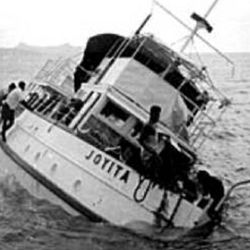
62. E60 | Murder at Sea? The Joyita Mystery (NZ/Pacific)
40:59||Season 1, Ep. 62Before dawn on 3 October 1955, the MV Joyita left Apia on one engine, bound for Tokelau with 25 people aboard, among them a doctor on his way to operate, Tokelau's District Officer, and two children aged 3 and 11. She never arrived. Five weeks later she was found drifting north of Fiji, flooded and listing, with nobody aboard. Her life rafts, logbook, navigation gear and the captain's guns were gone. On deck was a doctor's bag holding a scalpel and blood-stained bandages. A 1956 Commission of Inquiry explained the flooding, but found the fate of the 25 "inexplicable on the evidence." So was it an accident at sea, or a crime?IN MEMORYThomas Henry Miller, Charles R. Simpson, Tekokaa Teeweka, Aberaam Tanini, Henry McCarthy Jr, Penaia Kolio Pedro, Ihaia Kitiona Faraimo, Tagifano Latafoti Lepaio, Haipele Fihaga Himona, Ioakimi Iapeha Apete, Himeti Falaniko Mohe, Tuhaga Hila Elekana, Leota Telepu Kolo, Mohe Maota Peleti, James William Wallwork, George Kendall Williams, Takama Lapana, Tekai Lapana, Liua Noama Rosaiti Faiva, Founuku Uluola Talama, Herbert Hodgkinson, Alfred Denis Parsons, Roger Derrick Pearless, Joseph Hipili Pereira, Tomoniko Teofilo.Memorials stand at Mulinu'u Point, Apia, and on Fakaofo (2012). The Atafu Tokelau Community Group keeps a page on the families' campaign for formal declarations of death: matauala.org.nzA NOTE ON SOURCINGThis is a historical case. No one was ever charged and no court has found that any crime occurred. The mutiny theory involving Captain Miller and mate Chuck Simpson comes from Miller's friend Capt. S. B. Brown and the writer Robin Maugham (1962). It was never proved, and both men are presumed long dead. The 1956 Commission report (C. C. Marsack) could not be obtained for this episode; its findings are taken from reporting, including by a journalist who covered the inquiry. Criticism of the inquiry (a "suppressed" witness, the Fiji Guardian editor's unpublished report) reaches us through one family memoir and is untested. The "four tons" of missing cargo conflicts with the owners' representatives' 1955 statement that provisions were still aboard. The cash figure comes from reports at the time. The Thelma Todd link is ownership only. Status of death declarations checked 11 Sep 2026.SOURCESRNZ, "Call for coronial hearing into Tokelau's Joyita tragedy", 8 Mar 2012Atafu Tokelau Community Group, "Joyita - Unsolved Mystery" (incl. PMN, 2022) matauala.org.nzTerry Dunleavy tribute, Savali News, 11 Mar 2012Rosemary Francis, "A Watery Grave", Pae Koroki, Tauranga City Libraries, 2013Julie Parsons, Westmeath Independent, 28 Oct 2020; julieparsons.ieTe Vakai (Tokelau Government), 10th ed., 2012China Mail, 21 and 23 Nov 1955 (UP wires); Life, 12 Dec 1955; FATE, Apr 1961 (archive.org)Fiji Times, "Joyita - the ghost ship mystery", 5 May 2014Martinborough Star, 8 May 2023; Fijivillage, 7 Mar 2012David G. Wright, Joyita: Solving the Mystery (AUP, 2002); Robin Maugham, The Joyita Mystery (1962); John Harris, Without Trace (1981)SUPPORTThis episode discusses sudden death and loss at sea. NZ: 1737 (call or text). AU: Lifeline 13 11 14.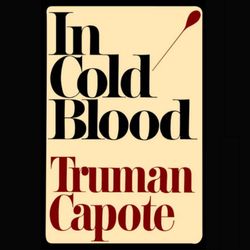
61. E59 | In Cold Blood | Part One of the Book Series
42:50||Season 1, Ep. 61On a Monday morning in November 1959, Truman Capote found a three hundred word wire story deep inside the New York Times. A wheat farmer, his wife and two of their children had been found bound and shot in their farmhouse in western Kansas. Nothing had been stolen. Capote went to Kansas with Harper Lee, stayed six years, and wrote the book that made true crime respectable. This episode tells both stories at once: what happened to Herb, Bonnie, Nancy and Kenyon Clutter, and what happened to the facts on their way into In Cold Blood. It ends with the two daughters who survived, and the letter they sent to everyone who asked. IN MEMORYThe Clutters are buried at Valley View Cemetery, Garden City. A shelter at the Kansas State 4-H camp at Rock Springs Ranch, a stained glass window at the First United Methodist Church in Garden City, and the Garden City Co-op building are dedicated to the family. The 1959 murders of Cliff, Christine, Jimmie and Debbie Walker at Osprey, Florida, remain an open investigation with the Sarasota County Sheriff's Office. A NOTE ON SOURCINGRichard Hickock and Perry Smith were convicted of all four murders on 29 March 1960 and hanged on 14 April 1965. The Kansas Supreme Court never determined which man fired which shot; both were guilty as principals. Hickock's signed statement blamed Smith for all four; Smith's first account had Hickock shooting Nancy and Bonnie, and he later asked to take all four himself but signed neither version. The sequence inside the house is taken from the Kansas Supreme Court's 1961 judgment only. Neither man was ever charged over the Walker murders; the 2013 DNA result was inconclusive and the lab work has since been found contaminated. We have named nobody else. Capote's account of the night is attributed to him wherever it appears. The two versions of the last words are as reported by the wire services and by Capote; Phillip Tompkins's 1966 witnesses are the source for the claim that Capote did not hear them. The 1965 wire text was reached through a secondary source. On Bonnie Clutter's health we report only what her family said in 2005 and what Capote wrote. The daughters' letter and interviews are from the Lawrence Journal-World, 2005. As of September 2026 the KBI investigative file has not been released; the Nye notebooks were published in 2019. SOURCESState v. Hickock and Smith, 188 Kan. 473 (1961): law.justia.com/cases/kansas/supreme-court/1961/42-068-0.htmlHickock v. Crouse, 334 F.2d 95 (10th Cir. 1964): law.justia.com/cases/federal/appellate-courts/F2/334/95/108910/State ex rel. Schmidt v. Nye, Kansas Court of Appeals, 2019: law.justia.com/cases/kansas/court-of-appeals/2019/118666.htmlNew York Times, 16 Nov 1959, "Wealthy Farmer, 3 Of Family Slain" (NYT archive)George Plimpton, "The Story Behind a Nonfiction Novel", NYT, 16 Jan 1966 (NYT archive)Garden City Telegram, 16 Nov 1959 and 4 Jan 1960; AP, 30 Mar 1960 and 8 Apr 1965Kansas Memory, Hickock and Smith inmate files and execution witness list: kansasmemory.gov/item/208965Lawrence Journal-World, "In Cold Blood: A Legacy", 3 to 5 Apr 2005 (Patrick Smith, Melissa Lee, Van Jensen)Kevin Helliker, Wall Street Journal, 8 Feb 2013, and On the Media, 15 Feb 2013Phillip K. Tompkins, "In Cold Fact", Esquire, June 1966; Purdue oral history, 2015Casey Cep, Furious Hours (2019); Gerald Clarke, Capote (1988); Too Brief a Treat (2004)Tampa Bay Times / CBS News, 6 Feb 2023, and ABC News, 14 Aug 2013, on the Walker case SUPPORTThis episode describes the murder of a family including two children, and discusses capital punishment. If you need to talk to someone: New Zealand, call or text 1737. Australia, Lifeline 13 11 14.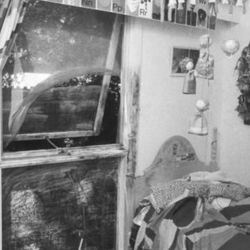
60. E58 | Who turned off the light? The disappearance of Eloise Worledge (AUS)
40:41||Season 1, Ep. 60In January 1976, eight year old Eloise Worledge went to bed in her family's home on Scott Street, Beaumaris. Her father looked in on her at 11:40pm. At 7:30am her younger brother and sister woke their parents to say Ella was not in her room. The flyscreen on her window had been cut and rolled back, but forensic examination found the cut was made from the inside, the dust and cobwebs undisturbed, and the scene staged. Fifty years on, Eloise has never been found, nobody has been charged, and a coroner's open finding is the only formal answer anyone has.IF YOU KNOW SOMETHINGOn 13 January 2026, the fiftieth anniversary, Victoria Police announced a reward of up to $1 million. It is offered at the discretion of the Chief Commissioner of Police for information leading to the discovery of Eloise's remains, or the apprehension and subsequent conviction of the person or persons responsible. Police say it is currently the only reward of its kind in Victoria because it pays for the recovery of remains, not only for a conviction. The Director of Public Prosecutions may grant an informant indemnity from prosecution.The investigation remains open with the Victoria Police Missing Persons Squad. Police believe Eloise was murdered.Crime Stoppers: 1800 333 000Confidential online report: crimestoppersvic.com.auYou do not have to give your name.A NOTE ON SOURCINGNobody has ever been charged over Eloise Worledge's disappearance. Her parents, Lindsay and Patsy Worledge, were treated as suspects from the first days and lived under public suspicion for decades. No evidence implicating either was ever found. A 2001 cold case review found none, and Victoria Police have since told the family they have concluded the parents were not involved. Lindsay died in 2017 and Patsy in 2022, before that conclusion was conveyed.Alistair Duncan Webster, named in this episode, died in 2020. He had convictions for sexual offences in 1953, 1970 and 1972. He was never charged over Eloise Worledge, and no court or coroner has found he had any involvement. The case for examining him is ABC journalist Russell Jackson's, and Jackson states he found circumstantial evidence and coincidences but nothing definitive. Police say they cannot comment on individuals.The Board of Inquiry into historical child sexual abuse at Beaumaris Primary School reported in February 2024 and found no connection between Eloise's disappearance and the abuse at the school.Coroner Frank Hender's 2003 finding is not published online, so we worked from contemporaneous reporting of it. The 631 page police coronial brief is not public. Some widely repeated details about that night could not be traced to a source and were left out. The argument in Part Two that a staged window is equally consistent with an intruder misdirecting the search is the host's own analysis, not any investigator's finding.SOURCESVictoria Police cold case, missing person and reward pages, police.vic.gov.auBoard of Inquiry into Historical Child Sexual Abuse in Beaumaris Primary School and Certain Other Government Schools, final report, Chair Kathleen Foley SC, February 2024Russell Jackson, ABC News, 11 and 14 January 2026ABC News, 13 January 2026 and 7 July 2003Australian Women's Weekly, January 2026SUPPORTThis episode deals with the abduction and presumed murder of a child, and with historical child sexual abuse.New Zealand: 1737 call or text. Safe to Talk 0800 044 334. Family violence 0800 456 450.Australia: Lifeline 13 11 14. Beyond Blue 1300 22 4636. 1800RESPECT 1800 737 732.
59. E57.5 | BONUS - While the Baby Slept: Jess Rigby (companion to Episode 57)
49:21||Season 1, Ep. 59A companion to Episode 57 — the death of Jason RigbyOn the evening of 14 December 2024, Jess Rigby and her husband Chris had put their youngest to bed and started a movie when the calls began. Chris's brother Jason, forty years old and second-in-charge of a resort in Nadi, had died in his staff apartment that morning — ten hours earlier, on the other side of the Pacific, with a stab wound to the chest. By the time the family were told, the scene had already been cleared and released.In this conversation Jess describes what the twenty months since have been like: three trips to Fiji, a private investigator, a missing phone, a knife nobody can account for, a toxicology form with a word crossed out - and the single document her family has been given about how Jason died.IF YOU KNOW SOMETHINGJason's family want to hear from anyone who worked at, or stayed at, the Crowne Plaza Fiji Nadi Bay Resort & Spa on 14 December 2024. There were hundreds of guests and hundreds of staff on the property that day, and almost none has ever been asked what they saw. No detail is too small.Justice for Jason Rigby — on Instagram and Facebook Or message anonymously via theguiltpodcast.com and it will be passed to the family.THE BOOKWHILE THE BABY SLEPT: A Family's Fight for Justice in Fiji Over the Unsolved Death of Jason Rigby, by Jessica Rigby (Hembury Books), publishes 24 November 2026. Ebook pre-orders are open now: amazon.com/dp/B0HGL7VG7PA NOTE ON SOURCINGNobody has been charged with any offence in relation to Jason Rigby's death, and no court or coroner has made any finding about how he died. The Fiji Police Force's public position, stated by Assistant Commissioner Mesake Waqa in June 2025, is that they could not establish foul play and that there was no cover-up.People who were present or nearby that morning are referred to in this conversation. None of them has been charged with anything, all are entitled to the presumption of innocence, and nothing said here should be taken as alleging criminal conduct by any of them.What Jess describes of what happened inside that apartment is her family's understanding of what they have been told. It is not a matter of record, because the record has not been released to them. There were two post-mortem examinations — one in Fiji, and a second by the Queensland Coroner after Jason was repatriated — and the family has been permitted to read neither. The reason given for withholding the Queensland report is that the matter forms part of an open investigation in Fiji. No wound count, no toxicology beyond a single alcohol screen, no scene examination, no witness statement and no incident report has ever been made public.Fiji Police referred the file to a Resident Magistrate in March 2025 recommending a full inquest. As at the end of August 2026, no inquest finding is on the public record.For the full case, the timeline and the sources, listen to Episode 57.SUPPORTThis episode concerns a death officially recorded as suicide, and a family who do not accept that finding. If it raises anything difficult for you:New Zealand — 1737, call or text any time. Safe to Talk 0800 044 334. Australia — Lifeline 13 11 14. Beyond Blue 1300 22 4636.
58. E57 | Jason Rigby (Aus/Fiji)
27:10||Season 1, Ep. 58On the morning of 14 December 2024, Jason Rigby put on a suit, went to a meeting, and told colleagues in the lobby of the Fijian resort he had helped build that he would see them in half an hour. He was forty, the resort's executive assistant manager, living in staff quarters a hundred metres away. Within that half hour he was stabbed in the chest. His scene was cleared by four o'clock that afternoon — before his family in Australia had been told he was dead. Twenty months later they have obtained exactly one document about how he died, and somebody had already crossed a word out of it.IF YOU KNOW SOMETHINGJason's family want to hear from anyone who worked at, or stayed at, the Crowne Plaza Fiji Nadi Bay Resort & Spa on 14 December 2024. There were hundreds of guests and hundreds of staff on the property that day, and almost none has ever been asked what they saw. No detail is too small.LINKSJustice for Jason Rigby — on Instagram and FacebookOr message anonymously via theguiltpodcast.com and it will be passed to the family.Jessica Rigby's account of the case, WHILE THE BABY SLEPT: A Family's Fight for Justice in Fiji Over the Unsolved Death of Jason Rigby (Hembury Books), publishes 24 November 2026. Ebook pre-orders are open now: amazon.com/dp/B0HGL7VG7PA NOTE ON SOURCINGNobody has been charged with any offence in relation to Jason Rigby's death, and no court or coroner has made any finding about how he died. The Fiji Police Force's public position, stated by Assistant Commissioner Mesake Waqa in June 2025, is that they could not establish foul play and that there was no cover-up. Everyone who was near Jason that morning is entitled to the presumption of innocence, and nothing in this episode should be taken as suggesting otherwise. None of them is named in this episode.Almost nothing about this death has been released. There were two post-mortem examinations — one in Fiji, one by the Queensland Coroner after Jason was repatriated — and his family has been permitted to read neither. The reason given for withholding the Queensland report is that the matter forms part of an open investigation in Fiji. No wound count, no toxicology beyond a single alcohol screen, no scene examination and no witness statement has been made public.Accounts of what happened inside the flat come from Jason's family, and are their understanding of what they have been told rather than established fact. The published record on this case amounts to three things: the Fijian reporting of December 2024, the 60 Minutes broadcast of June 2025 and the police response to it, and Mamamia's interview with Jess Rigby in June 2026. The rest comes from the family.Fiji Police referred the file to a Resident Magistrate in March 2025 recommending a full inquest. As at the end of August 2026, no inquest finding is on the public record.SOURCESThe Fiji Times, 16 Dec 2024 — the resort's statement that there was no criminal investigationFBC News, 17 Dec 2024 — ACP Mesake Waqa's first statementfijivillage / FBC News, 22–23 Jun 2025 — "We could not establish any foul play... there is no cover up"60 Minutes Australia, "Murder in Paradise", 22 Jun 2025Mamamia, Gemma Bath, 30 Jun 2026True Crime Conversations (Mamamia) — "A Families' Fight For Answers After A Death In Paradise"Interview with Jess Rigby, 26 Aug 2026SUPPORTThis episode concerns a death officially recorded as suicide. If it raises anything difficult for you:New Zealand — 1737, call or text any time. Safe to Talk 0800 044 334.Australia — Lifeline 13 11 14. Beyond Blue 1300 22 4636.
57. E52.5 | BONUS - Hunting Elly's Killer: Paul Warren, ten years on (companion to Episode 52)
01:08:50||Season 1, Ep. 57Elly Rose Warren was twenty years old, three days from flying home, when she was found dead beside a toilet block at Tofo Beach in Mozambique on 9 November 2016. The Mozambican autopsy recorded a violent death — a homicide — with sand obstructing her airways. The Australian autopsy left the cause undetermined. Nearly ten years later nobody has been charged, and almost everything now known about how Elly died was found by her father.In this conversation Paul Warren describes what he found: a crime scene he believes was altered before investigators arrived, a photograph that existed for two years before his family was shown it, clothing that never came home, and an Australian agency he says did not go to Mozambique officially until seven years after his daughter died.ELLY WARREN — THE TRUE FACTSPaul has published his entire ten-year investigation, including scanned primary documents, at ellywarren.net. If you take one thing from this episode, take that.THE ELLY WARREN PROTOCOLPaul's proposed reform for what should happen when an Australian dies overseas in suspicious circumstances — putting the coroner in control from the start, and using state homicide expertise rather than leaving families to investigate for themselves. It is set out on his website. It has not been taken up.THE BOOKHUNTING ELLY'S KILLER: A father's relentless pursuit of justice, by Paul Warren (Simon & Schuster Australia, ISBN 9781761636486). Available in print, ebook and audiobook.https://www.simonandschuster.com.au/books/Hunting-Ellys-Killer/Paul-Warren/9781761636486Kindle: amazon.com.au/dp/B0GR1JY5H4Ebook ISBN 9781761636493 — also at Booktopia, Dymocks, Readings, QBD and Mighty Ape in New Zealand.IF YOU KNOW SOMETHINGIf you were at Tofo Beach in November 2016, or know anything about what happened there, you can reach us through theguiltpodcast.com — anonymously if you prefer. Anything concerning Elly is passed to Paul directly.A NOTE ON SOURCINGNobody has been charged with any offence in connection with Elly Warren's death.The Victorian coronial inquest was held in 2023. Judge John Cain delivered his findings on 15 December 2023: the cause of death was aspiration of a large amount of sand; he could not determine how the sand came to be there; he could not rule on whether the death was a homicide; he found it possible that a person or people caused or contributed to her death; he could not say whether she died where she was found or was moved there; and he could not determine whether she had been sexually assaulted, though he accepted it was possible.Three post-mortem examinations reached different conclusions — in Mozambique, in South Africa and in Melbourne — and all three found sand in her airways. The Melbourne finding of "undetermined" was later amended following evidence at the inquest.Paul is severely critical of the Australian Federal Police, the Mozambican police and the Victorian coronial process. Those criticisms are his, they are strongly held, and the documents he relies on are published on his website for you to read and weigh. Nothing in this episode should be taken as alleging criminal conduct by any identified person.SOURCESellywarren.net — Paul Warren's published investigation and primary documentsCoroners Court of Victoria — inquest into the death of Elly Rose Warren, findings delivered 15 December 2023ABC News, 22 August 2023 and 15 December 2023 — inquest and findings reportingHunting Elly's Killer, Paul Warren (Simon & Schuster Australia)Interview with Paul Warren, recorded 25 August 2026SUPPORTThis episode concerns the unexplained death of a young woman overseas, and refers to the possibility of sexual assault. If it raises anything difficult for you:New Zealand — 1737, call or text any time. Safe to Talk 0800 044 334.Australia — Lifeline 13 11 14. 1800RESPECT 1800 737 732.Hosted by Ryan Wolf. brevityplus.com