Share
The Veil
E31 | Special Series | Murder in the Pacific: Part Two - Norfolk Island's Darkest Day
On Easter Sunday 2002, Janelle Patton — a 29-year-old Sydney woman seeking a fresh start — was found brutally murdered on Norfolk Island, a tiny, idyllic community of fewer than 2,000 people. With 64 injuries and no clear motive, the case sent shockwaves through a place that hadn't seen a murder in over a century. Investigators faced a closed, tight-knit community reluctant to talk, and a tangle of unidentified DNA that raised more questions than answers. A conviction eventually came — but did justice? In this episode of The Veil, we pull back the curtain on Norfolk Island's darkest day.
While some dramatic license is taken during the retelling of these stories, but you can be sure that these true crime stories are all based 100% on real events and facts.
If you would like to suggest a case, you can message us via our website at www.brevityplus.com
Subscribers get ad free listening to The Veil and all of our podcasts. Please consider subscribing to support our work.
This podcast is researched, and written by the Brevity Studios team using AI tools, and is narrated in its entirety by - Ryan Wolf.
More episodes
View all episodes
45. E45 | The Gatton Murders (AUS)
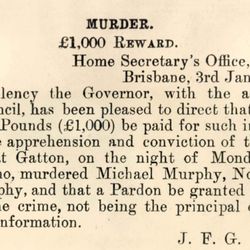
43:35||Season 1, Ep. 45There was no Australia yet. Six British colonies, six sets of laws, and a farming town of fewer than five hundred people west of Brisbane. On Boxing Day 1898, Michael Murphy and his sisters Norah and Ellen drove ten kilometres into Gatton for a dance that had been cancelled. They turned for home and never arrived. The next morning their brother-in-law followed the tracks of his own sulky into a paddock and found all three dead, arranged in a triangle with a shot horse, their feet pointing west. Within hours, forty townspeople had walked across the only evidence there would ever be. No one was ever charged.A NOTE ON SOURCINGEvery person named in this episode died more than a century ago. No one was ever charged with the murders of Michael, Norah and Ellen Murphy. No coroner or court has ever made a finding as to who was responsible, and the case remains formally unsolved.Thomas Day, Richard Burgess and William McNeill are named because each was publicly investigated at the time and named in the 1899 Royal Commission material and the Queensland Police Museum's own account. None was ever charged. Nothing here should be taken as a finding against any of them.A man was charged in relation to the death of Alfred Stephen Hill at Oxley in December 1898. That indictment was not proceeded with, and that killing is also unsolved. He is not named here, and some widely-circulated sources are wrong to state the matter as settled.The two sisters were sexually assaulted before they were killed. That is stated plainly in the episode and not described in detail.Where testimony reaches us through a stenographer, then a book, then a retelling, it is described rather than quoted, and the episode says so on air. Direct quotation is confined to the Royal Commission's published findings and to Frederic Urquhart's own published verse. Single-source material — the calibre of the recovered bullets, the reported cry of "Father!", and the conclusion that more than one attacker was involved — is attributed as such.SOURCESQueensland Police Museum, "The Gatton Murders of 1898" — police.qld.gov.au/museum1899 Royal Commission into the Queensland Police Force — testimony, post-mortem evidence and recommendations (archived copies linked at brevityplus.com)The Telegraph (Brisbane), "Gatton Tragedy", 4 January 1899 — the £1,000 reward — nla.gov.au/nla.news-article173352686Toowoomba Chronicle, "Police Inquiry", 5 December 1899 — nla.gov.au/nla.news-article217713782The West Australian, "Suicide in Sydney — The Deceased and the Gatton Tragedy", 27 Oct 1900, and "The Oxley Murder — The Inquest", 18 Feb 1899 — both via TroveQueensland State Archives — "Police Detectives and trackers in Blackfellow Creek, Gatton, c 1899"Australian Dictionary of Biography — W. Ross Johnston on Frederic Charles UrquhartQueensland Places (University of Queensland) — "Gatton"Stephanie Bennett, The Gatton Murders (Pan Macmillan, 2004) and The Killer with 300 Names (2013)Raymond Evans, A History of Queensland (Cambridge, 2007)With thanks to the Queensland Police Museum and to the National Library of Australia's Trove — without Trove, the 1899 press record would be out of reach to anyone outside a reading room. SUPPORTThis episode deals with sexual violence and, in its closing section, with suicide. If any of it lands close to home: Australia — Lifeline 13 11 14, Beyond Blue 1300 22 4636, 1800RESPECT 1800 737 732. New Zealand — 1737, Safe to Talk 0800 044 334.Written and hosted by Ryan Wolf. Researched and produced with AI assistance — I use it to help me find and check the record, and I go through everything before it reaches you.www.brevityplus.com
44. E44 | The Murder of Pauline Sowry (AUS)
44:23||Season 1, Ep. 44Pauline Sowry was 49 when she had lunch with her son at a Warrawong pub in December 1993. Her family never saw her again. A coroner found she had died but could not say how, when or where. Thirty years later a witness led police into bushland at Figtree, where they dug up a blouse she had stitched herself. In January 2026 the only charges ever laid in connection with her death were withdrawn. Nobody has ever been convicted. Police say there are people in the Illawarra who know exactly what happened.IF YOU KNOW SOMETHINGA $500,000 reward remains open for information leading to the arrest and conviction of those responsible.Crime Stoppers — 1800 333 000 — anonymousWollongong Police — (02) 4226 7899Police especially want to hear about two things:A cream-coloured, button-down, long-sleeved blouse with a hand-stitched design in coloured cotton, believed added by Pauline herself. Images were released by NSW Police in December 2024.A white 1968-model Holden HK Kingswood sedan, in pristine condition, reportedly seen carrying Pauline south of Wollongong after she disappeared.A NOTE ON SOURCINGAll charges against the man named in this episode were withdrawn by the DPP on 28 January 2026. No court has ever made a finding against him, he has never been convicted of any offence connected to Pauline's death, and he is entitled to the presumption of innocence. Nobody has ever been charged with her murder.Where this episode describes covert police recordings, those descriptions come from what the Crown told a bail hearing they contained, as reported by one journalist present in court. We have not heard the recordings and neither has anyone outside that courtroom, so they are described rather than quoted. The defence disputed their accuracy and context. None of it was tested at trial.Strike Force Anthea remains open.SOURCESNSW Police — reward appeal and case summarypolice.nsw.gov.au/can_you_help_us/rewards/500000_reward/disappearance_of_pauline_sowryThe Illawarra Mercury is the only outlet that covered the court proceedings in this case, and the reason it is still being talked about.Jason Lawrence on his mother — who Pauline actually was. Read this one.illawarramercury.com.au/story/8707899Clothing unearthed at Figtree, December 2024illawarramercury.com.au/story/8841308Charges withdrawn, January 2026illawarramercury.com.au/story/9162611SUPPORTThis episode discusses suicide.Lifeline (AU) 13 11 14 · Beyond Blue (AU) 1300 22 4636 · New Zealand: free call or text 1737
43. E43 | The Masterton Massacre
42:50||Season 1, Ep. 43On a winter Friday night in 1992, Raymond Ratima let himself into his in-laws' house on Judds Road, Masterton, with a key he had taken when he was told to leave. He waited forty-five minutes. Then he killed seven members of his own family — including his three small sons and a woman a month from giving birth — before lying in wait in the dark for the rest of them to come home. He pleaded guilty. He has never been released. And across thirty-four years, fourteen parole boards, a High Court judgment and the country's best forensic psychiatry, nobody has been able to answer the only question that matters: why.Sources used:Court and official recordsRatima v The New Zealand Parole Board [2024] NZHC 613 (Preston J, 20 March 2024) — https://thelawassociation.nz/wp-content/uploads/2024/05/Ratima-v-Parole-Board.pdfNew Zealand Parole Board, decision of 12 March 2024 — https://www.paroleboard.govt.nz/decisions/decisions_2024/raymond_wahia_ratima_12032024Parole Act 2002 — https://www.legislation.govt.nz/act/public/2002/0010/latest/DLM137632.htmlSentencing Act 2002, s 103 — https://www.legislation.govt.nz/act/public/2002/0009/latest/DLM136499.htmlContemporaneous reporting"Man charged over massacre of seven," UPI, 26 June 1992 — https://www.upi.com/Archives/1992/06/26/Man-charged-over-massacre-of-seven/7593709531200/History and reference"Masterton massacre, 1992," NZHistory, Manatū Taonga — https://nzhistory.govt.nz/page/masterton-massacre"Mass homicides since 1990," Te Ara: The Encyclopedia of New Zealand — https://teara.govt.nz/en/violent-crime/page-6Later reportingNikki Macdonald, "Faces of Innocents: The Ratima massacre — remembering the children of Judds Rd," Stuff, 23 July 2016 — https://www.stuff.co.nz/national/faces-of-innocents/81305979/faces-of-innocents-the-ratima-massacre--remembering-the-children-of-judds-rd"Mass murderer believed he was 'putting them in a better place'," NZ Herald, 2017 — https://www.nzherald.co.nz/nz/mass-murderer-believed-he-was-putting-them-in-a-better-place/SYPSCTINWHZJSKXKURBIXI7W5M/"Mass murderer Raymond Ratima to have opportunity to apply for parole again," RNZ, 21 March 2024 — https://www.rnz.co.nz/news/national/512331/mass-murderer-raymond-ratima-to-have-opportunity-to-apply-for-parole-againMelissa Nightingale, "Mass murderer denied parole for 16th time, reveals motive for killing his kids," NZ Herald / Newstalk ZB, 24 July 2025 — https://www.newstalkzb.co.nz/news/crime/mass-murderer-raymond-wahia-ratima-denied-parole-explains-why-he-killed-seven-people/"No parole for Raymond Ratima who murdered seven in Masterton," Stuff, January 2026 — https://www.stuff.co.nz/nz-news/360931145/no-parole-raymond-ratima-who-murdered-seven-masterton
42. E42 | The Red Fox Tavern
43:52||Season 1, Ep. 42On Labour Weekend 1987, two disguised men walked into the Red Fox Tavern at Maramarua, shot the publican Chris Bush dead in front of his staff, and disappeared into the night with the contents of his safe. For more than thirty years, the case stayed cold. Then, in 2021, two men were convicted of the murder — one of them so notorious that his name was suppressed for years. In July 2026, the Supreme Court took those convictions apart, entered acquittals, and left a killing that is, once again, officially unsolved. This week on The Veil, we trace the case backwards from that courtroom: the night itself, the circumstantial evidence that was never quite enough, and the dead man whose alleged confession pointed somewhere else entirely. It's a story about the uneasy gap between what the law can prove and what we think we know. Some veils lift; this one fell closed again.SourcesSupreme Court of New Zealand — Wilson v R [2026] NZSC 88 (judgment): https://www.courtsofnz.govt.nz/assets/cases/2026/2026-NZSC-88.pdfRNZ — "Red Fox Tavern murder: How the case and trial unfolded": https://www.rnz.co.nz/news/national/442059/red-fox-tavern-murder-how-the-case-and-trial-unfoldedRNZ — "Pair's convictions over Red Fox Tavern killing quashed by Supreme Court": https://www.rnz.co.nz/news/crime-and-justice/683311/pair-s-convictions-over-red-fox-tavern-killing-quashed-by-supreme-courtRNZ / The Detail — "The life and crimes of James Henry Wilson": https://www.rnz.co.nz/news/crime-and-justice/706724/the-life-and-crimes-of-james-henry-wilson1News — "Red Fox Tavern killing convictions quashed by Supreme Court": https://www.1news.co.nz/2026/07/07/red-fox-tavern-killing-convictions-quashed-by-supreme-court/NZ Herald — "Red Fox Tavern murder convictions overturned by Supreme Court, James Henry Wilson named": https://www.nzherald.co.nz/nz/red-fox-tavern-murder-convictions-overturned-by-supreme-court-james-henry-wilson-named/S7HLC2IW4RCMBKHM6RPZVKPXDY/NZ Herald — "Red Fox Tavern murder: Two men found guilty after 33-year wait for justice" (2021): https://www.nzherald.co.nz/nz/red-fox-tavern-murder-trial-two-men-found-guilty-after-33-year-wait-for-justice/WZ4T6AHA4ISJHM6QUOXOE27OHI/New Zealand Police — "Police acknowledge Supreme Court decision in Red Fox Tavern case": https://www.police.govt.nz/news/release/police-acknowledge-supreme-court-decision-red-fox-tavern-case
41. E41 | The Bounty's Children
37:11||Season 1, Ep. 41In 1790, the mutineers of HMS Bounty burned their ship in a hidden bay and vanished onto a mis-charted Pacific rock, sealing themselves off from the world. Two centuries later, that isolation had a price. When a visiting British officer, sent merely to train the local constable, was quietly told that a girl had been raped, she pulled a thread that unravelled generations of abuse on Pitcairn — and forced one of the strangest trials in legal history. Could British law even reach an island settled by men who fled it? Courts were built from scratch; a third of the island's men stood accused.Sources usedWikipedia — "Mutiny on the Bounty," "HMS Bounty," "Pitcairn Islands," "2004 Pitcairn Islands sexual assault trial": backbone for the mutiny (28 April 1789), Bligh's open-boat voyage (~3,600 nmi to Timor, ~47 days), the burning of the Bounty in Bounty Bay (23 Jan 1790), the founding violence and Fletcher Christian's death (~1793), John Adams, and the full trial record — charges (55), verdicts (6 of 7 convicted on 35 charges; Jay Warren acquitted), individual sentences, the jurisdiction defence, Betty Christian's counter-testimony, the firearms surrender, Bob's Valley prison, sentences served by 2010.History.com, National Geographic, History Hit, EBSCO, Historical Maritime, History Chronicles, Shipwrecks & Sea Dogs: corroboration for the Bounty mission (breadfruit for West Indies plantations), Tahiti layover, mutiny mechanics, settlement of Pitcairn (15 Jan 1790), Topaz/Folger discovery 1808, Thursday October Christian, Norfolk Island relocation.HMS Bounty (Wikipedia): the detail that the Tahitian men/women were effectively kidnapped (per a follower's journal) — attributed in script.NZ Herald ("Law descends on Pitcairn," Kathy Marks): the 1996 first report, Kent detectives as first police on the island, Gail Cox sent 1997 to train local officer Meralda Warren, two girls' 1999 disclosure, the global scope of Operation Unique, the from-scratch legal infrastructure, Governor Richard Fell.ProQuest review of Kathy Marks, "Pitcairn: Paradise Lost": 1996 Australian girl's report; Cox's "rose-coloured glasses" quote; the detective's "100 per cent" observation; 13 men / 96 charges figure.Irish Times (Oct 2004, Rosita Boland): trial in converted schoolroom, guns handed in Aug 2004, victims testifying by video link and breaking down, the seven named accused, islanders' belief Britain wanted to depopulate the island, Ricky Quinn 1999 case (100 days).Into the Shadows; HubPages/Crimewire: Operation Unique = 27-month investigation, 100+ allegations / 31 men, 24 women testified, "tip of the iceberg" (Simon Moore), prosecutor's "child abuse on a grand scale."NBC News (AP, Oct 2004): sentences up to six years; the longboat-lifeline problem and Prof John Connell's prediction that prisoners would be released to crew it; Randy Christian 6 years, Len Brown (78) 2 years.Wikipedia "Pitcairn Islands" + en-academic + Wikishire + Apple Podcast "The Pitcairn Trials": prison at Bob's Valley built by the community, sentences began late 2006, all served/home detention by 2010, "ludicrously short" (Marks), trial cost (~NZ$14.1m as of April 2006), later off-island trials.Huck Magazine (Rhiannon Adam, "Big Fence"): a convicted man (Shawn Christian) later served as mayor of Pitcairn (2014–2019) — used with light attribution; present-day decline and ageing population.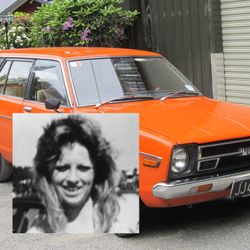
40. E40 | Mona Blades
29:20||Season 1, Ep. 40On Queen's Birthday weekend, 1975, eighteen-year-old Mona Blades set out hitchhiking from Hamilton to Hastings, carrying a birthday gift of plastic cups for her baby nephew. She reached Taupō — and vanished. A truck driver's sighting of her in an orange Datsun launched one of New Zealand's largest manhunts: more than 500 cars, thousands of hours, not a single trace found. Fifty years on, her body has never surfaced and no one has been charged. But a cold-case review revealed something unsettling: the famous orange Datsun may have been a wrong turn from the very start, sending an entire country chasing a mirage.Sources usedWikipedia — "Disappearance of Mona Blades": backbone for timeline, sightings table, the 500+ orange Datsun owners, John Freeman (rental + St Cuthbert's shooting/suicide), Hinton allegation and 2012 Kawerau dig, 2003 Huntly garage-floor false alarm, 2018 Cold Case documentary findings, gang-link theory, family detail.NZ History (nzhistory.govt.nz) — "Mona Blades vanishes": family context (sister Lillian, brother-in-law Tom, niece Angela), the surprise trip and nephew's 1st birthday, plastic tumblers, dropped on Cambridge Rd/SH1, ~10am orange-Datsun sighting, fencing contractor on Matea Rd.NZ Herald / The Listener (Greg Bruce, "On the wrong trail" / "No DNA, no CCTV, no chance," May–June 2025): the central reassessment — the short/spiky hair vs the long-haired bridesmaid photo; the truck driver interviewed four times with escalating certainty and the "half-pie smile"; the memory-as-fresh-snow interviewing material; the alternative sightings (blue/green wagon, red Toyota, Spa Hotel); detectives Ron Cooper, John Hope, Mark Loper and the on-camera conclusions; 145km road; "solved in a week today" (Henwood/Beard); Scott Bainbridge "deathbed confession."1News (May 2025, 50th anniversary): hundreds of police across a 200km Tokoroa–Napier stretch; fencing contractor detail; "steady stream" of tips since the 2018 doc; Det Snr Sgt Ryan Yardley; clothing/pack detail.The Post (May 2025): surprise trip, items found in searches incl. discarded dresses, identikit of the man, ~360 Datsun station wagons by Oct 1975, "suspects — the driver of the orange Datsun and four others — two of whom are dead," the living person of interest's public denials and DNA sample.NZ Police cold-case page: ~5000 hours over 6 months; webpage now lists blue/green wagon and red Toyota (the Taupō-local / gang-adjacent theory); appeal re: bike-gang associates.NZ Herald (Sept 2025 / "Cop v Cop," Jan 2012): Tony Moller (former Kawerau policeman) and the Hinton allegation; the family's strong rejection; the red-Toyota / rolled-carpet sighting not followed through.
39. E39 | The Snapshot Killer
31:40||Season 1, Ep. 39He was a successful Florida businessman with a waterfront house, fast cars, and a camera — and a name that surfaced, twenty years earlier, among the suspects at Wanda Beach. In early 1984, Christopher Wilder began to kill. Over six weeks and sixteen states, the Australian-born "Beauty Queen Killer" lured young women with the promise of a modelling shoot, abducting at least twelve and murdering eight. Three survived, and their testimony narrowed the net. He died in a struggle with police a few miles from the Canadian border. The chilling question isn't who — it's how he stayed free so long.Sources usedWikipedia — "Christopher Wilder" (en.wikipedia.org/wiki/Christopher_Wilder): primary backbone for biography, full spree chronology (victims, dates, locations), death scene, FBI Most Wanted, estate distribution, The Collector, disputed electroshock/near-drowning (per McNab).UPI Archives (April & August 1984): Tina Risico contemporaneous reporting — released at Boston/Logan, treated as victim not accomplice, told authorities of electric-shock torture and abuse.ABC News / People / E! News / USA Today (2024, re: Hulu's The Beauty Queen Killer: 9 Days of Terror): three survivors (Grober, Risico, Wilt); Risico's "arms crossed above her head" detail; accomplice debate and her status as a minor/victim; spree framing (8–9 killed, 12 abducted, "47 days").Palm Beach Post (2025) — "Boynton Beach serial killer Christopher Wilder's … rampage": numbered victim chronology, dates/locations, Risico lured Wilt, Dodge last murder, death scene; FBI Most Wanted 5 April.WickedWe (victims overview) and Yahoo/Palm Beach Post reprints: corroborating sequence for Logan, Bonaventura, Korfman, Risico, Wilt, Dodge; Charlie Laursen (truck driver) and Penn Yan hospital.A&E — "Elusive 'Beauty Queen Killer'": private investigator hired by Kenyon's father; Wilder's proximity/profile; nine-month delay theme (used re: the Wanda link, consistent with prior episode).Duncan McNab, The Snapshot Killer (2019), via Wikipedia citation: debunks electroshock and near-drowning stories.
38. E38 | The Sandhills of Wanda
34:30||Season 1, Ep. 38On a windy Monday in January 1965, two fifteen-year-old best friends, Marianne Schmidt and Christine Sharrock, took four young children to Cronulla. When the little ones tired, the girls walked on into the sandhills behind Wanda Beach and never returned. Their bodies were found the next morning, stabbed and partially buried, a thirty-four-metre drag mark telling the story of one friend's desperate, failed escape. Sixteen thousand people were interviewed. Three men were named and never charged. A weak DNA profile survives; a crucial sample was lost. Sixty years on, it remains New South Wales' oldest unsolved homicide.Sources usedWikipedia — "Wanda Beach murders" (en.wikipedia.org/wiki/Wanda_Beach_murders): primary backbone for timeline, crime-scene reconstruction, autopsy findings, drag mark, weapons, reward, investigation scale, suspect summaries, 2012 DNA, 2014 lost sample, Kruger/Dowlingkoa linked cases.Illawarra Mercury — "Blood spot offers new Wanda murders clue" (2012) and "Australian serial killer Christopher Wilder linked to the Wanda Beach murders" (2018): corroborates the knife-wipe blood mark / weak male DNA profile; Wilder named as official police suspect, Det Insp Ian Waterson "number one suspect," family not told, ~9-month delay before seeking to interview Wilder.that's life! — "Hans Schmidt breaks silence over his heartache": corroborates 2007 cold-case reopening, 2012 DNA, 2014 lost semen sample, mother died 2009; Hans's belief that someone still knows.Alchetron (mirror) and en-academic (Wikipedia mirror): corroborating detail on autopsy, alcohol/food findings, suspect profiles, reopening.NZ Herald — "Derek Percy believed to be Australia's worst child serial killer": Percy family Sydney holiday Jan 1965 / Ryde; story found in Percy's belongings with "striking similarity" to Wanda; map marked at Ryde.serialkillercalendar.com (Percy & Wilder pages): Percy's "I could have done it but I can't remember" reported remark; underwear-slashing at Mount Beauty late 1964; Wilder biography and US spree.Penguin Books AU (Australia's Least Wanted promo): senior-police confidence in Wilder; "lost crucial evidence."A&E — "Elusive 'Beauty Queen Killer'": Wilder profile match, proximity, delay before interview.murdersheposted (Substack) — "Death on the Sandhills": Bassett conviction (Carolyn Orphin, near Cronulla), painting, no physical link; Percy could not be physically placed at scene; right-to-silence detail.crimeimmemorial.com: corroborates semen present / hymens intact / attempted-rape inference; body positions.NFSA (Nine News / Ten News archive descriptions): investigation scale (7,000 by 1966; >16,000 and ~5,000 suspects by 1981); Wilder named 2018.Goodreads / "Lambs to the Slaughter" (Percy biography listing): Yvonne Tuohy murder July 1969, NGRI, held indefinitely; Wanda among suspected cases.
37. E37 | The Princes in the Tower
38:47||Season 1, Ep. 37In the summer of 1483, two boys vanished behind the walls of the Tower of London. Edward the Fifth, twelve years old and uncrowned, and his nine-year-old brother Richard were last seen at the windows, growing fainter, until they appeared no more. Their uncle took the throne as Richard the Third. For five centuries the blame has shifted — Richard, Buckingham, Henry Tudor — while pretenders claimed to be the lost princes and bones turned up beneath a staircase. Today a sealed urn in Westminster Abbey may hold the answer, untested by choice. Ryan Wolf looks through history's coldest veil.