Share
The Techne Connect
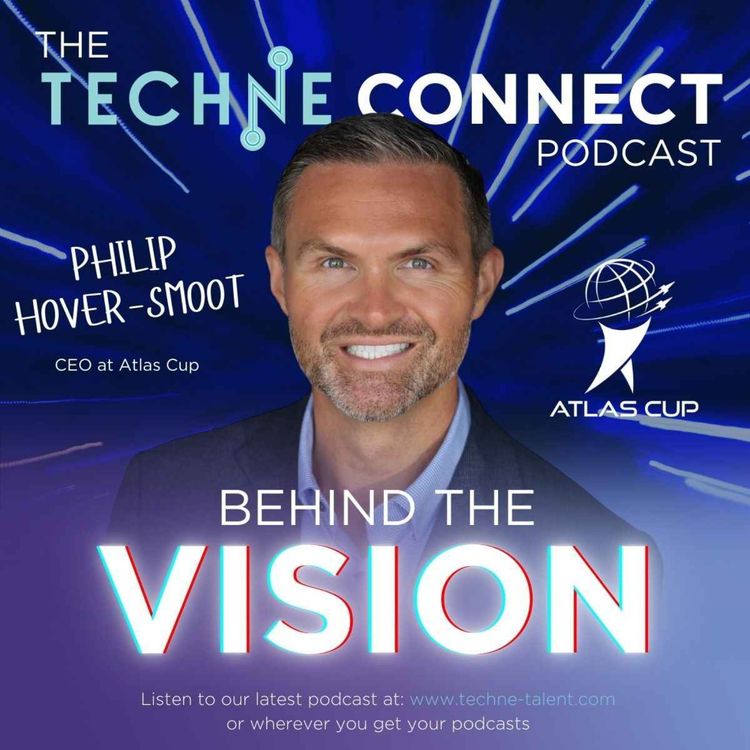
Philip Hover-Smoot, CEO at Atlas Cup
In this episode we speak with Philip Hover-Smoot, CEO at Atlas Cup, about creating a new category of professional sport in space.
Philip shares his path from aviation, law, and aerospace defence into the commercial space sector, and explains how Atlas Cup plans to bring satellite racing to low Earth orbit using existing spacecraft, propulsion, and mission operations technology.
He breaks down the concept behind head-to-head satellite races, how teams can compete using their own platforms, and why racing creates a simple way to compare performance across propulsion systems and spacecraft design.
The conversation also explores entrepreneurship in the space sector, the realities of building a startup, and why Philip believes space represents the next major frontier for commercial growth and technological experimentation.
Thank you for listening to The Techne Connect Podcast - where we go behind the tech and ahead of the curve.
But we don’t just share stories, we help build them. At Techne Talent, we connect ambitious people with opportunities across the very industries we feature. If you’re inspired by what you hear, speak to us today about where your skills could take you.
👉 Don’t miss an episode: Follow and subscribe wherever you get your podcasts.
📸 For behind-the-scenes content, follow us on Instagram: @techne_talent
💼 Explore opportunities and connect with us on LinkedIn: Techne Talent
Inspire your future. Plug into what’s next.
More episodes
View all episodes
Cindy Comer, VP Certification Safety Management System and Quality at Wisk
40:56|In this episode we speak with Cindy Comer, VP of SMS Certification and Quality at Wisk, about building the safety foundation for autonomous air taxis. Cindy shares her path from electrical engineering and systems integration into certification, and explains why she values requirements flow down, test planning, and working directly with regulators.She reflects on joining Merlin Labs as an early employee, building certification and quality functions from scratch, and how startup environments force you to learn fast, own outcomes, and create lean processes.The conversation then shifts to Wisk’s mission of safe everyday flight for everyone, and what it takes to certify an autonomous aircraft as an OEM. Cindy breaks down the industry challenges around autonomy, public trust, and regulation, and explains how safety management systems and quality help scale advanced air mobility responsibly.
Thomas Forner, CEO & Co-Founder of Focused Energy
37:00|In this episode we speak with Thomas Forner, Co-Founder and CEO of Focused Energy, about building a fusion company designed to bring clean, safe and abundant baseload power to the grid.Thomas shares his path from corporate startups and software ventures into deep tech, and explains why fusion became the mission worth dedicating a decade of his life to. He reflects on the importance of timing, scientific proof, strong co-founders, and building the right ecosystem around a company from day one.The conversation explores what it takes to translate complex science into engineering, why partnerships across industry and government matter, and how Focused Energy is scaling from labs in Darmstadt and Austin to its future fusion campus in Biblis. Thomas also shares lessons on hiring, leadership, communication, systems thinking, and why persistence matters more than most people expect when building something truly ambitious.
Aleksey Matyushev, CEO & Co-Founder of Natilus
36:33|In this episode we speak with Aleksey Matyushev, CEO and Co-Founder of Natilus, about his journey from aerospace engineering to building a new aircraft manufacturer.Aleksey shares how his family’s early hustle in Ukraine shaped his mindset, then covers lessons from earlier startups, including speed to market, supplier leverage, and pushing products out before perfection.The conversation moves into Nautilus, why blended wing body aircraft suit air freight, how e-commerce demand drives volume constraints in traditional designs, and why aviation needs new manufacturing capacity. Aleksey explains the personal sacrifices of founding, why the industry’s “aircraft take forever” belief is overstated, and what it takes to certify new platforms without stalling innovation. He closes with practical advice for founders, build with a balanced team, learn fast, and commit fully to the mission.
Hui Du, Co-Founder & CTO of Ampcera
44:31|In this episode we speak with Hui Du, Co-Founder and CTO of Ampcera, about building next generation battery technology and scaling battery innovation in the US. Hui shares his journey from rural China into engineering, entrepreneurship, and clean tech leadership. He reflects on how early leadership experience, a strong technical foundation, and hard moments in his career shaped his path into founding companies.The conversation explores solid state battery technology, why battery supply chains matter for national security, and how better batteries support EV adoption, robotics, data centres, and future energy systems. Hui also explains why Ampcera focuses on practical progress, strong partnerships, and technologies that fit into existing manufacturing routes.He also shares lessons on hiring, integrity, mentorship, and why young engineers should build strong STEM foundations while staying open to wide career paths across technology and industry.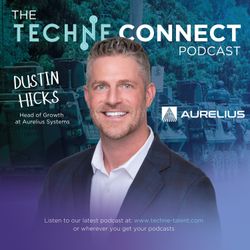
Dustin Hicks, Head of Growth at Aurelius Systems
59:56|In this episode we speak with Dustin Hicks, Head of Growth at Aurelius Systems, about directed energy, counter UAS, and accelerating defence innovation.Dustin shares his non traditional path from US Army military intelligence to defence acquisition, and how early exposure to uncrewed systems shaped his career. He reflects on urgent operational needs, rapid fielding, and the difference between risk aversion and responsible risk taking inside government.The conversation explores why venture backed defence startups are gaining momentum, how fail fast testing shortens development cycles, and why directed energy changes the economics of air defence through low cost per effect and deep magazine capacity.Dustin also explains what young engineers should focus on today, from software centric systems to system of systems thinking, and why adaptability is now a core skill in defence technology.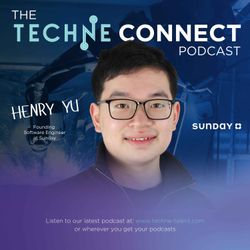
Henry Yu, Founding Software Engineer at Sunday
33:35|In this episode we speak with Henry Yu, Founding Software Engineer at Sunday Robotics, about building AI powered home robots designed to automate everyday tasks. Henry shares how he moved from coding projects and robotics competitions into startups and large scale software systems before joining Sunday during its earliest stage. He explains why robotics requires engineers from multiple disciplines and how curiosity, side projects, and continuous learning shaped his career.The conversation explores the biggest challenge in robotics today: real world manipulation data. Henry explains how Sunday approaches this problem with its skill capture gloves, which collect large volumes of real world training data directly from human activity in home environments.They also discuss generalisation, safety in domestic robotics, AI driven learning systems, and how startups iterate quickly across hardware, software, and data pipelines to deploy robots in real homes.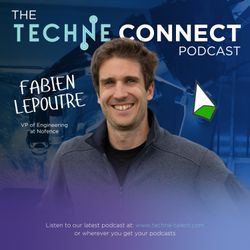
Fabien Lepoutre, VP of Engineering at NoFence
48:48|In this episode Fabien Lepoutre, VP of Engineering at NoFence, shares how the company is building the world’s first virtual fencing platform for ruminants, from collar hardware to cloud infrastructure and mobile app.Fabien explains how NoFence collars enforce virtual boundaries using audio cues and a gentle pulse, why livestock adapts fast, and how the company has scaled to more than 150,000 collars sold since launching in 2016. He also breaks down how NoFence raised a $35M Series B and what it takes to deliver quality across hardware, firmware, software, and manufacturing at speed.The conversation covers Fabien’s path from embedded systems and wearables in Norway and Silicon Valley to impact-led engineering in medtech, then leadership at NoFence. He shares how the team built a continuous deployment pipeline for embedded devices, using hardware-in-the-loop testing and simulation to release multiple times per week with confidence. Fabien also outlines how robotics is shifting from automation to autonomy, why edge AI matters, and why low-level embedded and hardware skills remain essential for the next decade.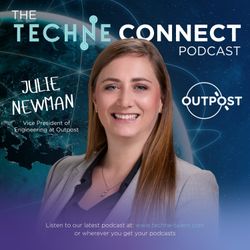
Julie Newman, Vice president of Engineering at Outpost
47:16|In this episode we speak with Julie Newman, VP of Engineering at Outpost, about building a next generation space reentry vehicle and shaping the future of in space logistics.Julie walks through her journey from Caltech to SpaceX, NASA JPL and Boeing, including her work on the Europa Clipper mission to Jupiter. She explains why she transitioned from large aerospace primes to startup leadership and how that experience shaped her approach to ownership, speed and culture.The conversation explores why reentry is becoming critical to the space economy, how Outpost’s deployable heat shield and precision paraglider system enable high mass return, and why in space manufacturing only scales if you can bring product back affordably. Julie also shares her passion for STEM outreach, developing future engineers, and building teams that move fast with accountability.