Share
Renaissance English History Podcast: A Show About the Tudors
Episode 172: The Music of the Spheres
•
In this episode we look at Music Therapy from a Tudor perspective, diving into the idea of the music of the spheres, and also tying in string theory. Because really, it's all related.
Like this show? Leave a rating where you get your podcasts - it's the number one thing you can do to help it grow!
Show notes will be up at englandcast.com/musicofthespheres
Thank you so much for your listenership and support!
More episodes
View all episodes

The One Choice That Could Have Changed Tudor England Forever
28:38|What if Catherine of Aragon had agreed to an annulment in 1527?Today we explore a Tudor what-if with enormous consequences. If Catherine had stepped aside quietly, Henry VIII might never have broken with Rome, Anne Boleyn might have had time to secure her position, Mary Tudor’s future could have been settled early, and England might have remained a far quieter place.A meditation on how one refusal, rooted in conscience, reshaped a kingdom.Check out the Vday collection: https://tudorfair.com/collections/valentines-day-2026
[YouTube Drop] A Day in the life of a Yeoman Farmer
09:56|In this minicast, we spend twenty-four hours with a yeoman farmer and his family, the solid middle of Tudor society. From waking before dawn to fieldwork, food, spinning, neighborly chatter, and falling asleep by firelight, this is an ordinary working day in rural England. No court, no kings, just the daily rhythm that fed the country and kept Tudor England running.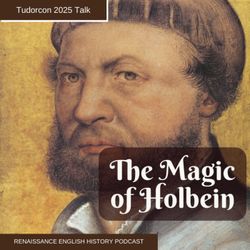
A Tudorcon 2025 Talk: The Magic of Holbein
37:58|This talk was recorded live at Tudorcon 2025.In this lecture, Mallory Jackson explores the work of Hans Holbein the Younger, the artist whose portraits defined how we visualize the Tudor court. Focusing on key paintings from Holbein’s years in England, she looks at how symbolism, material culture, and political change shaped portraits of figures such as Henry VIII, Thomas More, and Thomas Cromwell.This is a detailed, art-driven discussion of Holbein’s most famous works, including The Ambassadors, and what they reveal about power, belief, and uncertainty in Tudor England.
Juana of Castile: The Queen Who Was Never Allowed to Rule
19:44|Juana of Castile is remembered by history as “Juana the Mad,” but that label explains far less than it hides. In this episode, we step away from biography and diagnosis to look instead at power: who held it, who wanted it, and who benefited when Juana was declared unfit to rule. Drawing on recent scholarship and the comparison with her sister Catherine of Aragon, this is a closer look at how a reigning queen was sidelined, confined, and ultimately erased without ever being formally deposed. Juana’s story isn’t just tragic. It’s a case study in how authority can be neutralized not by force, but by containment.Read the book Sister Queens - available on Amazon
[YouTube Drop] Henry Beaufort
09:00|Henry Beaufort is rarely the most famous Beaufort, but he may have been the most influential.A son of John of Gaunt and Katherine Swynford, Beaufort took a different path from his more rebellious relatives. As Bishop of Winchester and later a cardinal, he became the wealthiest churchman in England and a crucial financial backer of the Lancastrian crown.This minicast explores how Henry Beaufort shaped English politics through money and influence rather than titles or armies. From underwriting royal government to clashing with Humphrey, Duke of Gloucester during Henry VI’s minority, Beaufort’s power came from being indispensable, even when he was unpopular.
[YouTube Drop] Three Twelfth Nights at the Tudor Court (1512–1582)
09:19|At the Tudor court, Twelfth Night was more than the end of Christmas. Using specific recorded celebrations from across the sixteenth century, this minicast explores how plays, masques, tournaments, dancing, and banquets were used to perform power at court.
[YouTube Drop] Henry VIII Did Pardon People.
08:18|Henry VIII is famous for executions, but he did issue pardons; rarely, strategically, and always on his own terms. Starting with the pardon of Geoffrey Pole in 1539, this minicast explores who Henry spared, who he didn’t, and what mercy really meant under the Tudors.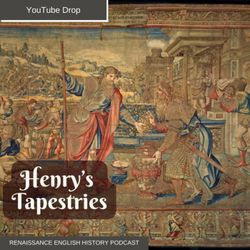
[YouTube Drop] Henry's Abraham Tapestries
08:48|When you step into the Great Hall at Hampton Court Palace, the walls tell a story. In this minicast, we explore Henry VIII’s Abraham tapestries: vast, expensive works of art that doubled as political messaging.Woven in the 1540s, these biblical scenes weren’t just decoration. They reinforced Henry’s claims to religious authority, dynastic legitimacy, and the future of the Tudor line, all at a moment when succession anxiety and church reform loomed large. Five hundred years later, the tapestries are still hanging—and still saying exactly what Henry wanted them to say.Read more here: https://www.amazon.com/Henry-VIII-Art-Majesty-Tapestries/dp/0300122349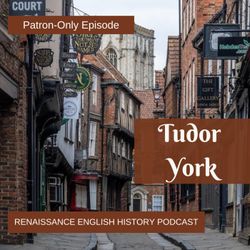
A Tour of Tudor York
09:30|This tour of Tudor York was originally a Members Only video from two years ago. I’m making it public today so everyone can explore it. Patrons and channel members still get the good stuff first, including extra episodes, and content that never appears on the public channel.