
Latest episode

Help to Buy reboot: Can Labour fix the housing market?
31:09|Will a re-imagined version of Help to Buy solve Britain's housing crisis? Dominic O’Connell examines whether government mortgage subsidies can rescue Labour's ambitious homebuilding targets.In this episode of The Business, we explore "Your First Home" - the government's proposed scheme to resurrect Help to Buy and subsidise mortgages for first-time buyers without the bank of mum and dad. With construction stalling across the UK economy, we ask whether restarting Help to Buy will stimulate homebuilding or simply inflate property prices.Dominic is joined by Jennie Daly, chief executive of Taylor Wimpey - one of Britain's largest house builders - and Carol Lewis, property editor at The Times. Together, they discuss planning delays, red tape, and how changing government fiscal policy impacts British business confidence. They analyse whether mortgage subsidies and supply chain reform can overcome material costs, unlock land development, and deliver long-term economic growth.“We have to step back and think: what does housebuilding deliver? It’s a fundamental human right,” Jennie Daly said on the show. “New home building is the only route to increasing the housing stock. So there's a fundamental economic and social case for intervention at times in the economic cycle where house building is particularly in danger of contracting.”Guests:Jennie Daly, chief executive of Taylor WimpeyCarol Lewis, property editor at The TimesPresenter:Dominic O’Connell, Times columnist and Times Radio business correspondentProducer: Hope FedericoExecutive Producer: Miriam Hall and Emily LeahyVideo Producer: Bronwen LathamGet in touch: thebusiness@thetimes.comHear more from The Business:Why are the super rich leaving Britain? Does Andy Burnham’s government have the guts to deliver growth? The rise of the corporate landlord - with Grainger’s Helen Gordon Read more from The Times: New home approvals sink to 13-year low as PM revives Help to Buy How housebuilders won argument to revive help for first-time buyers
More episodes
View all episodes

The Business of Formula 1®: Jenson Button on performing under pressure
31:02|This series is sponsored by PwC.What can business learn from the high-stakes of Formula 1® racing?In the fourth and final episode of a special series, host Andy Jaye speaks to 2009 F1® World Champion Jenson Button and Amish Patel, PwC’s UK Transport Lead, about how elite drivers and teams perform under pressure.Jenson Button shares unique insights from his career in Formula 1® about how to manage talent in high-stress environments, build resilient teams, foster supportive workplace cultures, and allow room to experiment and sometimes fail.They explore what British business and industry leaders can learn from Formula 1® about execution under pressure, corporate strategy, and driving economic growth when stakes are high.You can also watch this episode on Times Business channel on YouTube.Presenter:Andy Jaye, Broadcaster Guests:Jenson Button, 2009 F1® World ChampionAmish Patel, PwC’s UK Transport LeadProducer: Robert Wallace and Shabnam GrewalExecutive Producer: Emily Leahy Video Producer: Super LlamaGet in touch: thebusiness@thetimes.comHosted on Acast. See acast.com/privacy for more information.
Reindustrialisation: Can Labour rebuild British manufacturing?
34:15|Is Labour’s promise of reindustrialisation realistic for the UK economy? Dominic O’Connell explores the future of British manufacturing.In his speech to the Labour Party conference, Chancellor John Healey promised "a new age of industrialisation". But with UK manufacturing output stagnant and England losing over 6,000 manufacturing businesses in the past five years according to the Office for National Statistics, can government fiscal policy turn the tide?In this episode of The Business, Dominic O’Connell considers whether genuine reindustrialisation is possible, as well as the obstacles in the way including the impact of high energy costs, skills shortages and the global impact of Chinese manufacturing competition.Joined by David Smith, economics editor at The Sunday Times, and Liam Sides, director of regional analysis at Oxford Economics, we examine the structural shifts that transformed Britain into a service-based economy over the last 50 years and evaluate what a realistic reindustrialisation strategy looks like for British business, from growing advanced manufacturing sectors like aerospace and pharmaceuticals to regional investment and planning reform.Guests:David Smith, Economics Editor at The Sunday TimesLiam Sides, Director of Regional Analysis at Oxford EconomicsPresenter:Dominic O’Connell, Times columnist and Times Radio business correspondentProducer: Hope FedericoExecutive Producers: Emily Leahy and Miriam HallPicture: Getty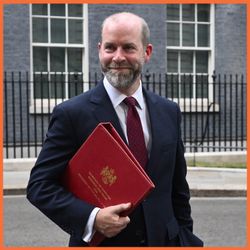
Business Secretary Jonathan Reynolds on Labour’s industrial strategy, Heathrow and diesel costs
28:12|What does Labour’s industrial strategy mean for British business? Business Secretary Jonathan Reynolds speaks to Hannah Prevett at the Labour Party conference.In this episode of The Business, recorded live on stage at the Labour Party conference in Liverpool, Business Secretary Jonathan Reynolds joins Hannah Prevett, associate business editor at The Sunday Times, to outline the government's plans for driving economic growth across the UK economy. Reynolds discusses how Labour’s industrial strategy will operate alongside regional growth plans, what the government's corporate strategy is for taking British Steel into public control, and how fiscal policy will support UK manufacturing and infrastructure. He also shares his perspective on Heathrow expansion, rising diesel costs, and the government's plans to restore business confidence.Guest:Jonathan Reynolds, Secretary of State for Business and TradePresenter:Hannah Prevett, associate business editor at The Sunday TimesProducer: Hope FedericoExecutive Producer: Miriam Hall and Emily LeahyGet in touch: thebusiness@thetimes.com
The Business of Formula 1®: Secrets of the evolution into a global brand
24:42|This series is sponsored by PwC.How has Formula 1® evolved from a legacy sport into a global entertainment powerhouse?In the third episode of a special series, host Andy Jaye speaks to Charlie Minors, Director of Strategy and Transformation at F1® and Jon Glick, PwC Advisory Marketing Leader to discuss the corporate strategy behind the business’ transformation. They discuss the key drivers of this commercial transformation from the success of the Netflix show Drive To Survive, expanding in the US market and creating engaged communities on social media. And the guests offer practical insights for industry leaders looking to scale modern consumer brands in a fast-changing global trade landscape.Presenter: Andy Jaye, BroadcasterGuests:Charlie Minors, Director of Strategy and Transformation at F1® Jon Glick, PwC Advisory Marketing LeaderProducer: Shabnam Grewal Executive Producer: Emily Leahy Video Producer: Super LlamaGet in touch: thebusiness@thetimes.comHosted on Acast. See acast.com/privacy for more information.
M&S revival: how the retail giant is defying high street trends
34:54|How did M&S pull off one of the biggest turnarounds in British retail? Hannah Prevett speaks to operations director Sacha Berendji about the high street giant's transformation.In this episode of The Business, we explore how M&S transformed its food, fashion, and shop location strategy to capture market share across British business. From store renewals and digital growth - to managing a cyber attack - we consider what its resurgence reveals about wider retail trends and consumer spending across the UK economy. M&S operations director Sacha Berendji joins Hannah Prevett, associate business editor at The Sunday Times, to discuss the corporate strategy behind the multi-billion-pound revival of M&S. He explains how leadership set the course to revamp its product lineup, handle the logistics of "fortress factories" and is now approaching shoplifting challenges. He also discusses the tax burden on high street retailers, along with what M&S wants from government fiscal policy to address rising costs and the youth unemployment crisis.He breaks down the company's decision to close a number of high street shops across the country:“We're very well aware of the role that we play on a high street and within a local community, so we never take these decisions [to close a location] lightly - but when you look at the economics at play, not just for us, but for all retailers, and, really importantly, where customers are shopping, it has become more and more difficult to justify being in locations where there isn't customer foot fall,” he says on the show. “It's not an anti-high street agenda … If the high street is the right place, then we'll be on the high street.”Guest:Sacha Berendji, operations director at M&SPresenter:Hannah Prevett, associate business editor at The Sunday TimesProducer: Hope FedericoExecutive Producer: Miriam Hall and Emily LeahyGet in touch: thebusiness@thetimes.comPicture: Getty
The Business of Formula 1®: Can a female driver break the gender barrier?
31:09|This series is sponsored by PwC.Could we see the first female Formula 1® driver in 50 years racing in a Grand Prix?In the second episode of a special series, host Andy Jaye speaks to 19 year old F1 ACADEMY driver Rachel Robertson, who’s chasing that dream and breaking down barriers in motorsport. Joined by PwC’s chief people officer Phillippa O’Connor they discuss Rachel’s inspirational story from a karting to the F1 ACADEMY, and how talent investment and more inclusive workplace cultures can open up new career pathways.Together they explore how nurturing talent is vital for Formula 1® and how industry leaders can attract more diverse talent to drive high performance and long term economic growth.You can also watch this episode on Times Business channel on YouTube.Presenter: Andy Jaye, BroadcasterGuests:Rachel Robertson, F1 ACADEMY driverPhillippa O’Connor, PwC Chief People OfficerProducer: Harry Bligh and Shabnam GrewalExecutive Producer: Emily Leahy Video Producer: Super LlamaGet in touch: thebusiness@thetimes.comHosted on Acast. See acast.com/privacy for more information.