Share
The Business
Inside The Traitors empire: can British TV survive the streaming giants?
How did The Traitors become a global TV phenomenon? And is its success a sign that British TV survive the streaming era?
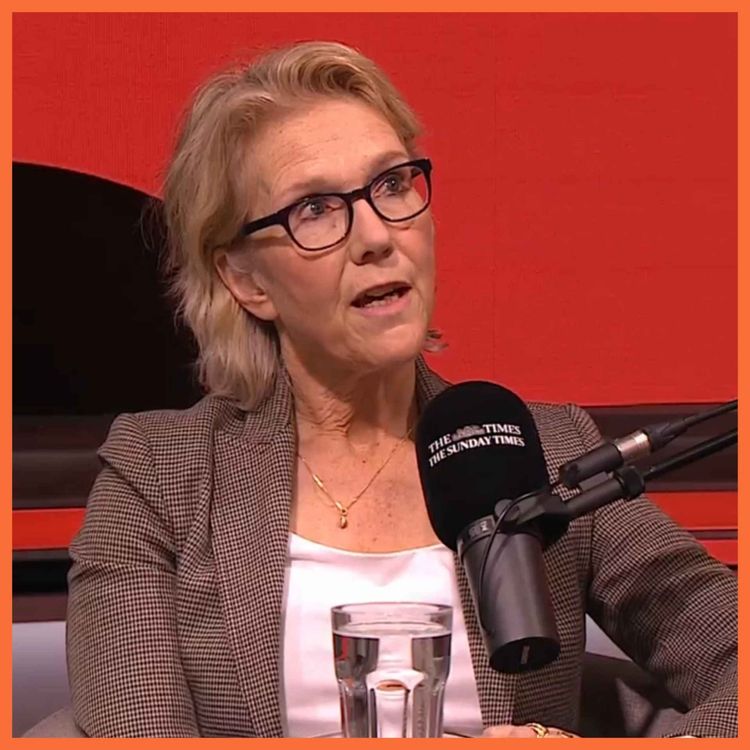
In this episode of The Business, Dominic O’Connell is joined by deputy chief executive of Banijay Entertainment, Jane Turton, to discuss the future of British television and how it can compete against social media platforms and US streaming giants.
The powerhouse behind The Traitors, MasterChef, and Big Brother, Banijay Entertainment is the world’s largest independent production company. It's deputy chief executive Jane Turton, reveals the corporate strategy behind turning formats like The Traitors into worldwide juggernauts, why social media platforms now pose the biggest challenge and opportunity for capturing audience attention, and navigating the rapid pace of change in audience viewing habits.
"Maybe 25 to 30% of the programmes, the production revenue we generate comes from the big streamers. If you looked at that number five years ago, it would've been maybe not zero, but close to zero."
Dom and Jane also discuss how the wider industry should respond to high-profile scandals, including the conviction of Russell Brand, and what this means for workplace culture across British media.
The Times media correspondent, Alex Farber also joins Dom to warn that domestic networks look increasingly small beside global streaming rivals, making further industry consolidation almost inevitable.
“We're definitely living in an increasingly international world when it comes to content, TV programming, and film, and that means that unless you're big, you're going to struggle. And that leaves some of the British broadcasters looking rather small in the face of global competitors.”
If you enjoyed this episode, make sure to press follow at the top of your podcast app.
This podcast was brought to you thanks to the support of readers of The Times and The Sunday Times. Subscribe today to get full digital access.
This episode is sponsored by PwC.
Guests:
- Jane Turton, deputy chief executive at Banijay Entertainment
- Alex Farber, Media Correspondent at The Times
Presenter:
- Dominic O’Connell, Times Radio business correspondent and The Times columnist
Producer: Hope Federico
Executive Producers: Emily Leahy and Miriam Hall
Video Producer: Bronwen Latham
Photo credit: Getty
Get in touch: thebusiness@thetimes.com
More from The Times
- Merger will mean we can stand up to US giants, says Zucker
- Russell Brand’s predatory nature an open secret in entertainment industry
- Banijay boss on why YouTubers couldn’t have made Peaky Blinders
More from The Business
More episodes
View all episodes

Brexit and the City: Could Financial Services Block Andy Burnham's EU Reset?
34:57|Could the city of London torpedo Britain’s return to the EU?As Prime Minister Andy Burnham eyes closer EU ties, we examine if UK-EU divergence in financial services since Brexit means the City of London is reluctant to rejoin Brussels' rulebook.In this episode of The Business, Dominic O’Connell examines how Brexit has reshaped Britain’s £200bn financial services sector and what a potential reset could mean for the wider UK economy.Joined by Miles Celic, chief executive of TheCityUK, and Sarah Hall, professor of economic geography at the University of Cambridge, we assess whether the Square Mile still wants a return to the single market.From post-Brexit regulatory freedom and the end of EU passporting to competition from New York and Paris, they explore why the City has thrived despite Brexit disruption, how global trade alliances like the UK-Swiss Bern agreement offer a new blueprint, and whether Brussels and London can ever strike a deal on financial regulation.“I'm actually relatively optimistic - I say that because I think one thing that's characterised UK financial services is its regenerative capacity,” Sarah Hall says on the show. “I think in some areas you're starting to see what that regeneration might look like - whether it's in terms of full-on, full-fat rejoining the single market for financial services, I'm a bit less sure.”Celic agrees that the UK is deft at finding solutions to challenges, but it may come down to what the big banks will accept. “The industry is very much in favour of a closer relationship with the European Union,” Miles Celic says. “Where there is skepticism is being an automatic rule taker - that it has to adopt what the European Union puts forward.”If you enjoyed this episode, make sure to press follow at the top of your podcast app.This podcast was brought to you thanks to the support of readers of The Times and The Sunday Times. Subscribe today to get full digital access.This episode is sponsored by PwC.Guests:Miles Celic, chief executive of TheCityUKSarah Hall, professor of economic geography at the University of Cambridge and deputy director of UK in a Changing EuropePresenter:Dominic O’Connell, Times columnist and Times Radio business correspondentProducer: Hope FedericoExecutive Producer: Miriam Hall and Emily LeahyVideo Producer: Bronwen LathamGet in touch: thebusiness@thetimes.comImage: GettyMore from The Times EU reset deal: how UK businesses fared in post-Brexit talksAndy Burnham’s big Brexit reset: what’s in and what’s out?Prime minister must play the long game over rejoining the EUMore from The Business Wealth and inheritance tax driving away the UK's super rich?Budget 2026 Special: What's in for business?Diesel Crisis: Is UK Facing a Rationing Threat
Pay transparency: A new burden on business?
28:38|Could new UK law on pay transparency help close the gender pay gap, or place a costly burden on British business?In this episode of The Business, Hannah Prevett is joined by Edwina Dunn, entrepreneur and founder of the non-profit The Female Lead, to discuss whether planned reforms to pay transparency rules could end pay discrimination as well as what impact the changes could have on businesses.The government's recently closed its consultation on equal pay and pay discrimination, recommending mandatory salary ranges on all job adverts. Legislation is set to be brought forward “as soon as possible”, according to Prime Minister Andy Burnham, who recently urged firms to adopt pay transparency voluntarily before the law changes.Dunn, who previously founded and led Dunnhumby, the data science firm behind the Tesco Clubcard, explains how salary transparency might not be a silver bullet for closing the gender pay gap. She also examines the wider impact on corporate strategy and the UK economy, addressing what industry leaders worry about most, from internal friction to potential salary inflation.If you enjoyed this episode, make sure to press follow at the top of your podcast app.This podcast was brought to you thanks to the support of readers of The Times and The Sunday Times. Subscribe today to get full digital access.This episode is sponsored by PwC.Presenter:Hannah Prevett, associate business editor at The Sunday TimesGuests:Edwina Dunn, entrepreneur and founder of The Female LeadProducer: Hope FedericoExecutive Producers: Emily Leahy and Miriam HallImage: GettyGet in touch: thebusiness@thetimes.comMore from The TimesIs it time to ban job ads that hide the salary?Could I face an equal pay claim?Women hold majority of self-employed service jobs for first time More from The BusinessWhy Are Women Paid Less Than Men?Inside the Multi-Billion-Pound Resurgence of Marks & SpencerWealth and Inheritance Tax Driving Away the UK’s Super Rich?
Anthropic: The IPO that could make or break the AI Boom
33:22|How do the baffling numbers behind Anthropic’s massive float add up, and can the AI bull market justify a $1.3 trillion valuation?In this episode of The Business, Dominic O’Connell examines the public debut of Anthropic, the company behind the Claude AI assistant, as its shares begin trading on the stock market this week. Joined by veteran analyst Stephen Clapham of Behind the Balance Sheet and Wall Street Journal reporter Corrie Driebusch, we unpack the eye-watering figures inside the prospectus, consider what investors are actually buying into and whether the recent Nvidia scandal will impact demand.“If Anthropic prices it too high – and then the stock market has another bad day on its listing day – shares could fall 10%,” Driebusch said on the show. “As one large fund manager said to me: ‘If we've committed $100 million to Anthropic shares and the stock trades down 10%, there goes my year.’”Clapham stresses the importance of thinking carefully about Anthropic’s corporate strategy and how it may be positioned in three or five years' time across a fiercely competitive tech industry.“We know Anthropic has grown like a weed this year – we know that every programmer in the world was trying out Claude Code... But we don't know in the long run what competition there will be for Claude Code,” Clapham said on the show.This episode is sponsored by PwC.Guests:Stephen Clapham, founder of Behind the Balance SheetCorrie Driebusch, reporter at The Wall Street JournalPresenter:Dominic O’Connell, Times columnist and Times Radio business correspondentProducer: Hope Federico Executive Producers: Miriam Hall and Emily LeahyImage: GettyGet in touch: thebusiness@thetimes.comIf you enjoyed this episode, make sure to press follow at the top of your podcast app.This podcast was brought to you thanks to the support of readers of The Times and The Sunday Times. Subscribe today to get full digital access.More from the Business:Nvidia’s Jensen Huang: The affair threatening a $4.5T tech giantIPOs Go ‘Mega’ – Should We Be Worried?More from the TimesWhy Britain’s biggest AI data centre is still a pile of bricksAI’s promise must not blind us to the risks to financial stability
Raspberry Pi on the London Stock Exchange and data centres
15:50|How did Raspberry Pi turn a credit card-sized computer into one of the biggest success stories in British tech business? And has the world jumped to conclusions when it comes to investing in AI data centres?In this episode of The Business, Raspberry Pi co-founder and chief executive Eben Upton joins Hannah Prevett on stage at The Times Tech Summit to discuss why the company chose to manufacture and list in the UK, and what domestic technology firms must consider as they scale.Eben first developed the low-cost computer during his studies at the University of Cambridge to provide hands-on programming experience for computer science students. Fifteen years later, Raspberry Pi has grown into a cornerstone of the UK tech industry.When Raspberry Pi floated on the London Stock Exchange in 2024, Upton went against the grain of UK tech companies listing abroad. He explains why listing on the London stock market was the right strategic move for the business, how UK firms can successfully attract international capital without abandoning Britain, and what expanding domestic production means for the wider UK economy.“We build in the UK, not 'cause we're patriotic, but because it's the best place to build. And we listed in London, not because we're patriotic, but because it was the best place to list.”Upton also shares his candid view on current tech industry valuations, questioning the scaling and investment into AI data centres. “ It's four years after ChatGPT launched, right? And we have jumped to this conclusion about deployment of capital, really probably faster than the evidence supports. “If you enjoyed this episode, make sure to press follow at the top of your podcast app.This podcast was brought to you thanks to the support of readers of The Times and The Sunday Times. Subscribe today to get full digital access.This episode is sponsored by PwC.Guest:Eben Upton, co-founder and chief executive of Raspberry PiPresenter: Hannah Prevett, associate business editor at The Sunday TimesProducer: Hope FedericoExecutive Producers: Miriam Hall and Emily LeahyImage: GettyGet in touch: thebusiness@thetimes.comMore from The TimesMemory chip shortage is boosting profits at UK’s Raspberry PiIs it worth buying a slice of Raspberry Pi?AI can’t live without data centres. Locals can’t live with them More from The BusinessSynthesia CEO: Europe is a "Trust Fund Kid"Nvidia's Jensen Huang: The affair threatening a $4.5T tech giantCould the UK Electricity Grid Fail?
Nvidia’s Jensen Huang: The affair threatening a $4.5trn tech giant
28:05|Can Nvidia survive the explosive scandal engulfing chief executive Jensen Huang, or will the fallout trigger a wider crash across the AI boom?In this episode of The Business, Dominic O’Connell looks at the bombshell confession from Nvidia boss Jensen Huang regarding his affair with a businesswoman suspected of being linked to Chinese intelligence services. With the company's board launching an urgent inquiry, we examine whether the silicon giant's leadership is untenable.Dominic is joined by Louisa Clarence-Smith, US business editor for The Times, and Maike Currie, vice-president of personal finance at PensionBee, to break down how volatility at Nvidia could reverberate across the global stock market. Will tremors in the tech industry knock UK investor confidence, affect the FTSE and impact capital flows for British business?Ultimately, they ask: what is next for Huang, and the company he has shepherded to global dominance?"I think what is interesting here is that this is not just about an embarrassing personal relationship or infidelity - but what we've got here is the issue of national security,” PensionBee’s Maike Currie said on the show. “We know that the US and Washington, specifically, have been very focused on protecting its AI technology and its AI chips from reaching China … this is a race between China and America who is going to dominate.”Nvidia has said it “prioritises US national and economic security, which is paramount to the interests of Nvidia and its shareholders”. In announcing its investigation, it said while the board had “no reason to believe that either national security or Nvidia secrets were compromised”, it would examine “all available information”. Jensen Huang has made a public apology to his family and his colleagues, and said he will co-operate with the company investigation. This episode is sponsored by PwC.Guests:Louisa Clarence-Smith, US business editor, The TimesMaike Currie, vice-president of personal finance, PensionBeePresenter:Dominic O’Connell, Times columnist and Times Radio business correspondentProducer: Hope FedericoExecutive Producer: Miriam Hall and Emily LeahyGet in touch: thebusiness@thetimes.comThis podcast was brought to you thanks to the support of readers of The Times and The Sunday Times. Subscribe today to get full digital access.More from the BusinessIPOs Go ‘Mega’ – Should We Be Worried?Synthesia CEO: Europe is a "Trust Fund Kid"More from the TimesNvidia takes $300bn hit after boss Jensen Huang admits affairWho is Alice Huang? The Nvidia scandal explained
Sustainable aviation fuel: can a UK start-up clean up flying?
32:30|Can the UK lead the world in sustainable aviation fuel?In this episode of The Business, Dominic O’Connell is joined by Andrew Symes, chief executive of British start-up OXCCU, to explore how an old technology could hold the key to the future of flight.Sustainable aviation fuel, made from renewables, waste materials and captured carbon dioxide could play a huge role in air travel’s future and limiting its damage to the environment.The UK government has mandated increasing amounts of sustainable aviation fuel into the standard jet fuel blend, rising to 10 per cent by 2030. Yet today's global supply remains limited, expensive, and dependent on imported waste fats.OXCCU believes it has found an answer. By reviving an old chemical technology, the company bypasses the energy-intensive and costly steps usually associated with synthetic fuel.Andrew Symes explains why commercial aviation cannot rely purely on battery electrification, how their technology unlocks domestic supply for the UK economy, and what it will take to scale sustainable aviation fuel production into commercial airlines and international global trade.Could British business innovation lead the race to decarbonise aviation?If you enjoyed this episode, make sure to press follow at the top of your podcast app.This podcast was brought to you thanks to the support of readers of The Times and The Sunday Times. Subscribe today to get full digital access. This episode is sponsored by PwC. Guests:Andrew Symes, chief executive of OXCCUPresenter:Dominic O’Connell, Times Radio business correspondentProducer: Hope FedericoExecutive Producers: Emily Leahy and Miriam HallVideo Producer: SuperllamaImage: GettyGet in touch: thebusiness@thetimes.comMore from The TimesThe man on a mission to fuel flights with food wasteDirty secret of green fuel shortages to push up cost of flights Michael O’Leary: Air fares could rise by 20% next year More from The BusinessDubai Airports CEO: "This war could be our new normal"Diesel Crisis: Is UK facing a rationing threat? Can Labour reindustrialise Britain?
Covid bounce-back loans: the scheme that cost taxpayers billions
31:55|How did bounce-back loans end up in the hands of fraudsters? And can the government ever recover the lost funds?When the Covid bounce-back loan scheme was launched in May 2020, it was intended as an emergency lifeline for small and medium-sized British businesses. Issuing 1.2 million loans totalling £47 billion, it was the largest of the Covid-related business loan initiatives.While it was rolled out rapidly, it is now embroiled in scandal. The countless cases of fraudulent activity cost billions of taxpayers’ money.In this episode of The Business, James Hurley, The Times assistant business editor, and George Greenwood, The Times investigative reporter, join Hannah Prevett to lift the lid on the bounce-back loans scandal.George and James first broke the bounce-back loans story in 2021, and continue to track the ongoing fallout: from disqualified company directors to criminal convictions.Could these pricey mistakes have been avoided? And what lessons could be learnt?When asked about their lending being higher risk Starling Bank has said: “The majority of this lending was to eligible micro-businesses with single directors, many of which were relatively young businesses." They added: “Direct comparisons [with] other lenders are difficult, given limitations of the data, the different characteristics of each lender’s customer base, and the maturity of the scheme.”When asked about the guarantees being repaid Starling Bank has said they: “identified a group of loans made before April 2021 which potentially did not comply with a guarantee requirement”.These were loans where the bank’s “own procedures did not have strict adherence to the scheme rules around all the checks that have to be made”.If you enjoyed this episode, make sure to press follow at the top of your podcast app, so you never miss an episode. This episode is sponsored by PwC. Guests:George Greenwood, The Times investigative reporterJames Hurley, The Times assistant business editorPresenter: Hannah Prevett, The Sunday Times associate business editorProducer: Hope FedericoExecutive Producers: Miriam Hall and Emily LeahyVideo Producer: SuperllamaImage: GettyGet in touch: thebusiness@thetimes.comMore from The TimesGovernment ‘dangerously flat-footed’ about recovering Covid fraudStarling takes a £28m hit from Covid bounce back loansSuitcases of Covid loan cash seized at UK’s borders More from The BusinessCan Labour really reindustrialise Britain? Taylor Wimpey: Can Labour fix the UK's broken housing market? Wealth and inheritance tax driving away the UK’s super rich?
Budget 2026 Special: What's in it for business?
30:43|What does Chancellor John Healey's 2026 budget mean for business?In this episode of The Business, Dominic O’Connell is joined by Dan Neidle, founder of Tax Policy Associates, and Shevaun Haviland, director general of the British Chambers of Commerce, to unpack an Autumn Budget designed to give British people ‘breathing room’.At the despach box the chancellor said: "Too many people feel this country isn't working well for them, and in particular, households and businesses face challenges from rising energy costs due directly to the conflict in the Middle East. In the face of that, what matters is how we respond as a government. And my choice in the budget today is to give families and businesses some breathing space now, and to begin the radical reform of energy to reduce bills in the future."They examine how the Chancellor plans to balance short-term household relief with long-term economic growth. We break down the cash ISA U-turn, capital gains tax adjustments, and the new Founders’ Relief, dissecting the practical realities for British business owners and leaders.They also explore the devolution of business rates, and what this Autumn Budget means for high streets facing mounting costs.The Business is sponsored by PwCGuest:Shevaun Haviland, Director General of British Chambers of CommerceDan Neidle, founder of Tax Policy AssociatesPresenter:Dominic O’Connell, Times columnist and Times Radio business correspondentProducer: Hope FedericoExecutive Producer: Miriam Hall and Emily LeahyImage: GettyGet in touch: thebusiness@thetimes.comMore from The TimesBudget 2026 key points: a summary of the highlights What the budget means for youMore from The BusinessDiesel Crisis: Is UK facing a rationing threat?Taylor Wimpey: Can Labour fix the UK’s broken housing market?Can Labour really reindustrialise Britain?Hosted on Acast. See acast.com/privacy for more information.