
Latest episode
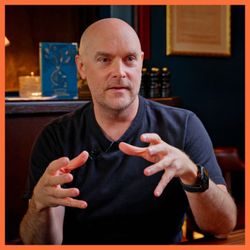
How Hawksmoor built a £100M restaurant empire
33:40|How did Hawksmoor grow from a single Shoreditch steakhouse into a global brand, and can UK hospitality survive rising tax burdens?In this episode of The Business, Hawksmoor co-founder and Chief Executive Will Beckett joins Hannah Prevett at Hawksmoor St Pancras to reflect on what he's learned from 20 years in British business, and what UK hospitality wants from Chancellor John Healey's budget.He breaks down the harsh financial pressures facing the industry, including how tax changes, rising business rates, and employment legislation impact hospitality margins.“I know that the hospitality industry would like me to say, ‘big, sweeping change’ - I just think it's unlikely,” he tells the programme. “Anything that is just relieving the tax burden or relieving the pressure slightly, that, in a way that would help smaller independent businesses flourish, I think has to be good news.”Beckett, who runs the business alongside his co-founder, Creative Director Huw Gott, also discusses scaling the steakhouse chain across London and taking on private equity investment to take the brand to the US with major openings in New York, Chicago, and Boston."We've learned about how to pitch Britishness and London. Boston's really well known for lobster rolls, but in Hawksmoor Boston, we do a lobster crumpet.”If you enjoyed this episode, make sure to follow this podcast.This podcast was brought to you thanks to the support of readers of The Times and The Sunday Times. Subscribe today to get full digital access.Guest:Will Beckett, chief executive and co-founder of HawksmoorPresenter:Hannah Prevett, associate business editor of The Sunday TimesProducer: Hope FedericoExecutive Producer: Miriam Hall and Emily LeahyGet in touch: thebusiness@thetimes.comMore from The TimesI was a jack of all trades until I sunk my teeth into HawksmoorHow a very British steakhouse won over New YorkMore from The BusinessWill the Chancellor Increase Capital Gains Tax in the Budget?The Employment Rights Act: A Generational Shift for British Business
More episodes
View all episodes

Inside the world of football agents with Jo Tongue
30:47|What does it take to become a top football agent in the UK? From negotiating million-pound contracts, to managing player transfers, a football agent holds the power to change the game long before players walk onto the pitch.In this episode of The Business, we explore the high-stakes world of sports management, where agent fees topped £400 million in the Premier League last year. Jo Tongue, leading football agent and chief executive of Tongue Tied Management, joins Hannah Prevett, associate business editor at The Sunday Times, to take us behind the scenes of commercial deal making in football. Jo discusses managing players' careers, negotiating commercial deals, and representing some of the biggest names across British football, including the manager of Manchester United, Michael Carrick.As a board member of Women in Football, Jo also reflects on working in a male-dominated industry and addressing the persistent inequalities facing female sports professionals.On social media she says abuse "is rife for women, to the point where I think a lot of females just go, ‘I'm just not gonna put anything out there because it's just not worth the stress." More from the Times: ‘It never occurred to me that I couldn’t succeed in football as a girl’ Michael Carrick hails ‘fresh start’ but one win in seven tells own storyMore from the BusinessBeyond TV: How Trinny Woodall Built A Beauty Brand“I was ashamed”: How failure built CastoreGuests: Jo Tongue, football agent and chief executive of Tongue Tied ManagementPresenter: Hannah Prevett, associate business editor at The Sunday TimesProducer: Hope FedericoExecutive Producer: Miriam Hall and Emily LeahyVideo Producer: Super Llama
Diesel Crisis: Could UK fuel rationing really happen?
35:22|With pump prices passing £2 a litre and national reserves dropping, could the diesel crisis force ministers to activate emergency fuel rationing? In this episode of The Business, Dominic O’Connell looks at what current diesel pricing means for the UK economy.Joined by Helen Thompson, Professor of Political Economy at Cambridge, and Joe DeLaura, Global Energy Strategist at Rabobank, we examine whether low reserves and refining capacity threaten long-term economic growth. They break down how global supply disruptions, refinery closures, and changing government fiscal policy are squeezing margins across British business. Crucially, they consider - could rationing truly be a reality in the United Kingdom?“There's always that possibility because the Trump administration has shown that we will extract our pie from other countries. [The thinking is]: ‘If you don't buy American we'll stop selling you diesel, or maybe we'll do a diesel export ban for 90 days unless you release some of your strategic petroleum reserves, or unless you sell us something, or unless you let us have an aircraft base in your country,’” DeLaura says on the show. “Fortunately, I think the US and the UK have a pretty strong long-standing relationship, but the Administration has tested a lot of those long-standing relationships … it's the fact that we even have to ask this question that really concerns me.”Thompson, however, said it is a risk, but not likely - though she pointed out that some Asian countries did have to take that path. “I think for that situation to materialise in Europe, there would have to be something else on top of what has already happened … [but] the Trump administration itself might bring that about,” she says on the program. “This administration's first port of call, in a way, in dealing with its supposed allies, is the energy weapon.”More from the Times: Get drilling at Rosebank or risk diesel shortages, ministers warnedTrump’s diesel deal with Putin is gift to Russia, says ZelenskyMore from the BusinessNorth Sea Oil and Gas: The Future of UK Energy SecurityCould the UK Electricity Grid Fail?Guests:Helen Thompson, Professor of Political Economy at Clare College, CambridgeJoe DeLaura, Global Energy Strategist at RabobankPresenter:Dominic O’Connell, Times columnist and Times Radio business correspondentProducer: Hope FedericoExecutive Producer: Miriam Hall and Emily LeahyPhoto: Getty
Dubai Airports CEO: "This war could be our new normal"
33:32|Can Dubai’s $35 billion Al Maktoum International Airport expansion survive growing Middle East conflict, or will regional tensions stall the world's biggest aviation megaproject?In this episode of The Business, Dominic O’Connell is joined by Paul Griffiths, chief executive of Dubai Airports, to discuss the ambitious expansion of Al Maktoum International Airport. Designed to handle 260 million passengers across five runways, the airport represents a massive investment in the future of global travel and trade. Griffiths reflects on navigating regional instability, missile threats, and managing airport security during heightened tensions.“I think there are some things that we are considering which could harden some of the infrastructure against possible threats, but I think most of this is going to be technology that actually stops the impact of any conflict being felt by the infrastructure, that’s the most important thing,” Griffiths says on the show.Following Houthi missile attacks on Saudi’s Riyadh airport, the UK Foreign Office has now advised against all but essential travel to a large portion of Saudi Arabia. Griffiths tells the program Dubai’s airspace is so far unaffected. “The attacks on civilian infrastructure that are happening in Saudi are very regrettable and abhorrent in so many ways,” he says. “We have to remember that the Middle East is a pretty big place - and Riyadh and Jeddah are as far away as Italy is from the UK, so it is a war between two countries that are not fortunately touching the UAE. Obviously we are maintaining vigilance.”From his early career alongside Sir Richard Branson at Virgin Atlantic to running Gatwick and leading Dubai Airports, Griffiths outlines his corporate strategy for connecting world markets. He also discusses how international aviation disruptions impact passenger recovery, supply chains, and the wider UK economy - as well as how he has balanced his other career as a pipe organ musician.Guest:Paul Griffiths, chief executive of Dubai AirportsPresenter:Dominic O’Connell, Times columnist and Times Radio business correspondentProducer: Hope FedericoExecutive Producer: Miriam Hall and Emily LeahyGet in touch: thebusiness@thetimes.comPicture: GettyMore from the Business:EasyJet vs Wall Street: The £5.7bn Battle for a British Budget AirlineInside the Multi-Billion-Pound Resurgence of Marks & SpencerWealth and inheritance tax driving away the UK’s super rich?More from the Times: Saudi Arabia airport hit by second Houthi strike after 13 killed in attack — as it happenedDubai airport prepares for take-off amid US-Iran conflict
What to expect from the Budget with Andy Haldane
31:01|This series is sponsored by PwC.What should business leaders expect from the chancellor's first Budget? President of the British Chambers of Commerce and former Bank of England Chief Economist Andy Haldane joins The Business to discuss.Hannah Prevett and Dominic O’Connell explore what John Healey will be weighing up before heading to the despatch box. Joined by Andy Haldane and Claire Blackburn (PwC’s UK Tax Leader), they examine the economic pressures facing the UK economy, the politics behind the potential fiscal policy choices, and potential changes to capital gains tax.They discuss what British business and industry leaders need from this Budget to drive economic growth, manage corporate strategy, and restore commercial confidence.You can also watch this episode on Times Business channel on YouTube.Guests:Andy Haldane, President of the British Chamber of Commerce and former Chief Economist at the Bank of EnglandClaire Blackburn, PwC’s UK Tax LeaderPresenter:Hannah Prevett, associate business editor, The Sunday TimesDominic O’Connell, business correspondent, Times RadioProducer: Shabnam GrewalExecutive Producer: Emily LeahyVideo Producer: Super LlamaGet in touch: thebusiness@thetimes.comHosted on Acast. See acast.com/privacy for more information.
Help to Buy reboot: Can Labour fix the housing market?
31:09|Will a re-imagined version of Help to Buy solve Britain's housing crisis? Dominic O’Connell examines whether government mortgage subsidies can rescue Labour's ambitious homebuilding targets.In this episode of The Business, we explore "Your First Home" - the government's proposed scheme to resurrect Help to Buy and subsidise mortgages for first-time buyers without the bank of mum and dad. With construction stalling across the UK economy, we ask whether restarting Help to Buy will stimulate homebuilding or simply inflate property prices.Dominic is joined by Jennie Daly, chief executive of Taylor Wimpey - one of Britain's largest house builders - and Carol Lewis, property editor at The Times. Together, they discuss planning delays, red tape, and how changing government fiscal policy impacts British business confidence. They analyse whether mortgage subsidies and supply chain reform can overcome material costs, unlock land development, and deliver long-term economic growth.“We have to step back and think: what does housebuilding deliver? It’s a fundamental human right,” Jennie Daly said on the show. “New home building is the only route to increasing the housing stock. So there's a fundamental economic and social case for intervention at times in the economic cycle where house building is particularly in danger of contracting.”Guests:Jennie Daly, chief executive of Taylor WimpeyCarol Lewis, property editor at The TimesPresenter:Dominic O’Connell, Times columnist and Times Radio business correspondentProducer: Hope FedericoExecutive Producer: Miriam Hall and Emily LeahyVideo Producer: Bronwen LathamGet in touch: thebusiness@thetimes.comHear more from The Business:Why are the super rich leaving Britain? Does Andy Burnham’s government have the guts to deliver growth? The rise of the corporate landlord - with Grainger’s Helen Gordon Read more from The Times: New home approvals sink to 13-year low as PM revives Help to Buy How housebuilders won argument to revive help for first-time buyers
The Business of Formula 1®: Jenson Button on performing under pressure
31:02|This series is sponsored by PwC.What can business learn from the high-stakes of Formula 1® racing?In the fourth and final episode of a special series, host Andy Jaye speaks to 2009 F1® World Champion Jenson Button and Amish Patel, PwC’s UK Transport Lead, about how elite drivers and teams perform under pressure.Jenson Button shares unique insights from his career in Formula 1® about how to manage talent in high-stress environments, build resilient teams, foster supportive workplace cultures, and allow room to experiment and sometimes fail.They explore what British business and industry leaders can learn from Formula 1® about execution under pressure, corporate strategy, and driving economic growth when stakes are high.You can also watch this episode on Times Business channel on YouTube.Presenter:Andy Jaye, Broadcaster Guests:Jenson Button, 2009 F1® World ChampionAmish Patel, PwC’s UK Transport LeadProducer: Robert Wallace and Shabnam GrewalExecutive Producer: Emily Leahy Video Producer: Super LlamaGet in touch: thebusiness@thetimes.comHosted on Acast. See acast.com/privacy for more information.