Share

The Mohua Show
From Indian TV Powerhouse to Healthcare Changemaker | Nivedita Basu | Ep 273 | The Mohua Show
What does women’s empowerment look like beyond inspiration — inside leadership, healthcare, and real impact?
In this episode of The Mohua Show, Nivedita Basu — Founder & Chief Vision Officer, Global Cancer Care — shares her journey from shaping iconic women-led stories in Indian television to building accessible cancer care in India.
She speaks about women in leadership, career reinvention, healthcare entrepreneurship, cancer awareness, preventive healthcare, and why women must prioritize their own health.
This conversation explores:
- Leadership learned, not inherited
- Reinvention after reaching the peak
- Why creative success alone is not enough
- The fear and misinformation around cancer care
- Making preventive healthcare accessible, affordable, and normal
- Detachment, risk, and the courage to begin again
- Building brands with trust, empathy, and accountability
If you care about women’s leadership, cancer awareness, career pivots, and social impact, this episode is a must-watch.
🎯 What This Episode Is REALLY About
- Not surface-level empowerment
- Not success without sacrifice
- Not fear-driven healthcare
It’s about:
- Women earning authority in male-dominated industries
- Reinventing yourself after 20 years of success
- Health as responsibility, not panic
- Cancer awareness beyond stigma and fear
- Choosing yourself—professionally and personally
- Building trust-led, purpose-first brands
If you’ve ever wondered what it means to truly walk away from comfort to create impact—this episode offers an honest roadmap.
Chapters
0:00 – Introduction
4:30 – Women protagonists & progressive storytelling
10:55 – Starting over after success
14:05 – Why Global Cancer Care was born
18:50 – Cancer, fear, and awareness gaps
22:30 – Risk, detachment & building purpose-led brands
🔔 Support The Mohua Show
If this conversation changed how you think about leadership, health, or empowerment:
👍 Like the video
💬 Comment your biggest takeaway
📤 Share it with someone who needs to hear this
🔔 Subscribe for conversations with changemakers shaping India
Music Credits:
https://pixabay.com/music/ambient-butterfly-113600/
✅ Subscribe To Our Channel:
https://www.youtube.com/@TheMohuaShow/
Follow Us On
► Website: https://themohuashow.com/
► Instagram: https://www.instagram.com/themohuashow
► LinkedIn: https://www.linkedin.com/in/themohuashow
Connect with the Host – Mohua Chinappa
► Instagram: https://www.instagram.com/mohua_chinappa/
► LinkedIn: https://www.linkedin.com/in/mohua-chinappa/
📩 For queries: hello@themohuashow.com
Copyright ©2026 The Mohua Show. All Rights Reserved.
Disclaimer: The views expressed by our guests are their own. We do not endorse and are not responsible for any opinions expressed by our guests on our Show and its associated platforms.
More episodes
View all episodes

305. Devendra Kumar on Women’s Safety, Menstrual Taboos & AI Toilets | The Mohua Show
53:05||Season 1, Ep. 305What does women’s empowerment really mean when girls still face child marriage, menstrual stigma and unsafe sanitation? On this episode of The Mohua Show, podcast host Mohua Chinappa speaks with Devendra Kumar, founder of Ladli Foundation, about his extraordinary journey from childhood poverty and child labour to building an organisation working for women, girls and underserved communities.In this episode, we discuss:How Devendra’s childhood experiences shaped his mission to protect and empower girls.How AI-integrated toilets use smart sensors and automated alerts to improve sanitation and accountability in schools.Why menstrual health remains surrounded by stigma and misconceptions.The challenges of working with government systems and communities to drive social change.How technology-facilitated gender-based violence affects young people.Why financial and digital literacy are essential for women’s independence.What this episode is really about:Beyond infrastructure and awareness campaigns, meaningful social change requires accountability, community engagement and a shift in mindsets. Devendra shares lessons from grassroots work, challenging us to rethink women’s safety, dignity and empowerment.If you’re interested in women’s empowerment, gender equality, social entrepreneurship, leadership and success stories, inspirational audio stories, and podcasts for personal growth, this conversation offers insights into the realities behind social change.🔔 Support The Mohua ShowIf this conversation changed how you think about women’s empowerment, help spread the message.👍 Like the video💬 Comment your biggest takeaway📤 Share it with someone who needs to hear it🔔 Subscribe for conversations with changemakers shaping our world.✅ Subscribe To Our Channel:https://www.youtube.com/@TheMohuaShow/Follow Us On — The Mohua Show► Website: https://themohuashow.com/► Instagram: https://www.instagram.com/themohuashow► LinkedIn: https://www.linkedin.com/in/themohuashowConnect with the Host – Mohua Chinappa► Instagram: https://www.instagram.com/mohua_chinappa/► LinkedIn: https://www.linkedin.com/in/mohua-chinappa/📩 For queries: hello@themohuashow.comCopyright ©2026 The Mohua Show. All Rights Reserved.Disclaimer: The views expressed by our guests are their own and do not necessarily reflect those of The Mohua Show.#TheMohuaShow #MohuaChinappa #LadliFoundation #SocialImpact #WomensEmpowerment #Ladlifoundationtrust #Devendrakumar
304. Manil Suri: The Price of Freedom, Family & Finding Yourself | The Mohua Show
26:36||Season 1, Ep. 304What happens when the life you want conflicts with the expectations of the people you love? And how do you find the courage to choose yourself without losing the people who matter most?In this deeply personal episode of The Mohua Show podcast, host Mohua Chinappa speaks with acclaimed author and mathematician Manil Suri, whose memoir A Room in Bombay explores family, identity, sexuality, memory, migration and the complicated meaning of love.In this episode, we discuss:Growing up in a small Bombay apartment shared by Hindu and Muslim families, and how India’s social fabric has changed.Whether parental sacrifice can become a form of emotional control.Leaving India not just for economic opportunities, but for the freedom to explore his identity and sexuality.How his mother’s understanding of psychology and Freud helped him accept himself.The emotional challenges of caring for a parent with dementia, and learning to forgive yourself.How 2,700 letters written over three decades helped Manil reconstruct his life and memoir.His father’s unfulfilled dream of becoming a playback singer.Balancing a parent’s happiness with your own need to live your life.What this episode is really about:This conversation goes beyond a memoir. It is about the difficult choices that shape our lives, the invisible expectations within families, and the courage to understand that love does not always mean fulfilling everyone’s wishes. Sometimes, choosing yourself is also an act of love.If you’re interested in podcasts about life journeys, personal growth, identity, family relationships, LGBTQ+ experiences, Indian storytelling, creative writing and publishing, and thought-provoking conversations, this episode is for you.🔔 Support The Mohua ShowIf this conversation changed how you think about what you wear:👍 Like the video💬 Comment your biggest takeaway📤 Share it with someone interested in handloom🔔 Subscribe for conversations with changemakers shaping the worldConnect with UsMohua Chinappa: https://www.linkedin.com/in/mohua-chinappa/The Mohua Show: https://www.themohuashow.com/Follow UsYouTube: https://www.youtube.com/@TheMohuaShowLinkedIn: https://www.linkedin.com/company/themohuashow/Facebook: https://www.facebook.com/themohuashowInstagram: https://www.instagram.com/themohuashow/For any other queries EMAILhello@themohuashow.comDisclaimerThe views expressed by our guests are their own. We do not endorse and are not responsible for any views expressed by our guests on our podcast and its associated platforms.#TheMohuaShow #MohuaChinappa #ManilSuri #IndianParents #Parenting #FamilyExpectations #Relationships
303. Raja Venkateswar on Hinduism, Leadership, Varanasi & Finding Freedom in the Amazon |
40:52||Season 1, Ep. 303What can Varanasi teach us about change? What does Hindu philosophy have in common with scientific thinking? What can the Amazon rainforest teach us about happiness? And how does a leader learn to become an enabler rather than the person with all the answers?In this episode of The Mohua Show, Mohua Chinappa sits down with Raja Venkateswar for a wide-ranging conversation spanning Varanasi, Hinduism, leadership, technology, the Amazon rainforest, Kailash Parikrama and the many unexpected turns of an extraordinary career.In this episode, we discuss:• Raja’s formative years in Varanasi and his book on Assi• Hinduism as a philosophy of inquiry, questioning and reasoning• The complex conversation around caste and social structures• His upcoming book Darshana• Kolkata, history and the stories often left outside mainstream narratives• Leadership across different cultures and workplaces• His 4E and 4R management philosophies• What the Amazon rainforest taught him about happiness• Completing the Kailash Parikrama• Why effective leadership is about enabling othersWhat this episode is really about:A life does not always follow a straight line. From global boardrooms to the Amazon, from Varanasi to Kailash, Raja’s journey is ultimately a conversation about curiosity, adaptability, questioning assumptions and continuing to learn.If you’re interested in leadership, personal growth, Indian philosophy, life journeys and inspirational stories, this episode offers plenty to think about.🔔 Support The Mohua ShowIf this conversation changed how you think about what you wear:👍 Like the video💬 Comment your biggest takeaway📤 Share it with someone interested in handloom🔔 Subscribe for conversations with changemakers shaping the worldConnect with UsMohua Chinappa: https://www.linkedin.com/in/mohua-chinappa/The Mohua Show: https://www.themohuashow.com/Follow UsYouTube: https://www.youtube.com/@TheMohuaShowLinkedIn: https://www.linkedin.com/company/themohuashow/Facebook: https://www.facebook.com/themohuashowInstagram: https://www.instagram.com/themohuashow/For any other queries EMAILhello@themohuashow.comDisclaimerThe views expressed by our guests are their own. We do not endorse and are not responsible for any views expressed by our guests on our podcast and its associated platforms.Copyright ©2026 The Mohua Show. All Rights Reserved.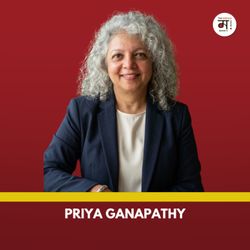
302. Stop Chasing Algorithms. Find Your Voice & Trust Your Craft: Priya Ganapathy | The Mohua Show
39:54||Season 1, Ep. 302What happens when you build a career without following a formula? In this episode of The Mohua Show podcast, Mohua Chinappa sits down with writer, radio voice, traveller and storyteller Priya Ganapathy for a deeply personal conversation about finding your voice, building a creative career, travel as storytelling, and why age should never decide when you begin.From iconic radio characters like Lingu Leela and Sister Stella to research-driven travel projects and an unexpected project for Gordon Ramsay, Priya shares the experiences that shaped her journey across media.In this episode, we discuss:• Finding your voice across radio, print, television, film and theatre• How Lingu Leela and Sister Stella were created• Why the anonymity of radio helped characters connect with audiences• How reels and travel influencers can sometimes reduce the depth of a destination• Travel writing beyond luxury, checklists and Instagram moments• The surprising story behind Priya's Gordon Ramsay project• Off-roading through remote parts of India• Why craft matters more than algorithms• Starting a creative career in your 30s, 40s or 50s• Rejection, resilience, adaptability and following your passionWhat this episode is really about:This is a conversation about creative courage—staying curious, finding your own voice, embracing unconventional paths and understanding that the best time to begin is when you decide you are ready.If you’re interested in storytelling, travel writing, creative career insights, personal growth, motivational podcasts India, inspirational audio stories, leadership and success stories, and podcasts about life journeys, this conversation is for you.🔔 Support The Mohua ShowIf this conversation changed how you think about what you wear:👍 Like the video💬 Comment your biggest takeaway📤 Share it with someone interested in handloom🔔 Subscribe for conversations with changemakers shaping the worldConnect with UsMohua Chinappa: https://www.linkedin.com/in/mohua-chinappa/The Mohua Show: https://www.themohuashow.com/Follow UsYouTube: https://www.youtube.com/@TheMohuaShowLinkedIn: https://www.linkedin.com/company/themohuashow/Facebook: https://www.facebook.com/themohuashowInstagram: https://www.instagram.com/themohuashow/For any other queries EMAILhello@themohuashow.comDisclaimerThe views expressed by our guests are their own. We do not endorse and are not responsible for any views expressed by our guests on our podcast and its associated platforms.Copyright ©2026 The Mohua Show. All Rights Reserved.
301. Is Fashion Killing Indian Crafts? | Priyanka Rajwar & Roli Mishra
42:31||Season 1, Ep. 301What happens when the very industry celebrating Indian crafts begins to threaten their survival? In this episode of The Mohua Show podcast, Mohua Chinappa speaks with Vayaka founders Priyanka Rajwar and Roli Mishra about handloom, conscious buying, sustainable fashion and the future of India's rich textile heritage.In this episode, we discuss:• What conscious buying really means• Handloom vs powerloom and digital printing• Pure fabrics vs blended fabrics• How consumers can identify authentic handloom• The traditional process behind Sri Kalahasthi Kalamkari• Kala cotton and its sustainability story• Mislabeling of crafts such as Bhujodi• Why younger generations are moving away from weaving• How fashion can help—or hurt—traditional craftsWhat this episode is really about:Beyond fashion and sarees, this is a conversation about craft, livelihoods, authenticity, sustainability and consumer responsibility. It asks a simple question: when we buy something, do we know what—and whom—we are supporting?If you’re interested in Indian storytelling, sustainable fashion, creative career insights, conscious living, women's entrepreneurship and inspiring conversations, this episode is for you.🔔 Support The Mohua ShowIf this conversation changed how you think about what you wear:👍 Like the video💬 Comment your biggest takeaway📤 Share it with someone interested in handloom🔔 Subscribe for conversations with changemakers shaping the worldConnect with UsMohua Chinappa: https://www.linkedin.com/in/mohua-chinappa/The Mohua Show: https://www.themohuashow.com/Follow UsYouTube: https://www.youtube.com/@TheMohuaShowLinkedIn: https://www.linkedin.com/company/themohuashow/Facebook: https://www.facebook.com/themohuashowInstagram: https://www.instagram.com/themohuashow/For any other queries EMAILhello@themohuashow.comCopyright ©2026 The Mohua Show. All Rights Reserved.Disclaimer: The views expressed by our guests are their own and do not necessarily reflect those of The Mohua Show#TheMohuaShow #MohuaChinappa #Sarees #Vayaka #IndianTextiles#TheMohuaShow #IndianHandloom #ConsciousBuying #SustainableFashion #IndianCrafts #SlowFashion #IndianHeritage #HandloomIndia
300. The Forgotten Women of Purulia | Rajaditya Banerjee | The Mohua Show
49:30||Season 1, Ep. 300What happens to an artist when the performance ends?In this episode, filmmaker Rajaditya Banerjee takes us into the largely unknown world of the Nachni dancers of Purulia, West Bengal through his documentary Acchutt.The Nachnis have preserved a traditional folk dance form for generations, but behind the colour, music and performance lies a far more difficult reality — social stigma, caste discrimination, economic dependence, patriarchy and the abandonment of women once they grow older.Rajaditya spent almost a decade researching and building relationships with the women before making Acchutt. He shares how he encountered the Nachni community, why they initially questioned his intentions, and what he discovered about their lives beyond the stage.The conversation also goes much further.Rajaditya speaks about his unusual journey from theatre and corporate life in Finland to filmmaking, growing up in a family connected to cinema, and how the death of his filmmaker brother eventually led him to pick up the camera.We explore why he chooses to tell stories that mainstream media often overlooks — from disappearing languages in Lost for Words, to invisible water carriers in Waterwala, and questions of mortality in Death of Death.The conversation then turns to a larger concern: Why does documentary cinema struggle to find audiences in India?Funding, distribution, OTT platforms, film festivals and the lack of a sustainable ecosystem for independent filmmakers all come under discussion.Rajaditya also offers a candid assessment of Bengali and regional cinema, arguing that storytelling needs to return to the centre rather than star power, hype and market-driven formulas.And finally, what does he tell young filmmakers who want to enter this difficult profession?His answer is simple: keep learning, stay hungry, and be willing to sacrifice.Because filmmaking, for him, is ultimately about having a story that demands to be told.KEY TAKEAWAYS- The Nachni tradition survives despite the social exclusion of its practitioners.- The women behind the performance often remain invisible once the music stops.- Caste, patriarchy and economic dependence intersect in the lives of Nachni women.- Folk traditions can disappear when institutions fail to document, - recognise and support them.- Documentary filmmaking can bring attention to stories ignored by mainstream media.- India's documentary ecosystem faces major problems with funding, distribution and visibility.- OTT platforms have not necessarily solved the accessibility problem for independent documentaries.- Independent filmmakers need sustainable avenues to reach audiences in India rather than relying primarily on international platforms.- Regional cinema needs to put storytelling and strong themes ahead of hype and star power.- Filmmaking may be difficult financially, but for those who genuinely have stories to tell, the struggle can be worthwhile.-----------------------------------------------------------✅ Subscribe To Our Channel: www.youtube.com/c/TheMohuaShow Stay updated!🔔*Follow Us On:**Mohua Chinappa*► Facebook: https://www.facebook.com/mohua.chinappa.9► Instagram: https://www.instagram.com/mohua_chinappa/► LinkedIn: https://www.linkedin.com/in/mohua-chinappa/*The Mohua Show*► Facebook: https://www.facebook.com/themohuashow► Instagram: https://www.instagram.com/themohuashow/► LinkedIn: https://www.linkedin.com/company/themohuashow/► Visit Our Website: https://www.themohuashow.com/► For any queries EMAIL: hello@themohuashow.com-----------------------------------------------------------Copyright ©2026 The Mohua Show. All Rights ReservedDisclaimer: The views expressed by our guests are their own. We do not endorse and are not responsible for any views expressed by our guests on our Show and its associated platforms.#RajadityaBanerjee #Acchutt #Documentary #DocumentaryFilm #IndianCinema #DocumentaryCinema #IndependentCinema #IndianFilmmaker
299. The Art of Slowing Down: Why We’ve Forgotten to Feel | Padmaja Nagaru
33:06||Season 1, Ep. 299The Art of Slowing Down: Why We’ve Forgotten to FeelWhat if the problem isn't that we don't understand art—but that we've forgotten how to pause long enough to experience it?In this episode of The Mohua Show, Mohua Chinappa speaks with Padmaja Nagarur, CEO of Art Flute, about art, intuition, ambition, creativity and the increasingly difficult art of slowing down.In a world driven by visibility, speed, scrolling and constant achievement, can we choose a different pace without falling behind?Padmaja talks about why she prefers “undrushed” rather than “slow,” how she consciously builds pauses into her work and life, and why slowing down can actually lead to greater clarity, better decisions and even sustainable business growth.The conversation also explores why so many people feel intimidated by art, why “I don't understand art” may actually mean “I don't give myself permission to experience it,” and how we can learn to trust our own intuition instead of listening to our inner critic.From price to purpose, from hustle culture to intentional leadership, and from the market persona of an artist to their inner voice, this is ultimately a conversation about something much larger than art:How do we learn to be present in our own lives again?Connect with UsMohua Chinappa: https://www.linkedin.com/in/mohua-chinappa/The Mohua Show: https://www.themohuashow.com/Follow UsYouTube: https://www.youtube.com/@TheMohuaShowLinkedIn: https://www.linkedin.com/company/themohuashow/Facebook: https://www.facebook.com/themohuashowInstagram: https://www.instagram.com/themohuashow/For any other queries EMAILhello@themohuashow.comDisclaimerThe views expressed by our guests are their own. We do not endorse and are not responsible for any views expressed by our guests on our podcast and its associated platforms.#MohuaShow #PadmajaNagarur #ArtFlute #ArtAndLife #SlowLiving #HustleCulture #Intuition #Mindfulness #ArtAppreciation #IndianArt #Creativity #IntentionalLiving #SlowBusiness #ContemporaryArt
298. What Happens When You Refuse to Let Age Define You? | The Mohua Show
36:43||Season 1, Ep. 298What if turning 50 isn't the beginning of slowing down, but the beginning of becoming more yourself?In this episode of The Mohua Show, Mohua sits down with Dr. Gita Prakash, doctor, former Army officer, model and media personality, to unpack what it really means to reinvent yourself at every stage of life. From becoming a doctor at 21 to stepping into modelling at 57, Dr. Gita shares how she refused to accept the invisibility society often assigns to women as they grow older.The conversation goes beyond her modelling journey. Dr. Gita talks about serving in the Army, working with Afghan refugees, hosting radio and television shows, and embracing every opportunity that came her way. She shares the mindset that helped her live what she calls “nine lives in one life” — try everything, give it your all, and never let age decide what you can or cannot do.Mohua and Dr. Gita also have an honest conversation about menopause, the emotional and physical changes women experience, the importance of family support, HRT, exercise, nutrition, mental wellbeing and staying socially connected.If you've ever felt invisible after 40 or 50, wondered whether it's too late to start something new, or simply needed a reminder that you are allowed to keep evolving, this conversation is for you.About the GuestDr. Gita Prakash is a doctor, former Army officer, model and media personality. From becoming a doctor at 21 to entering modelling at 57, she has challenged stereotypes around age, beauty and women's potential. She is also passionate about women's health, menopause awareness and helping women embrace every stage of life.#TheMohuaShow #GitaPrakash #DrGitaPrakash #WomenOver40 #WomenOver50 #LifeAfter50 #WomenEmpowerment #MenopauseAwareness #WomensHealth #AgeingGracefully #WomenWhoInspire #BreakingBarriers #SelfConfidence #IndianWomen #WomensWellness #Reinvention #WomenInModeling #InspiringWomen-----------------------------------------------------------✅ Subscribe To Our Channel: www.youtube.com/c/TheMohuaShow Stay updated!🔔-----------------------------------------------------------*Follow Us On:**Mohua Chinappa*► Facebook: https://www.facebook.com/mohua.chinappa.9► Instagram: https://www.instagram.com/mohua_chinappa/► LinkedIn: https://www.linkedin.com/in/mohua-chinappa/*The Mohua Show*► Facebook: https://www.facebook.com/themohuashow► Instagram: https://www.instagram.com/themohuashow/► LinkedIn: https://www.linkedin.com/company/themohuashow/-----------------------------------------------------------► Visit Our Website: https://www.themohuashow.com/► For any queries EMAIL: hello@themohuashow.comCopyright ©2026 The Mohua Show. All Rights Reserved-----------------------------------------------------------Disclaimer: The views expressed by our guests are their own. We do not endorse and are not responsible for any views expressed by our guests on our Show and its associated platforms.-----------------------------------------------------------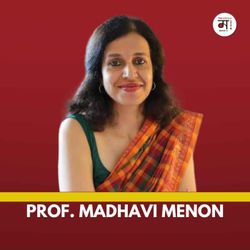
297. What Happens When Desire Refuses to Behave? | Professor Madhavi Menon | The Mohua Show
38:29||Season 1, Ep. 297What happens when desire refuses to behave? What happens when literature unsettles law, queerness challenges our ideas of identity, and the past refuses to stay neatly in the past?In this thought-provoking episode of The Mohua Show, Mohua sits down with Professor Madhavi Menon, Professor of English at Ashoka University and author of The Law of Desire and Infinite Variety: A History of Desire in India, to explore desire, sexuality, queerness, literature, law, language, and power.From Shakespeare and queer theory to Indian courtrooms and Section 377, Professor Madhavi Menon unpacks why desire is so difficult to define and why societies constantly try to make it legible, respectable, and controllable.The conversation also questions the idea that the past was sexually simpler than the present. Professor Madhavi Menon explores how fantasies about a “simpler time” are created, why they become powerful tools of social control, and what happens when we impose modern labels and terminology on histories and cultures that don't fit neatly into them.The episode also dives into the relationship between law and literature, particularly through the history of Section 377 in India. Professor Madhavi Menon discusses how laws that claim to have the final word can themselves be open to interpretation, and why the language used to understand sexuality and desire matters.The conversation further explores the changing visibility of queerness in popular culture, the tension between identity and surveillance, and whether giving desire a name can sometimes make it easier to discipline.Towards the end, the conversation turns to younger generations, relationships, situationships, emotional vulnerability, and the fear of failure. Professor Madhavi Menon shares her observations from the classroom and reflects on why young people may not necessarily be more liberated, but instead may be navigating new forms of pressure and fragility.If you're curious about desire, queerness, sexuality, literature, law, relationships, identity, or the ways society shapes how we understand ourselves, this episode is for you.About the GuestProfessor Madhavi Menon is a Professor of English at Ashoka University and the author of The Law of Desire and Infinite Variety: A History of Desire in India. Her work explores literature, queer theory, sexuality, law, and desire, challenging conventional ideas around identity, relationships, and social norms.-----------------------------------------------------------✅ Subscribe To Our Channel: www.youtube.com/c/TheMohuaShow Stay updated!🔔-----------------------------------------------------------*Follow Us On:**Mohua Chinappa*► Facebook: https://www.facebook.com/mohua.chinappa.9► Instagram: https://www.instagram.com/mohua_chinappa/► LinkedIn: https://www.linkedin.com/in/mohua-chinappa/*The Mohua Show*► Facebook: https://www.facebook.com/themohuashow► Instagram: https://www.instagram.com/themohuashow/► LinkedIn: https://www.linkedin.com/company/themohuashow/-----------------------------------------------------------► Visit Our Website: https://www.themohuashow.com/► For any queries EMAIL: hello@themohuashow.com-----------------------------------------------------------Copyright ©2026 The Mohua Show. All Rights Reserved-----------------------------------------------------------Disclaimer: The views expressed by our guests are their own. We do not endorse and are not responsible for any views expressed by our guests on our Show and its associated platforms.#TheMohuaShow #MadhaviMenon #Desire #Queerness #QueerTheory #Sexuality #Literature #Law #Gender #Section377 #Shakespeare #IndianLiterature #IndianLaw #Relationships #Identity #Language #Culture #Society #Podcast