Share
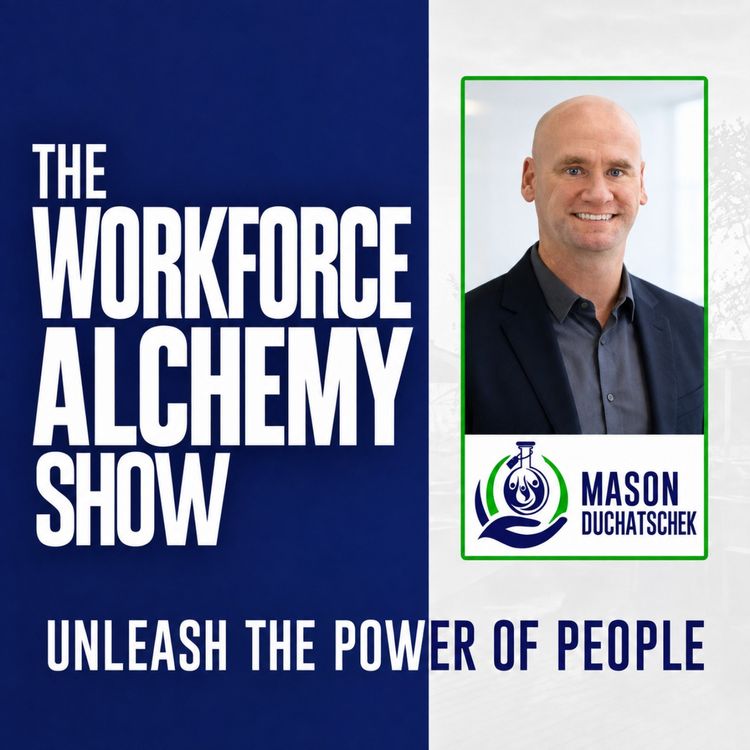
The Workforce Alchemy Show
Recession-Proof Your Business Strategies
Summary
In this engaging conversation, Mason Duchatschek interviews Teresa Bassett, CEO of the Diamond Group, who shares her insights on how businesses can build momentum and recession-proof their operations. Teresa emphasizes the importance of creating one's own economy, focusing on what can be controlled, and the necessity of taking action during downturns. She discusses strategies for attracting high-value clients, the significance of authentic marketing, and the need for businesses to overcome bottlenecks to scale effectively. The conversation also touches on the importance of people systems in organizations and the impact of leadership on business success.
Takeaways
- Create your own economy by focusing on what you can control.
- The cost of inaction is often greater than the cost of action.
- During downturns, businesses should push the gas pedal instead of constricting.
- Authenticity in marketing is crucial for attracting high-value clients.
- Building trust through educational content is essential in client acquisition.
- Companies should treat their employees as their most valuable assets.
- Clarity in target market is key to business success.
- Leadership requires self-awareness and mirroring desired behaviors.
- Hiring the right people is critical to avoid churn and maintain culture.
- Using technology can help businesses scale and overcome bottlenecks.
Chapters
00:00 Introduction to Teresa Bassett and Her Expertise
01:02 Creating Your Own Economy: Focus and Mindset
03:52 Zigging When Others Zag: Strategies for Growth
08:26 Attracting High-Value Clients: Building Trust and Authenticity
11:38 Increasing Brand Presence: The Power of Content Creation
17:03 Overcoming Bottlenecks: Embracing Technology and Systems
20:49 Identifying Bottlenecks in Business Growth
23:19 Empowering Teams for Authentic Performance
26:43 The Importance of Self-Awareness in Leadership
28:20 Building Effective People Systems
31:35 HR as a Second Sales Force
36:20 Leadership Through Self-Reflection
37:33 Clarity in Product and Market Positioning
Learn More with Workforce Alchemy
If you're looking for proven strategies, tools, and secrets to improve leadership, branding, and resilience in business, take the Workforce Alchemy Challenge for free.
👉 Apply here: https://www.WorkforceAlchemy.com
About Our Company
Alchemy was the medieval forerunner of chemistry, based on the supposed transformation of matter. It was concerned with attempts to convert base metals (like lead) into gold. WORKFORCE ALCHEMY is kind of like that, except with people and businesses.
We provide various skill, attitude, and personality-based psychometric assessment tools and training to help employers with employee selection, engagement & retention.
Follow Us:
Facebook: https://www.facebook.com/people/Workforce-Alchemy/100089012713935/
Instagram: https://www.instagram.com/workforcealchemy/
YouTube: https://www.youtube.com/@WorkforceAlchemist
Rumble: https://rumble.com/user/WorkforceAlchemy
#businesstips #entrepreneurship #businesssuccess #businessstrategy #hr #humanresources #masonduchatschek #workforcealchemy
More episodes
View all episodes
163. Are Your Employees in the Wrong Roles? The Hidden Cost of Poor Team Fit
46:24||Ep. 163What if your biggest business performance problem isn't your strategy, your pricing, or your employees' abilities, but the way your people are working together?A business can have talented employees, experienced executives, and well-defined processes yet still lose revenue, struggle with employee engagement, and experience unnecessary workplace conflict. Sometimes the problem isn't who you've hired. It's how their natural strengths, behavioral tendencies, and responsibilities fit together.In this episode of The Workforce Alchemy Show, host Mason Duchatschek sits down with Leon Morales, President and Chief Energy Officer of DNA Behavior International, to uncover how hidden behavioral differences affect leadership effectiveness, employee performance, executive decision-making, workplace culture, and profitability.With more than 35 years of experience, Leon explains why some talented employees struggle in certain roles, why executive teams get trapped in unproductive conflict, and how seemingly minor adjustments to responsibilities can transform team performance.One particularly revealing story involves a 30-person business analytics team that leadership was considering replacing. After evaluating behavioral differences and making targeted adjustments to employees' responsibilities, the team experienced a remarkable turnaround within 60 days.In this episode, discover:How to get the right people in the right roles: Why aligning responsibilities with natural strengths can improve productivity without replacing valuable employees.Why talented teams become dysfunctional: How differences in decision-making, communication styles, and work preferences create workplace friction.The four stages of team development: How to move employees from forming and storming toward norming and high performance.How CEOs can make better decisions: Why presenting multiple options can unlock solutions that executives might otherwise overlook.The danger of hiring people who think like you: How behavioral diversity strengthens executive teams and exposes blind spots.How to build psychological safety: Why employees must feel valued and comfortable speaking up, asking questions, and admitting mistakes.When your best employee becomes your biggest liability: What to do when a high performer generates impressive results while creating fear, conflict, or dysfunction.Why constructive criticism matters: How private, specific, observation-based coaching can strengthen accountability without destroying employee engagement.Mason and Leon also explore the dangers of the "hero leader," the executive who constantly jumps in to solve everything while unintentionally discouraging others from contributing.The central question for business owners and CEOs: Are your employees underperforming, or have you created an environment that prevents them from doing their best work?If you're responsible for improving employee productivity, reducing turnover, building stronger management teams, or eliminating unnecessary workplace drama, this conversation offers practical insights you can apply to your organization.Connect With Our Guest: Leon MoralesWebsite: https://dnabehavior.com/Connect With Workforce AlchemyWebsite: https://workforcealchemy.com/YouTube: https://www.youtube.com/@WorkforceAlchemistFacebook: https://www.facebook.com/ReverseRiskConsultingInstagram: https://www.instagram.com/workforcealchemy/X: https://x.com/WorkAlchemistConnect With Mason DuchatschekWebsite: https://masonduchatschek.com/LinkedIn: https://www.linkedin.com/in/masonduchatschek/More From Workforce AlchemyWorkforce Alchemy Magazine: Discover additional insights on leadership, hiring, employee engagement, and workforce performance.https://workforcealchemymagazine.com/Subscribe to The Workforce Alchemy Show:https://shows.acast.com/themasonduchatschekshow#WorkforceAlchemy #LeadershipDevelopment #BusinessLeadership #EmployeeEngagement #TeamPerformance162. Leadership Under Pressure: Stop Overthinking and Lead with Confidence | Marc Hildebrand
44:56||Ep. 162What if the biggest obstacle to becoming a better leader isn't your employees, your circumstances, or your experience, but the way you think under pressure?Former LAPD sergeant and leadership coach Marc Hildebrand joins Mason Duchatschek to reveal how business owners, CEOs, and executives can stop overthinking, make better decisions, manage difficult employee situations, and inspire confidence when the stakes are high.Drawing on 20 years with the Los Angeles Police Department, Marc shares how he learned to recognize the thinking patterns that undermine leadership effectiveness. He explains why correcting employee behavior without understanding what's driving it can damage trust, how to maintain composure when situations spiral out of control, and why effective leadership begins with mastering your own responses.You'll discover how to:Recognize when overthinking and self-doubt are interfering with leadership decisions.Stay calm and communicate confidently during stressful situations.Understand what's driving employee behavior before attempting to correct it.Use self-coaching to break unproductive thinking patterns.Apply Marc's Growth Model: Reality, Perspective, Emotion, Response, and Results.Improve employee engagement by explaining the reasoning behind difficult decisions.Build trust, accountability, and stronger working relationships by leading through example.Marc also recounts a powerful experience during an exhausting LAPD shift that demonstrates how changing your perspective can completely change your response to a difficult situation.If you're responsible for leading employees, making difficult business decisions, or building a team that performs under pressure, this conversation offers practical leadership lessons you can put to work.About Marc HildebrandMarc Hildebrand is a former LAPD sergeant, leadership coach, and author of Mastering Your Life Through Self Coaching. He co-hosts the Modern Leadership Coaching podcast with his wife.Explore Marc's self-leadership resources: https://modernleadership.usConnect with Workforce AlchemyLeadership, employee selection, employee engagement, and workforce development resources: https://workforcealchemy.com/Connect with Mason Duchatschek: https://masonduchatschek.com/Subscribe to Workforce Alchemy Magazine: https://workforcealchemymagazine.com/Follow The Workforce Alchemy Show for conversations about leadership, hiring, employee retention, and building stronger businesses.https://shows.acast.com/themasonduchatschekshow161. The Leadership Trap: Success at Work, Failure at Home.
37:05||Ep. 161What happens when the ambition that helps you succeed in business starts costing you your marriage, your family, and the life you were working so hard to build?Kevin Davis knows that experience firsthand.Kevin is a lifelong entrepreneur, founder of Maxed Out Man, and author of How I Lost My Left Nut and Other Life Lessons. Early in his marriage, while traveling heavily and helping grow a fast-moving company, Kevin became so consumed by work that his wife gave him an ultimatum: come home and be a husband and father, or she and their young child were leaving.That moment forced Kevin to reevaluate success, leadership, priorities, and personal responsibility.In this episode of The Workforce Alchemy Show, Mason Duchatschek and Kevin discuss how business owners, CEOs, executives, and entrepreneurs can pursue success without sacrificing the relationships that matter most.Kevin explains why he believes work-life balance is really about shifting priorities, why your calendar reveals where your priorities actually are, and why saying you are working hard “for your family” may not match how your family experiences your presence.You’ll hear Kevin’s “threshold method” for mentally transitioning from work mode to family mode, why open communication can prevent resentment, how technology and constant availability can damage relationships, and why building a business should support the life you want instead of consuming it.Mason also shares lessons from his own experience balancing business responsibilities, marriage, deadlines, and family life, leading to a candid discussion about perseverance, communication, responsibility, and knowing when pushing harder may actually be making things worse.Topics include:• Entrepreneurship and marriage• CEO and executive priorities• Work-life balance• Leadership and personal responsibility• Family relationships• Business owner burnout• Technology boundaries• Communication in marriage• Time management for entrepreneurs• Building a business without losing your lifeKevin’s central message is simple: make the main thing the main thing.Connect with Kevin Davis:https://maxedoutman.com/Connect With Workforce Alchemy:https://workforcealchemy.com/Subscribe to Workforce Alchemy Magazine:https://workforcealchemymagazine.com/Subscribe to The Workforce Alchemy Show:https://shows.acast.com/themasonduchatschekshow160. Generous Leadership: How to Build Trust, Initiative and Accountability
43:25||Ep. 160What makes people want to follow a leader instead of simply comply with one?Joe Davis, author of The Generous Leader, joins Mason Duchatschek to explain why effective leadership is not about having all the answers. It is about building trust, creating room for people to contribute, and helping employees perform at a higher level.Drawing on nearly four decades at Boston Consulting Group, Joe shares why saying “I don’t know” can strengthen credibility, how leaders can accidentally train employees to stop offering ideas, and why small acts of recognition can have a major impact on employee engagement.Joe and Mason also explore why generous leadership is not soft leadership. Direct feedback, accountability, and difficult conversations can be some of the most valuable things a leader provides when they are intended to help people grow and succeed.This episode is for business owners, CEOs, executives, managers, HR leaders, and team leaders who want stronger leadership, better employee engagement, and a workplace culture where people take initiative.Learn more about Joe Davis:https://joedavis.com/Workforce Alchemy:https://workforcealchemy.com/Connect with Mason:https://masonduchatschek.com/Subscribe to The Workforce Alchemy Show:https://shows.acast.com/themasonduchatschekshow#Leadership #GenerousLeadership #EmployeeEngagement #ExecutiveLeadership #Management #WorkplaceCulture159. Customer-Driven Leadership: From Slogan to Operating System
37:26||Ep. 159What does it take to move customer focus from a slogan to the way a company operates?Dr. James Killian is the author of Obsessed: Cultivating the Customer-Driven Leader and has spent more than 25 years studying leadership, customer experience, employee experience, and organizational behavior. His career includes leadership roles at Qualtrics, SAP, IBM, and Hogan Assessments, along with teaching at Michigan State University and authoring more than 50 publications.In this episode of The Workforce Alchemy Show, Dr. Killian joins Mason Duchatschek to explain what truly customer-driven leadership looks like and why behavior often reveals the truth long before a dashboard does.One of the clearest tests is what happens when customer needs collide with internal convenience. If a company consistently protects its processes, timelines, metrics, or organizational boundaries at the customer’s expense, then the customer is not really driving the business.Dr. Killian explains his framework for distinguishing customer-avoidant, customer-tolerant, customer-centric, and customer-driven leaders, and why leaders need evidence rather than self-perception to understand where they really stand.The conversation also explores how companies unintentionally train employees to avoid customers.When employees are punished for bad news, forced through layers of approval, or rewarded for speed instead of resolution, helping the customer can become personally risky.That leads to one of the strongest ideas in the episode:Before blaming the person at the counter or on the phone, examine the system behind them.Customer experience problems are often system problems.Mason and Dr. Killian also discuss why employee experience and customer experience should not be managed as separate functions. The stronger view is to connect employee behavior, customer outcomes, operational data, brand promise, and financial performance.Dr. Killian argues that leaders should start with friction. Where are employees losing time, discretion, energy, or the ability to help customers? Recognition programs and rewards can help, but they cannot compensate for broken systems.The conversation also turns to artificial intelligence.As AI handles more customer interactions and decisions, visible ownership, empathy, transparency, and accountability become even more important. AI can automate a decision. It cannot absorb accountability.Dr. Killian also shares a simple leadership shift that can improve problem solving: Instead of asking, “Who did this?”Ask, “What in our system allowed this to happen?”That changes the conversation from blame to improvement.If you are a CEO, business owner, executive, HR leader, customer experience professional, or manager responsible for people and customers, this episode offers a practical framework for building a company where customer focus is not just something leaders say.It becomes part of how decisions are made, how employees are supported, how systems are designed, and how the brand is delivered.Connect With Workforce Alchemyhttps://workforcealchemy.com/Connect with Masonhttps://masonduchatschek.com/https://www.linkedin.com/in/masonduchatschek/Workforce Alchemy Magazinehttps://workforcealchemymagazine.com/Subscribe to The Workforce Alchemy Showhttps://shows.acast.com/themasonduchatschekshow#CustomerDrivenLeadership #CustomerExperience #EmployeeExperience #Leadership #BusinessLeadership #ExecutiveLeadership #CustomerService #LeadershipDevelopment #WorkplaceCulture #WorkforceAlchemy158. Leadership, Loss and the Strength to Keep Going
32:21||Ep. 158What happens when a leader is hit by devastating personal loss, but the business still needs decisions, direction, and stability?Steven Ferrara spent 25 years as CEO of a financial services firm, helping build a small family insurance business into a much larger organization. Then his 23-year-old son, Christopher, died in a car accident. Later, Steven also lost his wife, Allie.In this episode of The Workforce Alchemy Show, Steven joins Mason Duchatschek for a deeply personal conversation about leadership, grief, resilience, delegation, responsibility, and how to keep functioning when your emotional capacity is stretched to its limits.Steven explains why one of the most important lessons he learned as CEO was the need to let go of control.Scaling a business required him to hire capable people, delegate meaningful responsibility, and give those people enough authority to make decisions without constantly coming back to him for approval.That philosophy became critical after Christopher died.Steven knew grief was affecting his judgment. Instead of pretending he could operate normally, he leaned on trusted leaders inside the company and gave them broader authority to keep the organization moving while he focused on his family and his own ability to function.That raises a difficult question:What should a leader do when personal grief collides with professional responsibility?Steven and Mason also explore how to support employees, coworkers, friends, and family members who are grieving.Steven’s advice is simple. You do not have to fix them. You do not always need to give advice. Sometimes the most useful thing you can do is listen, be present, offer practical help, and ask what kind of support they actually need.He explains why excessive sympathy can sometimes create another burden for someone who is already hurting, and why understanding can be more valuable than trying to find the perfect words.Steven also shares practical ways leaders can support grieving employees, including giving them time, covering responsibilities, reducing unnecessary pressure, and reassuring them that work will not collapse while they care for themselves and their families.The conversation also addresses another response to grief that can look productive from the outside: throwing yourself into work. Steven explains why busyness may provide temporary distraction, but unresolved grief still has to be faced. For him, journaling became one of the most important tools in that process. What began as a private way to process anger, sadness, confusion, and love eventually became the foundation for his book, Grief to Gratitude: Embracing the Inner Pathway to Healing and Peace.Steven shares how journaling, meditation, silence, reading, and reflection helped him develop a different relationship with grief and begin moving toward gratitude for the love, relationship, and meaning he could continue to carry forward.This conversation is about more than grief. It is about leadership when judgment is strained, delegation when control is impossible, supporting employees through personal crisis, and recognizing when business has to take a back seat to something more important. If you are a CEO, business owner, executive, HR leader, manager, or anyone responsible for people, this episode offers a thoughtful perspective on leadership, resilience, employee support, responsibility, and the strength to keep going.Connect With Workforce Alchemyhttps://workforcealchemy.com/Connect with Masonhttps://masonduchatschek.com/https://www.linkedin.com/in/masonduchatschek/Workforce Alchemy Magazinehttps://workforcealchemymagazine.com/Subscribe to The Workforce Alchemy Showhttps://shows.acast.com/themasonduchatschekshow#Leadership #Resilience #ExecutiveLeadership #BusinessLeadership #Grief #HRLeadership #EmployeeWellbeing #WorkforceAlchemy157. Brand, Process and Execution: The Formula Behind Business Growth
55:40||Ep. 157What happens when your marketing is doing its job, but your business is not ready to capitalize on the opportunity?Michael Trkolta has spent more than 25 years working across business operations, marketing, publishing, product development, print, and digital growth. As Managing Director of Network Media Group, he has helped businesses improve brand visibility, marketing execution, digital strategy, and the operational systems required to support growth.In this episode of The Workforce Alchemy Show, Michael joins Mason Duchatschek for a practical conversation about what actually makes marketing work.One of the biggest themes is that marketing cannot operate in a silo.You can spend money creating awareness, generating leads, and attracting qualified prospects, but if sales, customer service, or internal processes break down when those prospects arrive, the marketing investment can be wasted.Michael explains why growing businesses need the right people in the right roles, clear processes across departments, measurable KPIs, and a deep understanding of the customers they are trying to reach.The conversation also explores how business owners should evaluate marketing performance when customers may encounter a company through multiple channels before making a purchase. A prospect might see a social post, hear a radio ad, encounter a Google ad, watch a video, and then finally contact the company.Which channel gets the credit?Michael explains why the better question is whether the entire marketing and sales system is producing meaningful commercial outcomes. Mason and Michael also discuss why brand may become even more important as artificial intelligence changes how consumers search for products and services. If buyers already know, trust, and remember your brand, they may look for you directly instead of relying entirely on AI-generated recommendations.That leads to another major theme: people do not just buy products. They buy stories, identities, and brands they connect with. The conversation includes examples from Coca-Cola, Red Bull, Ironman, and other brands that built powerful identities by connecting products with experiences, communities, and stories.Michael also shares what business owners should ask when hiring a marketing agency. Do not just ask what activity the agency will produce. Ask what measurable outcome they are working toward. A strong agency should be able to explain the strategy, identify meaningful KPIs, understand your market, track results, and push back when your assumptions do not match what the data suggests.Michael and Mason also discuss why execution matters just as much as strategy.A business may have strong creative, effective advertising, and a recognizable brand, but one weak customer interaction can undo all the work that brought the prospect through the door. Every employee who interacts with a customer becomes part of the brand experience.If you are a CEO, business owner, executive, sales leader, or marketing professional trying to improve marketing ROI, brand awareness, customer acquisition, sales performance, or business growth, this episode offers practical ideas you can put to work.Connect With Workforce AlchemyWebsite: https://workforcealchemy.com/Facebook: https://www.facebook.com/ReverseRiskConsultingInstagram: https://www.instagram.com/workforcealchemy/X / Twitter: https://x.com/WorkAlchemistYouTube: https://www.youtube.com/@WorkforceAlchemistConnect with MasonWebsite: https://masonduchatschek.com/LinkedIn: https://www.linkedin.com/in/masonduchatschek/Workforce Alchemy Magazinehttps://workforcealchemymagazine.com/Subscribe to The Workforce Alchemy Showhttps://shows.acast.com/themasonduchatschekshow#Marketing #BusinessGrowth #BrandStrategy #DigitalMarketing #MarketingROI #Branding #CustomerExperience #SalesLeadership #BusinessOwners #WorkforceAlchemy156. What Extreme Endurance Teaches You About Leadership and Business
47:45||Ep. 156What can extreme endurance teach you about leadership, business, resilience, and performance under pressure?Quite a lot, according to Neil Thubron.Neil is an executive coach, sales performance expert, keynote speaker, endurance athlete, and author of Yucan: Achieve Any Big Goal Using the 7P Formula for Success. His experience spans the British Army, IBM, multinational sales leadership across 38 countries, offshore sailing, and extreme endurance events including the Ultra Trail du Mont Blanc and the Yukon Arctic Ultra.In this episode of The Workforce Alchemy Show, Neil joins Mason Duchatschek to connect lessons from extreme endurance with the realities CEOs, business owners, executives, and sales leaders face when performance slips, pressure rises, and the path forward becomes uncertain.Neil shares how an early IBM experiment with employee empowerment changed his approach to leadership. Instead of assuming the manager always has the best answer, he learned what can happen when capable employees are trusted to make meaningful decisions and take ownership of results.He also explains why leaders need clarity about the destination while remaining flexible about the route. That means staying close enough to employees and customers to understand what is really happening, especially when conditions change.The conversation also addresses one of the fastest ways to damage performance: fear-based leadership.Bullying, intimidation, excessive reporting, and constant pressure can create activity without creating better results. In sales organizations, that can mean managers spend more time defending forecasts and updating pipeline reports than helping their teams move opportunities forward.Neil and Mason also break down the 7P Formula from Yucan:Purpose: Know why the goal matters and who benefits when you succeed.Preparation: Build the skills, resources, and readiness you will need before pressure arrives.Plan: Turn ambition into a practical execution strategy.Pledge: Move from wanting the result to committing to achieving it.Perception: Pay attention to results and change your approach when the original plan stops working.Pain: Build a strategy for difficult moments before they happen.Persistence: Keep making forward progress instead of allowing temporary setbacks to become permanent defeat.The conversation connects these principles to Ironman triathlons, 100-mile ultramarathons, Arctic endurance racing, offshore sailing, military leadership, corporate sales, and executive coaching.Neil also challenges a common misconception about resilience. Resilience is not simply working earlier, staying later, pushing harder, and expecting your team to do the same until something breaks. Sustainable resilience requires preparation, recovery, perspective, discipline, and protecting the priorities that allow leaders to keep performing over time.If you are a CEO, business owner, executive, sales manager, HR leader, or team leader responsible for producing results through other people, this episode offers practical lessons for leading under pressure, adapting when plans fail, building resilient teams, and pursuing ambitious goals without sacrificing the people responsible for achieving them.Connect With Workforce Alchemyhttps://workforcealchemy.com/Connect with Masonhttps://masonduchatschek.com/https://www.linkedin.com/in/masonduchatschek/Workforce Alchemy Magazinehttps://workforcealchemymagazine.com/Subscribe to The Workforce Alchemy Showhttps://shows.acast.com/themasonduchatschekshow#Leadership #BusinessLeadership #CEO #ExecutiveLeadership #SalesLeadership #Resilience #HighPerformance #LeadershipDevelopment #WorkforceAlchemy155. Accountability vs. Ownership: The Difference That Changes Team Performance | Kyle McDowell
40:56||Ep. 155What happens when talented employees stop trying to do their best work and start doing just enough to stay out of trouble?Kyle McDowell believes that is often a leadership problem, not an employee problem.In this episode of the Workforce Alchemy Show, the host, Mason Duchatschek, talks with Kyle McDowell, former Fortune 10 executive, bestselling author of Begin with We: Ten Principles for Building and Sustaining a Culture of Excellence, and founder of Kyle McDowell Inc.After nearly three decades leading large teams and billion-dollar operations, Kyle saw a recurring problem: leaders relying on authority and fear can get compliance, but they rarely create ownership.Kyle explains why accountability is often confused with punishment, why high performers want ownership, and why leaders must create an environment where people want to do their best work.Mason and Kyle also explore the hidden cost of discretionary effort. Mason shares an example of a company with a $10 million payroll where leadership estimated employees were giving only about 60% of their potential effort. If that estimate is close, how much productivity and profit may be leaking from the business?They also break down a real restaurant experience where every employee appeared to do their individual job well, yet the customer experience still failed. The lesson: individual accountability is not enough if nobody takes ownership of the larger outcome.Kyle shares several of his “Ten We’s,” including:• We challenge each other• We embrace challenge• We lead by example• We take action• We own our mistakes• We measure ourselves by outcomes, not activityThe conversation also tackles organizational identity. Strong cultures are not built through slogans on a wall. They are built when leaders consistently model the behaviors they expect from everyone else.Kyle explains what to do when you inherit a team with low morale, low trust, or poor leadership history. His advice: do not walk in swinging a sledgehammer. Listen first. Observe. Understand why performance is suffering. Set clear standards. Create visible wins. Then model the behavior you expect.He also warns leaders about rewarding activity instead of outcomes. A packed calendar, constant meetings, and visible busyness may look productive, but if the activity does not connect to meaningful results, it should be questioned.Finally, Kyle shares one of the most important leadership lessons of his career. After taking over an unfamiliar and underperforming function, he expected to be promoted when his boss left. He did not get the job. When he asked why, the division president told him: “You never asked for help.”That experience changed how Kyle thought about leadership, vulnerability, expertise, and the belief that executives are supposed to have all the answers.If you are a business owner, CEO, executive, HR leader, sales manager, or team leader looking to improve culture, employee engagement, trust, accountability, ownership, and team performance, this episode is for you.Learn more about Kyle McDowell:https://kylemcdowellinc.com/Connect with Mason:Website: https://masonduchatschek.com/LinkedIn: https://www.linkedin.com/in/masonduchatschek/Connect with Workforce Alchemy:Website: https://workforcealchemy.com/Facebook: https://www.facebook.com/ReverseRiskConsultingInstagram: https://www.instagram.com/workforcealchemy/X / Twitter: https://x.com/WorkAlchemistYouTube: https://www.youtube.com/@WorkforceAlchemistWorkforce Alchemy Magazine:https://workforcealchemymagazine.com/Subscribe to the Workforce Alchemy Podcast:https://shows.acast.com/themasonduchatschekshow#Leadership #OrganizationalCulture #EmployeeEngagement #ExecutiveLeadership #TeamPerformance