Share

The Leadership in Insurance Podcast - Insurtech & Innovation
Why the Insurance Industry Desperately Needs Startups : An Interview with Nico Stainfeld, FinTech Partner at Foundation Capital
Hello and welcome to the latest episode of the Leadership in Insurance Podcast where this week we are lucky enough to be joined by Nico Stainfeld, Partner at Foundation Capital.
Nico is an early-stage investment expert from the team at Foundation Capital, who since 1995 have been leading the way in fintech, enterprise, and consumer investments. Their tag line 'building companies is in our bones' summarises just that and these values are clear throughout this conversation.
We discuss a whole host of topics (and could have spoken for much longer!) but here are some of the highlights...
- Total early-stage focus - the value of honing in & the rarity of 'staying in your lane'
- Foundations 1+1+3 approach
- How many firms actually make it past their first fund?
- 'The Emperor Has No Tech' as Nico puts it - Why the Insurance Industry Desperately Needs Startups
- If they are not going to spend the money, then they need to bring on board the start-ups
- There is no bad risk, only bad premium
- Do we need more of a sense of urgency?
- 2023 insurtech landscape - Profitability is not for losers anymore!
- Technology was meant to transform the insurance industry but it hasn’t - why?
- Embedded solutions and buying behaviour - is there trust?
- Next-generation risk needs next-generation data
- You're not still doing insurtech investing, are you?
- Insurtech locals vs. tourists?
- What's next for insurtech?
Thank you Nico for your time, it was great to speak to you!
This Podcast was brought to you by FinPro, an executive recruitment business that works in the Insurance and Insurtech space.
Our host in FinPro Director, Alex Bond
Please like and subscribe if you enjoyed this podcast
More episodes
View all episodes
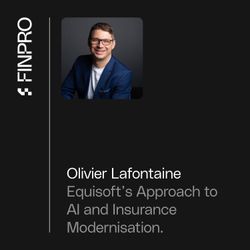
Olivier Lafontaine: Equisoft’s Approach to AI and Insurance Modernisation.
35:43|🎙️ Could the biggest risk in insurance AI be doing nothing?In this week’s Leadership in Insurance Podcast, Alex Bond speaks with Olivier Lafontaine, Chief Product Officer at Equisoft, about autonomous agents and how insurers can modernise their technology.Drawing on 20 years at Equisoft, Olivier explores:🔹 Where AI agents can reduce friction in insurance workflows—and why human oversight and guardrails matter.🔹 How AI coding tools are reshaping the build-versus-buy debate.🔹 How Equisoft/amplify helps carriers modernise incrementally, without replacing their entire core system.For insurance leaders navigating AI adoption and legacy technology, this conversation offers a practical perspective on where to start.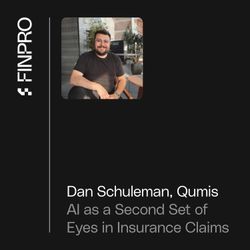
Dan Schuleman (Qumis): AI as a Second Set of Eyes in Insurance Claims
29:05|This week on The Leadership in Insurance, Alex Bond sits down with Dan Schuleman, CEO & Co-founder of Qumis, to explore how AI can help insurance professionals navigate complex policies — and why human judgement still matters.Some of what they cover:📄 Why lengthy policies, amendments and endorsements make insurance a tough challenge for AI 🤝 AI as a co-worker — helping professionals spot issues while keeping people responsible for decisions 💬 Why a good claims experience matters for trust, retention and the wider business 🎯 Measuring AI’s value beyond time savings — 72% of Qumis users reported catching coverage issues they would otherwise have missed 💡 Moving beyond faster processes to entirely new ways of transacting insuranceA must-listen for anyone exploring how AI can strengthen claims decisions and support the people making them.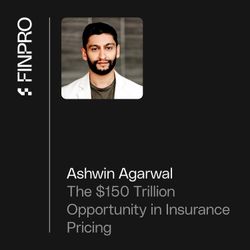
Ashwin Agarwal (Advocate Technologies): The $150 Trillion Opportunity in Insurance Pricing
33:17|This week on The Leadership in Insurance, Alex Bond sits down with Ashwin Agarwal, Founder & CEO of Advocate Technologies, to talk about bringing pricing transparency to commercial insurance.Some of what they cover:📊 An $8 billion data network, built in five years — think "Verisk 2.0" meets Bloomberg for insurance pricing⏳ Insurance pricing is 40 years behind financial markets — and that gap is costing the industry🔄 A 12.5% quote-to-bind ratio that shows just how badly the market needs better benchmarking💡 A bold bet: turning a $3 trillion market into $150 trillion with floating-rate policies and price-indexed hedges🎯 Real innovation vs. cost-cutting — and why insurance needs an investment mindset like Buffett'sA must-listen for anyone tracking where pricing data and market infrastructure in commercial insurance are headed next.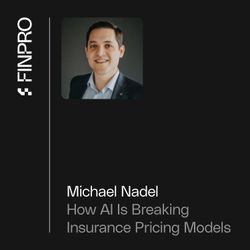
Michael Nadel on How AI Is Breaking Insurance Pricing Models
35:42|This week, host Alex Bond is joined by Michael Nadel, Global Practice Lead at Simon-Kucher, to unpack how AI is upending pricing and monetization in insurance.In this conversation, Michael shares:✅ Why AI is breaking the traditional per-user-per-month pricing model and forcing carriers and vendors toward outcome-based, value-aligned pricing instead✅ The hard truth that AI speeds things up but doesn't always cut costs ✅ How to manage pricing transitions without alienating existing customers✅ The State Farm AI claims lawsuit as a cautionary tale for deploying customer-facing AI in a regulated industry✅ Why he believes specialized judgment and expertise will remain valuable in consulting, even as AI commoditizes more technical knowledgeIt's a conversation about the gap between perceived value and willingness to pay — and why pricing strategy is really a signal of who you are as a business.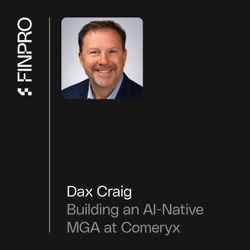
Dax Craig on Building an AI-Native MGA — With a Team of Five
39:32|This week, host Alex Bond is joined by Dax Craig, co-founder and CEO of Comeryx — a serial insurance entrepreneur.In this conversation, Dax shares:✅ His journey from a wireless start-up in grad school to founding two prior insurance ventures and why he came back for a third✅ Comeryx's AI-native approach to small commercial insurance, targeting hard-to-place ENS risks through wholesale brokers with no-touch processing from submission to renewal✅ How a five-person team is aiming to deliver the output of 50-75 employees and why profitability matters more to him than growth for growth's sake✅ Why MGA structures beat traditional carriers on speed and innovation and his warning against MGAs drifting into becoming carriers✅ What's really overlooked in small commercial insurance, and where investors are repeating mistakes from the mid-2010sIt's a conversation about building lean, staying disciplined on profitability, and why real distribution expertise still beats hype in Insurtech.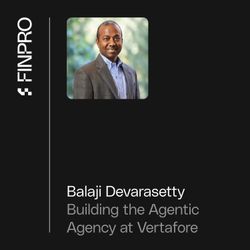
Balaji Devarasetty on Building the "Agentic Agency" at Vertafore
30:47|🎙️ NEW EPISODE: Leadership in Insurance PodcastThis week, host Alex Bond is joined by Balaji Devarasetty, CTO of Vertafore, to talk about bringing AI and outside-industry thinking to insurance technology.In this conversation, Balaji shares:✅ His path from banking to payments to crypto — and how that cross-industry experience shapes how he approaches insurtech✅ Vertafore's vision for the "Agentic Agency," using AI to modernize the tech stack without ripping out legacy systems✅ How the Orange Partner Program's 40+ partners and hundreds of APIs let agencies of every size extend their platform, rather than building everything in-house✅ How AI is closing the gap with other industries — cutting regulatory updates from days to hours and commission reconciliation from hours to minutes✅ Why attracting the next generation of insurance talent means rethinking user experience, not just technology It's a conversation about modernizing legacy systems without ripping them up, why the best insurtech ideas often come from outside insurance, and what it takes to build technology the next generation really wants to use.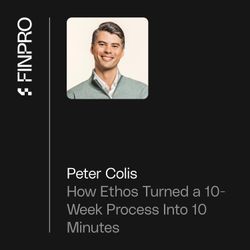
Peter Colis: How Ethos Turned a 10-Week Process Into 10 Minutes
31:05|🎙️ NEW EPISODE: The Leadership in Insurance PodcastThis week, host Alex Bond is joined by Peter Colis, co-founder and CEO of Ethos — the vertically integrated platform that's rebuilding how life insurance gets underwritten, sold and serviced in the US.In this conversation, Peter shares:✅ How Ethos went from a Stanford dorm-room idea in 2016 to the largest direct life insurance marketer in the US✅ The three pivotal decisions behind Ethos's growth — from vertical integration to automating 95% of underwriting decisions instantly (vs. a 20-30% industry average)✅ Why building a real competitor to Ethos is harder than it looks, and what makes their culture different from traditional carriers✅ His view on where LLMs will (and won't) fit into life insurance distribution✅ How Ethos's agent platform is democratizing access to life insurance for the mass and middle marketsIt's a conversation about innovation, execution, and building a category-defining company — as told by someone who's done it twice over: through years of private growth and now as a newly public company.#LeadershipInInsurance #InsurTech #LifeInsurance #Leadership #Ethos #Innovation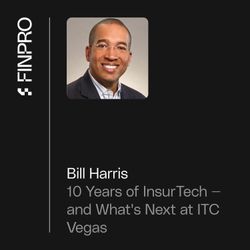
Bill Harris on 10 Years of InsurTech and What's Next at ITC Vegas
28:01|🎙️ NEW EPISODE: The Leadership in Insurance PodcastThis week, host Alex Bond sits down with Bill Harris, co-founder and Chief Customer Officer of ITC (InsureTechConnect), ahead of ITC Vegas 2026 (Sept 29 – Oct 1).In this conversation, Bill shares:✅ How InsurTech has evolved over 10 years — from disrupting legacy carriers to helping them adopt technology at scale✅ The AI investment numbers reshaping the sector, and why he's excited (with eyes open) about where it's heading✅ What's new at ITC Vegas this year, including dedicated Cyber and AI summits✅ Why 80-85 of the top 100 global carriers now show up — and what keeps 9,000+ attendees coming back✅ His take on why the best opportunities at ITC happen outside the formal agenda — in the hallway conversations and serendipitous meetingsIt's a conversation about scale, connection, and why ITC has become the industry's annual homecoming.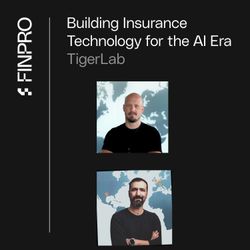
TigerLab's Blueprint: Building Insurance Technology for the AI Era
37:01|In the latest episode, host Dan Briselden sits down with Tobias Bergmann CEO & Founder, and Bassel Hamadeh, Head of Innovation at TigerLab — a company that has been building insurance technology from Southeast Asia to global markets for nearly two decades.What makes TigerLab's perspective different:🔧 Founded before the InsurTech boom — they've lived through 2.0 and are now helping carriers, MGAs and brokers navigate 3.0🌍 Global reach with deep domain expertise — from Malaysia to Europe to an expanding US presence⚙️ A product-led approach that combines a core platform with bespoke builds so clients get exactly what they need, fastWhat else they cover:🤖 Where AI is actually delivering ROI right now and where it isn't ready yet (spoiler: confidently wrong is worse than no decision at all)📧 Why email triage, document ingestion and multilingual support are the unglamorous AI wins that are transforming underwriting workflows💡 The build vs. buy debate and why domain expertise will separate the long-term survivors from the white-labelled newcomers🧑💼 Why human relationships in insurance will remain irreplaceable even as automation reshapes the size and shape of teamsWhether you're an MGA scaling fast, a carrier weighing your AI strategy, or simply curious about what two decades of insurance tech experience looks like in practice, this is a grounded and honest conversation from people who've seen the industry evolve from the inside.🔔 Follow Leadership in Insurance so you never miss an episode#LeadershipInInsurance #InsurTech #AI #CoreSystems #MGA #Insurance #Podcast #TigerLab