Share

The Leadership in Insurance Podcast - Insurtech & Innovation
AI, Innovation, and the Future of Claims: Insights from Heather Wilson, CEO of Clara Analytics
🎙️ AI, Innovation, and the Future of Claims: Insights from Heather Wilson of Clara Analytics
In this week’s episode of The Leadership in Insurance Podcast, I’m excited to share my latest conversation with Heather Wilson, CEO of Clara Analytics. Clara Analytics’ AI Claims platform uses its models and data utilities to fully understand each claim, leading to positive outcomes for both claims professionals and customers alike.
From Heather’s background in Fortune 50 companies, over 25 years’ experience of data analytics and driving innovation at scale, this episode dives deep into AI driven technologies and how that is impacting, and will continue to impact, Insurance Talent.
In this episode, we cover:
🤖 AI in Claims Management: How Clara Analytics' AI platform works post-first notice of loss to assess severity and optimise outcomes
🏢 Innovation at Scale: We discussed the challenges and opportunities in leveraging legacy core systems while implementing new AI and data solutions in the insurance industry. Heather emphasised how freeing data from legacy systems is crucial for AI adoption.
Build Vs Buy: We discussed the ongoing "buy vs. build" debate in the insurance industry and how the growing expectation for AI accuracy is impacting this decision for businesses.
👥 Multigenerational Workforce Challenges: Heather discussed managing expectations across multi-generational teams with Gen Z, Millennials, Gen X, all having different experiences of technology.
Knowledge Transfer: Heather spoke about how remote working has impacted Industry knowledge transfer to Gen Z and millennials from older, more experienced colleagues. We discussed how this best happens in a face-to-face environment and that businesses need to find a way to bridge this gap.
As Heather powerfully stated “We need Gen Z to have Critical Thinking Skills as well as AI skills”
💡 We also discussed how Talent Strategy needs to focus as much on redeploying experienced claims professionals, as well as attracting Gen Z talent from an AI or data background, and how the industry needs all these people to thrive.
🔮 Looking Ahead to what’s on the horizon for Clara Analytics with a focus on agentic reasoning, a new approach to AI that leverages multiple data sources to enhance decision-making for claims adjusters.
My key takeaways from this fascinating conversation with Heather: the insurance industry isn't resistant to innovation—it's navigating complex regulatory frameworks, legacy systems, and multigenerational workforces while embracing transformative change. Success requires respecting both the experience of seasoned professionals and the capabilities of emerging technology.
#InsurTech #AI #ClaimsManagement #Insurance #Leadership #Innovation #WorkforceDevelopment
More episodes
View all episodes
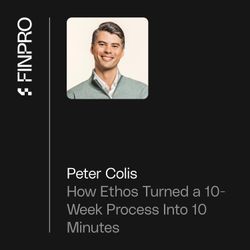
Peter Colis: How Ethos Turned a 10-Week Process Into 10 Minutes
31:05|🎙️ NEW EPISODE: The Leadership in Insurance PodcastThis week, host Alex Bond is joined by Peter Colis, co-founder and CEO of Ethos — the vertically integrated platform that's rebuilding how life insurance gets underwritten, sold and serviced in the US.In this conversation, Peter shares:✅ How Ethos went from a Stanford dorm-room idea in 2016 to the largest direct life insurance marketer in the US✅ The three pivotal decisions behind Ethos's growth — from vertical integration to automating 95% of underwriting decisions instantly (vs. a 20-30% industry average)✅ Why building a real competitor to Ethos is harder than it looks, and what makes their culture different from traditional carriers✅ His view on where LLMs will (and won't) fit into life insurance distribution✅ How Ethos's agent platform is democratizing access to life insurance for the mass and middle marketsIt's a conversation about innovation, execution, and building a category-defining company — as told by someone who's done it twice over: through years of private growth and now as a newly public company.#LeadershipInInsurance #InsurTech #LifeInsurance #Leadership #Ethos #Innovation
Bill Harris on 10 Years of InsurTech and What's Next at ITC Vegas
28:01|🎙️ NEW EPISODE: The Leadership in Insurance PodcastThis week, host Alex Bond sits down with Bill Harris, co-founder and Chief Customer Officer of ITC (InsureTechConnect), ahead of ITC Vegas 2026 (Sept 29 – Oct 1).In this conversation, Bill shares:✅ How InsurTech has evolved over 10 years — from disrupting legacy carriers to helping them adopt technology at scale✅ The AI investment numbers reshaping the sector, and why he's excited (with eyes open) about where it's heading✅ What's new at ITC Vegas this year, including dedicated Cyber and AI summits✅ Why 80-85 of the top 100 global carriers now show up — and what keeps 9,000+ attendees coming back✅ His take on why the best opportunities at ITC happen outside the formal agenda — in the hallway conversations and serendipitous meetingsIt's a conversation about scale, connection, and why ITC has become the industry's annual homecoming.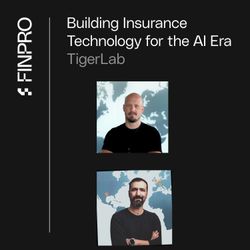
TigerLab's Blueprint: Building Insurance Technology for the AI Era
37:01|In the latest episode, host Dan Briselden sits down with Tobias Bergmann CEO & Founder, and Bassel Hamadeh, Head of Innovation at TigerLab — a company that has been building insurance technology from Southeast Asia to global markets for nearly two decades.What makes TigerLab's perspective different:🔧 Founded before the InsurTech boom — they've lived through 2.0 and are now helping carriers, MGAs and brokers navigate 3.0🌍 Global reach with deep domain expertise — from Malaysia to Europe to an expanding US presence⚙️ A product-led approach that combines a core platform with bespoke builds so clients get exactly what they need, fastWhat else they cover:🤖 Where AI is actually delivering ROI right now and where it isn't ready yet (spoiler: confidently wrong is worse than no decision at all)📧 Why email triage, document ingestion and multilingual support are the unglamorous AI wins that are transforming underwriting workflows💡 The build vs. buy debate and why domain expertise will separate the long-term survivors from the white-labelled newcomers🧑💼 Why human relationships in insurance will remain irreplaceable even as automation reshapes the size and shape of teamsWhether you're an MGA scaling fast, a carrier weighing your AI strategy, or simply curious about what two decades of insurance tech experience looks like in practice, this is a grounded and honest conversation from people who've seen the industry evolve from the inside.🔔 Follow Leadership in Insurance so you never miss an episode#LeadershipInInsurance #InsurTech #AI #CoreSystems #MGA #Insurance #Podcast #TigerLab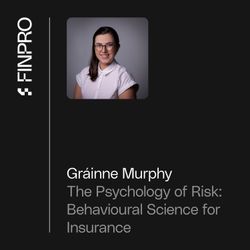
The Psychology of Risk: Gráinne Murphy on Behavioural Science for Insurance
33:43|In the latest episode, host Alex Bond sits down with Gráinne Murphy from Swiss Re's Risk Data Solutions to explore how behavioural science is reshaping insurance — from underwriting to claims to AI adoption.A few highlights:🔹 Why under-insurance persists — people consistently undervalue future risk against present-day cost🔹 How behavioural science helps debias expert judgment in underwriting, especially for novel or high-volatility risks where data alone isn't enough🔹 Why loss aversion is a far more powerful lever than statistics for getting people to buy insurance🔹 Inside Swiss Re's AI transformation — how an "AI champions network" is driving real adoption and trust in AI toolsIf you work in underwriting, pricing, or product — or you're just curious about the psychology behind why people buy (or don't buy) insurance — this one’s a must-listen.#LeadershipInInsurance #InsurancePodcast #BehavioralScience #SwissRe #InsurTech #RiskManagement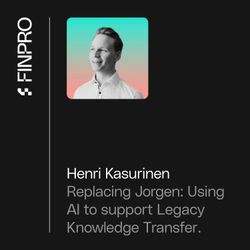
Replacing Jorgen: Henri Kasurinen (Nomain) on AI and Legacy Knowledge Transfer
32:52|In this episode, Alex Bond talks to Henri Kasurinen, CEO and co-founder of Nomain, about modernizing mainframe systems in insurance.Henri explains the problem Nomain was built to solve: organizations often depend on one long-serving employee — the "Jorgen" of the business — who holds deep, irreplaceable knowledge of legacy systems. Nomain's AI-powered knowledge platform aims to capture and scale that expertise before it walks out the door.Key themes from the conversation:🔹 Insurance vs banking — insurers rely more heavily on batch processing, which has slowed modernization compared to banking's real-time demands🔹 The real barrier is cultural, not technical — approval processes, lack of incentives, and fear of losing relevance often block progress more than the technology itself🔹 Finding the right pace — Henri makes the case for incremental, targeted rollouts (team-by-team) over ambitious org-wide overhauls🔹 What's next for Nomain — expansion into Germany first, then the UK, alongside growing excitement about open-source LLMs offering better data sovereignty for European insurersA candid look at what it really takes to modernize legacy infrastructure in a highly regulated industry.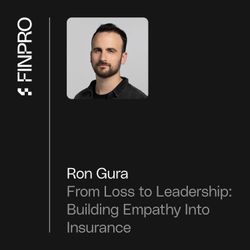
From Loss to Leadership: Ron Gura on Building Empathy Into Insurance
32:36|Ron Gura didn't build Empathy because he saw a market gap. He built it because he'd lived through loss — including the death of his brother — and knew the industry was getting it wrong.Not on purpose. But wrong nonetheless.In the latest episode of The Leadership in Insurance Podcast, host Alex Bond sits down with Ron, Co-Founder & CEO of Empathy, for one of the most human conversations the show has had. Because at the heart of it, that's exactly what this is about.Ron explains how Empathy provides continuity of care through technology and services for life's hardest moments — bereavement, legacy planning, disability — partnering with insurers and employers to transform what has historically been a transactional process into something genuinely supportive.They also get into:✅ Why 91% of beneficiaries are satisfied with claims — but fewer than 1 in 10 repurchase from the same carrier✅ The "orphan claim" problem — 70% of US life insurance claims have no assigned advisor✅ How AI should make humans more human, not replace them✅ What the $100 trillion generational wealth transfer means for life insurers right now✅ Empathy's expansion into Canada and Europe — and what's coming nextWith 200 employees across multiple offices and a live partnership with Zurich serving over 3 million people, this is a company that's moved well beyond vision into execution.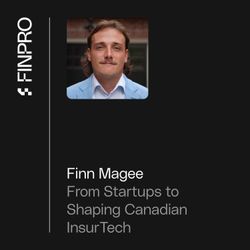
From Startups to Shaping Canadian InsurTech: Finn Magee on Building a Movement and a Fund
30:49|Finn didn't come from insurance. He came from startups — real estate, entertainment, a TPA. But when he looked at the Canadian Insurtech landscape and saw how much was being left on the table, he decided to do something about it.He took over InsurTech Canada. And then he started rebuilding it from the ground up.In the latest episode of the Leadership in Insurance Podcast, host Alex Bond sits down with Finn for a wide-ranging conversation about what it really takes to build an insurtech ecosystem — not just talk about one.Finn shares how he transformed InsurTech Canada from a non-profit meetup organisation into a for-profit, deal-flow-focused platform with a curated membership of 27 companies. And he opens up about his next move: launching an InsurTech investment fund, focused primarily on Canadian companies but with eyes on the US and UK markets too.They also get into:✅ Why Canada lags 2–3 years behind other markets — and what needs to change✅ The talent drain pulling founders and operators south of the border✅ How to evaluate founders (and why people skills matter as much as product)✅ His vision for Canada to become a genuine global hub for InsurTech innovation✅ What it means to have "skin in the game" when you're championing an ecosystemWith a clear commercial mindset, a growing network across carriers, brokers, MGAs, and capital providers — and a fund on the horizon — Finn is one to watch.#LeadershipInInsurance #Podcast #Insurtech #InsurtechCanada #VC #Innovation #Insurance #Canada
Backed by Space, Built for Insurance: James Rendell, Founder of BirdsEyeView
28:51|In the latest episode of the Leadership in Insurance Podcast, host Dan Briselden sits down with James Rendell, CEO and founder of BirdsEyeView — a UK-based insurance technology company backed by the European Space Agency — for a conversation that spans the journey from Lloyds broker to InsurTech entrepreneur.James brings a rare blend of market knowledge and technological curiosity to the world of natural catastrophe modelling. His path didn't start with a lightbulb moment: it started with a genuine obsession with emerging technology, a willingness to show up alone to InsurTech events, and a growing conviction that satellite data could meaningfully improve how the insurance market models and manages catastrophe risk.In this episode, James and Dan explore:🔹 How BirdsEyeView secured backing from the European Space Agency and why that rigorous, year-long process turned out to be the best thing the business ever did🔹 Why building customer-first — really understanding the day-to-day problems underwriters face — has been the key driver of early traction across Lloyds, Australia and the US🔹 The challenge of selling into a market that's historically slow to adopt new technology, and how to shorten the sales cycle by starting niche and expanding from there🔹 Why secondary perils like wildfire and severe convective storm represent the biggest product opportunity and where BirdsEyeView is investing to stay ahead of the incumbents🔹 How AI has already transformed output at BirdsEyeView — and why James believes the science-heavy, domain-specific nature of catastrophe modelling keeps them well ahead of any AI-generated challengersJames also shares his vision for where BirdsEyeView is heading: to become the go-to tool for at-desk hazard modelling and exposure management — bridging the long-standing gap between the lightweight tools underwriters use daily and the sophisticated outputs of the traditional vendor models.If you work in underwriting, exposure management, or catastrophe risk — or if you're building a business in the Lloyds or cover holder market — this episode is full of honest, hard-won insight from a founder who's done it the right way.
CompScience's Josh Butler: Better Data, Better Safety, Better Underwriting
37:29|What happens when you bring self-driving car technology to workplace safety and what does it mean for the future of insurance?In the latest episode of The Leadership in Insurance Podcast, host Alex Bond sits down with Josh Butler, Founder & CEO of CompScience, to explore how AI and computer vision are fundamentally reshaping workers' compensation underwriting and loss control.Josh shares how CompScience was born from a personal moment — a family member's construction site accident — and how the same technology that powers autonomous vehicles is now helping carriers finally understand workplace risk at a level that was never before possible.The results speak for themselves. Customers are seeing injury rates drop by 20-30% — not by replacing loss control professionals, but by giving them the data and authority to act as true consultants rather than just salespeople.On what's driving CompScience's success, Butler is clear:"Leaders need to get hands-on with AI to understand the challenges and opportunities. You can't just watch from the sidelines."Josh and Alex also dig into the wider market landscape: how advances in LLMs and agentic AI have transformed who can build software, why problem-solvers are now more valuable than coders, and the regulatory risks that keep him up at night.A fascinating conversation for anyone at the intersection of AI, safety, and insurance.