Share

The Standard
New cold war on heat? Russia’s Gazprom to cut EU gas
Russia’s state-controlled energy giant Gazprom says it will severely cut gas into the European Union that’s delivered through its main offshore pipeline.
Gazprom says it’s stopping operation of a compressor turbine for Nord Stream 1 - which pipes Russian gas into Germany and is already operating at reduced capacity - due to what it calls the “technical condition of the engine”.
In an escalation of Europe’s energy crisis, the move means from 4am on Wednesday, gas supplies into Germany will drop to 33 million cubic metres each day, or just 20 per cent of capacity.
The Kremlin previously blamed shortfalls caused by maintenance issues on Western sanctions, and says a second compressor is also showing defects.
It adds to winter supply security worries for Germany, where the economy ministry say officials knew of “no technical reason” to reduce deliveries via Nord Stream 1, which stretches 760 miles under the Baltic Sea.
Ukraine president Volodymyr Zelensky and the EU accuse the Kremlin of gas “blackmail”, while in the early hours of Tuesday Russian missiles attacked coastal villages in the Odessa region.
The broken turbine is reportedly still awaiting arrival after maintenance by Siemens Energy in Canada, with Moscow saying it hopes the works will be done “sooner rather than later”.
Siemens Energy says there are customs issues delivering the repaired turbine.
To unravel this latest geopolitical twist, The Leader’s joined by Professor Samir Dani, an operations management expert at Keele University who specialises in global supply chains and the impact of the Russian-Ukraine war on oil and gas prices.
We discuss the EU’s strategy to wean off Moscow-backed gas, the impact on consumers, new sources for energy and how the world’s digital economy is “entangled” with the Russian state.
It follows talks on Tuesday, where EU members agreed to 15 per cent cut in the volume of gas used by member states between August and March, in order to help build-up reserves.
More episodes
View all episodes

Should all serious crimes be tried by a jury? With Geoffrey Robertson KC
31:47||Season 1The government is considering dropping juries for certain criminal cases in an attempt to reduce court backlogs. Will this move undermine British justice?In this bumper episode, host Tamara Kormornick speaks to a vocal opponent to the plans, Geoffrey Robertson KC, former judge and founder of Doughty Street Chambers, where Keir Starmer, David Lammy and Attorney General Richard Herman have all practised. She also hears from criminal barrister and Vice Chair of the Criminal Bar Association, Andrew Thomas KC, who both prosecutes and defends for the Crown, for his view on whether the British justice system needs as many juries.Photograph: Getty Images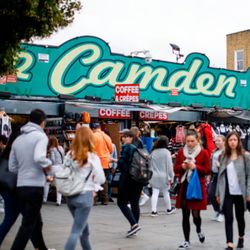
Will Starmer’s constituency lose to the Greens in next week’s council elections? With LSE professor Tony Travers
18:45||Season 1Londoners will head to the polls next week to choose their local councillors. Since 2021, Labour has held the majority across the capital, but new polling suggests that even Sir Keir Starmer’s local borough of Camden may fall to the Greens.In this episode, host Tamara Kormornick speaks to Tony Travers, a professor in the Department of Government at the London School of Economics about the results of the latest London council election poll by JL Partners for LSE. They discuss possible outcomes for the upcoming elections, including which parties might join forces, and the messages Londoners may send to Westminster through the ballot box.
What you need to know about the Renters' Rights Act
21:53||Season 1This week, many Londoners will gain new powers as the Renters' Rights Act comes into force. So what do tenants and landlords need to know?In this episode, host Tamara Kormornick speaks to The Standard’s Homes & Property editor, Prudence Ivey, about the upcoming changes to rental agreements. The two discuss what renters should look out for in the small print, whether the new bill might inadvertently cause a housing shortage, as well as consider if the bill is enough to convince Londoners to vote for Labour in the upcoming council elections.Photograph: Getty Images
Has London’s wisteria craze gone too far?
15:45||Season 1It’s wisteria season — and flower-filled streets in Notting Hill and Kensington have become littered with visitors keen to take a picture in front of pastel coloured houses, with the viral flowers in shot. In this episode, host Tamara Kormornick speaks to Standard journalist Niva Yadav, to discuss whether it is fair to take pictures of people’s homes, and whether security measures will be taken to curb the anti-social behaviour of some wisteria enthusiasts in London.Clips: Universal Pictures, ITV News (Faye Barker)
Is Iran posing a credible security threat to Londoners? With Jonathan Hall KC
19:20||Season 1The repeated attacks on Jewish infrastructure over the past few weeks has led to the opening of a Met police counter terrorism investigation into whether the events are linked. In this episode, host Tamara Kormornick speaks to Jonathan Hall KC, the senior barrister responsible for reviewing the UK government’s terrorism and state threats legislation. The two discuss how the law distinguishes hate crimes from terrorist acts, why the Islamic Revolutionary Guard Corps, the military wing of the Iranian regime, is not currently proscribed as a terrorist group by the UK government, and whether the normalising of extremism is more worrying than extremism itself.
Is it easier than ever to build a start up now? With AXA Startup Angel Competition judges
20:52||Season 1Small and medium-sized enterprises accounted for 99.9% of the UK’s 5.7 million new companies last year. So what does it really take to build a business from scratch today, and how easy is it to secure funding?In this episode, host Tamara Kormornick sits down with Raphael Sofoluke, the founder of the UK Black Business Show and UK Black Business Week, and Izzy Obeng, the founder and CEO of Foundervine. Both guests are on the judging panel for the AXA Startup Angel Competition from AXA Business Insurance - in partnership with the Standard - and in a couple of months they will select impressive entrepreneurs to win top prizes, including £25,000, expert mentoring, plus business insurance for a year. Together, they discuss what it takes to be a founder, including the most common mistakes, tips on how to impress investors, and how to build a supportive business network that pays dividends in the long run.Competition entries close on 21 June 2026. For more information and to enter this year's AXA startup Angel competition, visit https://axastartupangel.standard.co.uk/
How badly will this week's tube strikes affect Londoners?
17:50||Season 1London is about to be brought to a standstill as a result of planned tube strikes. So why have TFL and the RMT not reached a deal, and will the disruption change how Londoners vote in upcoming council elections?In this episode, host Tamara Kormornick speaks to Standard journalist, Megan Howe, for a detailed breakdown of all how the strikes will affect Londoners, as well as the deal that sparked the tube strikes. Plus, Tamara also speaks to The Standard’s political editor, Nic Cecil, for his insights on the position politicians across the party spectrum are taking on the tube worker’s strikes, and to what extent the strikes will impact the upcoming local council election results.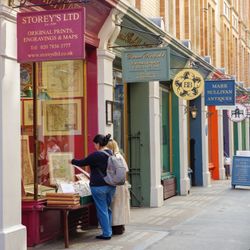
The art of "Londonmaxxing"
10:57||Season 1A new social media phenomenon, Londonmaxxing, is growing in popularity. This 2026 viral trend is about experiencing the essence of the city, and packing in the best activities London has to offer. In this episode, host Tamara Kormornick speaks to the senior social features editor at the London Standard, Katrina Mirpuri, for a breakdown of this trend, plus her methods for exploring London like a curious local.Photograph: Getty Images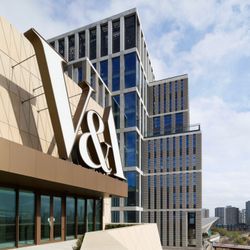
A first look at London’s V&A East Museum, with senior curator Madeline Haddon
13:00||Season 1This Saturday, the Victoria and Albert museum will open its latest outpost, V&A East. So, what can London expect from its new museum?In this episode, host Tamara Kormornick speaks to Dr Madeleine Haddon, the senior curator of V&A East, for a sneak peek of the new museum. Together they discuss the opening exhibitions, the museum's connection to its home in East London, as well as the museum's inspired cafe offering.Image: V&A East Museum © Hufton+Crow