Share

The Intelligence from The Economist
Boom! Episode 2: 1978 - I love the nightlife
•
America was caught in a crisis of confidence, just as our boomers were leaving their youth behind. Their old 1960s dreams of transforming the country were gone, but new dreams of liberation took their place, from the women’s movement to a populist onslaught against big government – via Manhattan’s wildest nightclub.
To listen to the full series, subscribe to Economist Podcasts+.
If you’re already a subscriber to The Economist, you have full access to all our shows as part of your subscription. For more information about how to access Economist Podcasts+, please visit our FAQs page or watch our video explaining how to link your account.
This episode draws on audio from: CBS, ABC, AP and Getty.
More episodes
View all episodes
Tocqueville Road Trip: 4. Independence of mind
36:13|Harvard University is supposed to be a place of intellectual freedom. But its students and staff face two kinds of tyranny, both of which feature prominently in Alexis de Tocqueville’s work.Guests and HostsJohn Prideaux, The Economist’s US editor and host of “Tocqueville Road Trip”Harvey Mansfield, retired Harvard ProfessorAlan Garber, 31st president of Harvard Topics Tocqueville’s “Democracy in America”The battle over freedom of expression Harvard and the Trump Administration Let us know what you think. Email podcasts@economist.com To listen to the full series, subscribe to Economist Podcasts+If you’re already a subscriber to The Economist, you have full access to all our shows as part of your subscription. For more information about how to access Economist Podcasts+, please visit our FAQs page or watch our video explaining how to link your account.
Tocqueville Road Trip: 3. Boundless continent
47:19|In a township in rural Michigan, the residents choose to square up against some of the most powerful forces in the country. What can the campaign against a giant AI data centre teach us about democracy in America?Guests and HostsJohn Prideaux, The Economist’s US Editor and host of “Tocqueville Road Trip”Kathryn Haushalter, Saline township resident Colin Sullivan, senior vice-president of Related CompaniesTopics Tocqueville’s “Democracy in America”Data centers in rural America How the American township functionsLet us know what you think. Email podcasts@economist.com To listen to the full series, subscribe to Economist Podcasts+If you’re already a subscriber to The Economist, you have full access to all our shows as part of your subscription. For more information about how to access Economist Podcasts+, please visit our FAQs page or watch our video explaining how to link your account.
Trailer: Tocqueville Road Trip
03:27|When Alexis de Tocqueville visited America from France in 1831 he saw a new kind of society. Not just a country, but an idea that would change the world. His book “Democracy in America” was a big influence on later generations of writers and thinkers, including The Economist’s US Editor John Prideaux. Now, 250 years after its birth, the vitality of that democracy is under question. In this series, John retraces the route Tocqueville took to find out how much of what inspired Tocqueville about America remains—and how worried we should be about what’s changed.Out nowFind the show here
Coming in Andy: Britain's prime minister-in-waiting
24:29|Andy Burnham won a by-election he needed in order to challenge Sir Keir Starmer, Britain’s prime minister. We look at the path ahead for him. The Iran deal seemingly promises a financial windfall for the country and its regime—one that its battered economy sorely needs. And the mythmaking of presidential libraries, as seen in the latest one: Barack Obama’s.Watch extended clips from Insider here.Guests and host:Hugo Gye, British political correspondentFraser McIlwraith, foreign correspondentJon Fasman, senior culture correspondentJason Palmer, co-host of “The Intelligence”Topics covered: British politics, Andy Burnham, Labour party Iran war, Iran deal, Iran’s economyBarack Obama, presidential librariesGet a world of insights by subscribing to Economist Podcasts+. For more information about how to access Economist Podcasts+, please visit our FAQs page or watch our video explaining how to link your account.
First rate: Kevin Warsh’s Fed debut
25:08|As expected, the new Federal Reserve chairman kept rates steady. More interesting were what he did and did not say. How will he handle inevitable pressure from President Donald Trump? After nearly disappearing altogether, Germany’s left-wing Die Linke party is roaring back—particularly among the young. And a selection of our readers’ examples of upward-management tips and tricks.Guests and host:Archie Hall, US economics editorTom Nuttall, Berlin bureau chiefAndrew Palmer, Bartleby columnistRosie Blau, co-host of “The Intelligence”Jason Palmer, co-host of “The Intelligence”Topics covered: Federal Reserve, interest rates, monetary policy, Iran warGermany, Die Linke, left-wing politicsmanagement, managing managementGet a world of insights by subscribing to Economist Podcasts+. For more information about how to access Economist Podcasts+, please visit our FAQs page or watch our video explaining how to link your account.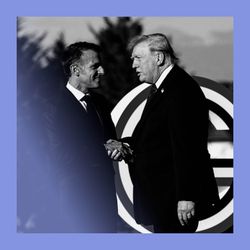
View from the summit: what did the G7 achieve?
22:54|Geopolitics has dominated this year’s G7 political meeting in Evian, France. Donald Trump offered scant detail on the Iran peace deal but leaders promised to boost support for Ukraine. Though prostitution in Japan has a long history, recent scandals have drawn it into the spotlight. And Britain’s Country Life magazine has a winning formula: ignore the news. Guests and host:Sophie Pedder, Paris bureau chiefMoeka Iida, East Asia reporterCatherine Nixey, Britain correspondentRosie Blau, host of “The Intelligence”Topics covered: G7, Donald Trump, Iran, UkraineProstitution, Japan, sex workCountry Life, publishing, BritainListen to what matters most, from global politics and business to science and technology—Subscribe to Economist Podcasts+For more information about how to access Economist Podcasts+, please visit our FAQs page or watch our video explaining how to link your account.
Local, an aesthetic: the deglobalisation of fun
22:58|The World Cup may seem to be proof that the digital commons centralises a global audience. We find that entertainment is in fact fragmenting, with big implications for soft power. Our series examining America’s 250 years of history tackles the AIDS crisis and the war on terror. And mosquitoes may in fact be attracted to a gold-standard repellent. Guests and host:Tom Wainwright, media editorAnnie Crabill, senior digital editorMatt Kaplan, science correspondentRosie Blau, co-host of “The Intelligence”Jason Palmer, co-host of “The Intelligence”Topics covered: global media, World Cup, cultureAmerican historymosquitoes, scienceGet a world of insights by subscribing to Economist Podcasts+. For more information about how to access Economist Podcasts+, please visit our FAQs page or watch our video explaining how to link your account.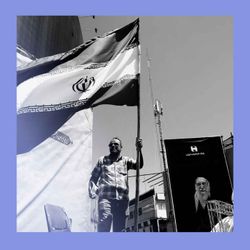
On the home strait? A path to peace in Iran
23:28|Despite exchanges of missiles and drones between Israel and Lebanon, the start of a deal was struck overnight. What exactly has been agreed, and will it hold? We examine the idea that part-nationalisation could be a way to share the coming onslaught of AI wealth. And our series on World Cup contenders concludes with a look at England’s side.Guests and host:Gregg Carlstrom, Middle East correspondentAlex Domash, economics correspondentJon Fasman, senior culture correspondentRosie Blau, co-host of “The Intelligence”Jason Palmer, co-host of “The Intelligence”Topics covered: Iran war, Middle East, AmericaAI, wealth redistributionWorld Cup, EnglandGet a world of insights by subscribing to Economist Podcasts+. For more information about how to access Economist Podcasts+, please visit our FAQs page or watch our video explaining how to link your account.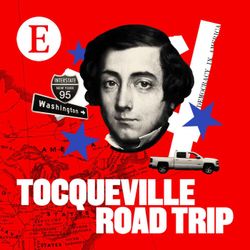
Tocqueville Road Trip: 2. Against all obstacles
44:23|Tocqueville saw America’s faith in its own democracy as a vital force. But these days the majority of Americans think the country is headed in the wrong direction. Can a group of maximum security prisoners in Sing Sing offer a vision of how to get back on track?Guests and HostsJohn Prideaux, The Economist’s US EditorSean Pica, executive director of Hudson Link for Higher Education in Prison Jean Frantz, prisoner at Sing Sing Correctional Facility Topics Alexis de Tocqueville’s views on voluntary associationsSing Sing prison education programmePrisoners’ views on the American dream Let us know what you think. Email podcasts@economist.com To listen to the full series, subscribe to Economist Podcasts+If you’re already a subscriber to The Economist, you have full access to all our shows as part of your subscription. For more information about how to access Economist Podcasts+, please visit our FAQs page or watch our video explaining how to link your account.