Share
The History of England
AAG 1646-1649 To Kill a King
Season 8, Ep. 47
•
In 1646, Charles secretly left Oxford, not sure whether to appeal to the English in London, or the Scots at Newark. It was the start of a long process of three years, which would see torturous negotiations - and the rise of extraordinary ideas about the rights of the people and religious toleration, and how to make all the blood worthwhile in a new world. It was a journey that would lead to the scaffold on a cold morning in January 1649.
For maps, resources, transcripts or to become a member, head for https://thehistoryofengland.co.uk. (Please note the 'the' part!)
More episodes
View all episodes
The Uprising
14:12||Season 9Paul Greengrass' The Uprising covers the Peasant's Revolt in 1381 from start to bloody finish. Did you see it? What did you think? This is a few minutes from me about how I found it, and an invitation tio come along to post your views with other listeners on the History of England Podcast Group https://www.facebook.com/groups/314746805305339/
English Food with Neil Buttery
57:10||Season 9Eating in England and indeed Britain is delightfully varied, with a diversity mix of heritages and styles from across the world. Neil Buttery, chef, food historian and host of the British Food History Podcast, joins me to answer some questions, and consider the origins of a few iconic English dishes
25. 455 The Immortal Seven
43:22||Season 9, Ep. 25The very same day that the Seven Bishops were acquitted, another seven men met at a secret meeting, and together composed as letter. The ex-admiral, Arthur Herbert, smuggled it to the Netherlands, to present it to William of Orange. The Immortal Seven had sent William the invitation he needed.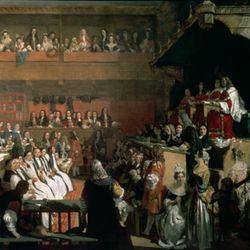
24. 454 Trial of the Seven Bishops
43:44||Season 9, Ep. 24Full of confidence at his progress, in 1688 James decided he would suffer no more equivocation from the Church of England. The Indulgence was re-issued, this time with a command that it be read by every priest from every pulpit - thus aligning them with a policy they detested, making them royal servants. The atmosphere was hot with conflict - and everything was heightened by the news of a birth - of a royal prince and heir. The Three kingdoms would now permanently be held by a Catholic. At Whitehall, Seven Bishops decided it was time to stand their ground.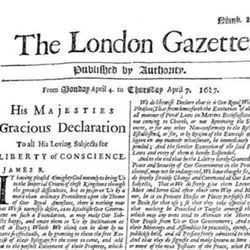
23. 453 Royal Indulgence
48:41||Season 9, Ep. 231686 had seen progress for James - but he was puzzled and frustrated by Anglican opposition from the English and Scottish parliaments. 1687 saw a continuation of the old strategy to raise the status of Catholics, and stifle independence of civil and military institutions. But it would also see a new strategy - to bypass parliament, and appeal to Dissenters as well as Catholics.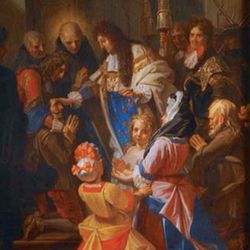
22. 452 A New Reformation
42:40||Season 9, Ep. 22From a happy start in 1685, James had begun to hit resistance in England to his campaign for Catholic emancipation. In 1686, he planned to accelerate the process. He expected rapid success in Ireland and Scotland, and confidently expected that education, propaganda, and the reality of supreme royal authority would subdue any resistance in England and Wales.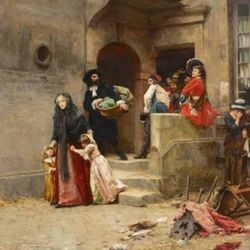
21. 451 Exodus
44:52||Season 9, Ep. 21As the English parliament was preparing to sit, news came in of a protestant cataclysm in the making in October 1685, and soon after refugees started arriving with horror stories of persecution. The rumours were confirmed. Louis XIV had revoked the Edict of Nantes which protected 800,000 French Protestants, and made their religion illegal. Nor was this the only matter on the minds of MPs as they assembled, and heard their King address them on 9th November.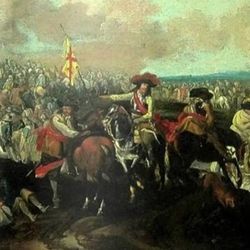
20. 450 Beat Your Drums
47:11||Season 9, Ep. 20At the parliament on April 1685, Scotland demonstrated how loyal subjects should treat their king - an example which was duly followed by their southern neighbours soon afterwards. Yet despite this enthusiastic reception, within weeks James faced two rebellions. In Western Scotland the Earl of Argyl raised the fiery cross to summon the clans, and in South West England the Duke of Monmouth was joined by thousands of rebels eager to fight for religious freedom. The outcome would be soaked in blood.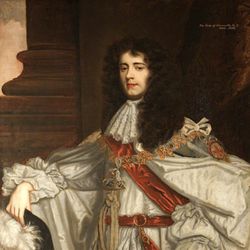
19. 449 King James II of Great Britain
45:46||Season 9, Ep. 19The reign of James II and the Glorious Revolution was a central part of the national story built by Whig historians. But since the 20th century the picture has been heavily revised with new perspectives, such as the view from all three kingdoms, a more nuanced view of James and his intentions, criticisms of the idea of a bloodless revolution, how much the voice of the people mattered - and was it a Revolution at all? Or a conserative assertion of ancient right? This episode is about James and the historiography Glorious Revolution.