Share
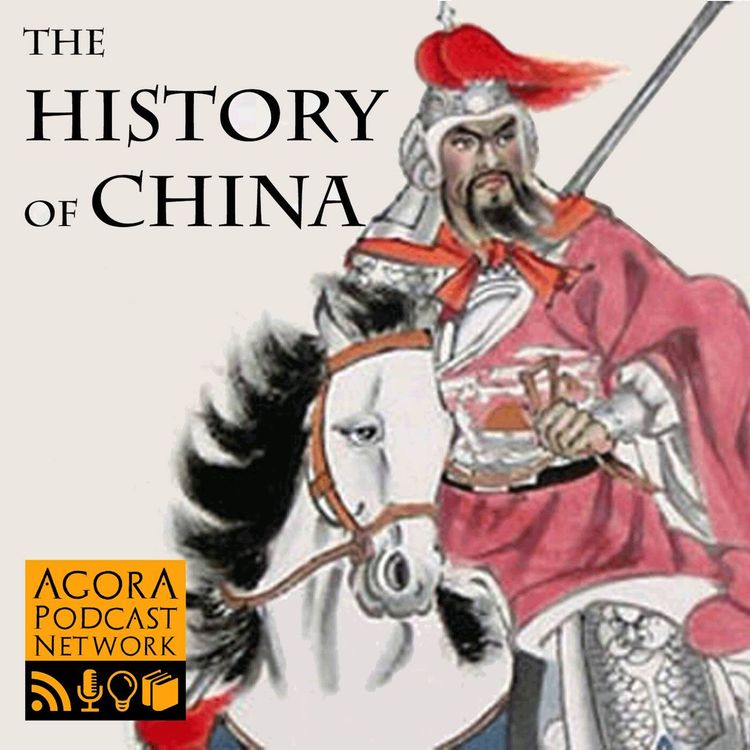
The History of China
#99 - Tang 17: The Battle of Talas
•
The armies of the Far West Anxi Protectorate of the Tang face down a force commanded by the ascendant Abbasid Islamic Caliphate, fresh off its victorious insurgency over the Umayyad Caliphate. But in this one and only clash between Chinese and Arab might, the ramifications for both will be felt long after the blood dries on the battlefield along the Talas River.
Time Period Covered:
May- September, 751
Major Historical Figures:
Tang Dynasty – Protectorate of Western Pacification
Emperor Xuanzong of Tang (Li Longji)
Governor-General Fumeng Lingcha
Governor-General Gao Xianzhi (Go Seonji)
Bian Lingchen, Court Eunuch on Assignment to Anxi
Lieutenant Li Siye
Officer Duan Xiushi
Transoxiana:
Lesser Bolü Kingdom (Gilgit-Baltistan, Pakistan)
Shi Kingdom (Tashkent, Uzbekistan)
Turgesh Khannate
Karluk (Qarluq) Turks
Tibetan Empire
Abbasid Islamic Caliphate:
Governor Ziyad ibn Salih
Major Works Cited:
Bartold, Vasily (1928). Turkestan Down to the Mongol Invasion (Trans. T. Minorsky & C.E. Bosworth).
Chen, Sanping (2012). Multicultural China in the Early Middle Ages.
Golden, Peter B. (1990). “The Kharakhanids and early Islam” in The Cambridge History of Early Inner Asia, vol. 1 (ed. Denis Sinor).
Hoberman, Barry (Sept/Oct. 1982). “The Battle of Talas” in Aramco World, vol. 33 no. 5.
Ibn al-Athir, Ali (ca. 1231) The Complete History.
Sima, Guang (1084). Zizhi Tongjian.
Soucek, Svak (2000). A History of Inner Asia.
Starr, S. Frederick (2004). Xinjiang: China’s Muslim Borderland.
Szczepanski, Susan (2015). “Battle of Talas River” in About.com: http://asianhistory.about.com/od/centralasia/a/BattleofTalas.htm
Tsien Tsuen-hsuin (1985). “Chemistry and Chemical Technology, Part 1: Paper and Printing.” In Science and Civilization in China: Vol. 5.
Twitchett, Denis (ed.) (1979).“Hsuang-Tsüng: Li-Lin Fu’s Regime” in The Cambridge History of China, vol. 3.
More episodes
View all episodes
#1 - Origins 1: The Mythical Origins Of The Middle Kingdom
29:52|In episode 1, we begin with an introduction to this podcast, followed by a brief overview of what we’ve come to know about early human migration and settlement in the region that will eventually become China. Finally, we’ll delve into the mythological origin story that purports to tell of the three divine Sovereigns who would create and then rule over the Han people. I’m very excited to be getting this journey underway! Once again welcome, and thank you for listening. UPDATE: As of 08/28/2016, this episode has been completely rebooted from the ground-up. Enjoy!Transcript Available (paywalled): TranscriptDonate to Help the Show!: https://www.patreon.com/thehistoryofchina
#2 - Origins 2: Five Emperors, Twelve Islands
27:17|This episode, we enter the second half of our gaze into the Chinese origins mythos. Focusing on the Five Emperors descended from the Yellow Emperor, this period marks the beginning of the transformation of the Huaxia People from settled tribe, to dynastic feudal kingdom. There will be betrayal, cataclysmic flooding, bird kingdoms, the Vietnamese, magical earth, and – of course – dragons. UPDATE: as of 08/28/2016, this episode has been fully rebooted from the ground up. Enjoy!Transcript Available (paywalled): TranscriptBecome a Patron: Click Here
#3 - Xia 1: The Xia, China's First Dynasty
26:10|This week we move into the beginnings of China’s dynastic period where rulers began favoring birthright over merit – and the consequences will be almost immediately apparent. Beginning with the triumphant reign of the heroic Yu the Great, the Xia’s semi-accidental trip into dynastic succession will swiftly spiral downward, eventually leaving a usurping general in power, and the House of Xia all but exterminated after decades in exile. Rebooted as of 09/06/2016
#4 - Xia 2: Revenge of the Xia!
20:20|This time, we take an in depth look into Shao Kang, the prince born in hiding who would rise from his dynasty's ashes to seek revenge against the Usurper-General Han Zhuo who had ruthlessly pursued him. Through a combination of skill, luck, and patience, Shao Kang will cobble together a force able to meet Han Zhuo's armies in battle.
#5 - Xia 3: The Fall Of The House Of Xia
28:46|This episode we cover our source materials, and then delve into the latter half of the Xia Dynasty post Shao Kang's restoration. It all ends with the corrupt and cruel Emperor Jie coming face to face with the Army of Shang bearing down on him, intent on ending his reign of terror once and for all.
#6 - Shang 1: Them Bones, Them Bones, Them Oracle Bones
34:17|We take a "time out" from our forward-marching chronology to examine the evidence we have of the Shang state, and how we came to know what we know about his period. Mostly, it's about what we can learn from reading divine messages off of dragon bones.
#7 - Shang 2: The Shang Triumphant
39:51|In this first of two parts, we look at the first half of the Shang Dynasty beginning with the victory and reign of Tang "The Perfect" and leaving off 21 emperors, five capitals, and 400 years later with the amazing reign of Wu Ding and his warrior-priestess wife Lady Fu Hao. Along the way, there are warlike redheaded Xirong, Demonic Mongols, and Blue Barbarians.
#8 - Shang 3: The Shang Vanquished
27:19|This episode we chronicle the decline and eventual fall of the once-glorious Shang Dynasty to the same vices and evils that spelled doom for the Xia centuries ago. In the West, a powerful new clan calling itself the Zhou has risen to power, eventually with an eye to make right what the final Shang Kings have twisted so horribly wrong. Along the way, we'll colonize the Japanese islands and raise a minor Chinese prince to the King of Korea.
#9 - W. Zhou 1: Heaven Does Not Make Propositions
31:52|The self-proclaimed Kung Wu of Zhou stands triumphant amid the smoking ruins of the Shang Dynasty... but though the war is over, victory is far from assured. With his premature death, his unready heir will prompt rebellion against the fledgling Zhou Dynasty - not only by the Shang remnant, but also his own uncles! To cement their hold on power, the Zhou will be forced to construct a new standard of legitimacy: The Mandate of Heaven.