Share

Money Talks from The Economist
Money Talks: Click and collect a grocery victory
Grocery shopping is a giant prize–accounting for around $800bn of spending a year in America. But it is also a notoriously tough business, with price-sensitive customers keeping a tight lid on margins. Add in online delivery and it often becomes unprofitable. Convincing customers to buy more of their groceries online is the holy grail for a digital-native company like Amazon, which is a newcomer to the business. But Amazon’s “technology first” approach hasn’t been enough to win over the market, or the customers who still see the value of shopping in-store. This leaves grocery stalwarts like Walmart with an opportunity–to expand online, while utilising their foothold in brick-and-mortar stores. With margins so tight, yet the lure of convenience strong, what is the future for online grocery shopping?
On this week’s podcast, hosts Tom Lee-Devlin, Alice Fulwood, and Mike Bird examine how the grocery business is adapting to the digital age. Bill Aull, leader in the North America Retail and Consumer Practice at Mckinsey, explains how online grocery shopping has struggled to make a mark in the US. And Jason Del Rey, author of "Winner Sells All", lays out what the battle between Amazon and Walmart tells us about the future direction of the industry.
Sign up for our new weekly newsletter dissecting the big themes in markets, business and the economy at www.economist.com/moneytalks
For full access to print, digital and audio editions, subscribe to The Economist at www.economist.com/podcastoffer
More episodes
View all episodes
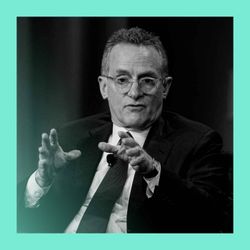
Veteran investor Howard Marks on AI debt
36:20|It's Mike's last show. And there was only one thing he wanted to talk about: the biggest story on his beat. He speaks to legendary distressed debt investor Howard Marks about the AI boom and the risks of a blow-up.Guests and hosts:Howard Marks, co-chair of Oaktree Capital ManagementMike Bird, co-host of “Money Talks”Ethan Wu, co-host of “Money Talks”Alice Fulwood, co-host of “Money Talks”Topics covered:AnthropicAI debtInvestingTranscripts of our podcasts are available via economist.com/podcasts.Listen to what matters most, from global politics and business to science and technology—subscribe to The Economist.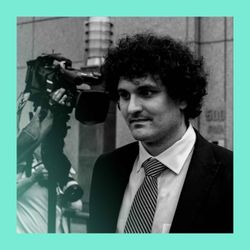
Sam Bankman-Fried on effective altruism
50:09|Sam Bankman-Fried was the poster child for effective altruism. Before his arrest, he had done more than anyone to promote the movement. Today, no one has done more damage. Yet, in Silicon Valley, EAs (as adherents are known) are everywhere. Should you worry that a philosophy that inspired the man behind one of America’s largest frauds has taken root in the world’s most important firms? We ask Bankman-Fried himself. We also speak to one of the founding fathers of the EA movement.Guests and hosts:Sam Bankman-Fried, former CEO of FTXToby Ord, co-founder of Giving What We CanShera Avi-Yonah, The Economist’s US business correspondentEthan Wu, co-host of “Money Talks”Alice Fulwood, co-host of “Money Talks”Topics covered:Effective AltruismAISilicon ValleyTranscripts of our podcasts are available via economist.com/podcasts.Listen to what matters most, from global politics and business to science and technology—subscribe to Economist Podcasts+.For more information about how to access Economist Podcasts+, please visit our FAQs page or watch our video explaining how to link your account.
A Nobel-winning economics lesson
37:46|It’s that time of year again. An economist gets a call from Sweden–and we then badger them to speak to us. We’re pleased to say Michael Woodford, who shared the award with Robert Hall, returned our call. The prize committee credited the duo with rebuilding macroeconomics on “microfoundations”: representing economic outcomes as the result of the behaviour of individuals and businesses. On this week’s show, Mr Woodford explains his theory.Guests and hosts:Michael Woodford, Columbia UniversityHenry Curr, The Economist’s acting business affairs editorAlice Fulwood, co-host of “Money Talks”Ethan Wu, co-host of “Money Talks”Topics covered:Nobel prize for economicsEconomic theoryNew Keynesian economicsTranscripts of our podcasts are available via economist.com/podcasts.
Are populists wrecking your portfolio?
35:26|Investors have a big problem. Their sharpest tool, diversification, is getting blunter. And one possible culprit may surprise you: Donald Trump. A growing number of investors blame populist politicians for upending the world order and ruining the logic behind their most important strategies. Are they right?Guests and hosts:Ed Cole, of Man GroupJosh Roberts, The Economist’s acting Britain editorAlice Fulwood, co-host of “Money Talks”Ethan Wu, co-host of “Money Talks”Topics covered:PopulismInvestment strategiesInflationTranscripts of our podcasts are available via economist.com/podcasts.Listen to what matters most, from global politics and business to science and technology—subscribe to Economist Podcasts+.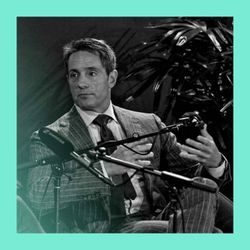
How to short AI with Carson Block
29:54|Carson Block is not the only investor asking whether the AI rally can last. But the famed short-seller has a distinctive theory of how it will unravel. In this special live show, he explains how he is betting against the AI boom.Guests and hosts:Carson Block, CEO of Muddy Waters ResearchAlice Fulwood, co-host of “Money Talks”Mike Bird, co-host of “Money Talks”Topics covered:AIShort sellingMuddy Waters ResearchTranscripts of our podcasts are available via economist.com/podcasts.
Big booze is reinventing itself
38:01|Global alcohol consumption fell by 2% in 2025. It was the third straight year of decline, as younger drinkers prove they are not as boozy as their parents. As drinks-makers face an uncertain future, competition is sharpening. With brewers, vintners and distillers expanding into new domains, which companies hold the advantage?Guests and hosts:Jacob Aarup-Andersen, CEO of CarlsbergTrevor Stirling, analyst at BernsteinAvantika Chilkoti, global business writer at The EconomistAlice Fulwood, co-host of “Money Talks”Ethan Wu, co-host of “Money Talks”Topics covered:Alcoholic drinks industryReady-to-drink cocktailsAlcohol-free drinksTranscripts of our podcasts are available via economist.com/podcasts.Listen to what matters most, from global politics and business to science and technology—subscribe to The Economist.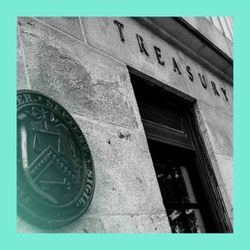
The great global bond sell-off
38:46|The global bond sell-off is deepening. This week, the yield on ten-year American Treasuries surpassed 5%, its highest level in two decades. Meanwhile British gilts, German bunds and Japanese government bonds are all soaring to multi-year highs. Investors are under pressure from persistent inflation, government debt and the AI borrowing binge. We ask whether high long-term yields are here to stay.Guests and hosts:Mark Dowding, Chief Investment Officer for BlueBay fixed incomeMike Bird, co-host of “Money Talks”Alice Fulwood, co-host of “Money Talks”Topics covered:Bond marketsScott BessentAI infrastructure buildoutTranscripts of our podcasts are available via economist.com/podcasts.Listen to what matters most, from global politics and business to science and technology—subscribe to The Economist.
Why the AI giants are acting like banks
36:38|Since 2022, the AI boom has been the biggest story in financial markets. It has turned some of the largest tech companies into major financial players, lending and borrowing from one another. This week, we dig into how worried you should be about that web of “circular” AI financing.Guests and hosts:Shailesh Chitnis, The Economist's global business writer Mike Bird, co-host of “Money Talks”Alice Fulwood, co-host of “Money Talks”Topics covered:NvidiaAI boom“Circular” financingTranscripts of our podcasts are available via economist.com/podcasts.
A long weekend in Jackson Hole
34:31|Each August, the world’s central bankers descend on Jackson Hole. Normally, the coffee-break chatter is about policy. But this year, the big question was what Kevin Warsh, the enigmatic new Fed Chair, was really thinking—about how the Fed works, its independence and monetary policy. His speech was surprisingly revealing. Our acting economics editor tells us what he learned.Guests and hosts:Archie Hall, The Economist’s acting economics editorAlice Fulwood, co-host of “Money Talks”Ethan Wu, co-host of “Money Talks”Topics covered:Kevin WarshJackson Hole Economic SymposiumFederal ReserveTranscripts of our podcasts are available via economist.com/podcasts.Listen to what matters most, from global politics and business to science and technology—subscribe to The Economist.