Share
Babbage from The Economist
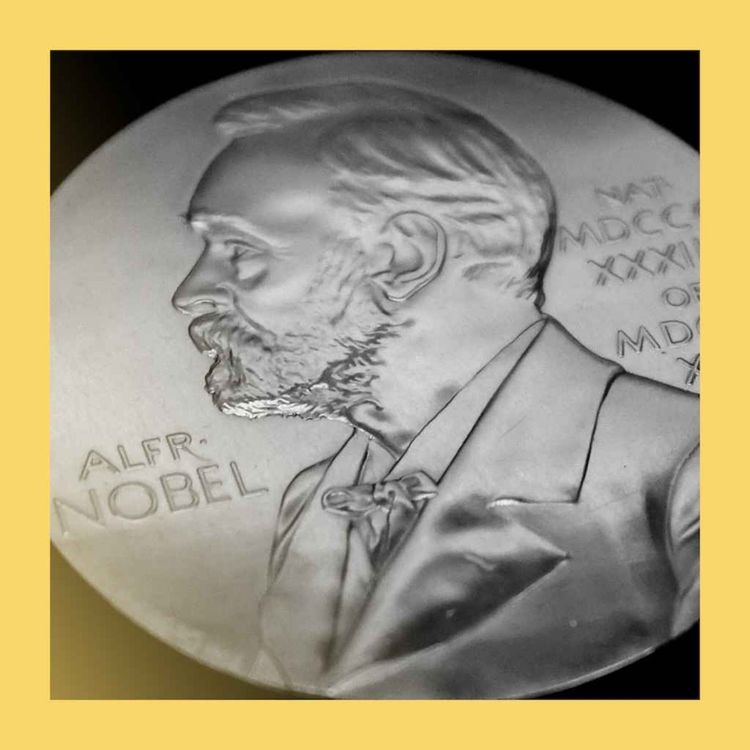
Nobel prizes: the 2025 science awards
Since 1901, the Nobel prizes have been the pinnacle of scientific achievement. This week, nine more scientists joined the ranks of Albert Einstein and Marie Curie, as they were recognised for their work in immunology, quantum computing and inventing a new class of materials. Who are the scientists who earned those coveted phone calls from Stockholm?
Host: Alok Jha, The Economist’s science and technology editor. Guests: The Economist’s Natasha Loder, Geoff Carr and Tim Cross.
Transcripts of our podcasts are available via economist.com/podcasts.
Listen to what matters most, from global politics and business to science and technology—subscribe to Economist Podcasts+.
For more information about how to access Economist Podcasts+, please visit our FAQs page or watch our video explaining how to link your account.
More episodes
View all episodes

A vaccine for everything
43:31|Imagine if a single vaccine could protect against a vast array of pathogenic threats. Recent research suggests that a universal vaccine to fend off respiratory viruses, bacterial infections—even allergens—might become a reality. Such jabs would be vital for blunting the impact of the next pandemic. Guests and hosts:Ainslie Johnstone, The Economist’s data and science correspondent Mihai Netea of Radboud University NijmegenPamela Bjorkman of the California Institute of Technology Bali Pulendran of Stanford UniversityHost: Alok Jha, The Economist’s science and technology editorTopics covered:Broad-spectrum vaccinesImmunologymRNA technologyListen to Ainslie’s related reporting on dementia and infections by scrolling back to our March 2025 episode, “Going viral: could infections cause Alzheimer's?”Transcripts of our podcasts are available via economist.com/podcasts.Listen to what matters most, from global politics and business to science and technology—subscribe to Economist Podcasts+.For more information about how to access Economist Podcasts+, please visit our FAQs page or watch our video explaining how to link your account.
How AI is really being used in war
42:14|The conflict in Iran has been described as the “first AI war”. But how is artificial intelligence actually being deployed? We examine the conflicts in Iran and Ukraine, which raise some thorny questions about the mechanics and ethics of the future of war.Guests and hosts:Shashank Joshi, defence editor at The EconomistJames Lawson, a director at HelsingHost: Alok Jha, The Economist’s science and technology editorTopics covered:Military technologyAutonomous weaponsArtificial intelligenceTranscripts of our podcasts are available via economist.com/podcasts.Listen to what matters most, from global politics and business to science and technology—subscribe to Economist Podcasts+.For more information about how to access Economist Podcasts+, please visit our FAQs page or watch our video explaining how to link your account.
The dangers of obsessing over metrics
37:16|The mechanisms of games are often used to motivate people—from tracking health to scrolling social media feeds and even the way school is graded. But C. Thi Nguyen is worried we’re over-obsessing about keeping score. He wants us to focus more on the things we enjoy doing, rather than letting metrics hijack our lives. Guests and hosts:C. Thi Nguyen, a philosopher at the University of Utah and author of “The Score”Host: Alok Jha, The Economist’s science and technology editorTopics covered:GamesMetricsSocial mediaTranscripts of our podcasts are available via economist.com/podcasts.Listen to what matters most, from global politics and business to science and technology—subscribe to Economist Podcasts+.For more information about how to access Economist Podcasts+, please visit our FAQs page or watch our video explaining how to link your account.
AI catastrophe could be around the corner
47:28|The spat between America’s government and Anthropic has some alarming implications. In AI development, it appears speed is being prioritised over safety. Artificial intelligence could not only give bad actors the capabilities to unleash destruction, evidence is building that the models themselves are becoming more capable of deceit. Is a catastrophe imminent?Guests and hosts:Alex Hern, The Economist’s AI writerAdam Beaumont, director of Britain’s AI Security Institute (AISI)Jade Leung, Chief Technology Officer at AISIAlok Jha, host of “Babbage”Watch Zanny Minton Beddoes, The Economist's editor-in-chief, interview Dario Amodei, Anthropic’s boss, on “The Insider”.Topics covered:Anthropic vs America’s governmentAI safetyCyber security Transcripts of our podcasts are available via economist.com/podcasts.Listen to what matters most, from global politics and business to science and technology—subscribe to Economist Podcasts+.For more information about how to access Economist Podcasts+, please visit our FAQs page or watch our video explaining how to link your account.
Why better chips will need more extreme physics
37:17|Making computer chips is not easy. The machines that etch patterns onto silicon wafers already use some astonishing engineering. To make the next generation of computer chips, though, engineers will need to get even more radical.Guests and hosts:Shailesh Chitnis, The Economist’s global business correspondentBruno La Fontaine, a physicist at the Lawrence Berkeley National LaboratoryNicholas Kelez, CEO and CTO of xLightAlok Jha, host of “Babbage”Topics covered:Extreme ultraviolet lithographyChipmakingASMLTranscripts of our podcasts are available via economist.com/podcasts.Listen to what matters most, from global politics and business to science and technology—subscribe to Economist Podcasts+.For more information about how to access Economist Podcasts+, please visit our FAQs page or watch our video explaining how to link your account.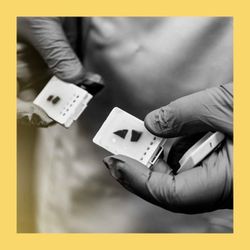
Science is winning the war on cancer
40:21|The rates of deaths from cancer have fallen dramatically in recent decades. And the good news doesn’t stop there. By teasing out the reasons why some cancers take hold, while others don’t, scientists are opening up new ways to prevent even more cases of the disease. Guests and hosts:Slavea Chankova, The Economist’s health-care correspondentJoanna Fowler, senior staff scientist at the Wellcome Sanger InstitutePhil Jones, an oncologist at the University of Cambridge and the Wellcome Sanger Institute Alok Jha, host of “Babbage”Topics covered:Cancer researchTumour preventionCarcinogensTranscripts of our podcasts are available via economist.com/podcasts.Listen to what matters most, from global politics and business to science and technology—subscribe to Economist Podcasts+.For more information about how to access Economist Podcasts+, please visit our FAQs page or watch our video explaining how to link your account.
How to think like a chess pro
34:36|How do the world’s best chess players operate? What does the game itself reveal about thinking and memory? In this episode, Jennifer Shahade explains how thinking like a chess champion can help you make better decisions in life.Guests and hosts:Jennifer Shahade, Woman Grandmaster and author of “Thinking Sideways”Alok Jha, host of “Babbage”You can watch Alok and Jennifer play their chess game here.Topics covered:ChessCognitive scienceArtificial intelligenceTranscripts of our podcasts are available via economist.com/podcasts.Listen to what matters most, from global politics and business to science and technology—subscribe to Economist Podcasts+.For more information about how to access Economist Podcasts+, please visit our FAQs page or watch our video explaining how to link your account.
Can “world models” fix AI’s blind spots?
42:04|Modern artificial intelligence is seemingly unstoppable. But large language models have an undeniable blind spot: an incomplete understanding of physical reality and the laws of physics. Could “world models” be the solution—and how are AI labs building them?Guests and hosts:Alex Hern, AI writer at The EconomistYann LeCun, AI pioneer and executive chairman at AMI LabsShlomi Fruchter, research director at Google DeepMindCristóbal Valenzuela, CEO at Runway AIAlok Jha, host of “Babbage”Topics covered:Large language modelsWorld modelsGoogle's Project GenieTranscripts of our podcasts are available via economist.com/podcasts.Listen to what matters most, from global politics and business to science and technology—subscribe to Economist Podcasts+.For more information about how to access Economist Podcasts+, please visit our FAQs page or watch our video explaining how to link your account.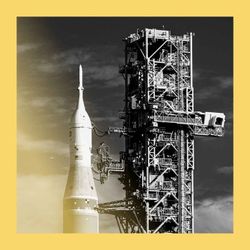
NASA’s Artemis: humans are returning to the Moon
38:29|NASA’s much-delayed Artemis II mission is set to launch in early March. For the first time since 1972, astronauts will fly around the moon—if all goes well, that means humans could walk on the lunar surface once again in a subsequent mission. But, if China succeeds in its own ambitions, those astronauts might not be alone. A new Moon race has begun.Host: Alok Jha, The Economist’s science and technology editor. Guests: The Economist’s Tim Cross and Oliver Morton; and Teasel Muir-Harmony of the Smithsonian's National Air and Space Museum.For more on America’s Moon programme, listen to our podcast on the inception of NASA’s giant (and pointless) SLS rocket.Transcripts of our podcasts are available via economist.com/podcasts.Listen to what matters most, from global politics and business to science and technology—subscribe to Economist Podcasts+.For more information about how to access Economist Podcasts+, please visit our FAQs page or watch our video explaining how to link your account.