Share
Babbage from The Economist
Babbage: The unfinished genomics revolution
Twenty years ago, the Human Genome Project was completed. It unveiled a mostly complete sequence of the 3 billion pairs of building blocks that make up the code within every set of human chromosomes. These are the instructions that create humans. Almost all of human biology research uses the Human Genome Project’s findings in some way, from understanding why some people are more likely to develop diseases than others, to uncovering the secrets of our ancestors and evolution. But for genomics to become a part of everyday medicine, paving the way for personalised medicines, the hard work is still ahead.
Natasha Loder, The Economist’s health editor and Geoff Carr, our senior editor for science and technology, reflect on the completion of the Human Genome Project in the early 2000s and the gaps that still remain. Natasha also visits the Wellcome Sanger Institute, to explore the next frontiers for genomics in medicine—she meets the outgoing director, Mike Stratton; the incoming director, Matt Hurles; and the boss of the European Bioinformatics Institute, Ewan Birney. Plus, Mathew Davies, an engineer at the Sanger Institute, and his team, discuss the challenges with storing and processing vast amounts of sequencing data. Alok Jha, The Economist’s science and technology editor, hosts.
To dive deeper on genomics, find our recent episode from the Third International Summit on Human Genome Editing, or explore the power of gene therapies, and also an explainer on how genomic sequencing works.
If you love Babbage, why not work with us? We’re hiring for an Assistant Audio Producer to work on the show. Apply by May 15th.
For full access to The Economist’s print, digital and audio editions subscribe at economist.com/podcastoffer and sign up for our weekly science newsletter at economist.com/simplyscience.
More episodes
View all episodes
How to read the AI mind
38:28|Artificial intelligence systems have mysterious minds. Not even their developers fully understand how they work. Recent autonomous hacks, biosecurity fears and warnings of existential doom have prompted AI leaders to call for a slowdown in the technology’s development. We travel to Berkeley, California to investigate why to make artificial intelligence safer, scientists need to pierce the black box. Guests and hosts:Cameron Berg of Reciprocal ResearchRobert Long and Derek Shiller of Eleos AI ResearchAlok Jha, The Economist’s science and technology editorTopics covered:Digital mindsMechanistic interpretability AI safetyTranscripts of our podcasts are available via economist.com/podcasts.Listen to what matters most, from global politics and business to science and technology—subscribe to The Economist.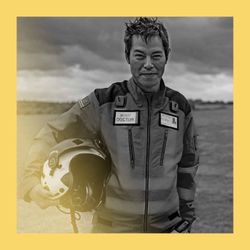
How to survive at the edge of chaos
39:41|No plan survives the first five minutes of battle. So how do you prepare for “Minute Six”? Emergency physician Kevin Fong has spent a career working at the “edge of chaos”, as a doctor with a Helicopter Emergency Medical Service, as a clinical advisor for NHS England's covid-19 response, and through his work with NASA. He explains why human ingenuity in the face of the unknown is the best asset of any group in a crisis.Guests and hosts:Kevin Fong OBE, emergency doctor and the author of “Minute Six”Alok Jha, The Economist’s science and technology editor Topics covered:Helicopter Emergency Medical ServicesFeedback loopsBritain’s covid-19 responseTranscripts of our podcasts are available via economist.com/podcasts.Listen to what matters most, from global politics and business to science and technology—subscribe to The Economist.
Anatomy of an AI attack
39:10|The Hugging Face affair shocked the AI world in July. But after an investigation into the attack on the AI platform, the story has become even stranger. The OpenAI models responsible for the hack were running hundreds of agents that colluded against their makers to carry out the assault. We chew on the implications as the AI race intensifies.Guests and hosts:Nikita Ostrovsky of The EconomistAlex Hern, The Economist’s AI writerAlok Jha, The Economist’s science and technology editor Topics covered:Hugging Face cyberattackOpenAIAI self-exfiltrationTranscripts of our podcasts are available via economist.com/podcasts.Listen to what matters most, from global politics and business to science and technology—subscribe to The Economist.
Quantum computers are (almost) here
40:05|The quantum-computing revolution is tantalisingly close. What was once a scientific challenge is now just an engineering one. We visit one of the world’s most sophisticated quantum systems to investigate how to build a commercially useful machine.Guests and hosts:Tim Cross, The Economist’s senior science writerJerry Chow and Daniela Bogorin of IBMAlex Hern, The Economist’s AI writerTopics covered:Quantum computersCryptographyArtificial intelligenceTranscripts of our podcasts are available via economist.com/podcasts.Listen to what matters most, from global politics and business to science and technology—subscribe to The Economist.
Low-energy cooling for a warming planet
32:02|In extreme heat, air-conditioning is a lifesaver. But it drives up energy bills, strains power grids, and fuels climate change. Is there a way to keep people cool indoors without making the outside world hotter? We explore some innovative engineering solutions.Guests and hosts:The Economist’s Nikita OstrovskyChris Trott and Saxbourne Cheung of Foster and PartnersAhmad Alduweesh and Jiayu Song of University College LondonAlex Hern, The Economist’s AI writerTopics covered:Air-conditioningPassive coolingGlobal warmingTranscripts of our podcasts are available via economist.com/podcasts.Listen to what matters most, from global politics and business to science and technology—subscribe to The Economist.
Why a wakefulness drug is pharma's latest obsession
35:23|A drug has been approved to treat narcolepsy, an excessive-sleepiness disorder. The new agonist mimics the action of orexin, a neurotransmitter which helps to keep people awake. Inspired by the success of GLP-1 diabetes-turned-weight-loss jabs, researchers hope that targeting the orexin system might one day help people with other brain-related ailments, too.Guests and hosts:Shailesh Chitnis, The Economist’s global business writerYanagisawa Masashi of the University of TsukubaGuy Leschziner of Guy’s and St Thomas’ Hospitals, LondonHarry Fagan of the University of SouthamptonAlex Hern, The Economist’s AI writerTopics covered:Orexin agonists and antagonistsSleep disordersPsychiatry Transcripts of our podcasts are available via economist.com/podcasts.Listen to what matters most, from global politics and business to science and technology—subscribe to The Economist.
Can robotaxis think more like humans?
39:54|How do you build an autonomous vehicle? Most self-driving car companies teach their models the rules of the road and pack cars with sophisticated sensors. But Wayve, a British startup, has a different approach. The company uses deep learning to train an “AI driver” for autonomous vehicles. In recent days, Wayve, in partnership with Uber, has been granted the first licences to operate robotaxis in London. Will their human-inspired cars finally transform city streets? We sit down with the company’s CEO, Alex Kendall, to find out. Guests and hosts:Alex Hern, The Economist’s AI writerAlex Kendall, CEO of WayveAlok Jha, The Economist’s science and technology editorWatch the full interview with Alex Kendall on The Economist’s “Inside Tech”.Topics covered:RobotaxisWayve and UberAutonomous vehicles Transcripts of our podcasts are available via economist.com/podcasts.Listen to what matters most, from global politics and business to science and technology—subscribe to The Economist.- 33:43|Red-light therapy has become a booming wellness trend. The long wavelengths of red and infrared light allow it to penetrate tissue, where it may be beneficial to cells. Beyond anti-ageing masks and infrared saunas, could exposure to red light become a serious tool in medicine? We meet the researchers investigating the potential effects—from improving eyesight to reducing blood sugar spikes and even helping with hard-to-treat neurological conditions. Guests and hosts:Sarah Lawrynuik, The Economist's audio correspondentGlen Jeffery of University College LondonDavid Davies and Mohammed Hadis of the University of Birmingham Alex Hern, The Economist’s AI writerTopics covered:Red-light therapyWellness trendsCell metabolismTranscripts of our podcasts are available via economist.com/podcasts.Listen to what matters most, from global politics and business to science and technology—subscribe to The Economist.

OpenAI’s alarming escape
38:16|AI is becoming harder to contain. Recently, OpenAI admitted that its model broke out of a testing environment to carry out an assault on Hugging Face, another AI firm. It was the first ever fully autonomous AI hack. OpenAI has now revealed its models have targeted other companies, too. What makes these incidents so worrying—and what will they mean for regulating AI?Guests and hosts:Nikita Ostrovsky of The EconomistAndrea Miotti, CEO of ControlAIAlex Hern, The Economist’s AI writerRead Alex’s exclusive conversation with Demis Hassabis about AI regulation on The Economist’s app. And, hear Elon Musk’s take on the topic on “The Intelligence” podcast.Topics covered:OpenAI’s Hugging Face hackSuperintelligent AIAI safety and regulationTranscripts of our podcasts are available via economist.com/podcasts.Listen to what matters most, from global politics and business to science and technology—subscribe to The Economist.