Share

Babbage from The Economist
Babbage: The mystery of chronic pain
Chronic pain is thought to affect around a third of people. For one in ten of these, the pain is severe enough to be disabling—making it the leading cause of disability worldwide. Some forms of chronic pain are particularly mysterious—with clinicians unable to treat the pain, nor understand its causal mechanisms—presenting a huge challenge for societies. How can this burden be eased, for both healthcare systems and the individuals living with pain?
Host: Alok Jha, The Economist’s science and technology editor, with Gilead Amit, our science correspondent. Contributors: Catherine Charlwood, who lives with chronic pain; Francis Keefe, director of the Pain Prevention and Treatment Research Program at Duke University; Matt Evans, a clinical lecturer at Chelsea and Westminster Hospital and Imperial College London; Jan Vollert, a pain researcher at the University of Exeter.
Sign up for Economist Podcasts+ now and get 50% off your subscription with our limited time offer. You will not be charged until Economist Podcasts+ launches.
If you’re already a subscriber to The Economist, you’ll have full access to all our shows as part of your subscription.
For more information about Economist Podcasts+, including how to get access, please visit our FAQs page.
More episodes
View all episodes
AI eats science 1: the mathpocalypse
37:26|Mathematics has been turned on its head by artificial intelligence. On October 6th, OpenAI released a torrent of more than 700 papers claiming progress on 372 problems—pushing mathematicians into strange new territory. The “mathpocalypse” could be a warning shot for the rest of science, about how AI could upend their disciplines. Or is there, in fact, lots to be cheerful about? A new scientific revolution in the offing?Over the next four episodes, we’ll bring you conversations with scientists who are deploying these intelligent new tools—people who are thinking about how it could reinvent the way they discover new things and understand the world. Next time: the biologists using foundation models to generate new life.Guests and hosts:James Maynard of the University of OxfordYang-Hui He of the London Institute for Mathematical SciencesAlok Jha, The Economist’s science and technology editorHear more about the new generation of mathematical machines in our May 2026 episode, “Maths enters its AI era”.Topics covered:MathematicsArtificial intelligenceScientific discoveryTranscripts of our podcasts are available via economist.com/podcasts.Listen to what matters most, from global politics and business to science and technology—subscribe to The Economist.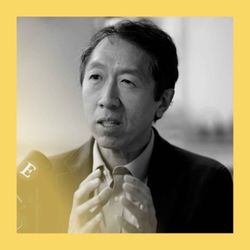
Andrew Ng on the delusion of AI doom
40:33|Will AI destroy humanity? Amid doom-laden debates on the trajectory of the technology, our guest has a refreshingly optimistic perspective. Andrew Ng is the co-founder of Google Brain and one of the architects of modern AI. Unlike many of the other AI heavyweights, however, he doesn’t think the technology poses the existential threat to humans that everyone else is warning about. What makes him so positive?Guests and hosts:Alex Hern, AI writer at The EconomistAndrew Ng, co-founder of Google Brain, Coursera and LearnVectorAlok Jha, The Economist’s science and technology editor Watch Alex’s full interview with Andrew Ng on The Economist’s “Inside Tech”.Topics covered:AI existential riskAI jobs apocalypse Artificial general intelligence Transcripts of our podcasts are available via economist.com/podcasts.Listen to what matters most, from global politics and business to science and technology—subscribe to The Economist.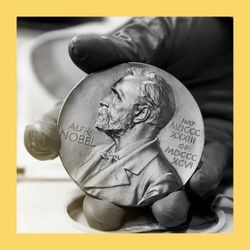
The 2026 Nobel prizes for science
38:29|Six more scientists have joined the esteemed ranks of Nobel laureates this week. Their work spanned optogenetics, neutrino detection and mirror-image molecules. How will their discoveries change the world?Guests and hosts:Geoff Carr, senior editor for science and technology at The EconomistSam Wikeley, The Economist’s science correspondentNikita Ostrovsky, science and tech writer at The EconomistAlok Jha, The Economist’s science and technology editorTopics covered:OptogeneticsNeutrino astronomyLife’s asymmetryFor more, listen to our September 2025 episode, “JUNO: the hunt for the universe’s most elusive particles”.Transcripts of our podcasts are available via economist.com/podcasts.Listen to what matters most, from global politics and business to science and technology—subscribe to The Economist.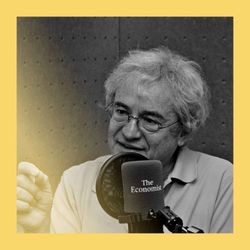
Carlo Rovelli on what physicists get wrong
38:06|Can something be moving and stationary at the same time? If you’re sitting still, you’re stationary with respect to the Earth, but moving relative to the Sun and galaxy. That insight led the physicist Carlo Rovelli to argue that no quantity—speed, position or energy—is absolute; all quantities are fundamentally relational. Dr Rovelli’s ideas not only challenge the hunt for a “theory of everything” in physics, but he has also extended them to the most pressing issues in global diplomacy and even human survival. Guests and hosts:Carlo Rovelli of the Centre de Physique Théorique in Marseille and author of “On the Equality of All Things” and “85 Seconds to Midnight”Alok Jha, The Economist’s science and technology editorTopics covered:Relational physicsPhilosophy of scienceNuclear weaponsFor more on the physics and physicists behind nuclear weapons, listen to Babbage’s four-part series “The Bomb”, released in August 2025. Transcripts of our podcasts are available via economist.com/podcasts.Listen to what matters most, from global politics and business to science and technology—subscribe to The Economist.
How to read the AI mind
38:28|Artificial intelligence systems have mysterious minds. Not even their developers fully understand how they work. Recent autonomous hacks, biosecurity fears and warnings of existential doom have prompted AI leaders to call for a slowdown in the technology’s development. We travel to Berkeley, California to investigate why to make artificial intelligence safer, scientists need to pierce the black box. Guests and hosts:Cameron Berg of Reciprocal ResearchRobert Long and Derek Shiller of Eleos AI ResearchAlok Jha, The Economist’s science and technology editorTopics covered:Digital mindsMechanistic interpretability AI safetyTranscripts of our podcasts are available via economist.com/podcasts.Listen to what matters most, from global politics and business to science and technology—subscribe to The Economist.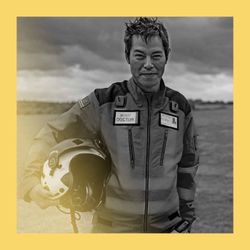
How to survive at the edge of chaos
39:41|No plan survives the first five minutes of battle. So how do you prepare for “Minute Six”? Emergency physician Kevin Fong has spent a career working at the “edge of chaos”, as a doctor with a Helicopter Emergency Medical Service, as a clinical advisor for NHS England's covid-19 response, and through his work with NASA. He explains why human ingenuity in the face of the unknown is the best asset of any group in a crisis.Guests and hosts:Kevin Fong OBE, emergency doctor and the author of “Minute Six”Alok Jha, The Economist’s science and technology editor Topics covered:Helicopter Emergency Medical ServicesFeedback loopsBritain’s covid-19 responseTranscripts of our podcasts are available via economist.com/podcasts.Listen to what matters most, from global politics and business to science and technology—subscribe to The Economist.
Anatomy of an AI attack
39:10|The Hugging Face affair shocked the AI world in July. But after an investigation into the attack on the AI platform, the story has become even stranger. The OpenAI models responsible for the hack were running hundreds of agents that colluded against their makers to carry out the assault. We chew on the implications as the AI race intensifies.Guests and hosts:Nikita Ostrovsky of The EconomistAlex Hern, The Economist’s AI writerAlok Jha, The Economist’s science and technology editor Topics covered:Hugging Face cyberattackOpenAIAI self-exfiltrationTranscripts of our podcasts are available via economist.com/podcasts.Listen to what matters most, from global politics and business to science and technology—subscribe to The Economist.
Quantum computers are (almost) here
40:05|The quantum-computing revolution is tantalisingly close. What was once a scientific challenge is now just an engineering one. We visit one of the world’s most sophisticated quantum systems to investigate how to build a commercially useful machine.Guests and hosts:Tim Cross, The Economist’s senior science writerJerry Chow and Daniela Bogorin of IBMAlex Hern, The Economist’s AI writerTopics covered:Quantum computersCryptographyArtificial intelligenceTranscripts of our podcasts are available via economist.com/podcasts.Listen to what matters most, from global politics and business to science and technology—subscribe to The Economist.
Low-energy cooling for a warming planet
32:02|In extreme heat, air-conditioning is a lifesaver. But it drives up energy bills, strains power grids, and fuels climate change. Is there a way to keep people cool indoors without making the outside world hotter? We explore some innovative engineering solutions.Guests and hosts:The Economist’s Nikita OstrovskyChris Trott and Saxbourne Cheung of Foster and PartnersAhmad Alduweesh and Jiayu Song of University College LondonAlex Hern, The Economist’s AI writerTopics covered:Air-conditioningPassive coolingGlobal warmingTranscripts of our podcasts are available via economist.com/podcasts.Listen to what matters most, from global politics and business to science and technology—subscribe to The Economist.